
This article explains why crochet lace trim is dominating the fashion market today. We will explore upcoming design trends, show you how to take a design from a single handmade prototype to full mass production, and provide a clear, actionable buying guide for brands. If you want to source better materials and scale your apparel line successfully, keep reading.
The Shift to Natural Fibers: Why Cotton?
Over the past few years, the fashion industry relied heavily on synthetic stretch materials. Now, the trend is shifting back to nature. Consumers want clothing that is breathable, sustainable, and highly textured.
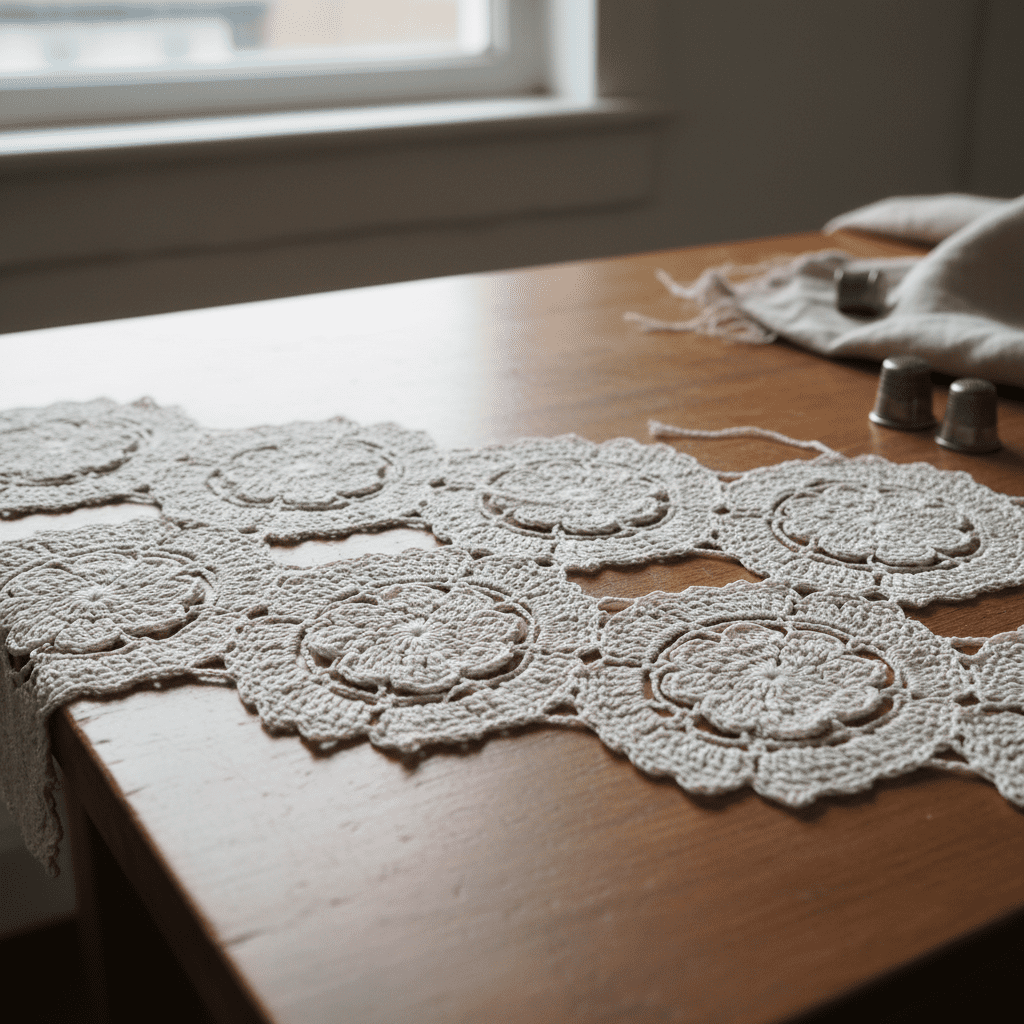
In 2026, the demand for cotton crochet lace trim is skyrocketing. Unlike polyester or nylon, pure cotton is a natural and breathable material. When it is woven into a thick, textured band, it provides a heavy, high-quality feel that synthetic plastic alternatives simply cannot copy.
Pure cotton materials are booming in spring and summer collections. The natural, matte finish of raw cotton absorbs light beautifully. This gives garments an earthy, organic vibe that modern consumers love. Additionally, cotton trims pair perfectly with linen and open-weave fabrics, ensuring your garment looks premium from top to bottom.
Top Application Trends for 2026
How are top brands using this material in their upcoming collections? Here are the three main trends to watch:
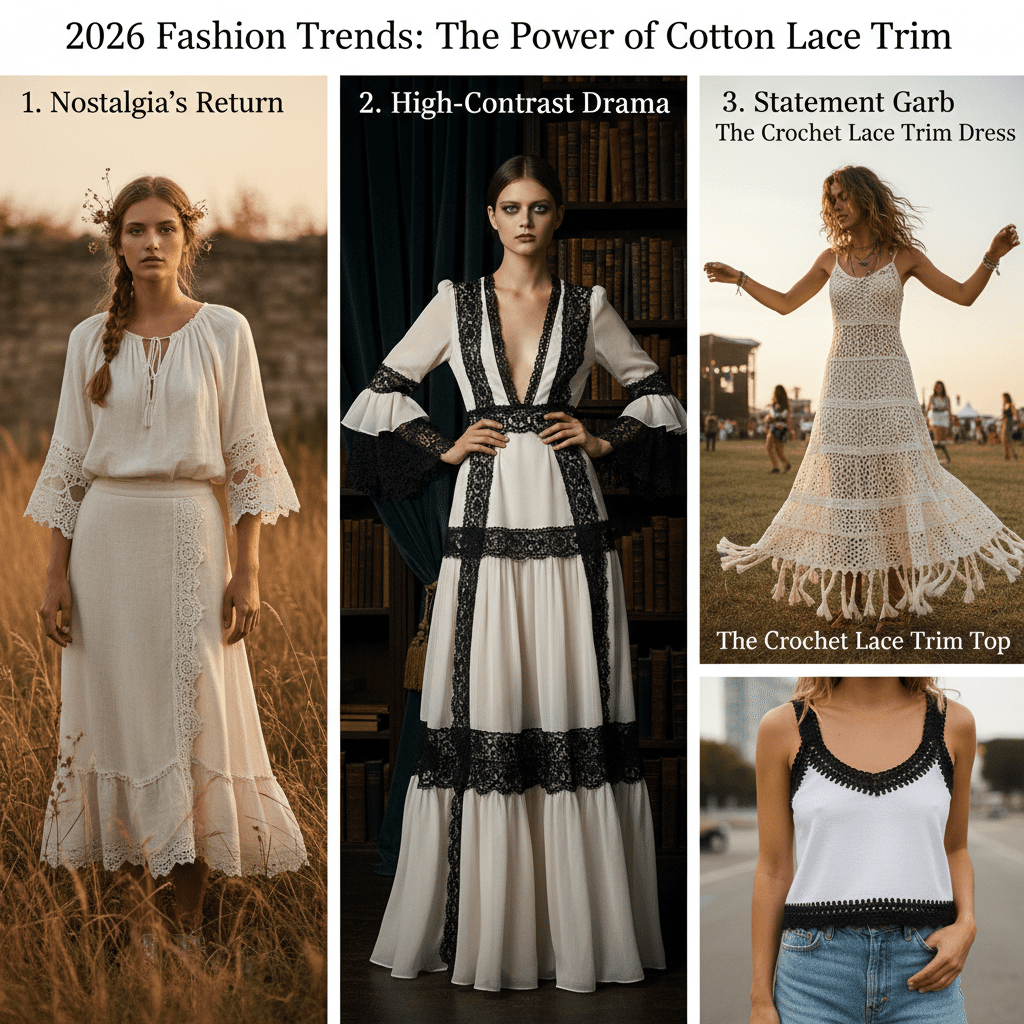
1. The Nostalgic Comeback
“Cottagecore” and bohemian styles are evolving into a more refined, high-quality look. Designers are using vintage-style cotton laces to add traditional details to modern clothes. Think of unbleached cotton edges on a linen skirt, or delicate scalloped borders on luxury sleepwear. The mix of raw texture and clean cuts is highly popular.
2. High-Contrast Drama
While white and cream will always be popular, 2026 is also embracing dark, high-contrast designs. Using a heavy black crochet lace trim on a light-colored fabric creates a striking visual impact. Because cotton absorbs dye so well, these trims offer deep, rich colors without the shiny, cheap look that synthetic black lace often has.
3. Statement Garments
Trims are no longer just for the edges of clothes; they are becoming the main structure of the garment.
-
The Crochet Lace Trim Dress: Festival and vacation collections are featuring maxi dresses where the bodice or the skirt panels are entirely connected by wide bands of lace crochet trim.
-
The Crochet Lace Trim Top: Summer camisoles and cropped tops framed with chunky cotton lace borders are becoming everyday staples. They perfectly mix the look of cozy knitwear with casual woven apparel.

From Concept to Production: The Designer’s Journey
Every successful clothing line goes through a clear development process. Here is how brands take a crocheted lace trim design from a simple idea to a bestselling product.
Phase 1: Prototyping and DIY
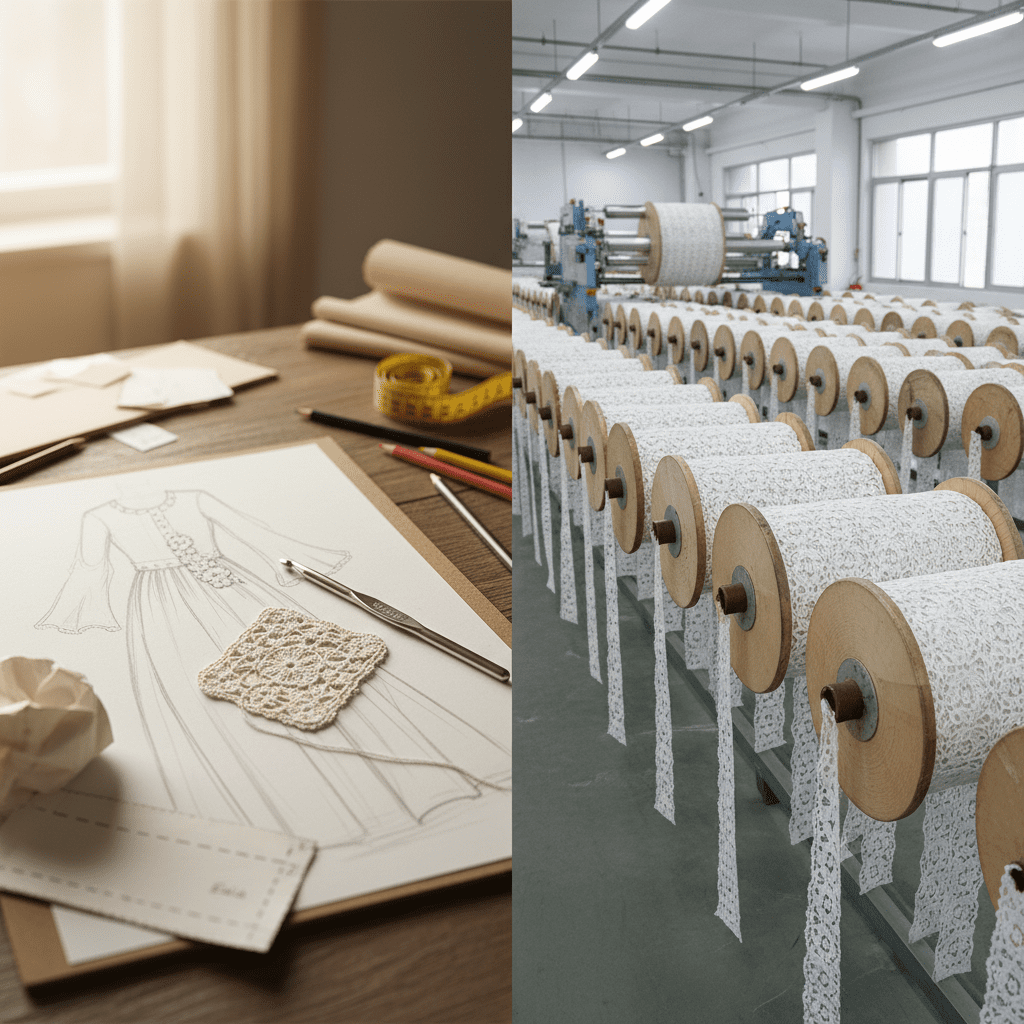
Many independent designers start their creative process by hand. Before committing to a factory order, they usually search for a crochet lace trim pattern to make a single prototype themselves.
During this phase, designers need to understand how the yarn feels and drapes. To keep early costs low, they often search the internet for a crochet lace trim pattern free download. Whether they are making a simple border or a highly complex lace trim crochet pattern, this manual stage is important to lock in the brand’s style.
Phase 2: Sampling and Testing
Once the handmade prototype is approved, hand-making the trims is no longer a smart business choice. It simply takes too much time. The focus shifts from looking for free patterns to buying ready-made materials.
For small test collections, brands usually buy crochet lace trim by the yard. This allows them to make 50 to 100 garments for a market test without having to meet a factory’s large Minimum Order Quantity (MOQ). It is a low-risk way to test how the trim washes and wears.
Phase 3: Scaling Up to Wholesale
When a crochet lace trim top or dress becomes a hit with customers, production must speed up. Brands stop buying from retail stores and start purchasing crochet lace trim wholesale directly from the factory.
Buying wholesale offers massive benefits: exact color matching, perfect pattern repetition, and huge cost savings. Using advanced industrial machines, factories can perfectly replicate the look of a handmade design in a fraction of the time, providing miles of continuous trim for mass production.
The Ultimate Buying Guide: How to Choose the Right Crochet Lace Trim
Many great garment designs fail because the brand bought the wrong trim. Buying lace is not just about finding a pretty design; it is about ensuring quality, stability, and good pricing.
If you are planning to buy laces for your next collection, use this simplified, step-by-step checklist to avoid costly mistakes.
Step 1: Choose Your Buying Strategy
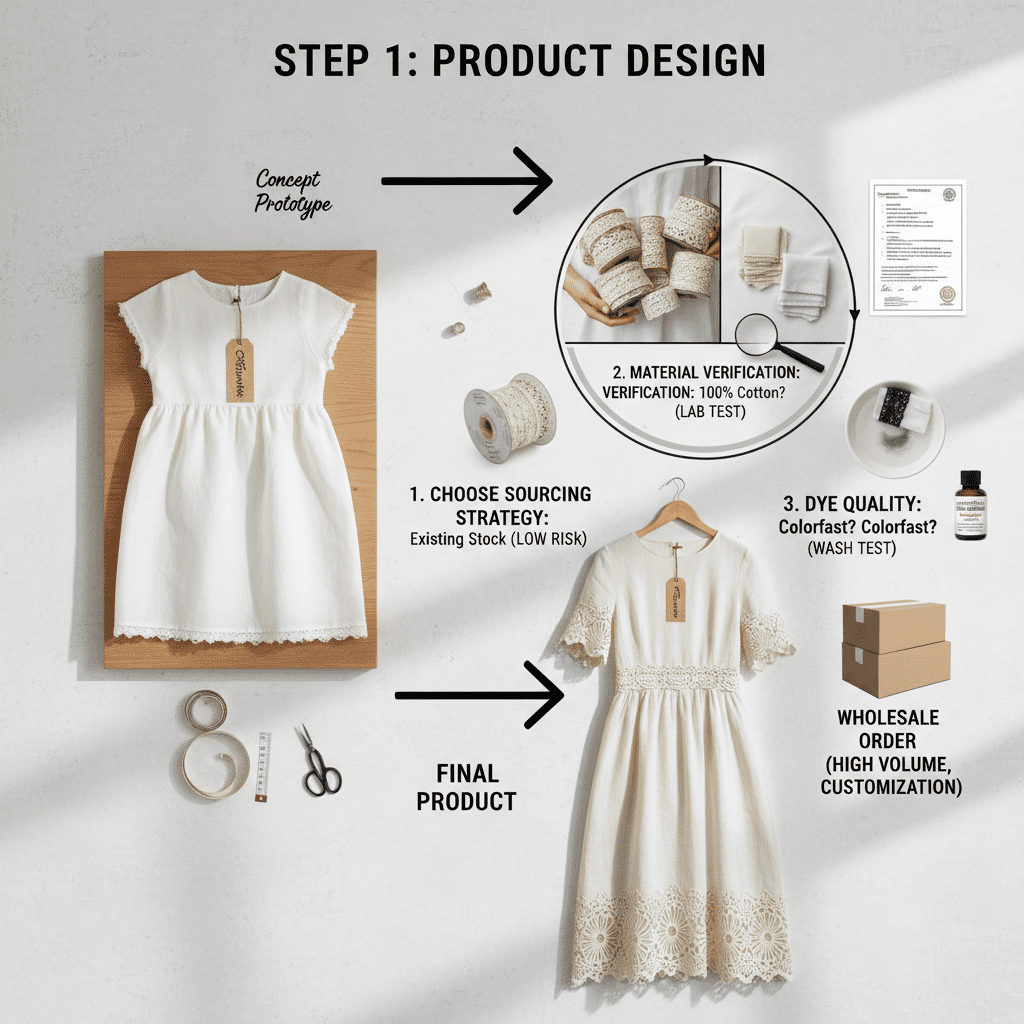
Do not rush into custom manufacturing right away. If you are testing a new design, always buy crochet lace trim by the yard from a supplier’s existing stock. This keeps your financial risk low. Once your item is selling well, switch to a crochet lace trim wholesale strategy. When buying wholesale, you can ask the factory to slightly adjust the width or thickness to perfectly match your brand’s specific needs.
Step 2: Verify the Fiber Content
If you are advertising your clothing as “natural and breathable,” you must ensure you are getting genuine 100% cotton crochet lace trim. Some bad suppliers will secretly mix in cheap polyester to lower their costs. If this happens, your trim will look shiny like plastic and will likely pill (form fuzz balls) after a few washes. Always ask your supplier for a fiber testing report.
Step 3: Test the Dye Quality
Buying white lace is easy, but dark colors are risky. If you are buying black crochet lace trim, poor dye quality will cause the black color to bleed onto the rest of your garment in the washing machine, ruining the whole piece. Always ask your supplier if they use high-quality, eco-friendly reactive dyes. Test a small piece in water with your main fabric before sewing hundreds of dresses.
Step 4: Plan for Shrinkage
Natural cotton always shrinks. If you sew an untreated lace crochet trim onto a pre-washed linen dress, the trim will shrink in the laundry and cause the seams of your dress to pucker and wrinkle. Pro Tip: Ask your supplier if the trim has been “pre-shrunk” or pre-washed. If it has not, you must cut your trim slightly longer (adding a 3% to 5% allowance) so it has room to shrink without ruining the clothing.
Step 5: Check Quality Tolerances
Before buying in bulk, check the physical details. Ensure the width of the trim is consistent across the entire roll. Check the edges to make sure they do not curl up. The stitching should be dense enough so that it doesn’t look like it has holes when pulled, but not so thick that it feels like stiff cardboard.
Step 6: Calculate Your True Costs
The cost per yard is only part of the story. Think about how much trim you actually need per dress, including the parts hidden inside the seams. Also, account for waste at the end of the rolls. Transitioning to a proper wholesale program can lower your overall trim costs by up to 50%, leaving you with much higher profit margins.
FAQs About Crochet Lace Trims
What is the difference between regular lace and crochet lace? Regular lace is woven with very fine threads to create a delicate, flat, and see-through mesh. Crochet lace uses much thicker yarns (usually cotton) to create a heavier, more textured pattern that looks like it was made by hand.
Can I use my own lace design for mass production? Yes. If you designed a unique lace trim crochet pattern, you cannot hand-make thousands of pieces yourself. A professional factory can take your handmade sample, program it into industrial machines, and run exclusive mass production just for your brand.
Does black crochet lace trim fade easily? This depends on the factory’s dyeing process. Because our laces use 100% pure cotton, the dye absorbs deeply into the core of the yarn. If processed correctly, your black crochet lace trim will stay dark and rich through many washes.
Where can beginners find free patterns to test? If you are just starting to design your first prototype, you can find a free crochet lace trim pattern on DIY blogs or Pinterest. Once you have perfected your design using a crochet lace trim pattern free download, you can bring that physical sample to a manufacturer to make it in bulk.
Is buying wholesale really cheaper than buying by the yard? Buying crochet lace trim by the yard is great for testing small batches. But once you are producing more than 50 garments, buying large factory spools of crochet lace trim wholesale will drastically lower your costs and increase your overall profit.
Conclusion
The message for 2026 is simple: consumers want high-quality, natural textures. Adding crochet lace trim to your designs is the fastest way to make your clothing look premium and trendy.