
Based on extensive on-the-ground factory insights, technical strike-offs, and continuous dialogue with global designers, three macro-forces are defining the 2026 lace trim trends: a powerful resurgence of romantic aesthetics, rigorous and non-negotiable sustainability standards, and the fragmentation of bulk orders into rapid, highly customized runs. Here is the definitive, authoritative guide to sourcing lace in 2026.
The Macro Forces Reshaping Lace Sourcing
The lace manufacturing landscape is shaped by three interconnected trends: consumer shift toward “quiet romance,” tactile softness and craftsmanship (a reaction to “clean-girl” minimalism), strict chemical and environmental standards (GRS and OEKO-TEX as market entry baselines), and DTC brands disrupting supply chains with agile, precise micro-runs instead of rigid bulk wholesale minimums—all dictating lace’s design, parameterization and production future.
Trend 1: The Romance Revival & Technical Precision
The current lace renaissance is driven by a desire for sophisticated softness that aligns with modern, versatile wardrobes. It is about strategic placement and flawless execution.
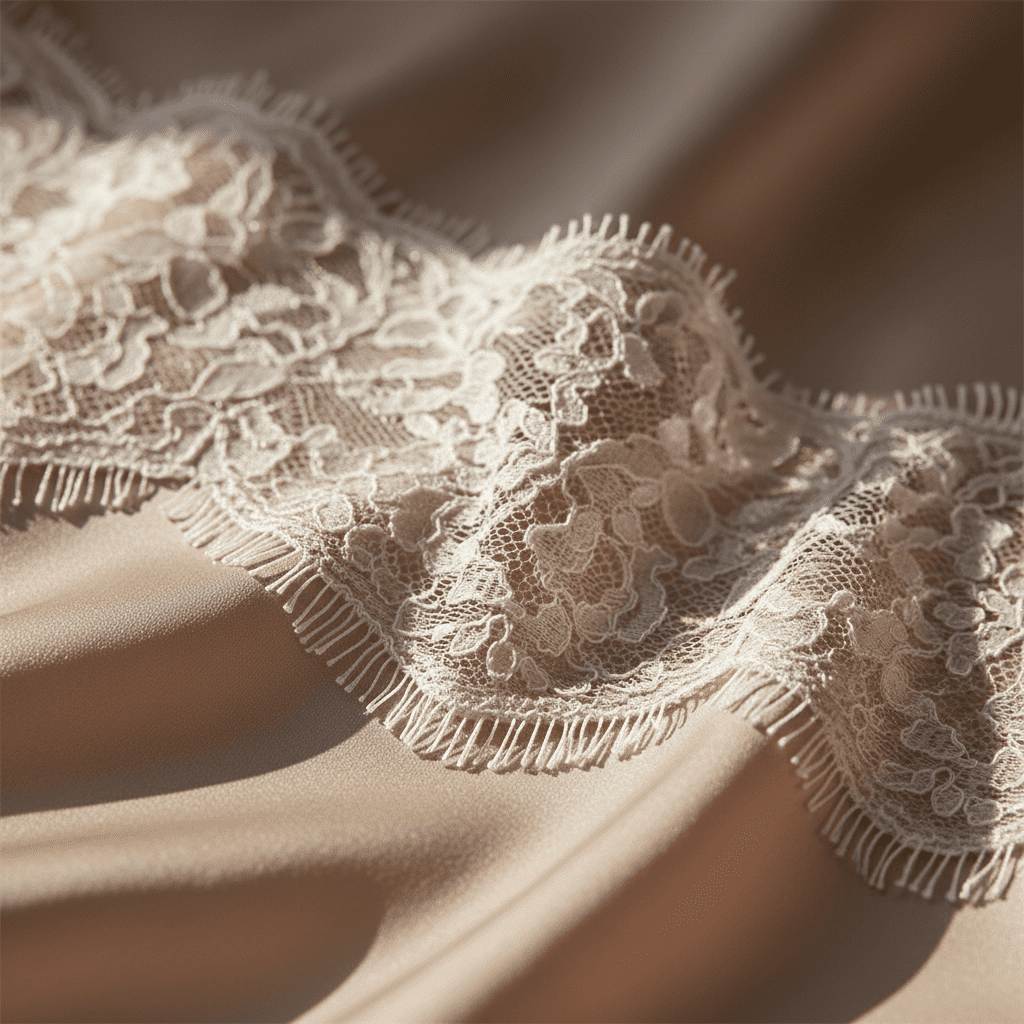
Eyelash Lace: The Pinnacle of Delicate Detailing
Eyelash lace remains the undisputed detail of the season. Characterized by the fine, fringed threads extending from its scalloped edge, it provides unparalleled movement and a premium, high-end visual aesthetic without adding bulk.
-
Design Application: Prominently featured on bralette edges, slip dress straps, and contrasting heavy textiles like denim or leather.
-
Technical Parameters: Precision is critical. Buyers are specifying exact width tolerances (often ranging from a delicate 1.5cm to a statement 8cm) to ensure the fringe lays flat against the skin without curling after washing.
The Resurgence of Crochet Lace
While eyelash trim dominates delicate applications, thicker, more structural crochet lace is experiencing a massive revival for outerwear and vintage-inspired collections.
-
Tactile Value: It offers a handmade, authentic texture that resonates with the “cottagecore” and artisanal market segments.
-
Sourcing Focus: For crochet lace, factory inspection procedures must be exceptionally rigorous. Consistent tension, accurate pattern repeat, and precise width measurements are vital to prevent warping when the trim is sewn onto the main garment.
Subtle Layering & The Lingerie-as-Outerwear Shift
The line between intimate apparel and ready-to-wear has dissolved. Slip dresses trimmed with delicate lace are being styled under tailored blazers or oversized knitwear. Because the modern aesthetic relies on just a “peek” of lace—perhaps a half-inch visible below a hem—the quality of that small section is magnified. Edge consistency, exact scallop symmetry, and premium yarn finish are strictly scrutinized during factory strike-offs.

Trend 2: Advanced Sustainable Innovation
In the context of 2026 lace trim trends, sustainability has transitioned from a marketing buzzword to a rigorous technical specification. Brands lacking traceable, certified supply chains are systematically being excluded from major retail networks.
Beyond Mechanical: The Rise of Chemical Recycling (rPET & rPBT)
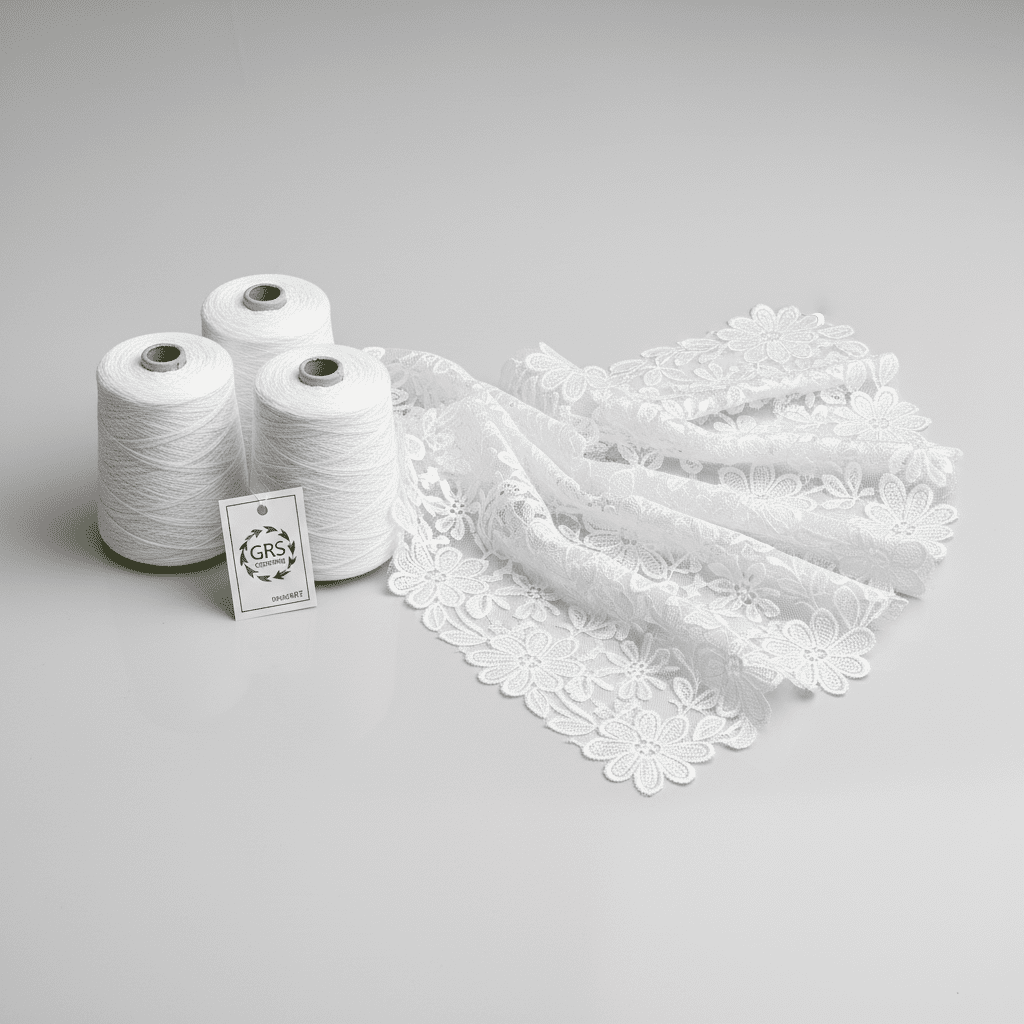
The industry standard is elevating rapidly. While mechanical recycling has been common, leading manufacturers are now focusing on advanced chemical recycling—specifically utilizing 500L polymerization pilot systems to create high-fidelity rPET (recycled Polyethylene Terephthalate) and rPBT yarns.
-
The Advantage: Chemical recycling breaks plastics down to their molecular level before repolymerization. This creates recycled yarns that possess the exact strength, drape, colorfastness, and dyeability of virgin synthetics.
-
GRS Compliance: This technology ensures that transitioning to GRS-certified lace requires zero compromise on the garment’s final aesthetic or durability.
OEKO-TEX Standard 100: The Non-Negotiable Baseline
For any trim making direct skin contact, OEKO-TEX Standard 100 certification is strictly mandatory. This standard guarantees the absence of harmful substances, heavy metals, and toxic dyes.
-
Supply Chain Auditing: Top-tier manufacturers are pre-certifying their entire upstream supply chain—from raw yarn spinning to final vat dyeing—providing brands with immediate, audit-ready documentation for customs and retail compliance.
Next-Generation Eco Materials
Material science is expanding the designer’s toolkit:
-
High-Twist Organic Cotton: Engineered with specific twist structures to hold sharp scallop details, overcoming the historical limitation of cotton being “too soft” for intricate lace.
-
Eco-Solvent Water-Soluble Lace: Producing freestanding lace patterns using innovative, lower-impact chemical solvents that drastically reduce the effluent burden on water treatment facilities.

Trend 3: Rapid Customization & Small-Batch Agility
The traditional procurement model—buying tens of thousands of meters from a static, seasonal catalog—is obsolete. 2026 is defined by digital integration and extreme manufacturing agility.
1-to-3 Day Rapid Sampling
The design-to-sample window has compressed dramatically. Factories equipped with advanced digital pattern systems and automated jacquard looms can now translate a vector file or AI-generated mood board into a physical strike-off in just 1 to 3 days.
-
Iterative Design: This speed allows designers to conduct multiple rounds of adjustments—tweaking the yarn composition, width, or scallop depth—within the same timeframe it previously took to receive a single, initial sample.
The Death of Massive MOQs
Modern fashion is highly fragmented. To support independent designers and agile DTC brands, progressive factories have restructured their operations to offer incredibly low Minimum Order Quantities (MOQs)—sometimes as low as 100 to 200 meters for a fully custom, programmed pattern.
Factory Quality Control at Speed
Rapid turnaround requires bulletproof internal systems. When producing small-batch, custom runs, standardizing the factory inspection procedure is paramount. Strict protocols ensure that even a 500-meter the exact technical specifications, color matching (lab dips), and physical performance tests as a 20,000-meter bulk order.

Trend 4: Lace Trim Transcending Apparel
The application of lace has aggressively expanded beyond its historical confines of bridal wear and intimate apparel.
Home Textiles & The Artisanal Economy
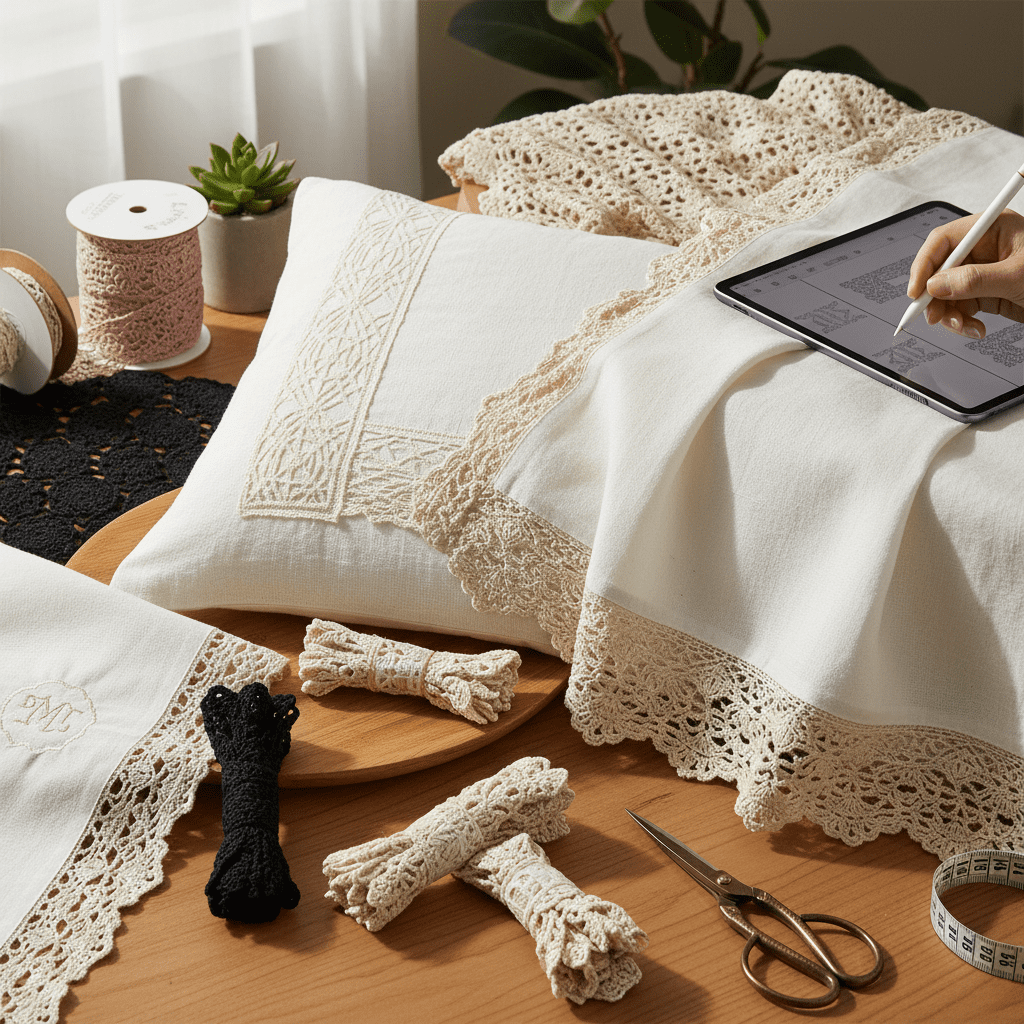
The demand for tactile, romantic aesthetics has permeated interior design. Lace-trimmed pillowcases, premium bed skirts, and table linens are essential components of the vintage-revival and cottagecore movements. These products require trims with excellent wash-durability and dimensional stability.
The Maker Economy and DIY Markets
Independent craft sellers, Etsy creators, and boutique pattern designers represent a rapidly growing market share. This demographic requires diverse stock, fast shipping, and accessible pricing. Suppliers succeeding in this space maintain deep inventories of trending eyelash and crochet styles, ready to ship in shorter lengths.
Bridal Couture’s Modern Edge
The bridal sector is moving away from generic floral yardages. 2026 brides are demanding highly personalized trims—incorporating modern geometric nets, abstract motifs, or even subtle, bespoke monograms woven directly into the scallop.
Strategic Sourcing Guide for 2026
To successfully navigate the 2026 lace trim trends, procurement teams and designers must pivot their sourcing strategies. Here are the three critical mandates for selecting a manufacturing partner this year:
-
Demand Comprehensive Certification: Verbal assurances are insufficient. Your supplier must provide immediate, verifiable GRS and OEKO-TEX documentation. Do not wait for a retail buyer to flag a compliance issue; secure these documents during the initial sourcing phase.
-
Evaluate Technological Speed, Not Just Scale: A manufacturer’s value is no longer measured by the size of their archival catalog, but by their digital pattern programming speed. Prioritize partners capable of executing high-fidelity samples within a 1-to-3 day window.
-
Insist on Scalable MOQs: Partner with facilities that support your growth curve. A modern manufacturer should offer low-barrier entry for custom designs (e.g., 200 meters) without penalizing you on quality control or technical precision.
The industry standard has shifted. From advanced rPET polymerization to rigorous, factory-level quality inspections on micro-orders, the suppliers who will define 2026 are those who merge traditional textile artistry with modern, sustainable engineering.
FAQs
What are the primary 2026 lace trim trends in fashion? Delicate eyelash lace, highly structured crochet lace, and subtle trim layering (particularly on slip dresses and tailored pieces) are leading the aesthetic trends. Operationally, rapid custom sampling and certified sustainable yarns are dominating the supply chain.
How does chemically recycled lace compare to traditional synthetics? Chemically recycled yarns (like rPET and rPBT) perform identically to virgin synthetics. Unlike older mechanical recycling methods, chemical depolymerization ensures the yarn maintains perfect strength, softness, and consistent dye uptake, making it ideal for intricate lace trims.
What is the standard MOQ for custom lace designs today? Agile, digitally integrated factories now offer Minimum Order Quantities as low as 100 to 200 meters for custom-programmed patterns. This represents a massive shift from legacy factories that still demand commitments of thousands of meters.
Why is factory inspection so critical for narrow trims? Because modern fashion often uses lace as a subtle, exposed detail (like a peeking hem), any inconsistencies are highly visible. Strict factory quality control ensures accurate width tolerances, perfect scallop symmetry, and consistent pattern repeats, preventing the trim from puckering when attached to the garment.
How quickly can a custom lace sample be produced? With the integration of digital drafting software and automated loom changeovers, industry-leading factories can now turn a conceptual sketch or digital file into a physical, woven sample in just 1 to 3 days.