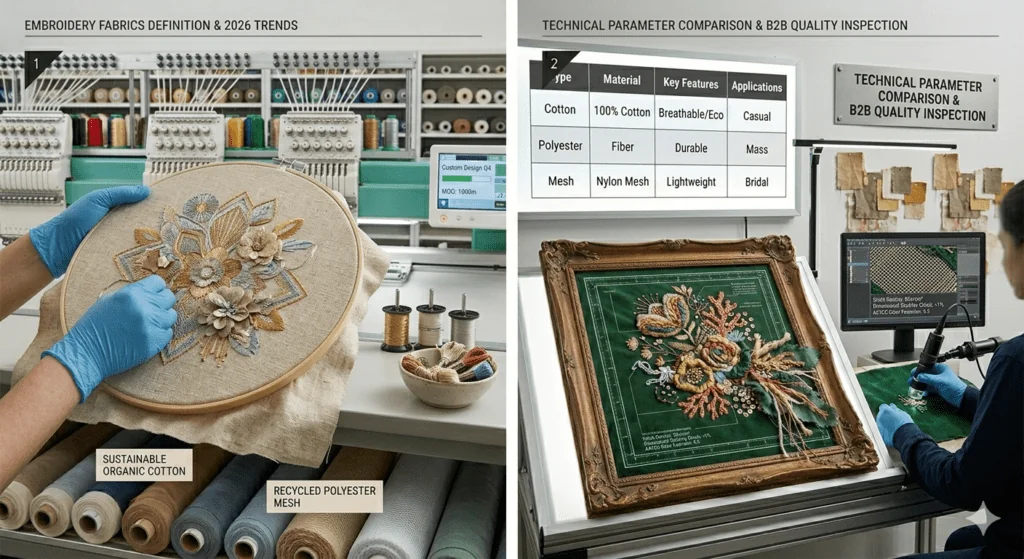
 Yituo Lace specializes in 3D embroidery using eco-friendly materials like organic cotton to meet the 2026 U.S. market trends.
Definition of Embroidery Fabrics
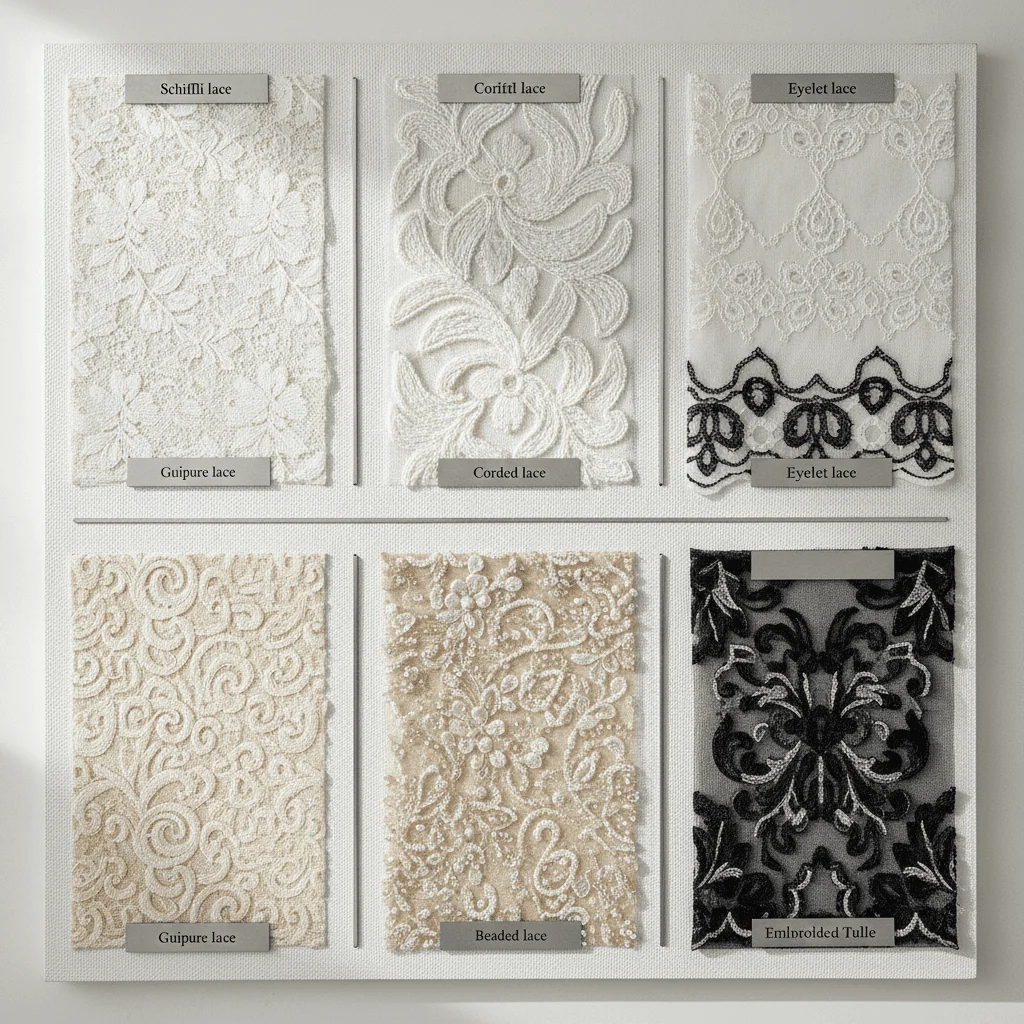
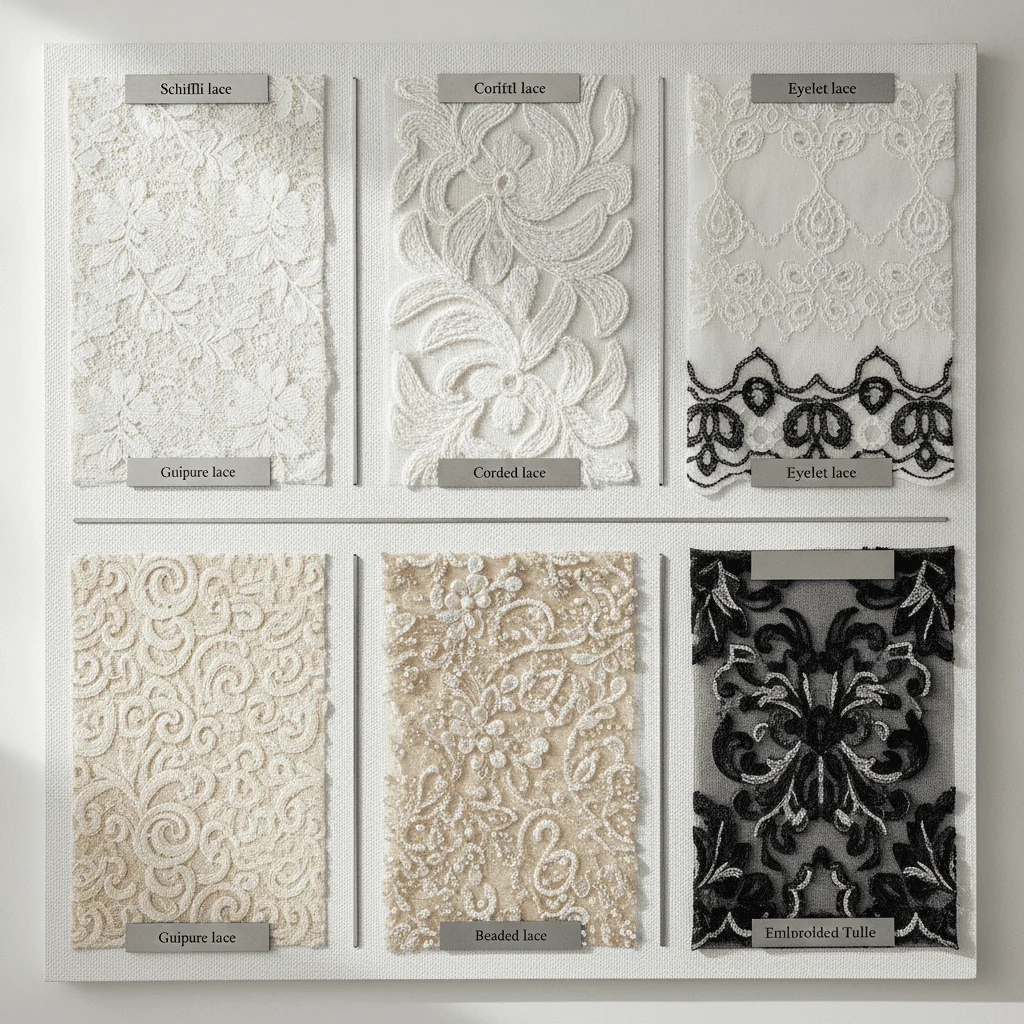
Embroidery fabric refers to textiles enhanced with decorative stitching patterns created through mechanical or manual techniques. In the U.S. market, demand for wholesale lace trim continues to grow, especially across bridal wear, fashion apparel, and home décor sectors. Today’s embroidery fabrics combine aesthetics with performance and sustainability. Professional lace trim supplier partners offer a wide range of solutions, including bridal lace trim collections and scalable wholesale lace trim supply for brands and distributors.2026 U.S. Embroidery Fabric Trends
- 3D Embroidery: Multi-layered stitching creates depth and texture, widely used in premium fashion.
- Sustainable Materials: Recycled polyester and organic cotton are becoming industry standards.
- Metallic Finishes: Gold and silver thread embroidery is trending in eveningwear and luxury segments.
- Digital Customization: Brands increasingly rely on custom lace trim to achieve product differentiation.
Technical Parameter Comparison
| Type | Material | Key Features | Applications |
|---|---|---|---|
| Cotton Embroidery | 100% Cotton | Breathable, eco-friendly | Casual wear |
| Polyester Embroidery | Polyester Fiber | Durable, cost-effective | Mass production |
| Mesh Embroidery | Nylon Mesh | Lightweight, sheer | Bridal & eveningwear |
B2B Quality Inspection Standards
- Embroidery density consistency (stitches per cm²)
- Color fastness compliant with AATCC standards
- Dimensional stability (shrinkage < 3% after washing)
- Clean finishing with no loose threads
Care & Maintenance Recommendations
- Wash with cold water or hand wash to preserve embroidery integrity
- Avoid excessive pulling or stretching
- Store in dry, flat conditions to prevent deformation
- Use mild detergents to protect fibers and threads



 WhatsApp Us