
Search “lace applique” and you’ll find thousands of product images. Flowers, leaves, butterflies, abstract motifs—all beautiful, all different. But which type actually works for your design? And what’s the difference between a $0.50 applique and a $5 one?
A lace applique is an independent decorative lace piece designed to be attached to fabric at specific points. Unlike lace trim that runs continuously along edges, appliques are individual motifs placed wherever your design needs them.
What Is a Lace Applique?
Lace appliques are standalone decorative elements cut or shaped into specific patterns—flowers, leaves, geometric shapes, or custom motifs. They get sewn, fused, or glued onto garments and textiles as focal points or accent details.
The key difference from lace trim:
| Lace Trim | Lace Applique | |
|---|---|---|
| Shape | Continuous strip | Individual piece |
| Placement | Along edges | Anywhere on fabric |
| Sold by | Yard / meter | Piece / set |
| Function | Edge finishing | Decorative accent |
Designers use appliques to add dimension, create visual interest at specific points, or elevate simple base fabrics into statement pieces. A plain bodice becomes bridal-worthy with strategically placed floral appliques. A basic sleeve transforms with a single motif at the shoulder.
4 Main Types of Lace Appliques
1. Guipure / Water-Soluble Appliques
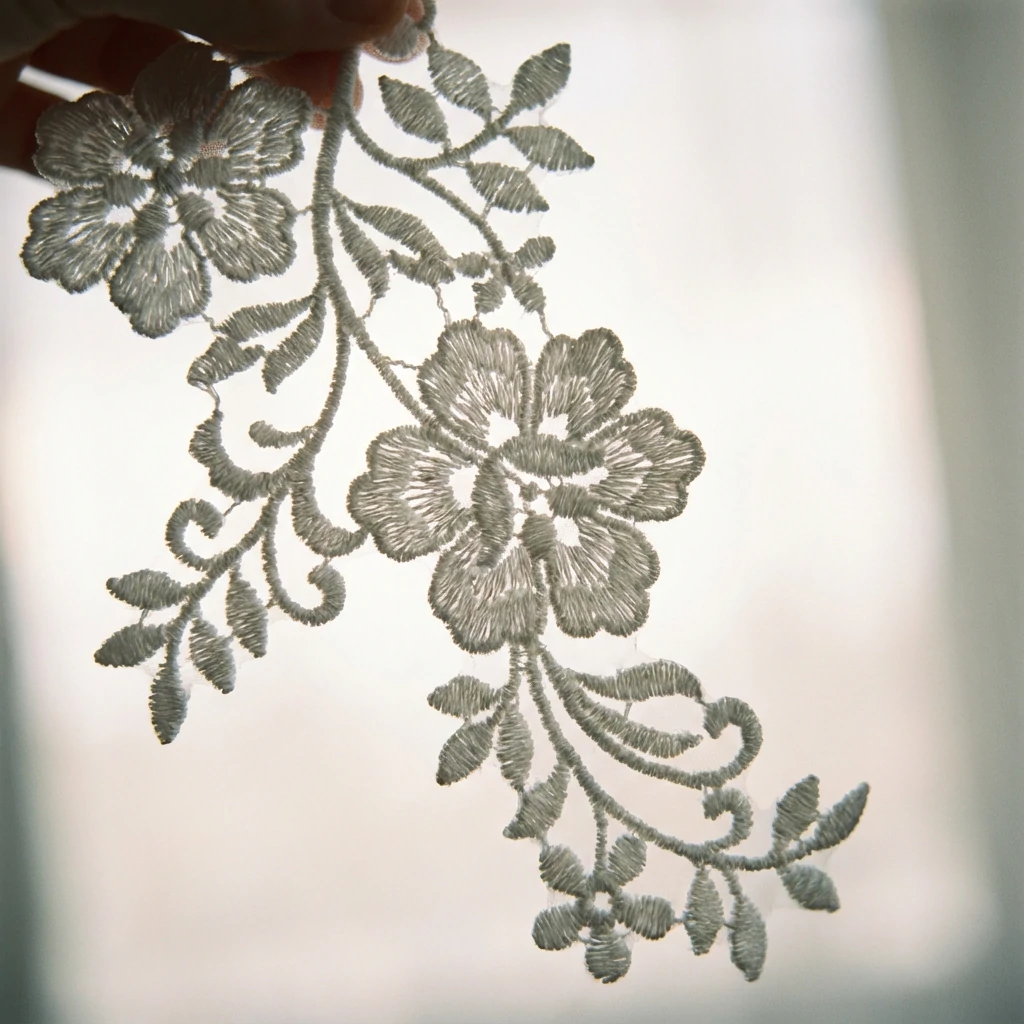
Guipure appliques are made by embroidering onto water-soluble fabric, then dissolving the base to leave only the thread pattern. The result: a raised, dimensional motif with no visible background.
This is the premium category. Without mesh or fabric behind the design, guipure appliques appear to float on the garment. Light passes through the negative spaces, creating an ethereal quality that photographs beautifully.
Best for: Bridal gowns, haute couture, high-end evening wear.
What to check: Stitch density determines durability. Look for reinforced connection points between design elements—weak bars mean the applique falls apart during handling or wear.
2. Embroidered Mesh Appliques
These appliques feature embroidered designs on a fine mesh or tulle background. The mesh remains part of the finished piece, providing structure while staying nearly invisible against skin or fabric.
The semi-transparent base makes mesh appliques more forgiving to apply. The mesh blends into the garment, so placement doesn’t need to be perfect. They’re also more affordable than guipure since the production process is simpler.
Best for: Lingerie, evening wear overlays, dancewear, garments where subtle transparency works.
What to check: Mesh color should match your base fabric. Ivory mesh on white fabric creates a visible shadow. Order samples against your actual materials before committing.
3. 3D Floral Appliques
Three-dimensional appliques add literal depth through layered construction, padded elements, or petals that lift off the surface. These are statement pieces designed to catch the eye.
The construction varies widely. Some use multiple fabric layers stacked and stitched. Others incorporate organza petals, beaded centers, or raised embroidery techniques. The best 3D appliques maintain their shape through handling, shipping, and garment construction.
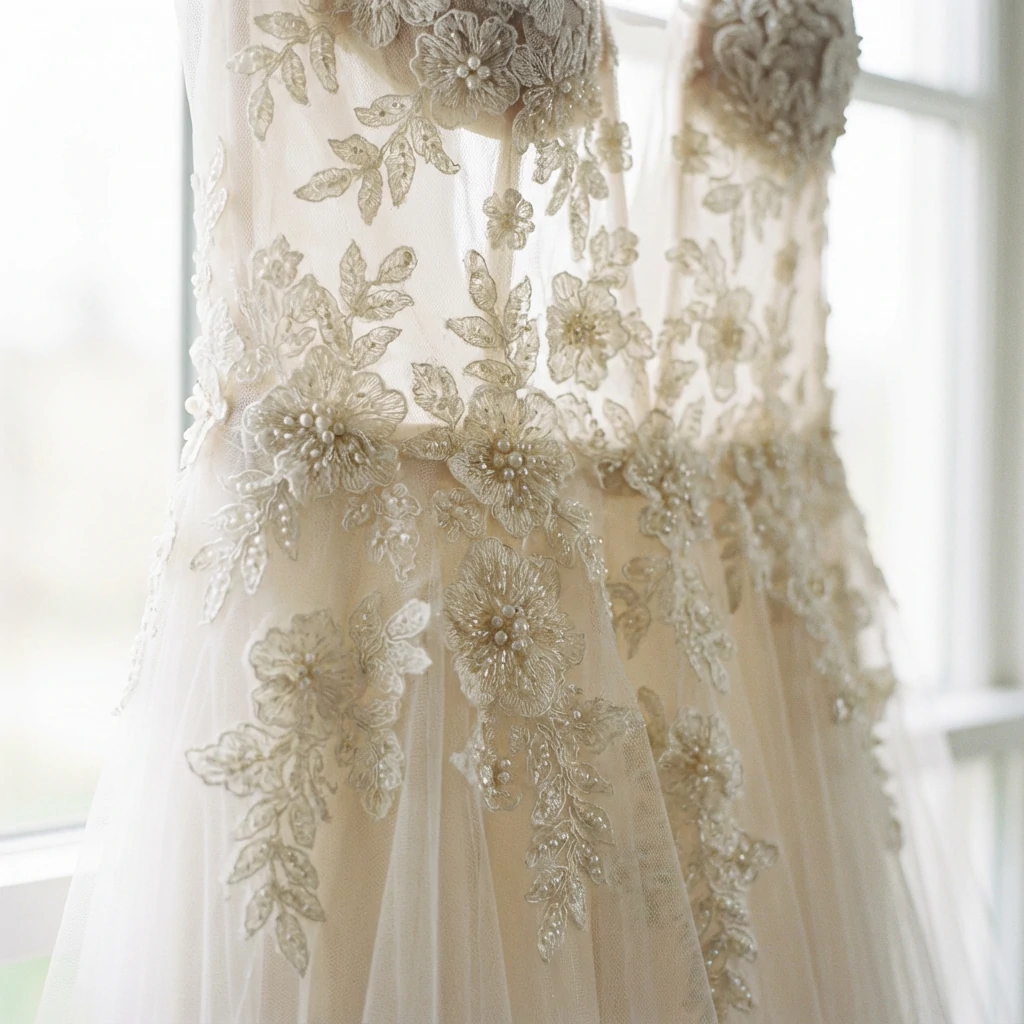
Best for: Bridal shoulder details, waist accents, anywhere you want a dramatic focal point.
What to check: Structural integrity matters more here than with flat appliques. Gently press the dimensional elements. They should spring back without permanent crushing. Ask suppliers about recommended handling during production.
4. Cotton Embroidered Appliques
Cotton-base appliques offer an opaque, substantial feel completely different from the delicate mesh varieties. The cotton ground shows as part of the design, creating a more casual, artisanal aesthetic.
These work where you want texture and visual interest without sheerness. The look reads as crafted and approachable rather than formal and delicate.
Best for: Children’s wear, casual apparel, boho styles, home textiles.
What to check: Edge finishing quality varies significantly. Poorly finished edges fray during application and wear. Look for clean-cut or sealed borders. Also verify colorfastness if the applique will be washed.
Quick Comparison
| Type | Background | Look | Price | Best Application |
|---|---|---|---|---|
| Guipure | None | Raised, floating | $$$$ | Bridal, couture |
| Mesh Embroidered | Semi-transparent | Soft, blended | $$ | Lingerie, evening wear |
| 3D Floral | Varies | Dramatic, dimensional | $$$ | Statement accents |
| Cotton Embroidered | Opaque | Casual, artisanal | $$ | Children’s, casual wear |
How to Source Quality Lace Appliques
Match Type to Application
Don’t choose appliques based on appearance alone. Consider the garment’s construction requirements, care instructions, and price point.
A guipure applique on a machine-washable casual dress makes no sense—you’re paying for quality that won’t survive the intended use. Likewise, cheap mesh appliques on a $3,000 wedding gown undercut the entire product.
Check Construction Quality
Three things separate quality appliques from disposable ones:
Stitch density. Higher density means cleaner design definition and better durability. Sparse stitching looks cheap and wears poorly.
Edge finishing. Edges should be clean and sealed, not fraying or rough. Run your finger along the border—any loose threads indicate corners were cut.
Connection points. For guipure and openwork designs, the bars connecting design elements need reinforcement. Weak connections break during handling.
Request Physical Samples
Photos don’t tell you how an applique feels, how it drapes, or how the colors actually read. Always request samples before production orders.
Test the samples under your actual conditions. Apply them to your fabric. Run them through your construction process. Check if they survive the handling they’ll face in production.
Clarify MOQ and Customization
Standard applique designs typically have lower MOQs than custom work. If you need modified sizes, colors, or patterns, expect minimum orders of 500-1,000 pieces or more.
Ask upfront about:
-
MOQ for existing designs vs. custom
-
Lead time for production
-
Color matching capabilities
-
Sample costs and policies
FAQs
What is a lace applique?
A lace applique is an individual decorative lace piece designed to be attached to fabric as an accent or focal point. Unlike continuous lace trim, appliques are standalone motifs—flowers, leaves, or patterns—placed at specific locations on a garment or textile.
How do you apply lace applique to fabric?
Three methods work depending on the application. Hand-sewing offers the most control and invisible attachment. Machine stitching works for production efficiency. Fabric adhesive or fusible webbing provides quick application for crafts or temporary placement. For garments, sewing remains the most durable option.
What’s the difference between lace applique and lace trim?
Lace trim is a continuous strip applied along edges. Lace applique is an individual piece placed anywhere on the fabric. Trim is sold by the yard; appliques are sold by the piece. They serve different design purposes and require different application techniques.
What type of lace applique is best for wedding dresses?