
Chapter 1: Global Lace Supply Chain Main Idea: Where the lace is made determines its price and quality limits.
-
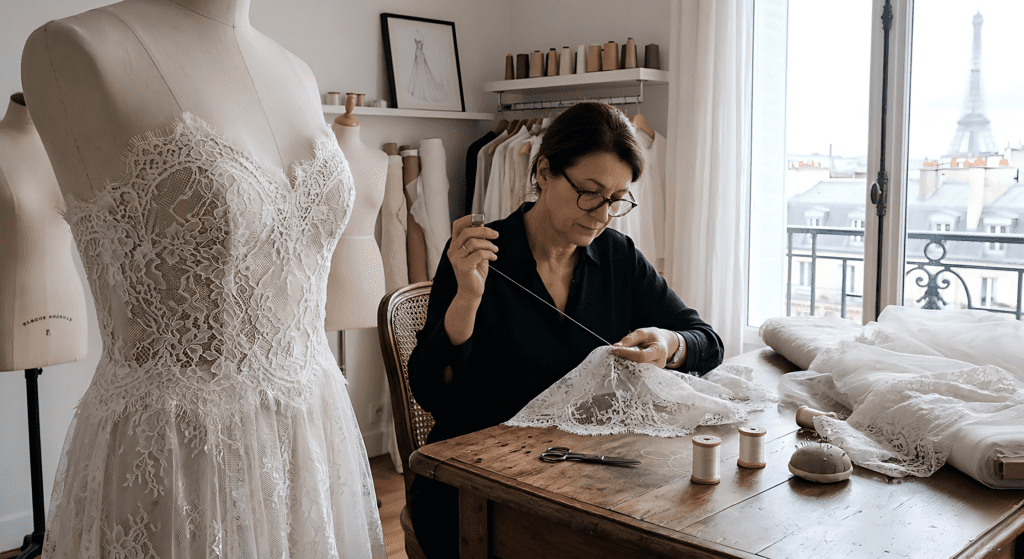
France (Top-Tier Lace):
-
Key Terms: Leavers looms, Eyelash Trim, high-end custom sewing.
-
Features: Very thin and light. It is best for luxury wedding dresses costing around $5,000.
-
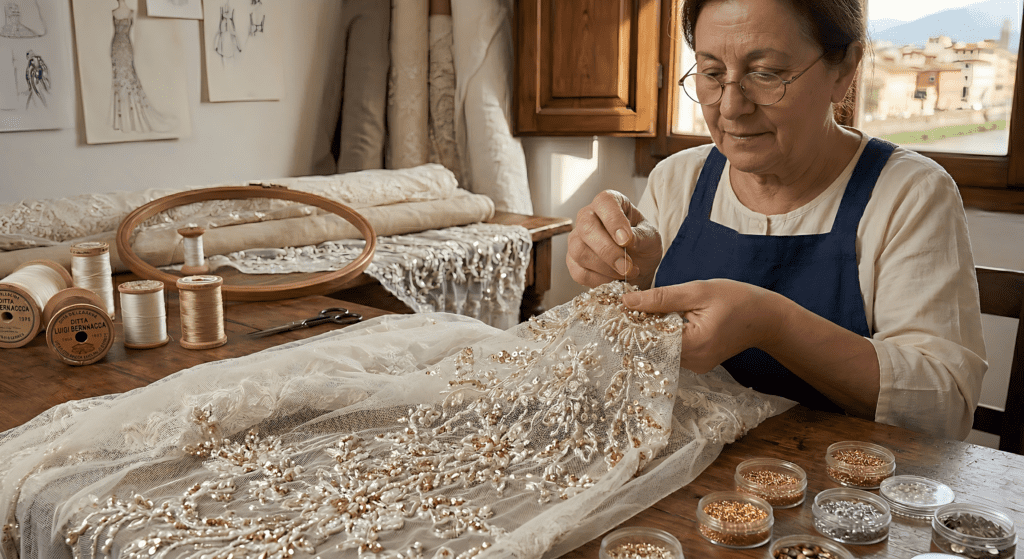
Italy (Embroidery Skills):
-
Key Terms: Embroidered Tulle, hand-sewn beads.
-
Features: Great at mixing shiny sequins with net fabric for a fancy, royal look.
-
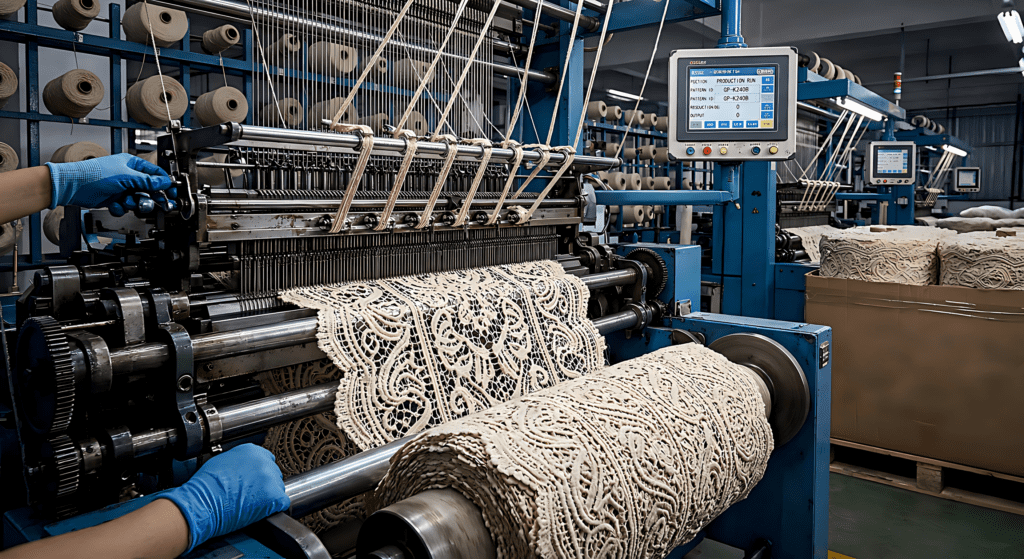
Asia (Factory Production):
-
Key Terms: Guipure lace, Raschel lace, good prices, bulk selling.
-
Features: Thick patterns and plenty of stock. It is perfect for ready-to-wear lines and online stores.
-
Why choose Yituo? We make 300,000 meters of lace daily, so we always have what you need. Our team can finish your custom samples in just 1 to 3 days.
[Check our ready stock and get your samples here to save time!]
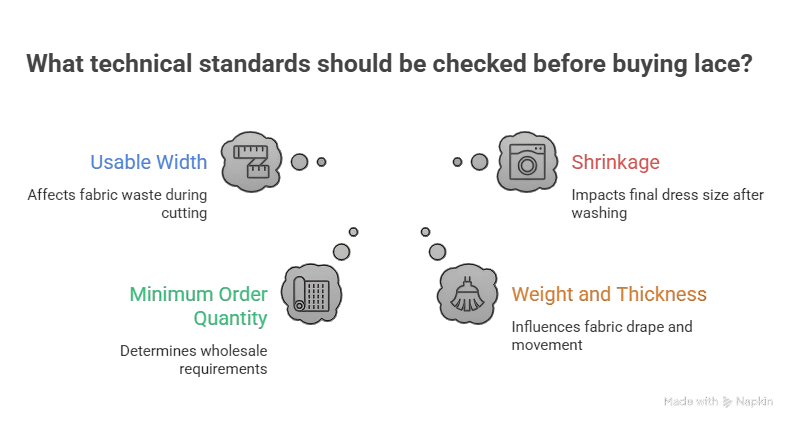
Chapter 2: Technical Checklist for Buyers Before buying large amounts of lace, professional buyers must check these four standards:
-
Usable Width: Usually 130cm to 150cm. This affects how much fabric is wasted during cutting.
-
Minimum Order Quantity (MOQ): Wholesalers usually require 50 to 100 meters per color. Custom shops should check for “in-stock” items.
-
Weight and Thickness: This decides how the dress hangs and moves (the “drape”).
-
Shrinkage: How much the lace shrinks after washing. This affects the final size of the dress.
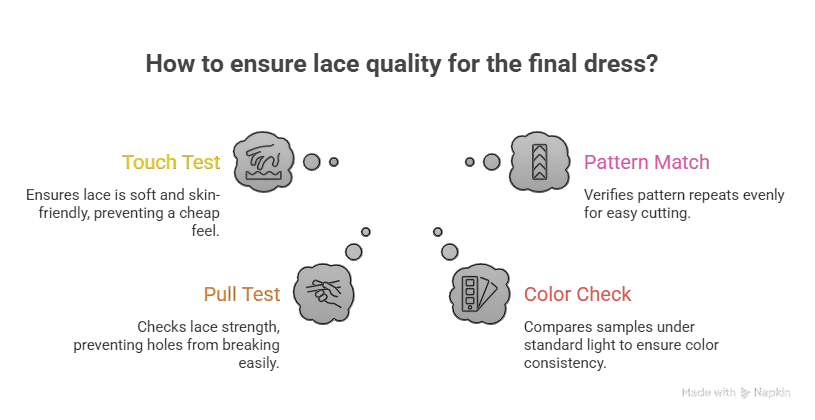
Chapter 3: Quality Check Standards for Businesses To make sure the lace looks perfect on the final dress, follow these four steps:
-
Touch Test (Skin-friendly): Lace must be soft and not itchy. If the edges feel rough, the dress will feel cheap.
-
Pull Test (Strength): Pull the net fabric gently to see if the holes break or change shape easily.
-
Color Check: Compare fabric samples under a standard light (D65). Ivory and White can look different in different batches.
-
Pattern Match: Check if the lace pattern repeats evenly so it is easy to cut matching left and right sides.
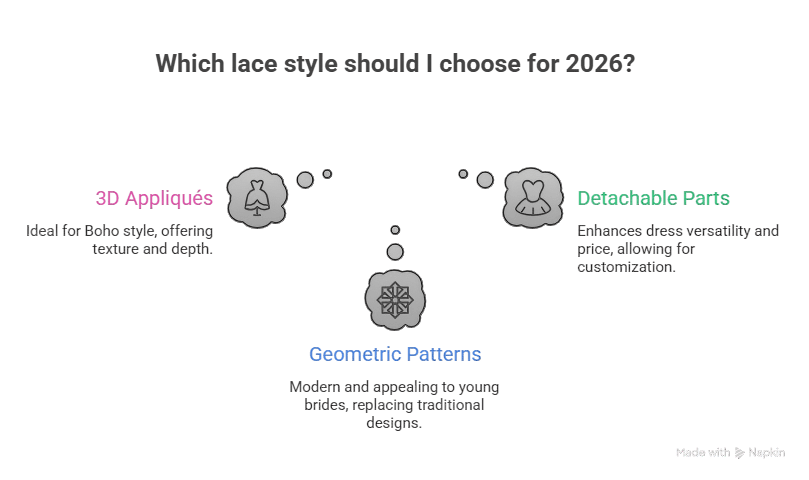
Chapter 4: Styles and Market Trends Market Insight: In 2026, buyers want lace that is “functional” and “3D.”
-
3D Appliqués: The most popular type right now. It is perfect for the “Boho” (Bohemian) style.
-
Geometric Patterns: Shapes like lines and circles are replacing old flower designs. Young brides love this modern look.
-
Detachable Parts: Using lace to make removable sleeves or capes. This helps sell dresses for a higher price.
Chapter 5: Storage and Maintenance Tips
-
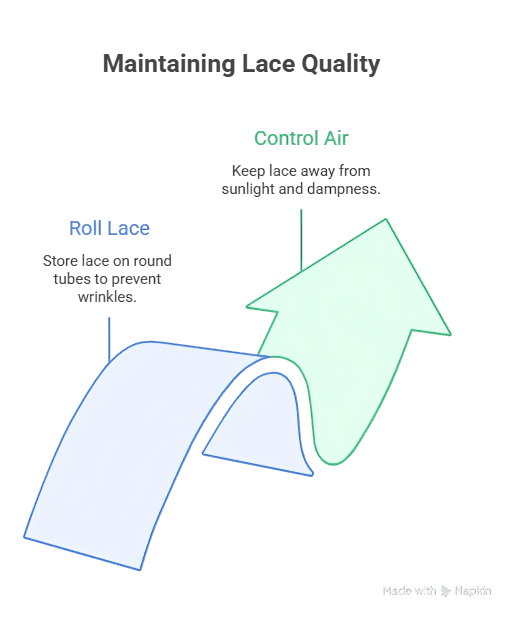
Roll It, Don’t Fold It: Lace should be kept on round tubes. Never fold it, or it will get permanent wrinkles.
-
Control the Air: Keep lace away from direct sunlight and damp places. This stops light-colored lace from turning yellow.
Chapter 6: Frequently Asked Questions (FAQ)
Q1: What is the main difference between French Leavers lace and Asian Raschel/Guipure lace?
French Leavers lace is very thin and light. It works best for top wedding dresses that cost over $5,000. Asian Raschel and Guipure lace has thicker patterns, steady quality, and lower prices. Many buyers pick Asian suppliers for bulk dresses and online shops because they offer the best value for the money.
Q2: What is the minimum order size for wedding lace, and can I get a small sample?
The standard order size is 2,000 meters, but we can lower this if we have the item in stock. You can order samples first to test the quality. Just ask us for our “Ready-to-Ship” colors to get your samples quickly!
Q3: How do I do the Touch Test and Pull Test?
Touch Test: Run your fingers over the edges and net. It should feel soft and not scratch your skin.
Pull Test: Gently pull the net. Good lace springs right back and the holes stay the same size. These two tests work especially well with lace from Asian suppliers because their quality stays steady.
Q4: How does lace shrinkage affect the size of the wedding dress? How can I stop problems?
Good lace usually shrinks 1% to 3% after washing or steaming. Many Chinese suppliers give clear shrinkage numbers. Add 2 to 3 extra centimeters when you cut. This keeps the dress fitting well.
Q5: What lace styles are most popular for Boho and modern weddings in 2026?
Right now, 3D appliqués and geometric patterns (straight lines, circles, and simple shapes) are the hottest. Many Asian factories can make these styles quickly. Removable lace sleeves, capes, and overlays are also popular because one dress can have many looks and sell for more.
Q6: How should I store lace rolls so they do not turn yellow or get permanent wrinkles?
Always roll the lace on a tube. Never fold it. Keep it in a cool, dry place away from sunlight. Many Chinese suppliers ship with good packing to make storage easy for buyers.
Q7: Is Italian embroidered tulle worth the extra money?
Italian lace is great if you sell to buyers who want a royal or luxury look. But most buyers and big orders still choose Asian Guipure lace. It has reliable quality, fast delivery, and the best price.