
Sequin lace fabric is delicate lace embellished with hundreds of small reflective discs that create sparkling visual effects. This guide provides a deep dive into its composition, varieties, performance properties, and maintenance, helping you make informed decisions for your projects.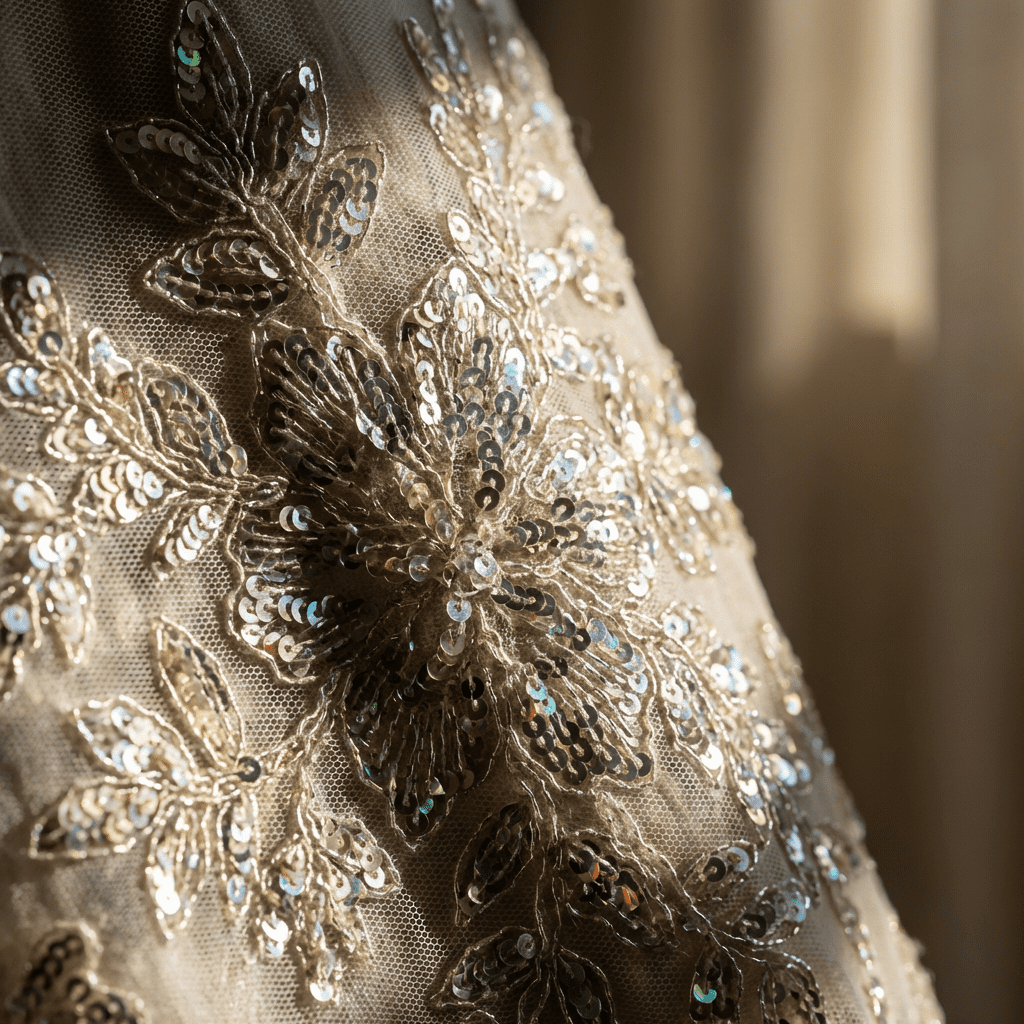
Origin and History of Sequin Lace
Ancient Roots The human fascination with “wearing light” is ancient. Sequins (historically called sequins) date back to 2500 BCE in Egypt as gold embellishments for royalty, intended to symbolize divinity. Meanwhile, lace emerged separately as a delicate luxury craft in 15th-century Europe, valued for its fragility and complex handwork.
The Historic Fusion These two traditions merged in the 19th century, when the Industrial Revolution enabled Parisian designers to sew metal spangles onto machine-made lace for evening wear. This innovation allowed fashion to move away from heavy embroidery, offering a new way to create shimmering garments that draped elegantly.
Modern Evolution Propelled by 1920s Hollywood glamour and the Flapper aesthetic, the fabric evolved from heavy metal to lightweight plastic. The invention of PVC (plastic) sequins in the 1950s revolutionized the industry, allowing for “all-over” sparkle without the weight. Today, the industry is shifting toward sustainable, biodegradable materials to address environmental concerns.
Common Materials Used in Sequin Lace
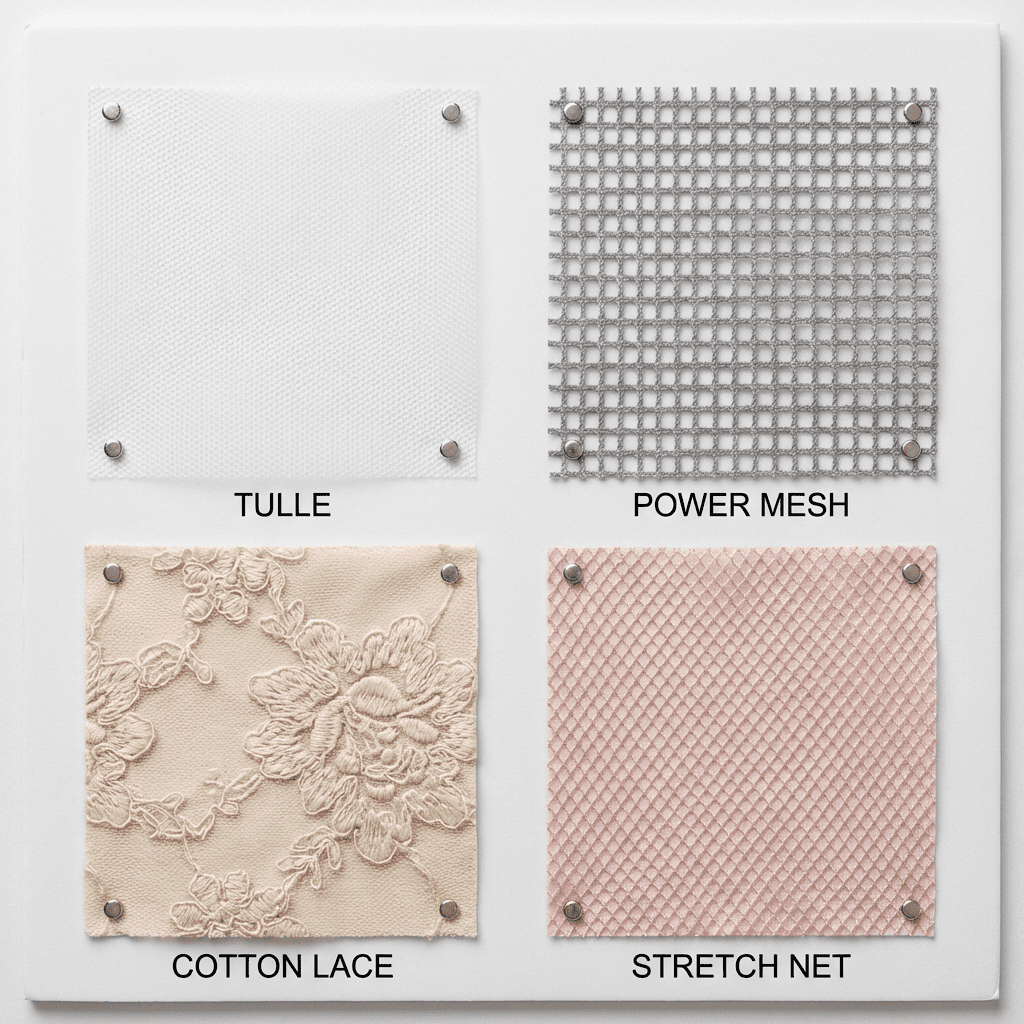
Base Fabric Materials
-
Tulle: The most popular foundation, featuring fine mesh with tiny hexagonal holes. Creates lightweight, translucent base that drapes elegantly—perfect for flowing gowns and bridal veils.
-
Mesh (Power Net): Features robust weave with larger openings and thicker threads resisting tearing. Performance costumes use mesh-based sequin lace because it withstands athletic movement.
-
Cotton Lace: Provides breathability and natural comfort for garments worn against skin. The absorbent nature makes it comfortable for extended wear in warm environments.
-
Stretch Net: Blends mesh with spandex (5-15%), creating base fabric that moves with your body. This revolutionized performance costume design by allowing sequined garments to fit without gaping or pulling.
Sequin Materials
-
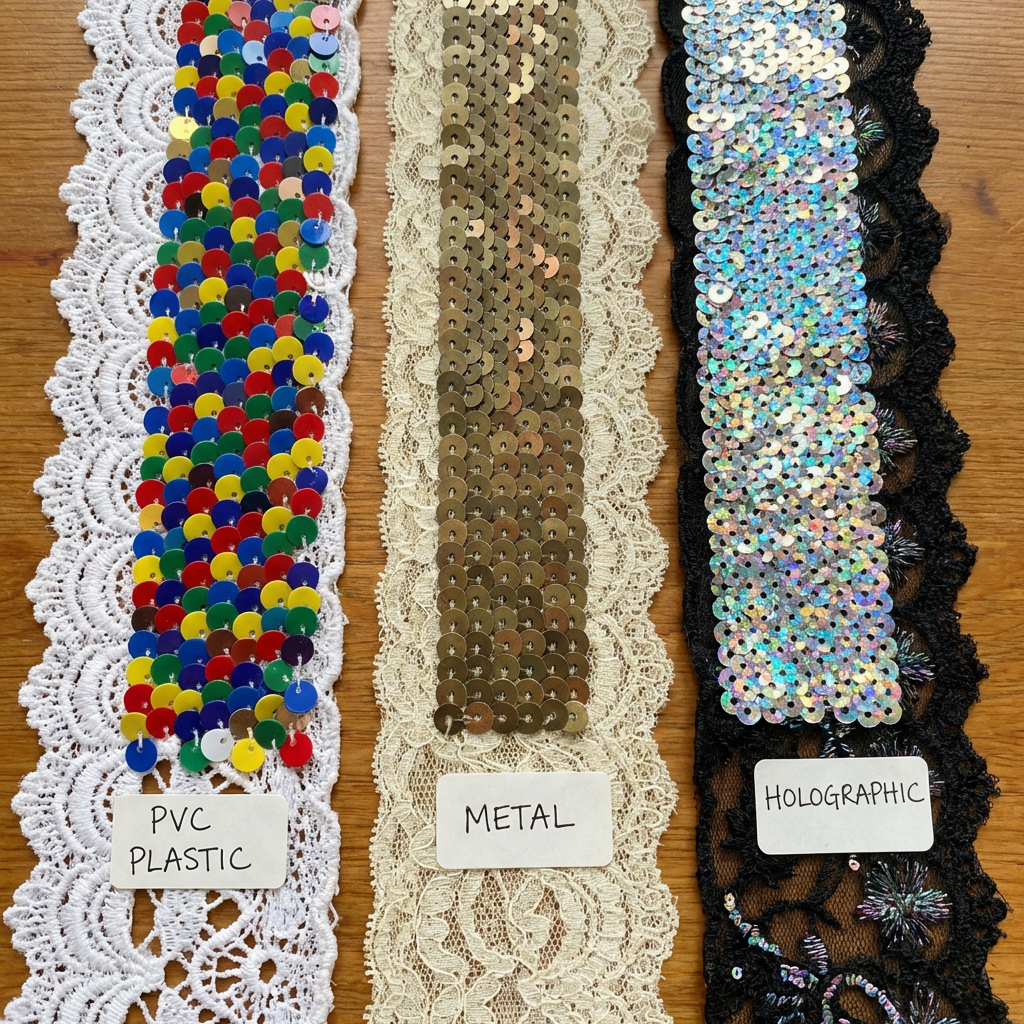
PVC Plastic: Most common, offering cost-effectiveness, light weight, and versatility. Manufacturers produce PVC sequins in any color with finishes from matte to high-gloss. These sequins are waterproof and maintain color well.
-
Metal (Brass/Aluminum): Brass develops warm vintage patina over time; aluminum stays bright indefinitely. Metal creates different drape and produces deeper, more complex shimmer that photographs beautifully.
-
Holographic Film: Multi-layered films diffract light into rainbow effects. These sequins shift through the spectrum as viewing angles change, creating mesmerizing effects under stage lighting.
-
Biodegradable PLA: Plant-based plastic derived from corn starch or sugarcane. PLA sequins look identical to traditional versions but break down in industrial composting facilities. They can’t handle heat as well—may warp if ironed directly.
Key Properties of Sequin Lace Fabric
Dynamic Light Reflection Unlike flat metallic threads, each sequin acts as an independent mirror. As the wearer moves, these discs catch light from various angles, creating a dancing sparkle that photographs beautifully.
Luxurious Textural Contrast The mix of soft lace and smooth, firm discs creates physical depth and tactile interest. This unique texture adds visual weight, making even simple garment silhouettes look expensive and high-end.
Variable Weight & Drape Options range from airy micro-sequins on tulle to heavy, overlapping “scale” designs. Heavily embellished fabrics drape differently and often require stronger linings to support the added weight.
Moderate Breathability While the mesh base is airy, the plastic sequins trap body heat. Heavily sequined garments are significantly warmer than plain lace, making them ideal for evening wear rather than hot daytime events.
Delicate Yet Durable Premium sequin lace is built to last, often withstanding significant wear. However, the threads holding the sequins are vulnerable to snagging on jewelry, which can cause chain-stitched rows to unravel.
Intensified Color Vibrancy Sequins reflect light and seal in pigment better than dyed cloth. This results in deeply saturated colors that resist fading, ensuring the garment remains vibrant for years.
Common Sequin Lace Fabrics & Applications
Bridal Sequin Lace
-
Fabric: Micro-Sequins (3-4mm) or Partially Sequined patterns on delicate mesh.
-
Use: Wedding gowns, veils, and overlays. Brides often prefer a glow rather than a glitter. This type creates a refined, glare-free sparkle that looks flawless in flash photography.
Evening Wear Fabric
-
Fabric: Fully Sequined or Standard Sequins (5-8mm) on a Rigid Base.
-
Use: Galas and cocktail dresses. The structured base holds complex silhouettes and supports heavy trains, while dense sequins maximize light reflection for red-carpet drama.
Performance Fabric
-
Fabric: Stretch Sequin Lace (with Spandex) and Large Sequins (10mm+).
-
Use: Dance costumes and stage outfits. The stretch offers unrestricted movement, while large sequins reflect spotlights effectively to be visible from the back row of a theater.
Party & Festival Wear
-
Fabric: High-saturation colors with heavy coverage (often large Paillettes).
-
Use: Club wear and music festivals. These are designed for durability and intense color vibrancy that pops on social media. The plastic surfaces are also easier to wipe clean after a crowded event.
Decoration & DIY
-
Fabric: Sequin Borders and Trims.
-
Use: Table runners, pillows, and clothing alterations. Designers use this as an affordable way to add luxurious texture and tactile interest without the bulk or cost of purchasing full yardage.

Care and Maintenance of Sequin Lace Fabric
-
Turn Inside Out: Always turn garments inside out before washing or ironing to protect the sequins from friction and snagging.
-
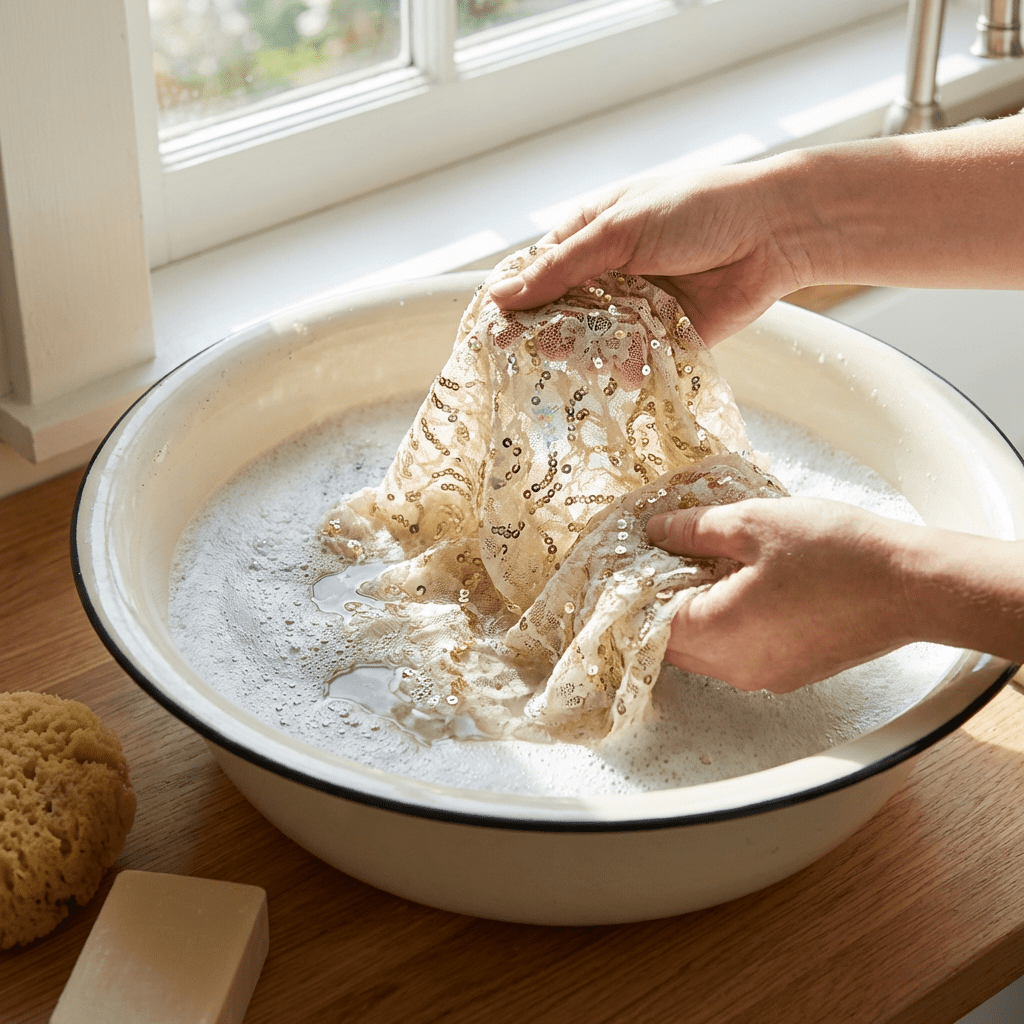
Gentle Washing: Hand wash in cold water is best. If machine washing is necessary, use a fine-mesh laundry bag on the delicate cycle.
-
No Heat Drying: Never tumble dry. Heat can warp plastic sequins and shrink the base. Lay flat on a towel to air dry.
-
Iron with Caution: Iron only on the reverse side using the lowest heat setting and a pressing cloth.
-
Smart Storage: Store on padded hangers or fold with tissue paper between layers. Keep away from jewelry or rough surfaces that cause snags.
FAQs About Sequin Lace Fabric
Q: Does sequin lace fabric stretch? A: Only if it contains Spandex (Elastane). Check the label: “Mesh” usually means rigid, while “Stretch Lace” offers flexibility for fitted garments.
Q: Can I put sequin lace in the washing machine? A: Only if the care label permits. If yes, turn inside out, use a mesh bag, cold water, and the delicate cycle. Never use the dryer.
Q: Why is my sequin dress scratchy? A: It’s often due to sharp edges on cheaper sequins. High-quality sequins have rounded edges. A soft lining is the best fix for comfort.
Q: Do sequins fall off easily after washing? A: Quality matters. Lock-stitched sequins are durable, while chain-stitched ones can unravel if a thread breaks. Always use a mesh bag and gentle cycle to prevent thread breakage.
Q: How do I remove wrinkles without melting the sequins? A: Avoid direct ironing. The safest method is to steam from the inside (reverse side) of the garment, or hang it in a steamy bathroom to gently relax the fabric.
Q: Can I dry clean sequin lace?