
What Is White Elastic Lace?
White elastic lace is a knitted textile engineered by integrating elastane yarns directly into the lace structure. Unlike traditional rigid lace, it stretches naturally with the wearer’s movements and returns to its original silhouette. The industry standard is nylon spandex lace construction, which keeps the finished material lightweight, breathable, and soft against bare skin.
Traditional lace was historically used for visual appeal. It looked elegant but often felt stiff, irritated sensitive skin, and distorted after repeated washing. Modern stretch lace fabric behaves differently. It moves with the body, maintains stretch recovery, and gives designers the structural freedom to build garments that marry physical comfort with high-end aesthetics. This distinct functionality explains why white elastic lace now dominates bridal fashion, loungewear, fashion layering, and fitted apparel.
Why White Elastic Lace Became a Major 2026 Trend
Several market shifts are driving the demand for elastic lace lingerie and flexible bridal applications in 2026.
Comfort Has Become a Luxury Standard
Consumers refuse to separate comfort from premium fashion. A lace bralette or bridal gown must feel soft enough for extended wear. White elastic lace solves this design challenge because the material itself stretches, eliminating the need for stiff mesh backings or restrictive tailoring. This flexibility is necessary for the development of wireless bras, soft bridal corsets, and lightweight shapewear, where material yield dictates wearability.
Minimalist Bridal Fashion Is Growing
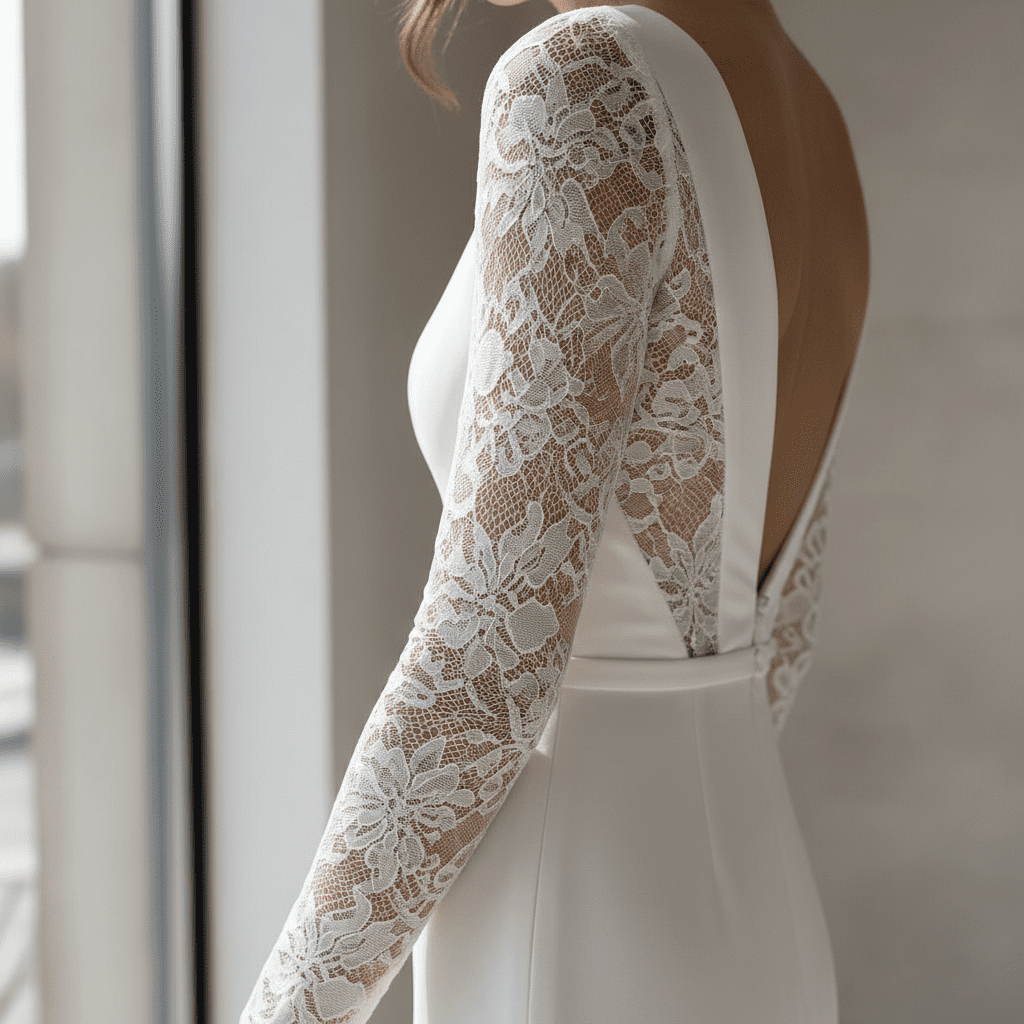
Heavy, multi-layered bridal gowns are making way for lighter silhouettes. Bridal designers focus on sheer overlays, fitted lace sleeves, body-contouring side panels, and breathable lace structures. Because stretch lace fabric conforms naturally to body biomechanics, brides can move and travel with more ease compared to those wearing traditional rigid lace garments. The result is a softer bridal look that preserves the romantic appearance expected of modern wedding attire.
Layering Trends Continue to Expand
Layering techniques define current ready-to-wear collections. White lace camisoles under structured blazers, lace-trimmed tank tops, transparent illusion lace sleeves, and full-lace bodysuits appear frequently across global markets. White elastic lace supports this trend because it maintains its structural shape and pattern definition without adding bulk to the wearer’s silhouette.
How White Elastic Lace Is Made
Understanding the production process helps buyers evaluate material quality accurately when navigating the white lace wholesale market.
Nylon and Elastane Yarn Selection
Premium nylon spandex lace relies on nylon as the foundational yarn, combined with elastane for stretch recovery. Nylon delivers a smooth hand feel, high tensile strength, sharp floral patterns, and long-term abrasion resistance. Elastane introduces stretchability, recovery performance, and shape retention. The precise balance between these yarns determines whether the lace feels supportive, lightweight, or overly loose. High-quality white elastic lace maintains elasticity without causing the lace motifs to warp during stretch.
Warp Knitting Technology
High-end elastic lace lingerie materials are crafted on Raschel warp knitting machines. Elastane yarns are fed into the lace structure under strictly controlled tension. Poor tension control leads to curling fabric edges, uneven stretch recovery, twisting during sewing, and shape instability after washing. Well-engineered stretch lace fabric remains flat and stable across its entire lifecycle.
Bleaching and Optical Whitening
Producing a true shade of white lace requires strict technical control. Factories manage bleaching temperatures, chemical balance, and optical whitening treatments. Inferior whitening results in lace with yellow undertones or an artificial blue tint under natural daylight. Professional mills evaluate white elastic lace under standardized lighting to guarantee color consistency across bulk production batches.
Heat Setting and Finishing
After knitting and dyeing, the lace undergoes a heat-setting process to stabilize the fabric structure and lock in elasticity. Proper finishing improves dimensional stability, edge smoothness, wash durability, and stretch recovery. This final stage dictates exactly how the lace behaves on the cutting table.
White Elastic Lace vs Traditional Lace
The biggest difference between traditional lace and modern spandex lace is functionality.
| Feature | Traditional Lace | White Elastic Lace |
|---|---|---|
| Stretch | Very limited | High elasticity |
| Comfort | Often rigid | Soft and flexible |
| Recovery | Weak | Excellent |
| Wash durability | Easily distorted | Holds shape well |
| Skin feel | Can feel rough | Smooth and breathable |
| Garment use | Decorative only | Structural + decorative |
This is why white elastic lace is replacing rigid lace in many commercial fashion categories.
Designers no longer want lace that only looks beautiful on hangers. They need lace that performs in real-world wear conditions.
Main Applications of White Elastic Lace in 2026
Elastic Lace Lingerie
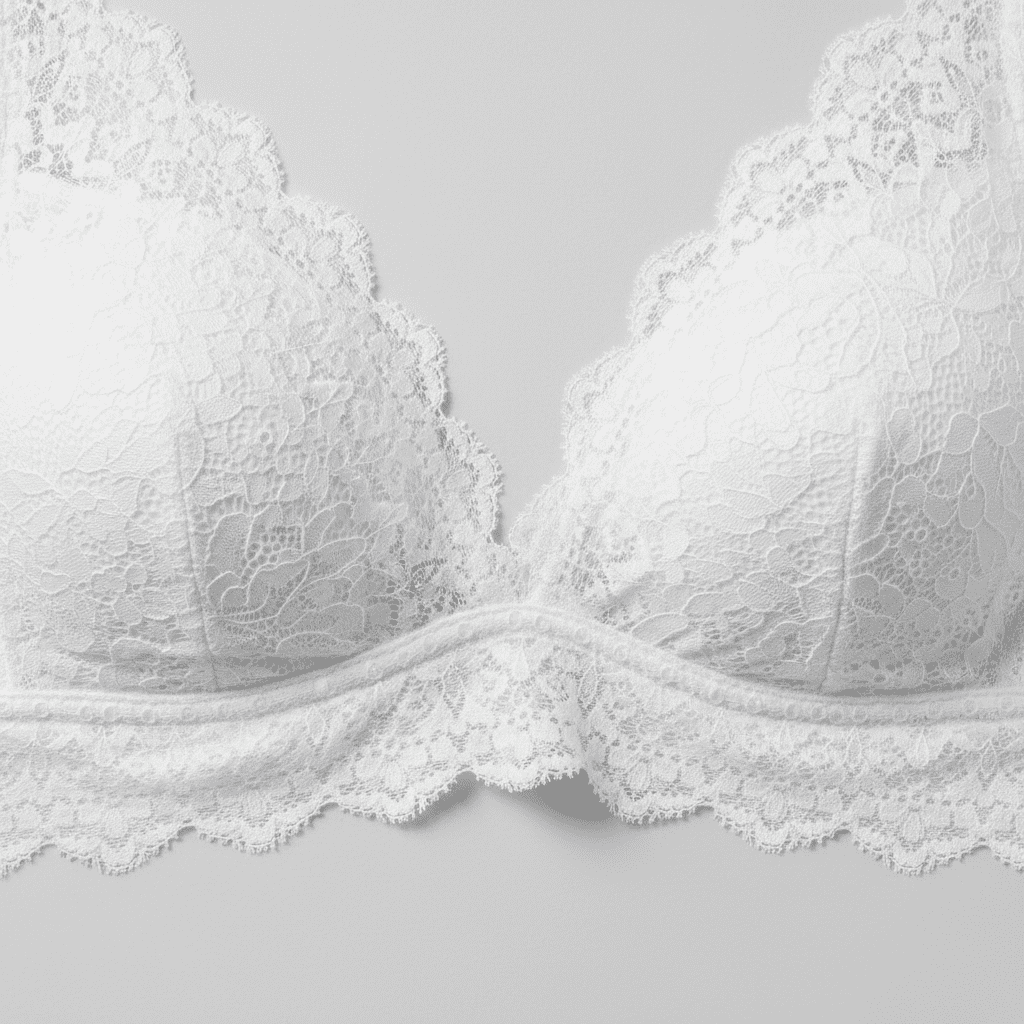
Intimate apparel is the dominant category for this textile. Modern bralettes, wireless bras, bodysuits, panties, and soft shapewear depend on stretch lace fabric because it adapts intuitively to body movement. Consumers prefer elastic lace lingerie because it creates a tailored silhouette without exerting pressure or causing discomfort.
Bridal Lace 2026 Collections
Wedding dress designers utilize white elastic lace to create sleeve panels, corset overlays, lace trains, sheer bodice inserts, and lightweight veils. The softer recovery of nylon spandex lace allows modern bridal garments to appear elegant while remaining practical for extended wear.
Loungewear and Fashion Layering
Sleepwear and loungewear now require elevated materials. White lace wholesale suppliers see high demand from brands developing lace-trimmed silk robes, camisoles, and lounge sets. Similarly, stretch lace fabric serves as a staple in everyday fashion for lace tank tops, sheer layering blouses, and neckline trims. Because white elastic lace is lightweight, it is the standard material for spring and summer fashion.
Maternity and Sensitive-Skin Apparel
The soft recovery and reduced surface pressure provided by spandex lace make it suitable for maternity garments and sensitive-skin apparel. Buyers prioritize sourcing OEKO-TEX lace certified to meet global safety standards for garments that sit directly against the body.
How to Identify High-Quality White Elastic Lace
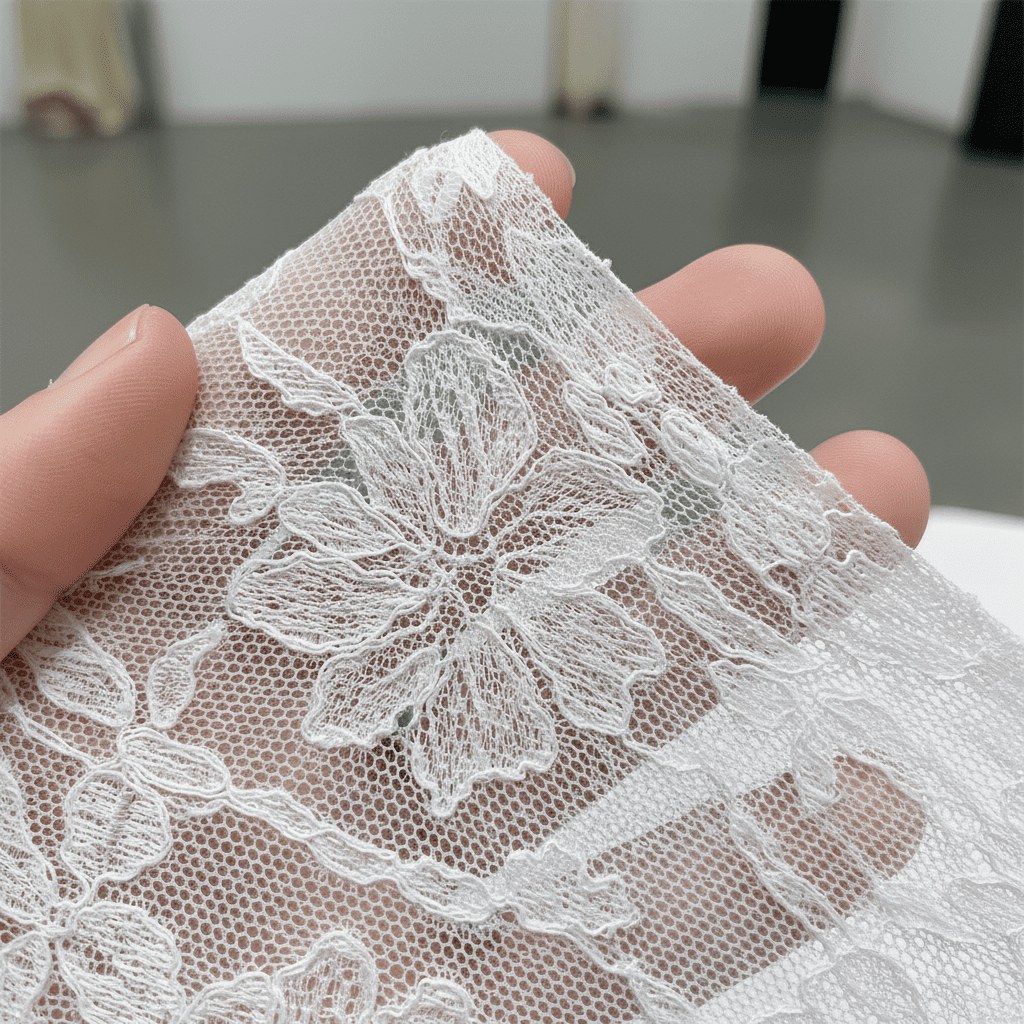
Not all white lace wholesale products perform equally on the cutting table. Buyers must evaluate more than visual appearance. Premium white elastic lace exhibits smooth recovery immediately after stretching; weak recovery indicates poor elastane quality or inadequate heat-setting. Higher-end lace displays clean floral outlines, balanced motifs, and structurally stable scalloped edges, whereas inferior options suffer from irregular yarn loops. Quality stretch lace fabric feels soft while maintaining structural integrity. Buyers must also demand consistent whiteness, as uneven whitening causes visible variations between production lots. For lingerie, prioritizing OEKO-TEX lace certification is expected by global brands to guarantee the lace complies with restricted chemical standards.
Sourcing White Elastic Lace in 2026
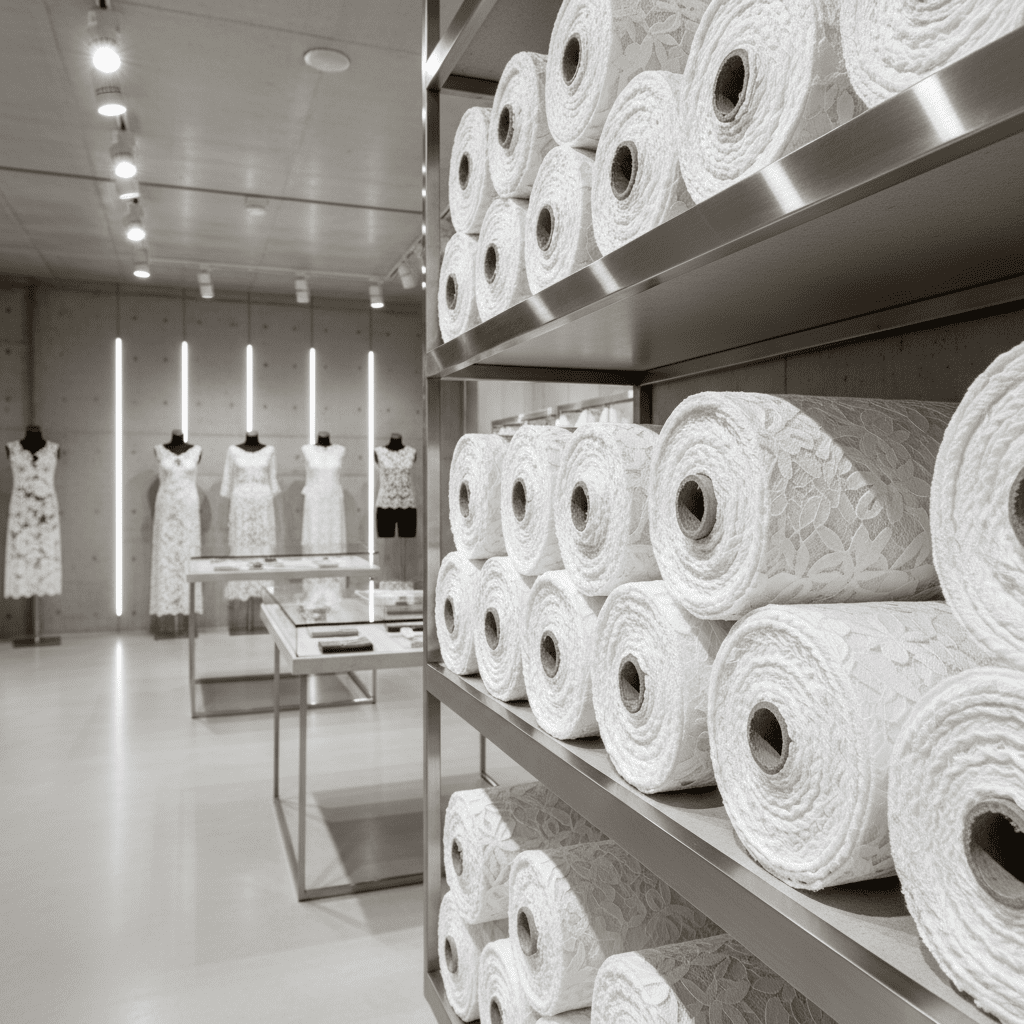
Professional buyers focus on a factory’s technical specialization rather than hunting for the lowest price. When evaluating suppliers in the white lace wholesale market, buyers request physical fabric swatches to evaluate color under natural daylight, alongside stretch recovery testing data and post-wash test samples. Thorough buyers require official certification documents, such as OEKO-TEX standard certificates, and ask for bulk production references. A capable manufacturing partner explains yarn compositions, elasticity behavior, and finishing processes. For emerging fashion brands, sourcing stock patterns is a practical approach before investing in custom lace development.
Care Tips for White Elastic Lace
Educating the consumer on proper garment care extends the lifespan of elastic lace lingerie and bridal garments. Garments should be washed in cold water utilizing a mild detergent. Placing delicate lace pieces inside protective mesh laundry bags prevents snagging during the wash cycle. After washing, the lace should air dry naturally. Exposing spandex fibers to the heat of a tumble dryer or direct UV sunlight breaks down the elastane, destroying the fabric’s stretch recovery. Properly maintained premium white elastic lace retains its softness, brightness, and structural elasticity.
FAQs
Does white elastic lace lose elasticity over time? High-quality nylon spandex lace maintains its stretch and recovery well when properly washed and stored. Exposure to high heat through machine drying is the primary cause of elasticity loss.
Is stretch lace fabric suitable for bridal dresses? Yes. The bridal lace 2026 trends favor lighter, highly stretchable lace structures. These fabrics improve physical comfort and freedom of movement while maintaining the elegant appearance required for wedding attire.
Why is nylon spandex lace preferred over polyester lace? Nylon provides a softer hand feel against the skin. It offers better durability, yields cleaner pattern definitions during knitting, and delivers improved elasticity compared to rigid polyester.
Is OEKO-TEX lace important for lingerie? Yes. OEKO-TEX lace certification guarantees that the textile has been tested and verified to be free from restricted harmful substances, ensuring it is safe for direct skin contact.
Can small brands source white lace wholesale in smaller quantities?