
Published by Senior Textile Consultant & SEO Strategist | 2026 Industry Report
Quick Navigation
- 1. Deep Definition & Design Anatomy of the Lace Trim Babydoll Blouse
- 2. Technical Material & Specification Comparison
- 3. B2B Quality Inspection Standards for Commercial Production
- 4. Care & Maintenance Protocol for High-End Lace Garments
- 5. 2026 Trend Forecast: The Evolution of Babydoll Aesthetics
- 6. B2B Sourcing FAQ
1. Deep Definition & Design Anatomy of the Lace Trim Babydoll Blouse
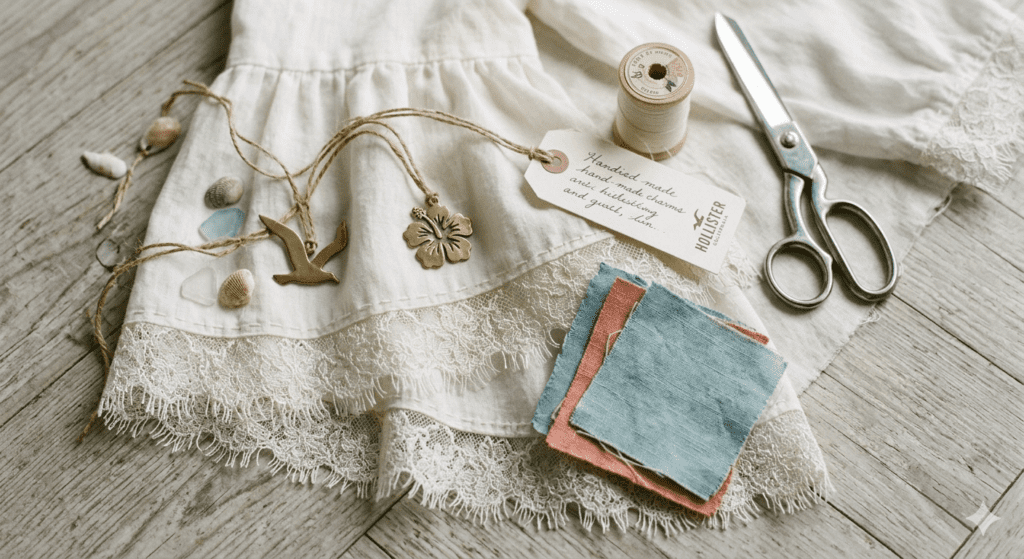
The lace trim babydoll blouse inspired by the signature Hollister aesthetic has evolved from a niche California-casual staple into a global commercial powerhouse. Defined by its empire waistline, flared lower bodice, and strategic lace integrations, this garment merges youthful romance with modern wearability. For apparel brands and volume fashion buyers, understanding its structural anatomy is critical to managing manufacturing expectations and cost margins.
Typically, the blouse utilizes lightweight woven or knit fabrics (such as cotton voile, rayon, or soft poly-blends) to achieve its iconic flowy drape. The integration of delicate lace trims along the V-neckline, under-bust seams, and sleeve cuffs elevates the garment’s perceived market value. To execute these delicate designs seamlessly, finding a reliable lace trim supplier is essential. This ensures the foundational lace materials possess the necessary tensile strength, aesthetic consistency, and wash-fastness required for modern commercial machinery.
2. Technical Material & Specification Comparison
Selecting the correct lace substrate directly dictates the drape, skin comfort, and ultimate retail price point of the babydoll blouse. Below is a comprehensive engineering matrix comparing common industrial lace options utilized by major apparel retailers:
| Lace Base Type | Composition | Weight (GSM) | Best Suited For… | B2B Sourcing Profile |
|---|---|---|---|---|
| Eyelash Chantilly | 100% Nylon / Polyamide | 35 – 55 | Necklines & Premium bridal lace trim alternatives | High cost, ultra-delicate tactile finish |
| Guipure / Chemical | 100% Polyester / Rayon | 90 – 140 | Structural waist inserts & structural panels | Excellent stability, highly customizable |
| Crochet / Cluny | 100% Cotton | 70 – 110 | Boho-chic, casual Hollister-vibe hemlines | Eco-friendly appeal, medium cost |
| Raschel Lace | Nylon-Spandex Blend | 45 – 75 | Stretchy sleeve bands & comfortable side-seams | Optimized for wholesale lace trim volume production |
When scaling production, generic options often fall short of meeting brand-specific pattern scales. Savvy designers regularly opt for a custom lace trim solution. Developing custom lace widths and motifs ensures that the finished babydoll blouse perfectly aligns with the targeted dimensions of regional sizing charts without disrupting the repeat pattern of the textile machinery.
3. B2B Quality Inspection Standards for Commercial Production
To prevent costly product recalls and compliance penalties, quality assurance managers must implement rigid standard operating procedures (SOPs) during the cut-and-sew phases. The following checklist outlines critical inspection benchmarks for lace-trimmed apparel:
- Tensile & Seam Strength: Ensure the attachment point between the body fabric and the lace trim withstands a minimum pull force of 15-20 lbs (depending on target demographic regulations, e.g., children vs. adults).
- Symmetry and Pattern Matching: Left-to-right alignment across the chest panel must not deviate by more than 2mm. The raw pattern edges must be locked to prevent unraveling.
- Chemical Compliance & Colorfastness: Lace components must achieve a minimum rating of Grade 4 in colorfastness to washing and perspiration, complying fully with REACH or CPSIA standards regarding azo dyes and heavy metals.
- Shrinkage Variance: Since lace and body fabrics shrink at different rates, samples must undergo a 3-cycle commercial wash test to ensure structural puckering along the seams remains below 1.5%.
Evaluating these metrics prior to signing bulk manufacturing contracts requires physical verification. Brands are strongly encouraged to request free lace trim samples to conduct rigorous in-house laboratory wash and wear testing before mass deployment.
4. Care & Maintenance Protocol for High-End Lace Garments
⚠️ Essential Care Guide for Garment Labels & Consumer Instructions:
Because babydoll blouses feature lightweight fabrics fused to highly intricate lace webbings, end-user care labels should mandate hand-washing or the utilization of a protective mesh laundering bag. Exposure to raw zippers or Velcro in high-rpm domestic washing machines remains the leading cause of consumer returns due to lace snagging.
For industrial pressing during packaging, the lace components should be steam-ironed exclusively on the reverse side under low-temperature parameters (under 110°C / 230°F for nylon configurations) to prevent synthetic fiber melting and preserve the soft, tactile finish consumers expect from fast-fashion premium lines like Hollister.
5. 2026 Trend Forecast: The Evolution of Babydoll Aesthetics
As we move through 2026, the traditional lace trim babydoll blouse is experiencing a series of technical and design revolutions driven by shift-conscious consumers and advanced manufacturing techniques:
- 3D Dimensional Embroidery: Moving beyond flat overlays, modern fast-casual designs incorporate multi-layered lace trims that create striking tactile depths along the empire waistline, appealing heavily to Gen-Z visual preferences.
- Next-Generation Sustainable Materials: With global regulatory emphasis on circular textiles, major brands are shifting completely to GRS-certified (Global Recycled Standard) recycled nylon and organic biodegradable cotton bases for lace edgings.
- Subtle Metallic Core Weaves: Integrating ultra-fine, non-scratchy metallic lurex threads into traditional floral lace patterns offers a subtle shimmer that allows the blouse to pivot gracefully from casual daywear to evening festive attire.
6. B2B Sourcing FAQ
Q1: What is the typical MOQ for custom lace trim development?
A: For bespoke patterns engineered specifically to your design metrics, standard MOQs hover around 3,000 to 5,000 yards depending on width. However, flexible manufacturers can accommodate lower test batches if existing base machinery frameworks match your pattern pitch.
Q2: How do you prevent lace trimming from scratching the skin at high friction areas?
A: We recommend selecting a blend with soft-spun multi-filament yarns or incorporating a post-weaving chemical softening wash (such as a silicone finish). Alternatively, placing a micro-mesh backing strip behind the lace layer prevents direct skin friction completely.
Q3: How do you solve lead-time delays during high-season garment manufacturing?
A: By sourcing from direct vertical factories with independent dyeing houses, you bypass third-party trading delays. Getting pre-approved design templates finalized during off-peak quarters ensures rapid deployment when regional sewing lines spin up.