
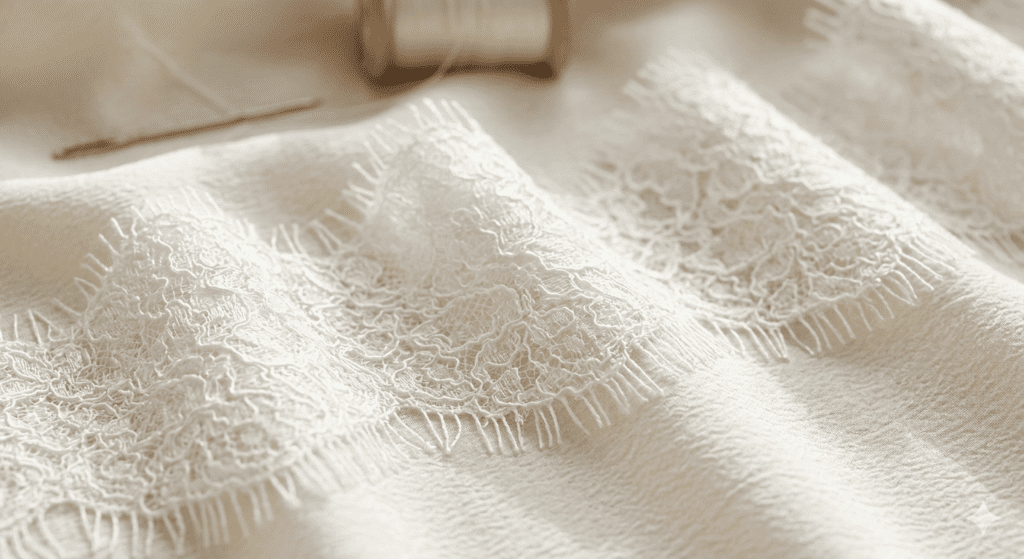
Discover how bridal designers can source premium wholesale lace trims with superior craftsmanship, sustainable materials, and scalable factory production for luxury wedding collections in 2026.
What Is Wholesale Lace Trim?
Wholesale lace trim refers to decorative lace materials manufactured and supplied in bulk quantities for bridal ateliers, garment factories, fashion brands, and textile distributors. In bridal fashion, lace trim plays a critical role in creating elegant wedding dresses through texture, embroidery, and couture-inspired detailing.
Modern bridal designers increasingly prefer working with a professional
lace trim supplier
that can provide stable production capacity, fast lead times, and premium embroidery quality for seasonal bridal collections.
The global market for
wholesale lace trim
now includes Chantilly lace, guipure lace, beaded lace, embroidered tulle lace, eyelash lace, and eco-friendly recycled lace options. Bridal designers often combine multiple lace textures to achieve layered luxury aesthetics.
Premium
bridal lace trim
helps fashion brands elevate gown collections while maintaining the delicate softness and intricate embroidery patterns expected in high-end wedding apparel.
Popular Bridal Lace Trim Types for Designers
- Chantilly Lace: Lightweight floral lace ideal for romantic veils and luxury bridal sleeves.
- Guipure Lace: Heavy textured lace without mesh backing, perfect for structured gowns and statement bodices.
- Beaded Embroidery Lace: Premium hand-sequined lace commonly used in haute couture wedding dresses.
- Eyelash Lace: Delicate fringe edges designed for feminine bridal details and lingerie-inspired silhouettes.
- 3D Floral Lace: Multi-layer floral appliqué lace becoming highly popular in 2026 bridal collections.
Many luxury bridal brands now request
custom lace trim
services to create exclusive floral motifs, personalized embroidery placements, and signature bridal aesthetics that differentiate them from competitors.
Technical Comparison Table
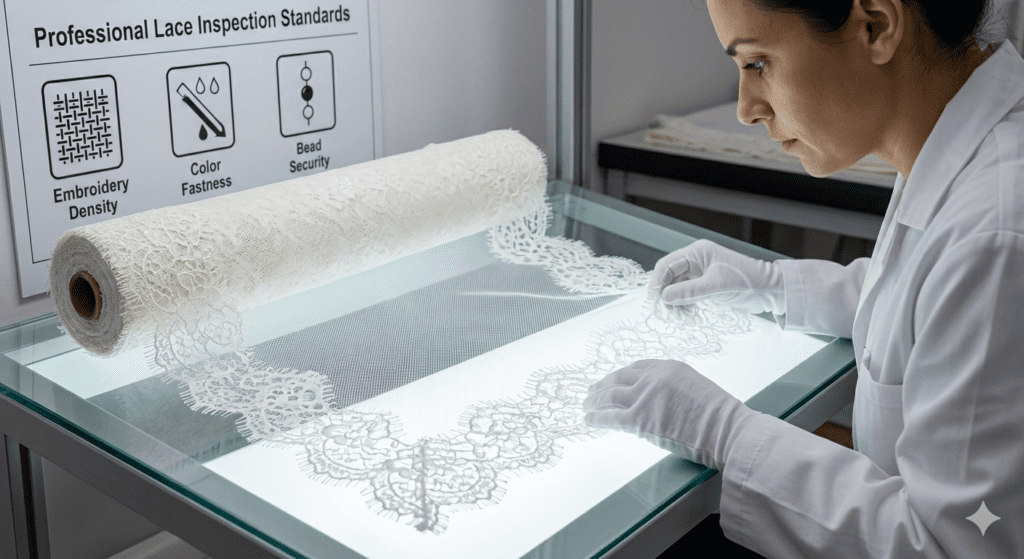
Professional Quality Inspection Standards for B2B Buyers
Bridal designers and wholesalers should implement strict quality control procedures before placing large-scale orders. Professional lace inspection typically includes:
- Embroidery Density: Ensure consistent stitch count without loose threads or skipped embroidery.
- Color Fastness: Verify resistance against washing, steaming, and light exposure.
- Symmetry Accuracy: Floral motifs must remain balanced across repeating patterns.
- Fabric Stability: Lace backing should not deform during cutting or sewing.
- Bead Security: Sequins and beads must pass pull-strength testing.
- Roll Consistency: Bulk orders should maintain identical width and dye lots.
Experienced bridal manufacturers often request
2026 Bridal Lace Industry Trends
The global bridal lace market continues evolving toward sustainability, customization, and visual innovation. Here are the biggest trends shaping bridal collections in 2026:
- 3D Embroidered Florals: Raised floral appliqué creates luxury dimensional effects on wedding gowns.
- Eco-Friendly Lace Materials: Recycled polyester mesh and biodegradable embroidery threads are increasingly requested by eco-conscious bridal brands.
- Metallic Lace Finishes: Gold and silver metallic embroidery add runway-inspired glamour.
- Transparent Layering: Illusion tulle combined with soft lace motifs remains highly popular for minimalist bridal aesthetics.
- Digital Lace Development: CAD embroidery design software allows rapid prototyping and precision customization.
Forward-thinking bridal designers increasingly collaborate with manufacturers offering
custom lace trim
development to create exclusive seasonal collections with unique embroidery identities.
Care & Maintenance Recommendations
Proper handling and storage significantly improve lace longevity during manufacturing and retail distribution.
- Store lace rolls in low-humidity environments to prevent yellowing.
- Avoid excessive compression to preserve embroidery texture.
- Use protective packaging for beaded lace during transportation.
- Conduct steam testing before large-scale bridal production.
- Keep white bridal lace away from direct sunlight during warehousing.
FAQ for Bridal Designers & B2B Buyers
1. What is the ideal MOQ for wholesale bridal lace trim?
MOQ depends on lace complexity and customization level. Standard lace trims may start from 50-100 yards, while custom embroidered bridal lace often requires higher MOQs.
2. How long does custom lace production take?
Sampling typically takes 5-10 days, while bulk production ranges between 15-30 days depending on embroidery complexity and order volume.
3. How can bridal brands ensure lace color consistency?
Always request dye-lot matching and pre-production approval samples before bulk manufacturing to maintain consistency across bridal collections.
4. Are sustainable bridal lace options available?
Yes. Many factories now offer recycled mesh bases, eco-friendly embroidery threads, and low-impact dyeing technologies for sustainable bridal production.
Partner with Yituo Lace for Premium Bridal Lace Manufacturing
Yituo Lace provides factory-direct pricing, stable bulk production capacity, premium embroidery craftsmanship, and flexible custom development services for bridal designers worldwide. Whether you need couture wedding lace, exclusive embroidery patterns, or fast sample delivery, our experienced team can support your next bridal collection.