What are they, and how do craft differences shape brand aesthetics?
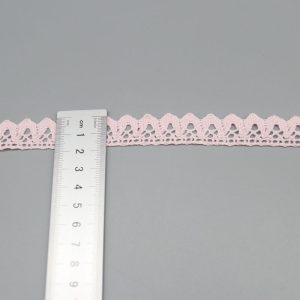
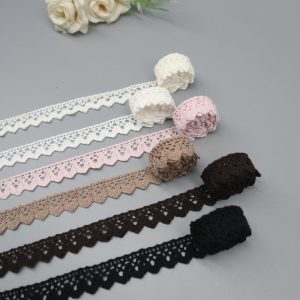
Cotton French border lace is a decorative, typically narrower edge lace with scallops or floral borders made on cotton bases. It delivers a refined, heritage look ideal for hems, cuffs, necklines, and dress panels where delicacy, drape, and a premium hand-feel are prioritized.
Custom wide cotton trim is a broader tape or band (often 2–8 cm+, woven/jacquard/embroidered) designed for visible placement. It emphasizes bold branding, stripes, logos, or textured weaves, and reads modern, graphic, and utility-forward for waistbands, plackets, outerwear panels, and athleisure.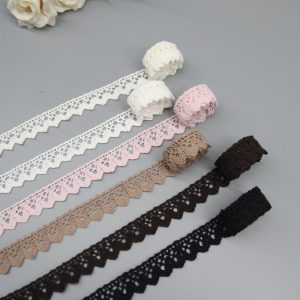
How do different garment trims affect the overall design of clothing?Different trims, such as lace, embroidery, and beading, add unique textures and visual interest to garments, significantly influencing the brand’s aesthetic and appeal.
The Ultimate Guide to Fabric Trims: Types, Uses, and SourcingHow do production costs compare for custom programs?
French border lace costs are driven by cotton base quality, motif density, and finishing. Once a pattern is digitized or standardized, costs scale well; however, delicate motifs and scalloped edges add finishing time and higher in-line QC, especially on seasonal collections.
Custom wide cotton trim benefits from standardized loom runs and repeatable widths; per-meter costs decline with volume and color carryovers. Adding jacquard logos or engineered stripes is cost-predictable, but multi-color branding and frequent recolors can increase MOQs and inventory pressure.
What factors influence the cost of custom apparel manufacturing?
Factors such as material quality, design complexity, order volume, and labor costs significantly influence the expenses of custom apparel manufacturing.
A complete guide to labels and trims in the Fashion IndustryWhich offers better stability and quality consistency in bulk?
French border lace is stable when pre-shrunk and heat-set, but scallops and openwork require careful sewing to avoid waviness. Batch consistency is strong with established programs, yet very fine motifs demand tighter tolerances and edge-control during assembly.
Wide cotton trims deliver excellent dimensional stability and are less prone to distortion in sewing. They keep straight edges and uniform widths, enabling consistent application across factories, which is valuable for multi-plant OEM/ODM deployments and retailer repeat orders.How does quality control impact large-scale garment manufacturing?
Implementing stringent quality control measures ensures consistency and stability in mass garment production.
Importance Of Decorative Trims In The Garment IndustryWhat about raw material supply and sourcing risks?
Both rely on widely available cotton yarns/threads. French lace may require specific cotton bases and fine-count threads, which are common but need good vendor matching for color/hand-feel across seasons. Lead times are predictable with mature lace suppliers.
Wide cotton trims use commodity cotton tapes or custom-woven bands with robust global supply. If brand Pantones, jacquard logos, or unique textures are required, dye approvals and weaving slots must be scheduled; dual-sourcing and shade libraries mitigate risk for rolling deliveries.What are the challenges in sourcing materials for garment manufacturing?
Challenges include fluctuating material costs, supply chain disruptions, and ensuring sustainable sourcing practices.
Trims and Accessories: Elevating Sustainable Garment MakingHow well do factory lines adapt to each for high-throughput assembly?
French border lace integrates into sewing lines with moderate speed; operators need to control feed and edge alignment (especially on bias or curved hems). Best results come from folders/guides and defined SPI to keep scallops crisp and even.
Custom wide cotton trim is line-friendly: it feeds through standard guides, folders, and tape attachments at high speed. Changeovers are fast (swap rolls/threads), which supports modular production cells and short lead times for replenishment and multi-style runs.What is the impact of different trims on garment production scalability?
The complexity and type of trims can affect production efficiency; simpler trims may allow for more scalable output.
Different Types of Trims used in the Garments industryApplication scenarios and B2B recommendation for custom apparel brands
Choose cotton French border lace for premium womenswear, bridal/occasion accents, heritage blouses, and children’s dresses where delicate aesthetics, drape, and a soft hand create value. It suits curated capsules and seasonal storytelling, with stable repeat patterns for continuity SKUs.
Choose custom wide cotton trim for logo-forward casualwear, outerwear, athleisure, uniforms, and streetwear where visible branding, edge definition, and rapid throughput matter. It scales easily for global rollouts, supports consistent brand identity, and simplifies cost control across price ladders.Which trims are most sought after in OEM garment manufacturing?
Answer: Functional trims like zippers and buttons are in high demand due to their essential roles in garment functionality.
What Are The 5 Frequently Used Garment Trims You Must Know About?