
Lace trim is what transforms simple pajamas into something special, but getting it right is crucial. The wrong lace can cheapen the entire look.
This guide covers every dimension of the decision: lace types, pattern choices, fabric compatibility, placement logic, and how to draw inspiration from ready-made pieces. By the end, you’ll know exactly what to look for.
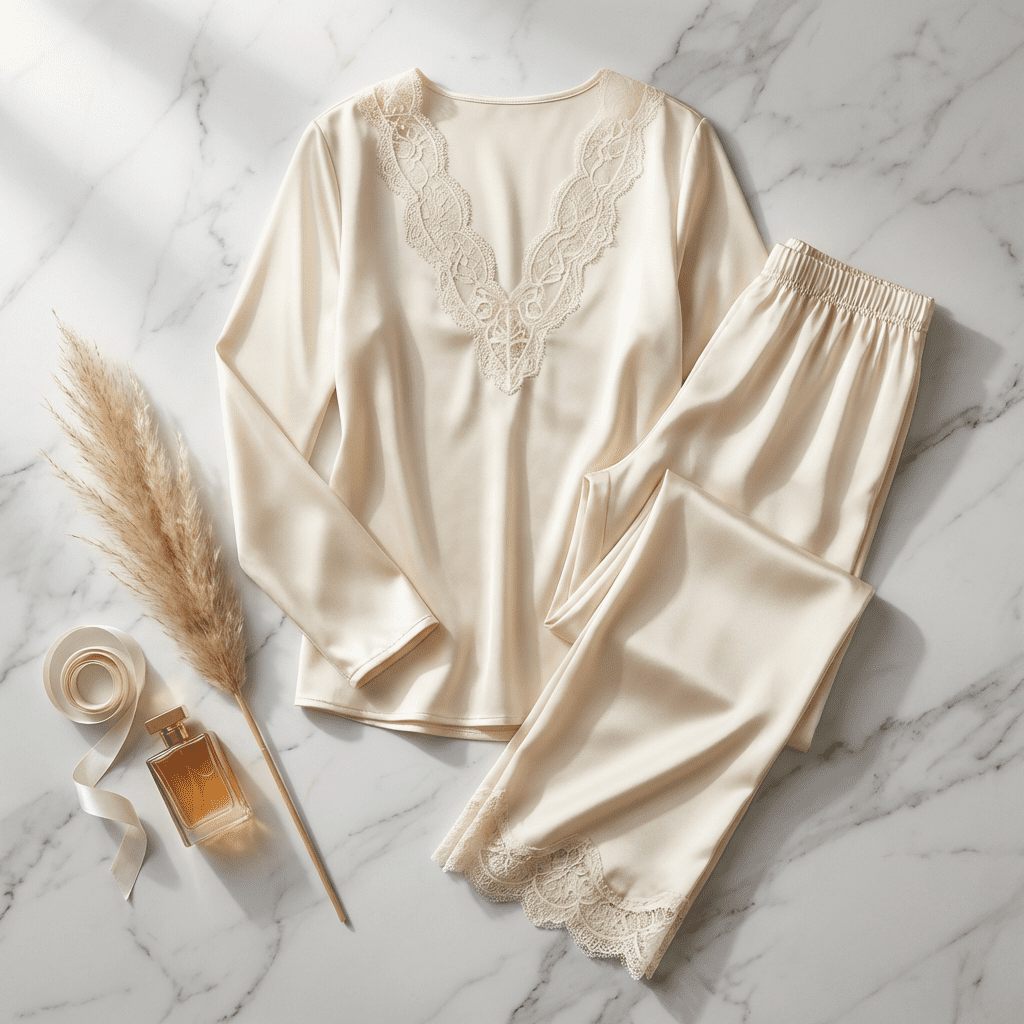
What Is Lace Trim and Why Does It Elevate Pajamas?
Lace trim is a narrow strip of lace, typically ranging from half an inch to several inches wide, applied along the edges of a garment as a decorative finish. Unlike lace fabric that covers large sections, trim works at the boundaries: necklines, cuffs, hemlines, and straps.
What makes it so effective on pajamas is contrast. Sleepwear generally uses soft, drapey fabrics like satin, silk, or cotton. Lace introduces texture and visual complexity without adding weight, transforming a garment from plain and utilitarian to refined and delicate.
There’s also a tactile dimension. Correctly chosen lace adds a sensory richness to the garment. Chosen incorrectly, it scratches, puckers, or looks out of place—which is precisely why the selection process matters.
The Main Types of Lace Trim for Pajamas
Chantilly Lace Defined by its delicate, lightweight mesh and fine floral motifs, Chantilly is the epitome of airy elegance.
- Best For: Adding a touch of sophistication to lightweight fabrics like silk and satin. Its beautiful drape complements these materials without pulling or adding bulk.
- Keep in Mind: It’s fragile. Reserve it for areas with less friction, such as necklines or sleeve cuffs, not high-stress seams.
Scallop Lace Identified by its clean, curved “scalloped” edge, this lace creates a polished, intentional frame for a garment.
- Best For: Finishing necklines and hemlines. The structured edge provides a clean, architectural silhouette that instantly looks professional.
- Keep in Mind: Its strength is versatility. Available in both rigid and stretch forms, it’s a reliable choice for a wide range of pajama designs and fabrics.
Stretch Lace This lace contains elastic fibers (like spandex), allowing it to stretch and recover with the base fabric.
- Best For: Knit fabrics such as jersey or ribbed cotton. It is the non-negotiable choice here, as it moves with the garment and prevents the puckering that occurs when rigid lace is sewn onto a stretchy base.
- Keep in Mind: It ensures comfort and movement, making it ideal for sleepwear meant for actual sleeping, not just lounging.
Guipure / Venice Lace Also known as Venice lace, this is a heavier, more sculptural style without a mesh background. The motifs are connected by threads, creating a bold, three-dimensional effect.
- Best For: Making a statement. Use it as a powerful accent on sturdier fabrics like cotton poplin or linen blends, where its weight won’t overwhelm the garment.
- Keep in Mind: A little goes a long way. Use it deliberately on hems or as a central detail; avoid applying it too broadly, as its visual weight can overpower softer fabrics.
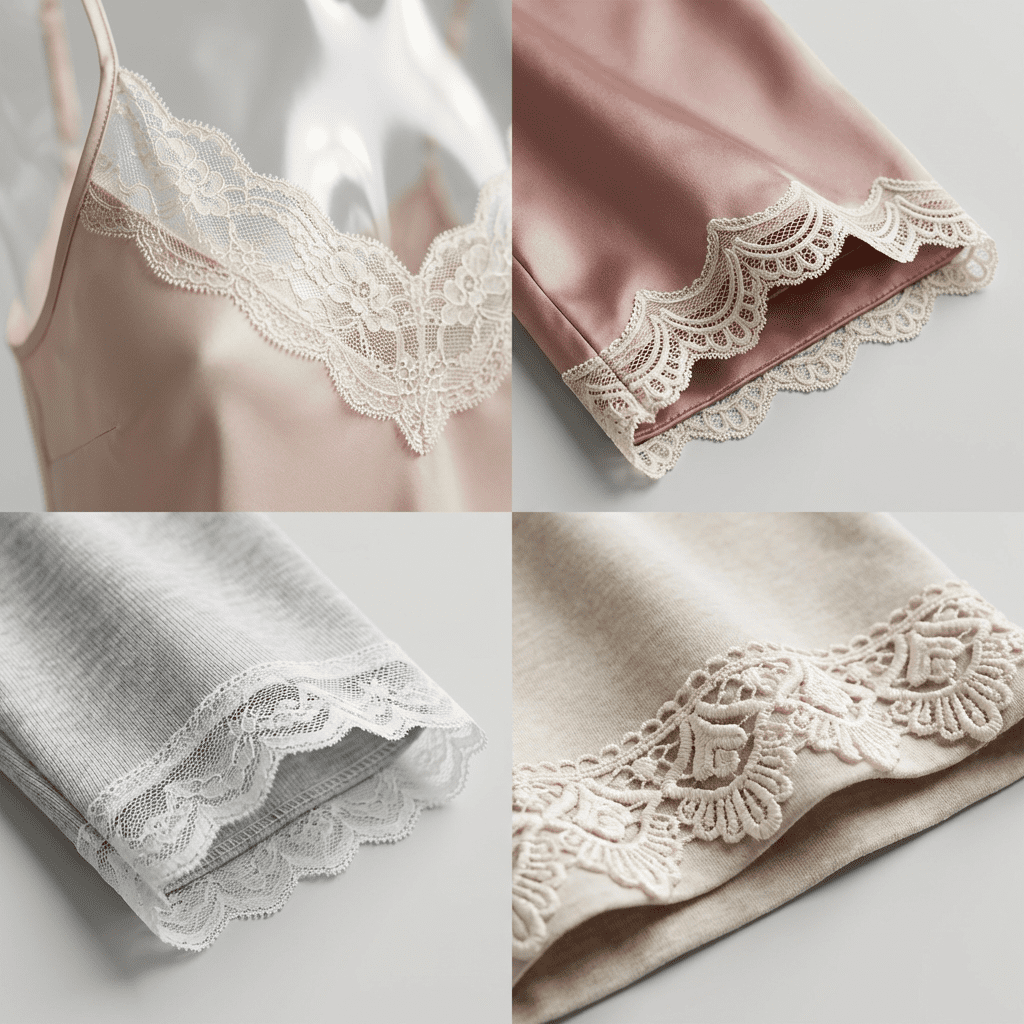
Choosing the Right Lace Pattern
The lace pattern should complement the personality of the base fabric. Here’s how to choose effectively.
Floral Patterns The classic choice for sleepwear, offering a soft and romantic feel. The key is scale:
- Small-scale florals add subtle, delicate texture.
- Large-scale florals make a bold statement and work best on otherwise simple garments.
Geometric Patterns The modern, architectural alternative to florals, featuring grids, diamonds, and other angular shapes.
- Best for: Minimalist designs where the goal is clean and restrained.
- Benefit: Tends to read as more gender-neutral than traditional florals.
Scalloped Edges More than just a shape, the repeating curve of a scalloped edge is a pattern in itself.
- Primary Function: To frame a garment with a classic, polished border.
- Why it works: It’s “pattern-neutral,” adding a finished look without competing with the main fabric, making it highly versatile.
Abstract & Allover Lace These patterns create a continuous field of texture rather than distinct, recognizable motifs.
- Effect: Adds rich visual complexity and dimension.
- Rule of Thumb: Best used in narrow widths. When applied too broadly, it can look busy and overwhelm the garment.
The Guiding Principle
Match the character of the lace to the character of the fabric.
- Soft, flowing fabrics (like silk) call for soft, flowing patterns (like Chantilly florals).
- Structured, matte fabrics (like cotton) can handle bolder, sculptural patterns (like geometric or Guipure lace).
How to Match Lace Trim to Your Pajama Fabric
Matching isn’t just about style; it’s about physics—weight, drape, and tension.
Satin + Lace
- The Pairing: Satin’s sheen needs a delicate partner.
- Best Choice: Fine Chantilly or narrow scallop trim. They match satin’s luxury and light-catching quality.
- Avoid: Heavy Guipure. It creates too stark a contrast and drags down the smooth fabric.
Cotton + Lace
- The Pairing: Cotton is grounded and casual, allowing for sturdier options.
- Best Choice: Stretch lace (for cotton knits) or Guipure (for poplin/woven cotton). Guipure adds necessary structure to plain cotton.
- Key Consideration: Washability. Cotton is often machine-washed; ensure your lace is durable enough to survive the cycle.
Silk + Lace
- The Pairing: Silk is unforgiving. Weight matching is critical.
- Best Choice: Ultra-lightweight Chantilly or fine nylon lace.
- The Rule: If the trim is heavier than the silk, it will distort the drape and pull at seams. When in doubt, go lighter.
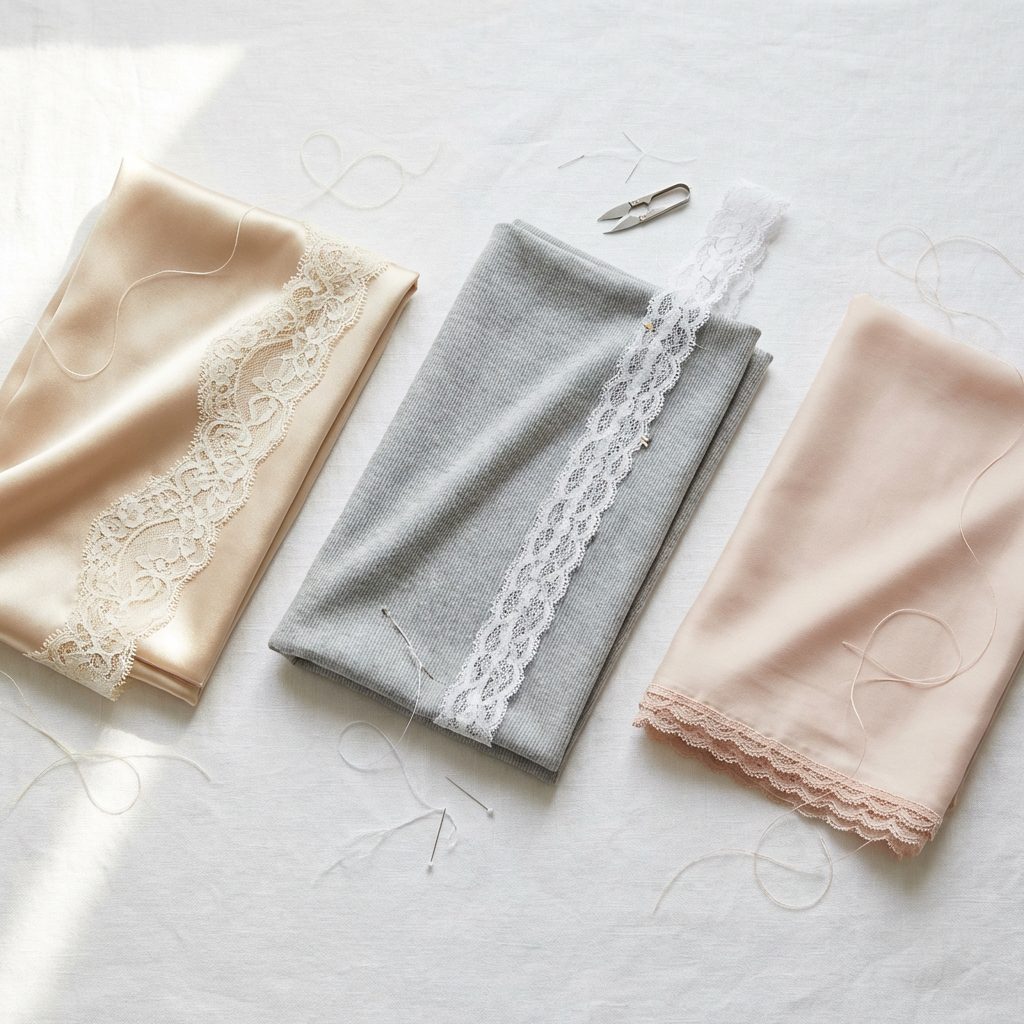
Key Factors to Consider When Choosing Lace Trim
Width & Proportion
- Narrow (<1 inch): A refined finish. Adds texture without dominating.
- Wide (>2 inches): A design feature. It shifts the garment’s visual balance.
- The Rule: The more delicate the base fabric, the narrower the trim should be.
Color Strategy
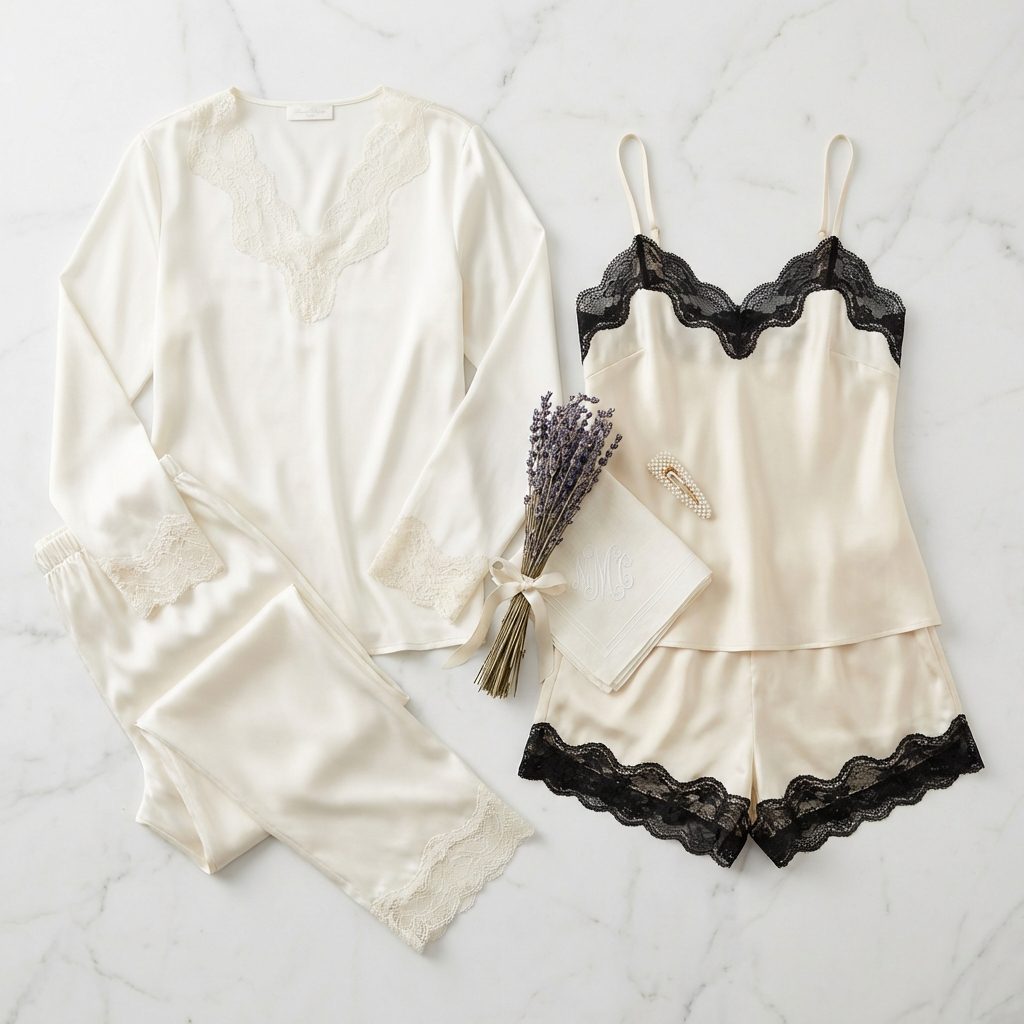
- Tone-on-Tone: (e.g., Ivory on Ivory) Adds texture without color contrast. Elegant and seamless.
- High Contrast: (e.g., Black on Cream) Bold and graphic. Intentional contrast defines the silhouette.
Softness (The “Wrist Test”)
- Comfort is Non-Negotiable: Lace that feels fine on fingers can scratch the neck at 2 a.m.
- How to Test: Always rub the trim against the inner wrist. If it catches or scratches there, do not use it. Look for high nylon/silk content for smoothness.
Care & Durability
- The Weak Link: Lace is usually the most fragile part of the garment.
- Matching Maintenance: Don’t pair a dry-clean-only lace with a wash-and-wear cotton pajama. Ensure the lace’s durability matches the base fabric’s care routine.
Style & Body Type
- Horizontal Lines: (Hem/Neckline) Draw the eye and can visually widen an area.
- Vertical Lines: (Plackets/Side Seams) Elongate the silhouette.
- Tip: Narrow trim at the edges creates a frame without adding bulk, making it universally flattering.
Lace Trim Placement on Pajamas
Placement determines both the look and the comfort level.
- Neckline: High visibility, high risk. Must be incredibly soft against the décolletage. Keep it proportional—too wide creates clutter near the face.
- Cuffs: The safest starting point. Adds elegance to the extremities without altering the garment’s main silhouette.
- Hems: The domain of Scallop Lace. A structured lace edge here creates a clean, architectural finish that looks expensive and intentional.
- Straps: High impact, low material. Edging camisole straps with fine Chantilly elevates a simple top instantly.
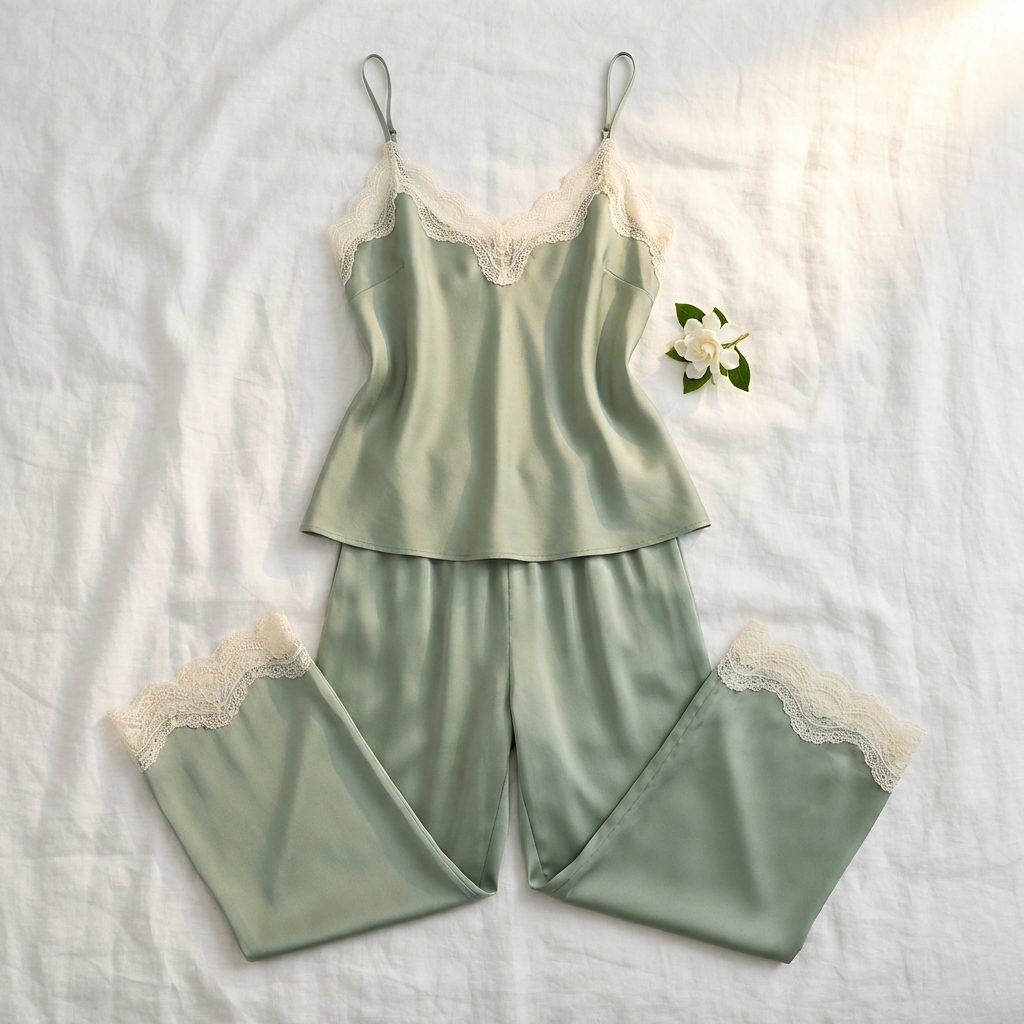
Getting Inspiration from Ready-Made Lace Pajamas
Train your eye by analyzing professionally designed sleepwear. Don’t just look; dissect.
Analyze Proportion High-end brands use lace with restraint. Notice how trim width is calibrated to the garment size—rarely overwhelming, always balanced.
Check Color Nuance Look closely at “matching” sets. Often, the lace is a shade lighter or warmer than the base fabric (e.g., warm ivory lace on cool white silk). This subtle tonal shift adds depth that an exact color match lacks.
Identify the Type Practice naming what you see. Is it a mesh ground (Chantilly)? Is it sculptural (Guipure)? Does it stretch? Building this vocabulary helps you shop for materials with confidence.
FAQs
Is lace trim comfortable to sleep in? Yes, if chosen correctly. Stick to soft, fine-fiber laces (like nylon-based Chantilly or Stretch lace) and avoid stiff polyesters. Always perform the wrist test.
How do I wash lace trim pajamas? Ideally, hand wash in cool water. If machine washing, use a mesh bag, cold water, and the delicate cycle. Never wring lace, as it distorts the pattern.
What’s the difference between lace trim and overlay? Trim is an edging detail (hems, necklines). Overlay is a fabric layer covering a large section of the garment. Trim finishes; overlay constructs.
Are lace pajamas suitable for all body types? Yes. Vertical placements and narrow edge trims are universally flattering. Avoid wide, horizontal bands of lace at areas you don’t wish to emphasize (like the hips).