
What Is Guipure Lace?
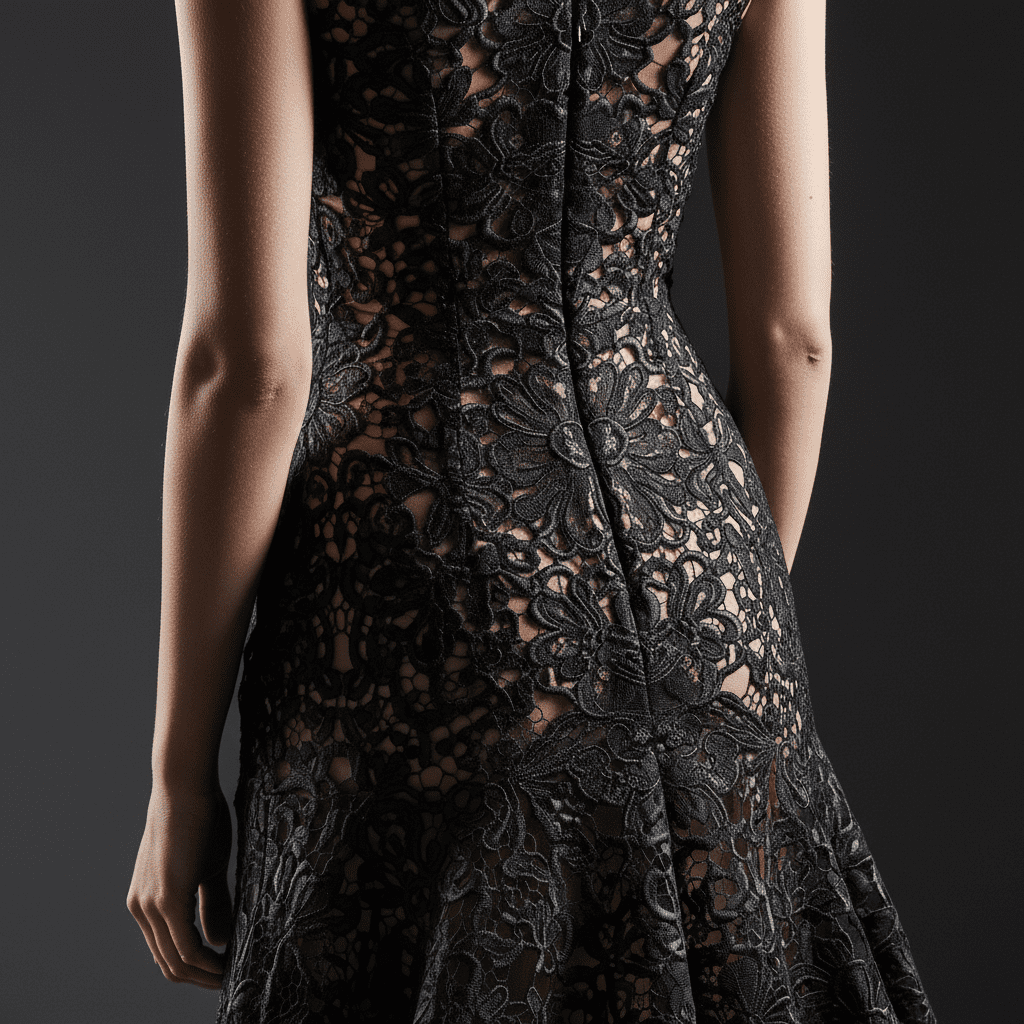
Guipure lace is distinguished by its lack of a supporting net. The motifs connect directly, creating open spaces and an architectural look. This results in a structured, visually striking fabric that stands out from traditional laces.
-
The Structure: Motifs (flowers, leaves, geometric shapes) are densely embroidered and connected directly to each other via small, sturdy thread bars called brides or plaits.
-
The Visual Impact: It creates a bold, open, architectural appearance. The fabric looks like beautifully intricate cut-out shapes suspended in the air, offering a striking contrast against the skin or a solid lining.
-
The Hand-Feel: Because it relies entirely on its own interlocking thread for structural integrity, guipure is generally heavier, holds its shape beautifully, and offers a much bolder three-dimensional effect than fragile, net-based laces.
How Is Guipure Lace Made?
The vast variations in guipure types come down to two fundamentally different production philosophies. Understanding these methods is key to understanding why these laces look and behave so differently.
-
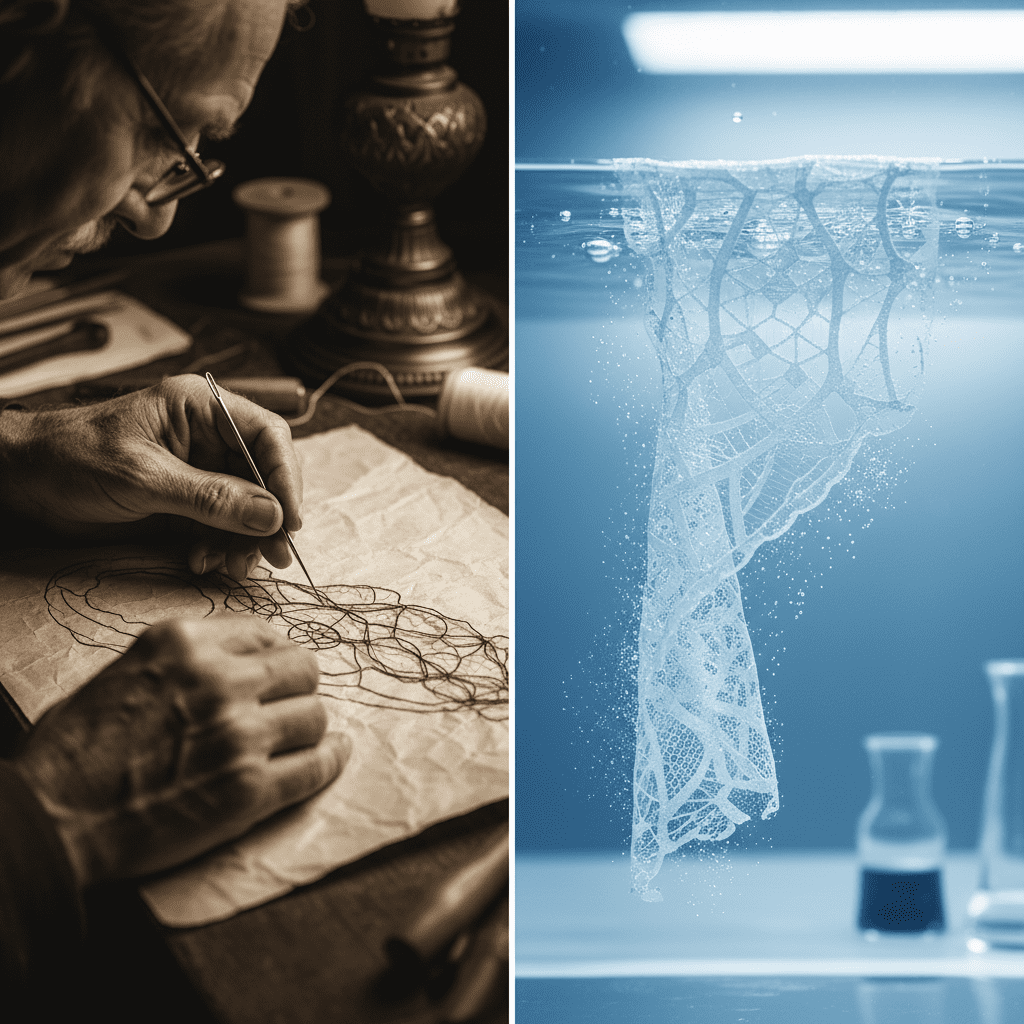
The Traditional Method (Needle Lace): Originating in 16th-century Venice, this is the historical root of all guipure. Artisans build the fabric entirely by hand, stitch by stitch, using a single needle and thread over a parchment paper pattern. Heavy threads are laid down and whipped together to create highly textured, dimensional structures. True handmade guipure is now a rare luxury found primarily in museum archives or elite haute couture.
-
The Modern Method (Water-Soluble Process): This is the commercial standard today, often called “chemical lace.” Giant Schiffli embroidery machines stitch the intricate pattern onto a special water-soluble base film (typically made of polyvinyl alcohol, or PVA). Once the heavy embroidery is finished, the entire fabric roll is submerged in a heated water or alkaline bath. The base film dissolves completely, leaving only the intricately interlocked embroidery threads holding themselves together.

The Core Materials of Guipure Lace
Before comparing the specific styles, it is crucial to understand the fiber composition. The yarn used in the embroidery dictates the fabric’s drape, shine, durability, and cost.
-
Polyester/Synthetic: The most common and durable material. It holds architectural shapes perfectly, resists fraying, and can be manufactured with a high sheen. It is the backbone of commercial fashion and affordable bridal wear.
-
Cotton: Offers a completely matte, soft, and natural finish. Cotton breathes exceptionally well, absorbs dye deeply for rich colors, and softens over time. It is the go-to for boho-chic bridal, summer dresses, and premium daywear.
-
Silk and Rayon (Viscose): Often referred to as “liquid lace” in the industry. These natural and semi-synthetic fibers provide a luxurious, lustrous sheen with a surprisingly heavy, fluid drape. Rayon guipure feels incredibly cold and soft against the skin, making it a favorite for high-end evening wear.
-
Metallic Threads (Lurex): Often interwoven with polyester or silk to create a stiff, glamorous lace that catches the light. Perfect for statement pieces, theatrical costumes, and formal trims.
The 5 Main Types of Guipure Lace
1. Venetian Guipure Lace
Venetian lace is the original, historical guipure. It is the lace equivalent of architectural building material, offering a regal, antique aesthetic.
-
Key Characteristics: It is bold, sculptural, and highly three-dimensional. The defining feature is the cordonnet—a thick, padded cord that outlines the motifs and raises the design significantly off the surface. The connecting brides are often decorated with tiny loops called picots.
-
Best For: Couture bodices, structured statement sleeves, heavy bridal trims, and dramatic collars.
2. Chemical (Water-Soluble) Guipure Lace
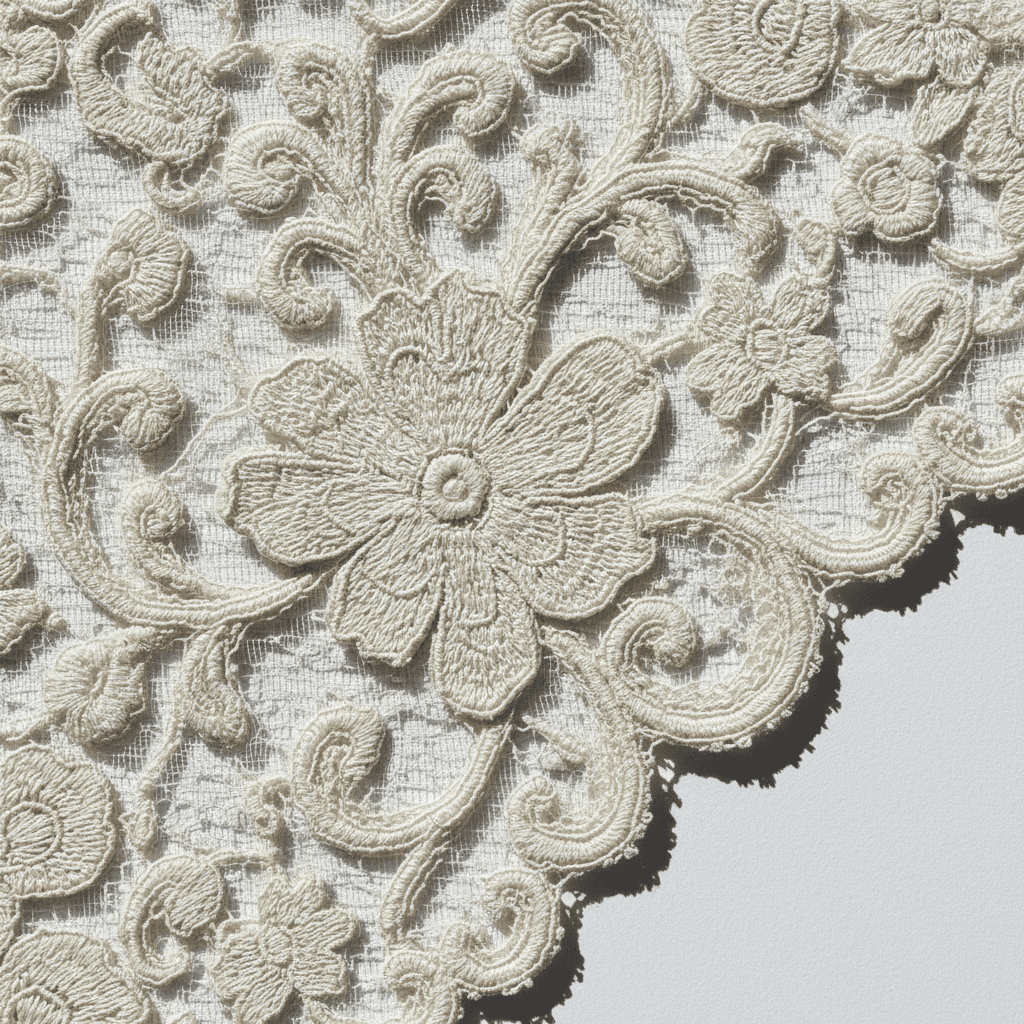
This is the modern workhorse of the global fashion industry. When a commercial fabric store labels something simply as “guipure,” it is almost always chemical lace.
-
Key Characteristics: It is relatively flat compared to Venetian, incredibly intricate, and machine-consistent. Because it is programmed digitally, it can feature anything from delicate micro-florals to sharp, ultra-modern geometric and abstract patterns.
-
Best For: Bridal gowns, cocktail dresses, ready-to-wear fashion overlays, and decorative sheer panels.
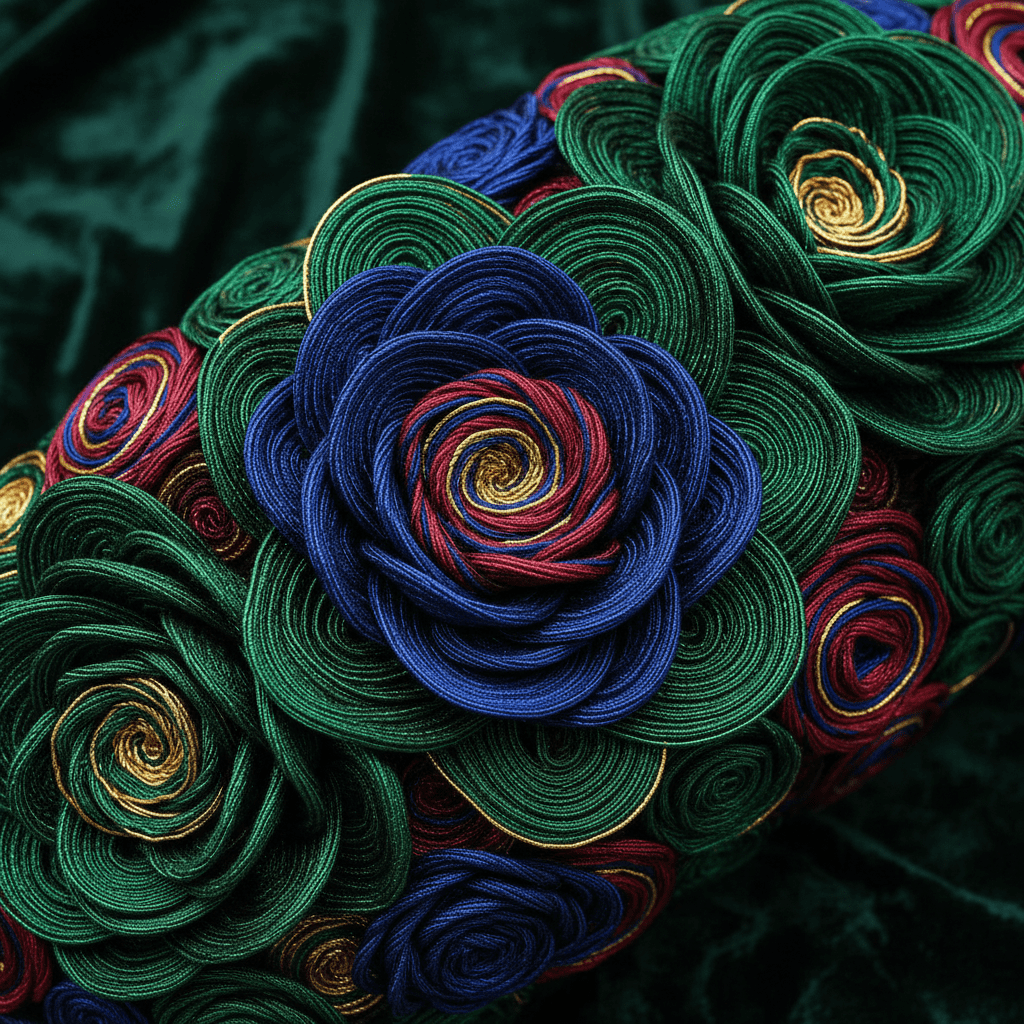
3. Cord Guipure Lace (African Lace)
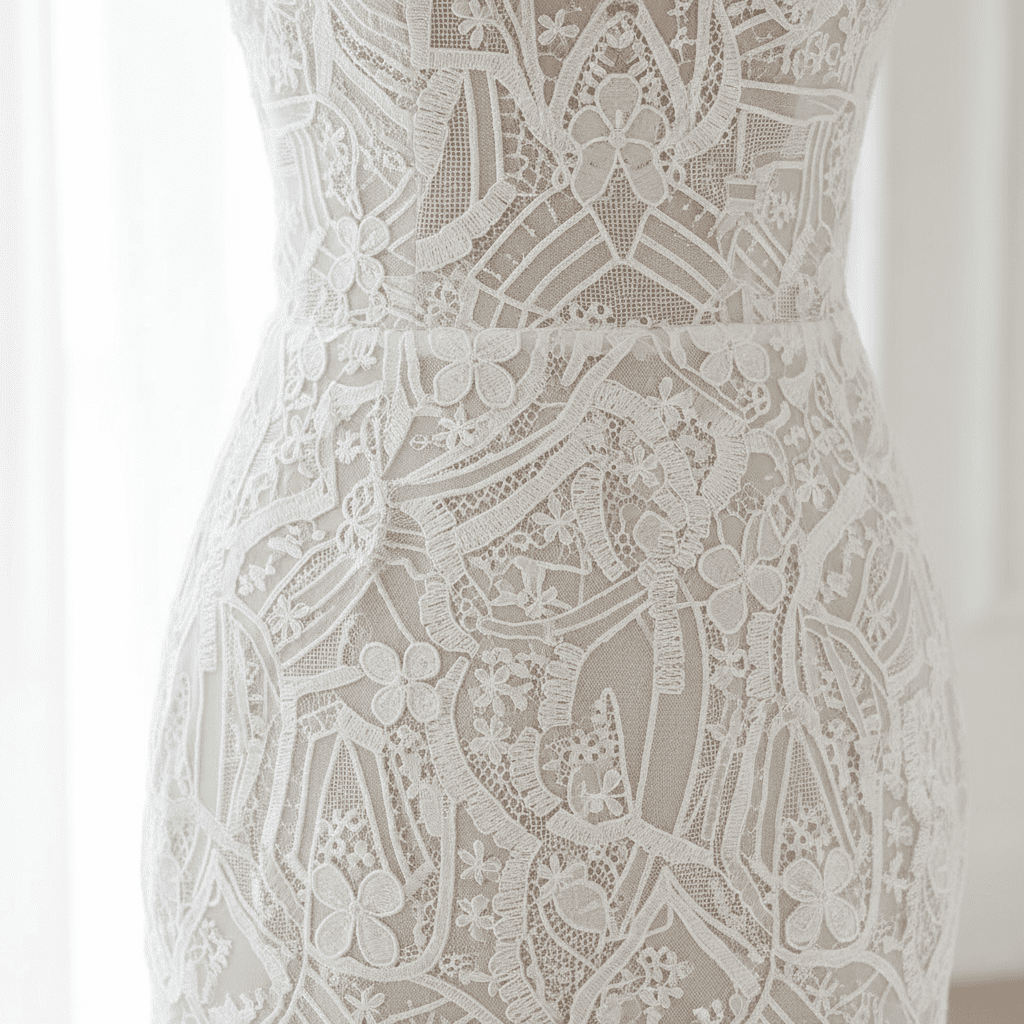
A staple in West African fashion culture (such as the Nigerian Aso-Ebi tradition), this lace is built for celebration, durability, and maximum visual impact.
-
Key Characteristics: It is constructed using thick soutache cord or heavy braid manipulated into large-scale loops, swirls, and arcs. It has a distinctive, raised, rope-like texture that makes the patterns easily visible from across a large room.
-
Best For: Traditional African formal wear, dramatic occasion wear, and high-impact couture accessories.
4. Cotton Guipure Lace
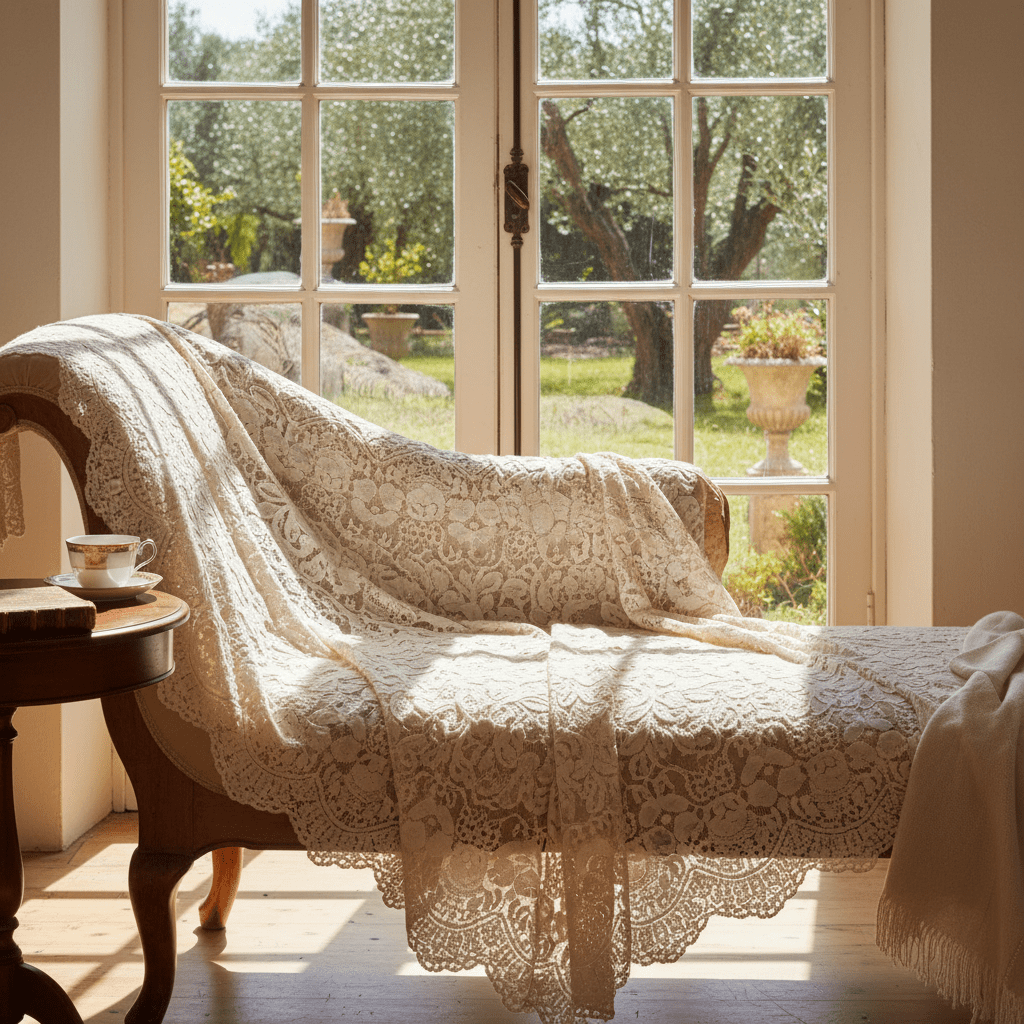
The quiet, understated, and highly versatile sibling of the guipure family, favored for its organic, non-synthetic appearance.
-
Key Characteristics: Features a completely matte finish, a softer hand-feel, and typically utilizes smaller, more delicate, and dense motifs (like daisies or small leaves). It lacks the high-shine glamour of polyester or rayon.
-
Best For: Bohemian bridal dresses, casual summer blouses, luxury resort wear, and premium children’s clothing.
5. Stretch Guipure Lace
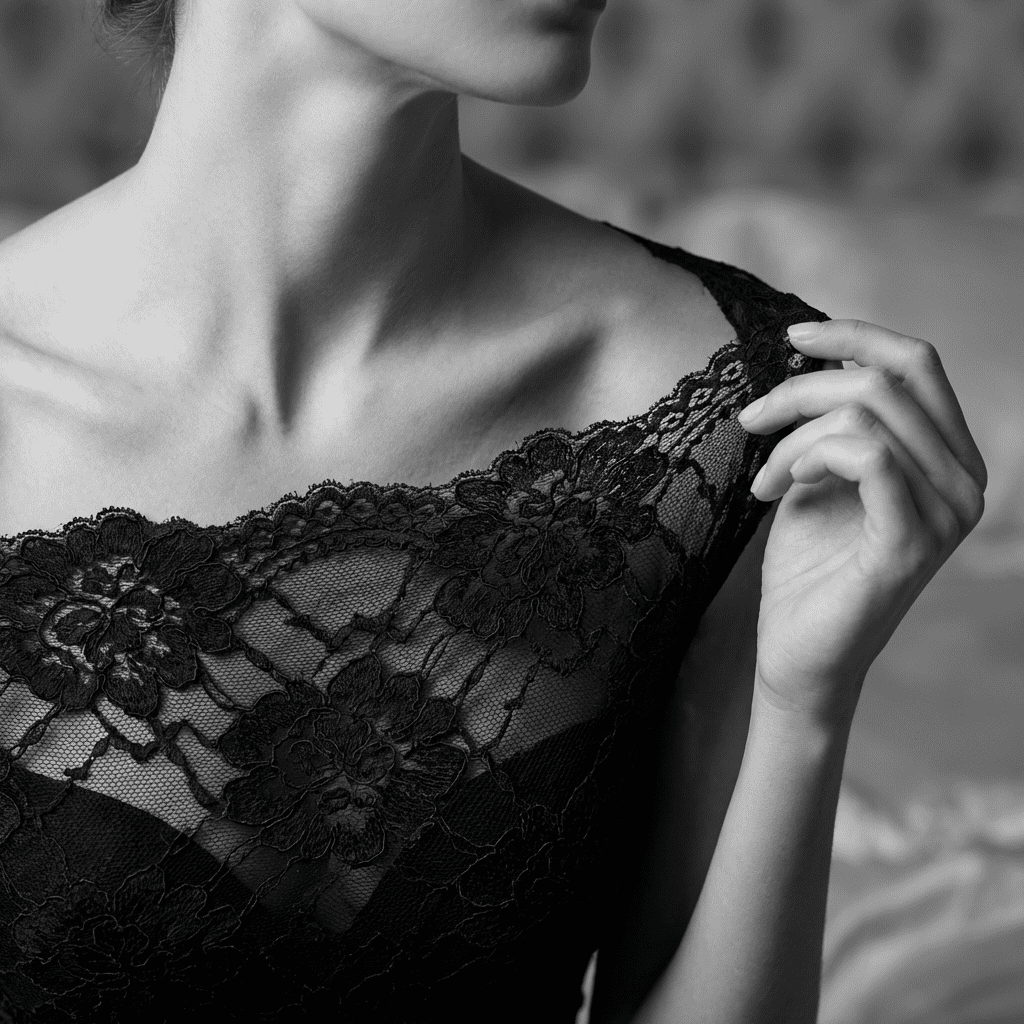
Standard guipure relies on tightly interlocked threads, meaning it has absolutely zero give. Stretch guipure was engineered to solve this exact problem for the modern, comfort-focused wardrobe.
-
Key Characteristics: Integrates between 3% to 20% elastane (spandex) directly into the embroidery thread structure. Visually, it looks identical to flat chemical guipure, but the internal engineering allows the motifs to expand and contract without snapping.
-
Best For: Lingerie, bodycon dresses, intimate apparel, and tightly fitted sleeves where movement and comfort are essential.
The Key Differences Between Guipure Lace Types
To successfully source and design with guipure, you must understand how these five types compare to one another across four crucial metrics: Weight & Drape, Visual Texture, Flexibility, and Application.
Here is exactly how they differ:
1. Dimensionality: Flat vs. 3D Texture
The most obvious visual difference is how far the lace lifts off the skin.
-
Highly 3D: Venetian and Cord (African) laces are highly textured. If you run your hand over them, they feel bumpy and sculptural. Venetian uses padded outlines (cordonnets), while Cord lace uses actual rope-like braids. These laces cast physical shadows on the fabric beneath them.
-
Relatively Flat: Chemical, Cotton, and Stretch guipures are flat. While they still have more texture than a printed fabric, the embroidery sits uniformly on one plane. They provide a sleek, intricate look without adding bulk to the wearer’s silhouette.
2. Weight and Drape: Stiff vs. Fluid
Because guipure has no mesh, its drape is dictated entirely by its thread density and fiber.
-
Stiff and Architectural: Venetian and Cord laces are heavy and rigid. They do not drape; they stand at attention. If you want a sleeve to puff out and hold its shape without tulle support, these are your choices.
-
Fluid and Heavy: Rayon Chemical lace is heavy but highly fluid. It will pool beautifully on the floor and drape closely to the body, making it ideal for slinky evening gowns.
-
Light and Soft: Cotton guipure is the lightest and softest of the family. It collapses gently, making it the only guipure truly suitable for casual, relaxed daywear.
3. Flexibility and Movement
-
Rigid (Zero Give): Venetian, Cord, Cotton, and standard Chemical guipure have absolutely no stretch. Because the threads are tightly locked to maintain the open-air structure, pulling on them will eventually snap the connecting brides. Garments made from these must be tailored with proper ease (darts, seams, and breathing room).
-
Dynamic (High Give): Stretch Guipure is the sole exception. By wrapping elastane inside the embroidery threads, the negative space between the motifs can expand. It is the only guipure type that can be used for skin-tight, negative-ease garments like lingerie or stretchy cocktail dresses.
4. Aesthetic Vibe: Glamour vs. Organic
-
High Glamour/Formal: Chemical (in synthetic/silk fibers), Cord, and Venetian laces are inherently formal. They reflect light, look expensive, and are heavily associated with bridal wear, red carpets, and cultural celebrations.
-
Matte/Organic: Cotton guipure stands apart due to its lack of shine. It absorbs light, giving it an earthy, vintage, or “boho” aesthetic. You would use Chemical lace for a black-tie gala, but you would use Cotton guipure for a beach wedding.
Guipure Lace Types at a Glance
| Type | Visual Texture (3D vs Flat) | Drape & Weight | Flexibility | Best Aesthetic Use |
|---|---|---|---|---|
| Venetian | Highly 3D (padded outlines) | Heavy, Stiff | Rigid | Architectural Couture, Antique Bridal |
| Chemical | Flat, highly intricate | Light-Medium, Fluid | Rigid | Modern Bridal, Evening Wear |
| Cord (African) | Highly 3D (rope-like texture) | Very Heavy, Stiff | Rigid | High-Impact Formal, Aso-Ebi |
| Cotton | Flat, matte finish | Light, Soft | Rigid | Boho-Chic, Casual Daywear |
| Stretch | Flat, consistent | Light-Medium | High Stretch | Lingerie, Bodycon Dresses |
Expert FAQs About Guipure Lace
What is the main difference between guipure and regular lace?
The difference is structural integrity. Regular laces (like Chantilly or Alençon) rely on a sheer, woven mesh net to hold the decorative patterns together. Guipure lace has no mesh background at all; the embroidered motifs are directly connected by sturdy threads, resulting in a heavier, open, and architectural fabric.
Is guipure lace expensive?
It ranges widely based on the manufacturing method and fiber. Handmade Venetian lace and high-thread-count silk guipure from European mills are luxury, high-cost materials. Conversely, machine-made polyester chemical guipure is highly accessible and budget-friendly for mass production.
Can guipure lace be machine washed?
It is highly recommended to dry-clean or gently hand-wash guipure lace. Because it lacks a supporting background net, the agitation of a washing machine can snap the delicate connecting threads (brides) or warp the heavy motifs. Cotton guipure can occasionally tolerate a gentle, cold machine wash inside a mesh garment bag.
Does guipure lace fray easily?
Yes, particularly chemical and cord guipures made from synthetic fibers. Because the fabric relies solely on interlocked embroidery threads, cutting a structural connecting thread can cause the adjacent motif to begin unraveling. Always secure raw edges with binding, serging, or seam sealant during construction.