
What Is Embroidered Lace Trim?
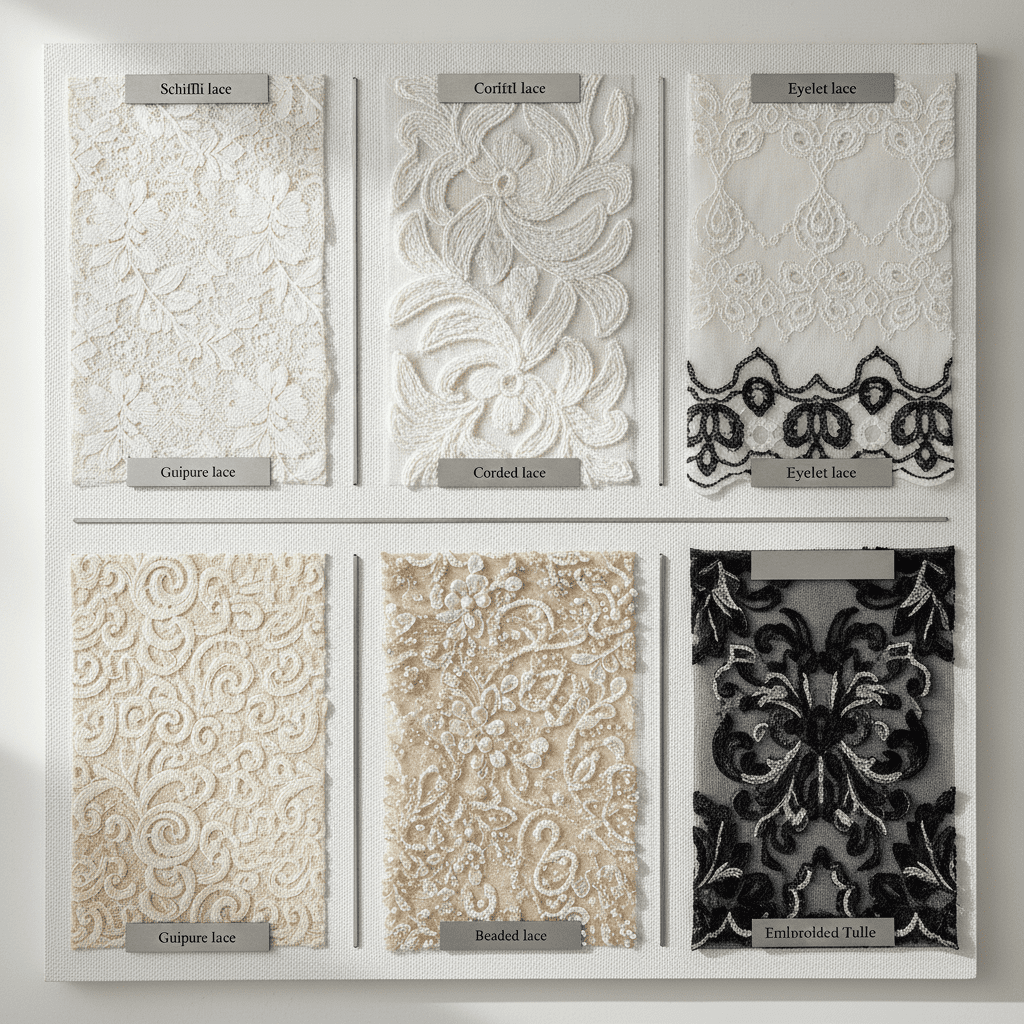
Embroidered Lace Trim is a decorative lace produced by stitching embroidery patterns onto a base fabric such as tulle, mesh, organza, or cotton. Unlike woven or knitted lace, the pattern is added after the base fabric is created. This construction allows greater design flexibility, richer texture, and easier customization. Today, most Embroidered Lace Trim is produced using computerized embroidery technology for consistent quality and scalable production.
How Is Embroidered Lace Trim Made?
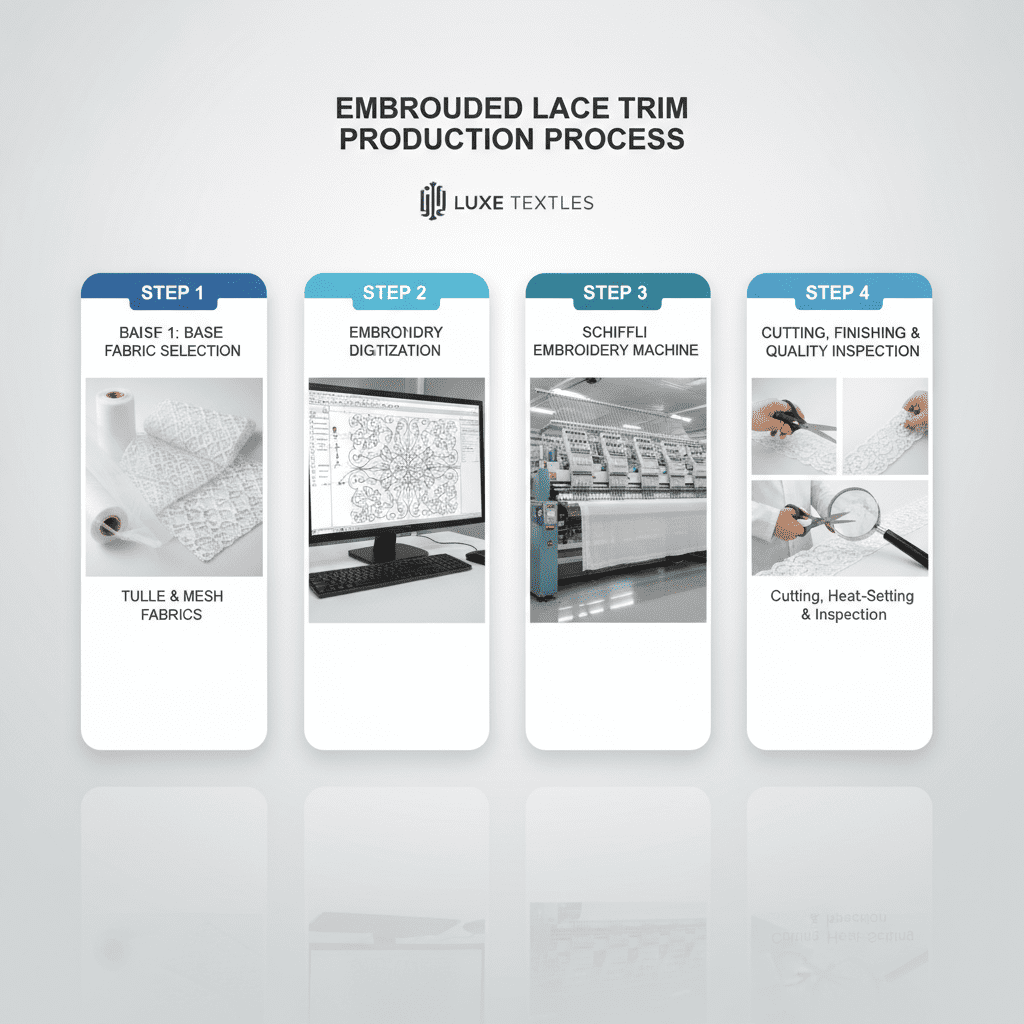
The manufacturing process typically follows four key steps:
1. Base Fabric Selection
Manufacturers first choose the foundation fabric, such as nylon tulle, polyester mesh, cotton fabric, or water-soluble backing. The selected ground fabric determines drape, transparency, softness, and overall cost.
2. Pattern Digitization
Design artwork is converted into embroidery machine instructions. This stage defines stitch density, thread direction, color sequencing, and motif accuracy.
3. Embroidery Production
Computerized embroidery machines stitch the design onto the base fabric. Schiffli embroidery machines are commonly used for continuous trims, while multi-head machines are often used for motifs and appliqués.
4. Finishing and Quality Control
The embroidered fabric is cut, scalloped, laser-finished, washed, pressed, and inspected. For guipure lace, the water-soluble backing is removed to create a freestanding lace structure.
The Main Types of Embroidered Lace Trim
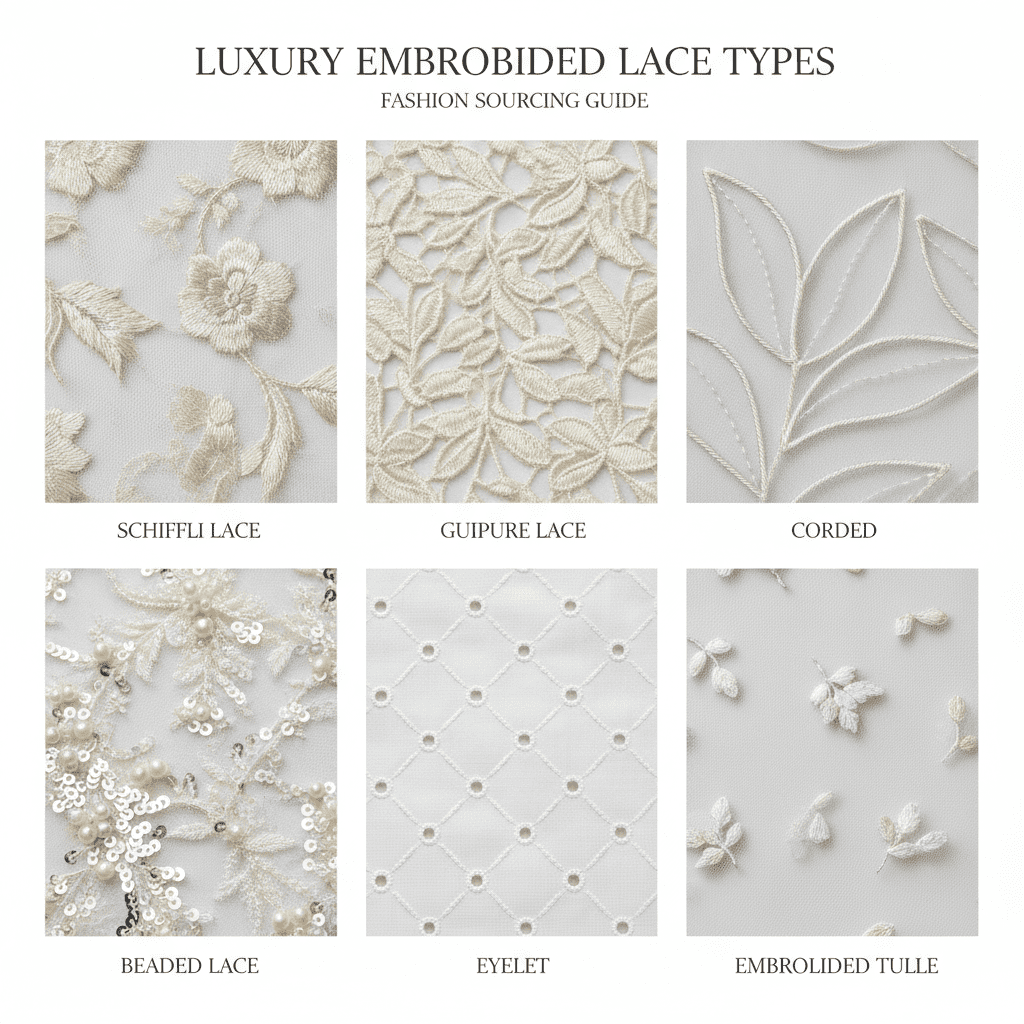
Although embroidered lace is often grouped into a single category, the market is actually dominated by several distinct constructions. Each type differs in appearance, production method, cost, and end-use application. Understanding these differences helps buyers select the right trim for both design and commercial objectives.
Schiffli Embroidered Lace
Schiffli lace is the most common type of embroidered lace trim found in today’s apparel market. It is produced on large Schiffli embroidery machines that can create continuous floral, geometric, and scalloped patterns on tulle or mesh foundations.
Its popularity comes from its balance of aesthetics and cost. Schiffli lace offers a soft hand feel, good drape, and extensive design flexibility, making it suitable for everything from lingerie and blouses to dresses and commercial bridal collections.
For brands seeking decorative value without significantly increasing garment costs, Schiffli lace is often the first choice.
Guipure Lace
Guipure lace, sometimes called chemical lace, differs from other embroidered lace trims because it has no visible ground fabric. The embroidery is created on a water-soluble backing that is removed during finishing, leaving behind a freestanding lace structure.
Compared with Schiffli lace, guipure appears heavier, more sculptural, and more luxurious. The motifs are clearly defined and create a strong three-dimensional effect, which is why it is frequently used on bridal gowns, statement collars, and premium eveningwear.
Designers often choose guipure when they want lace to become a focal design element rather than a subtle decorative detail.
Corded Lace
Corded lace adds an extra layer of dimension by incorporating thicker outlining threads around floral or ornamental motifs. These raised cords create stronger visual depth and make the embroidery stand out from the background.
This construction gives corded lace a more premium appearance than standard embroidered lace. It is particularly popular in bridal fashion, couture-inspired collections, and formalwear where texture and craftsmanship play an important role.
Although more expensive than conventional Schiffli lace, corded lace delivers a luxury look that many high-end brands value.
Beaded and Sequined Lace
Beaded lace combines embroidery with decorative embellishments such as beads, sequins, pearls, or crystals. These elements can be attached by machine or hand depending on the complexity of the design.
The result is a highly decorative trim that catches light and creates visual impact. Because of its weight and intricate detailing, beaded lace is most commonly used for wedding gowns, evening dresses, stage costumes, and special occasion garments.
While it commands a higher price point, it remains one of the most effective ways to create a premium, luxury appearance.
Eyelet Lace (Broderie Anglaise)
Eyelet lace is characterized by embroidered patterns combined with small punched openings that are stitched around the edges. Traditionally associated with cotton fabrics, it offers a lighter and more casual aesthetic than many other embroidered lace types.
Its breathable construction makes it especially popular in spring and summer collections. Eyelet trims are commonly used on dresses, children’s apparel, blouses, and home textile products where comfort and freshness are priorities.
For brands targeting a natural, romantic, or vintage-inspired look, eyelet lace remains a timeless option.
Embroidered Tulle
Embroidered tulle features decorative embroidery stitched onto an ultra-fine tulle foundation. Because the base fabric is nearly transparent, the embroidered motifs appear to float on the surface.
This lightweight and elegant appearance has made embroidered tulle a signature material in modern bridalwear. It is frequently used for illusion necklines, sheer sleeves, veils, overlays, and soft eveningwear designs.
Compared with heavier lace constructions, embroidered tulle provides decoration without adding significant weight, making it ideal for garments that require fluid movement and delicate visual effects.
Quick Comparison
| Type | Structure | Hand Feel | Price Level | Best For |
|---|---|---|---|---|
| Schiffli | Embroidered on fabric | Soft | $$ | Fashion & lingerie |
| Guipure | Freestanding embroidery | Firm | $$$ | Bridal & luxury |
| Corded | Raised embroidery | Structured | $$$$ | Couture |
| Beaded | Embellished embroidery | Heavy | $$$$ | Eveningwear |
| Eyelet | Embroidered perforations | Crisp | $$ | Casual apparel |
| Embroidered Tulle | Embroidery on tulle | Light | $$$ | Bridal & sheer garments |
Applications Across Modern Apparel
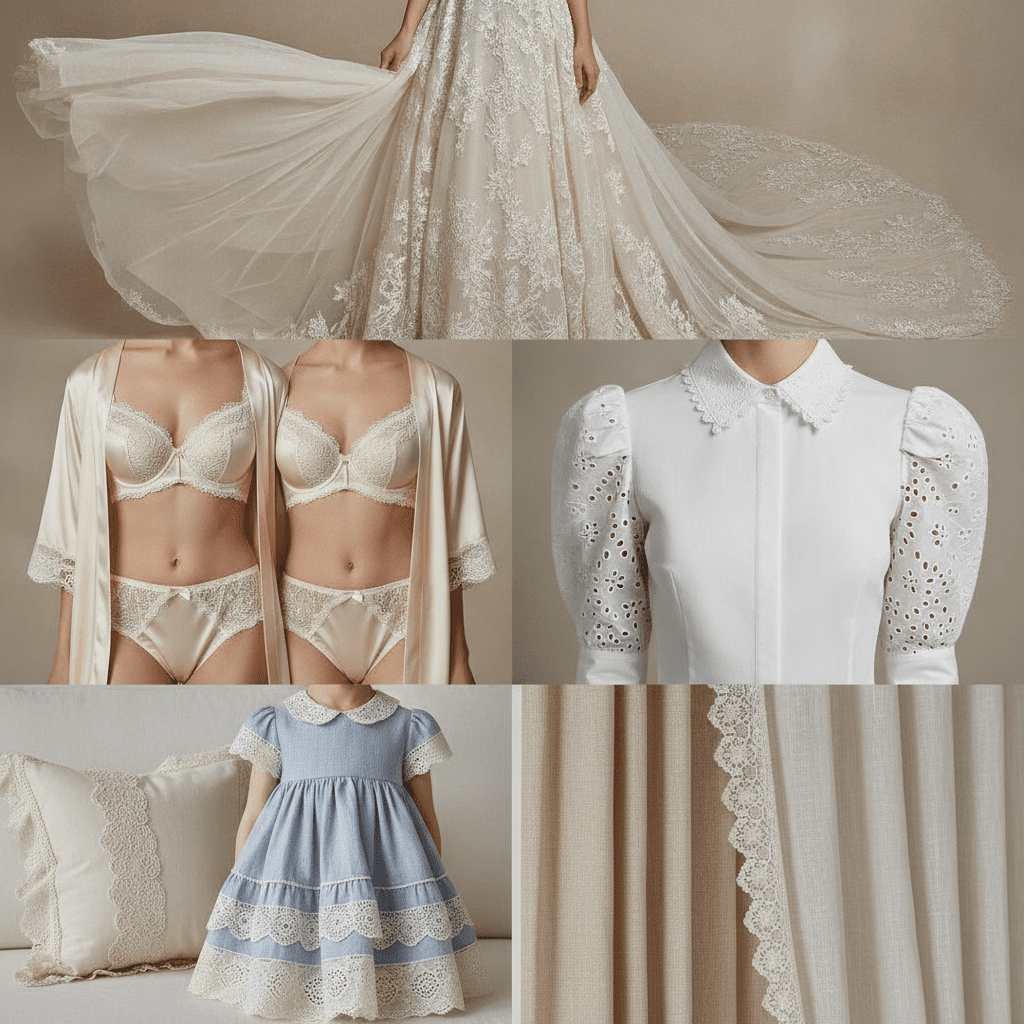
The versatility of Embroidered Lace Trim is one of the main reasons it remains widely used across fashion and textile industries. From luxury bridal gowns to everyday apparel and home furnishings, different lace constructions serve different functional and aesthetic purposes. Understanding where each type performs best helps brands make smarter design and sourcing decisions.
Bridal and Eveningwear
Bridalwear continues to be one of the largest application segments for embroidered lace. Designers often combine multiple lace types within a single garment to create depth and visual contrast. Corded lace and guipure lace are commonly selected for bodices, sleeves, and statement details because of their dimensional appearance, while embroidered tulle is widely used for illusion necklines, sheer backs, and veils. For luxury wedding gowns and formal evening dresses, beaded lace remains a popular choice thanks to its ability to add sparkle and elevate perceived value.
Lingerie and Intimate Apparel
Comfort is the primary consideration in lingerie design, making lightweight lace constructions the preferred option. Soft Schiffli lace and embroidered tulle are frequently used on bras, panties, camisoles, and sleepwear because they provide decorative appeal without adding excessive weight or stiffness. Stretch-compatible embroidered trims are especially important in modern intimate apparel, where flexibility and skin comfort directly affect product performance.
Fashion Apparel
In ready-to-wear collections, embroidered lace is often used to add texture and visual interest to otherwise simple garments. Schiffli lace trims appear regularly on blouses, dresses, skirts, and sleeve details due to their versatility and cost efficiency. Eyelet lace is particularly popular in spring and summer collections, where its breathable structure complements lightweight fabrics and relaxed silhouettes. Premium fashion brands may incorporate corded lace as a way to introduce a more refined and handcrafted appearance.
Children’s Apparel
For children’s clothing, softness and safety are typically more important than visual complexity. Cotton-based eyelet lace and lightweight embroidered trims are commonly used on dresses, collars, cuffs, and special occasion garments. Many brands also require OEKO-TEX certified materials to ensure compliance with safety standards and minimize skin irritation risks for younger consumers.
Home Textiles
Beyond apparel, embroidered lace trims are widely used in decorative home textile products. Eyelet lace and Schiffli lace are frequently applied to curtains, pillowcases, bedding, table linens, and decorative accessories. In this category, buyers generally prioritize durability and wash performance alongside appearance, making stable embroidery construction an important purchasing factor.
Stage Costumes and Performance Wear
Costume designers often look for lace materials that remain visually striking under strong stage lighting. Beaded lace, corded lace, and guipure lace are commonly selected because their texture and dimensional details remain visible from a distance. These lace types help create dramatic visual effects for dance costumes, theatrical productions, performance wear, and special-event garments where decorative impact is essential.
2026 B2B Sourcing Guide for Embroidered Lace Trim
1. Embroidery Density
Stitch density directly influences durability and appearance. Premium Embroidered Lace Trim typically features higher stitch density and cleaner motif definition.
2. Edge Finishing Quality
Inspect scalloped edges for thread fraying, uneven cutting, or burn marks. High-quality finishing improves both durability and garment appearance.
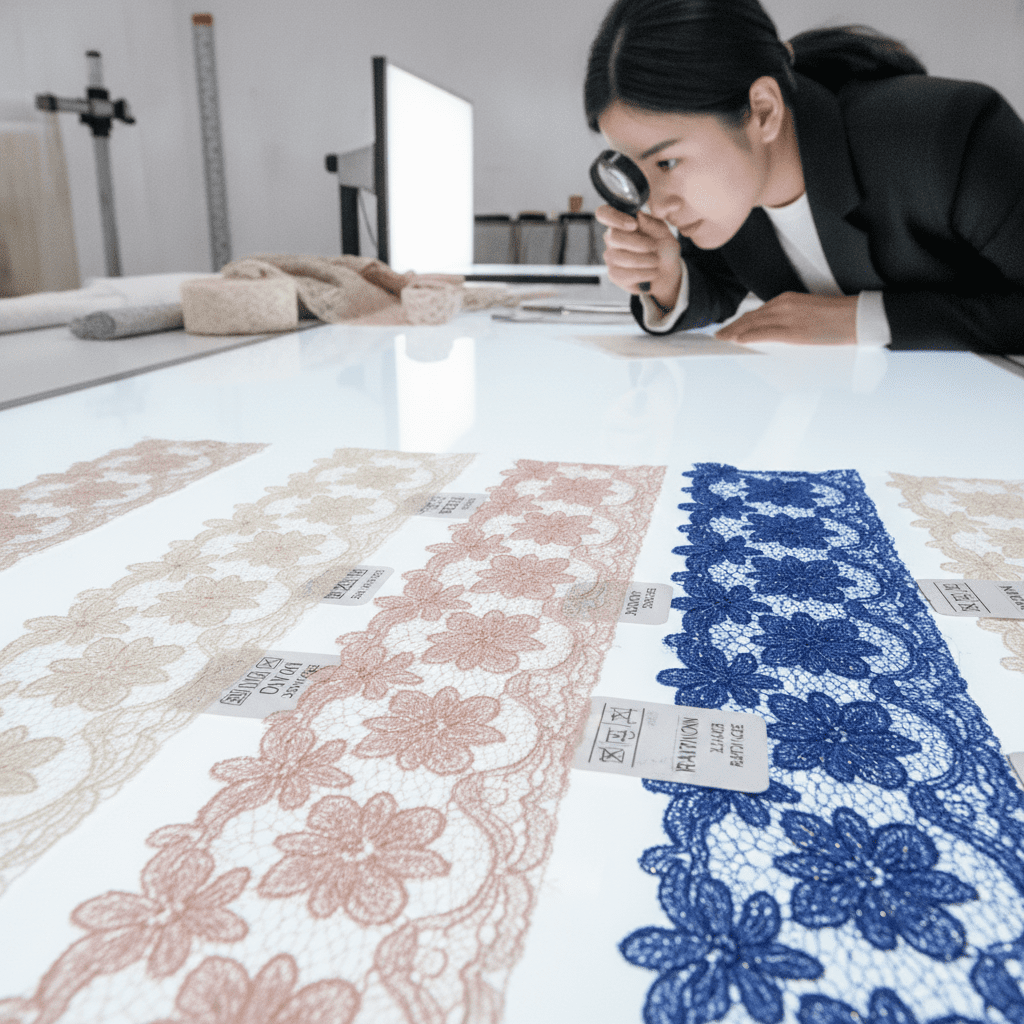
3. Ground Fabric Specification
Request detailed information regarding fabric composition, yarn quality, and mesh structure. Ground fabric selection significantly impacts final performance.
4. Certification Requirements
For apparel applications, prioritize suppliers offering OEKO-TEX Standard 100 certification. Recycled collections may also require GRS certification.
5. Consistency Across Production Runs
Evaluate color consistency, width tolerance, embroidery accuracy, and repeatability across multiple rolls to reduce production risk.
FAQs
What is the difference between embroidered lace and woven lace?
Embroidered lace is created by stitching patterns onto a fabric base, while woven lace forms patterns directly during fabric production.
Which Embroidered Lace Trim is best for bridalwear?
Corded lace, embroidered tulle, guipure lace, and beaded lace are the most common bridal options, depending on the desired look and budget.
Is guipure lace the same as chemical lace?
Yes. Both terms describe lace made on a soluble backing that is removed after embroidery.
Why is beaded lace more expensive?
Additional materials, slower production speeds, and more intensive quality control increase manufacturing costs.
Can Embroidered Lace Trim be used in stretch garments?
Yes, when produced on stretch tulle or elastic mesh. However, dense embroidery may reduce overall stretch performance.