
A complete B2B sourcing guide for fashion brands, garment factories, bridal designers, wholesalers, and textile importers.
Understanding Wholesale Embroidery Fabric
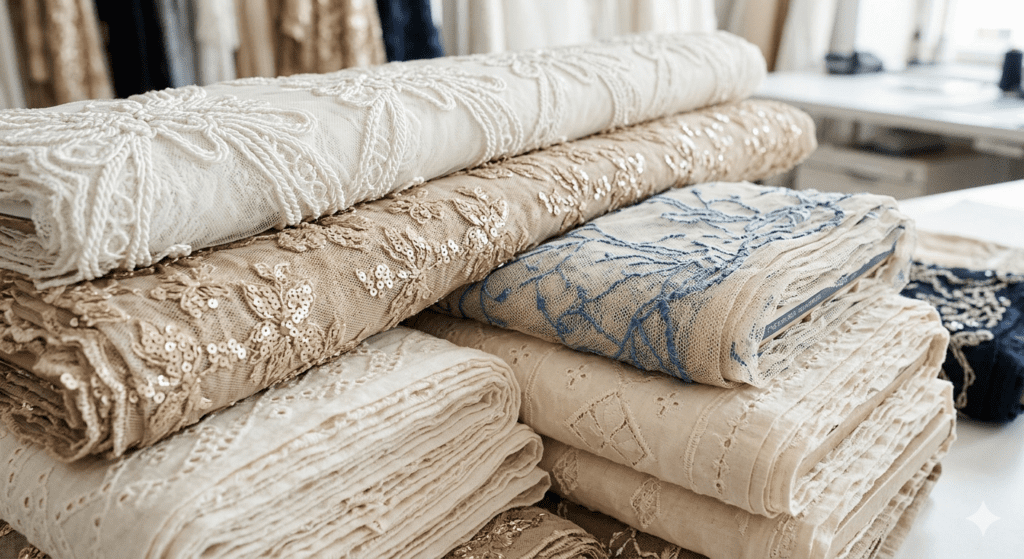
Embroidery fabric refers to textile materials enhanced with decorative stitching, lace motifs, sequins, beads, or threadwork using computerized embroidery machines or handcraft techniques. In the global apparel and home textile industry, embroidery fabric is widely used in bridal wear, evening gowns, lingerie, luxury fashion, curtains, accessories, and premium garment decoration.
For B2B buyers, sourcing embroidery fabric online provides access to broader design catalogs, factory-direct pricing, customized production, and faster global logistics. Professional suppliers today not only offer standard lace collections but also support personalized embroidery developments for private labels and fashion brands.
Trusted Online Sources for Wholesale Embroidery Fabric
When sourcing embroidery fabric online, choosing an experienced manufacturer is critical for maintaining quality consistency, competitive pricing, and reliable delivery schedules. Professional buyers often prefer working directly with a factory-based
lace trim supplier
that can support both ready-stock products and OEM developments.
Reliable factories offering
wholesale lace trim
solutions typically provide wider design catalogs, flexible MOQs, and stable production capacity for fashion brands, bridal studios, and garment manufacturers worldwide.
For bridal fashion collections and luxury eveningwear, sourcing premium
bridal lace trim
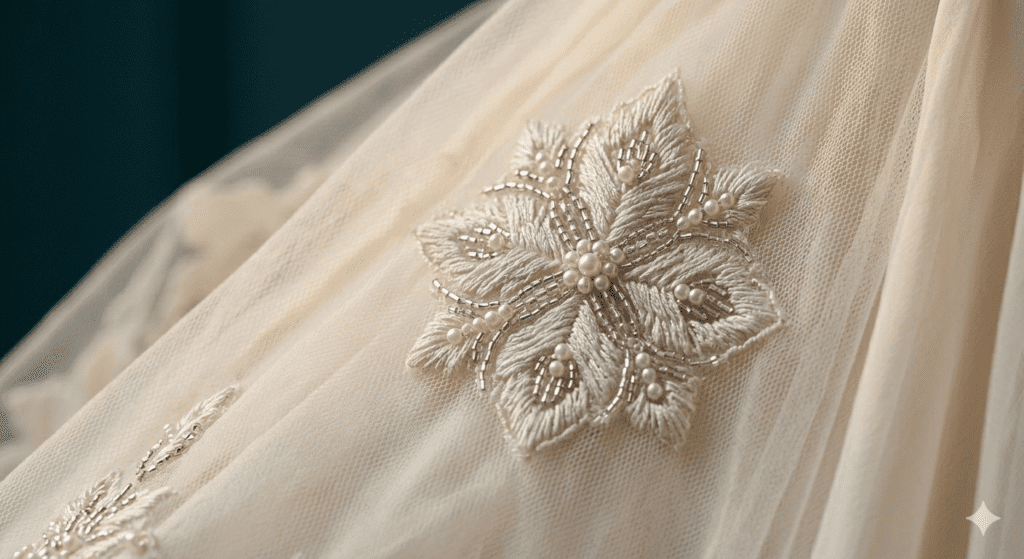
is essential to achieving elegant texture, durability, and sophisticated garment finishing. High-end bridal lace often includes cord embroidery, sequins, beadwork, and metallic thread detailing.
Many international buyers now prefer customized embroidery development to create exclusive product collections. Working with a supplier specializing in
custom lace trim
allows brands to develop unique embroidery patterns, personalized colors, logo motifs, and proprietary lace structures for stronger market differentiation.
Before confirming bulk production, experienced B2B purchasers usually request
Technical Comparison of Common Embroidery Fabrics
Professional B2B Quality Inspection Standards
- Embroidery Density: Check stitch consistency and thread tightness.
- Color Fastness: Verify washing and UV resistance standards.
- Backing Stability: Ensure the embroidery backing does not wrinkle or distort.
- Cutting Precision: Lace edges should remain clean without loose yarn.
- Repeat Accuracy: Pattern repeats must align perfectly in bulk production.
- Fabric Weight Consistency: GSM tolerance should remain within factory standards.
Requesting physical samples before mass production is one of the most effective ways to reduce sourcing risks and verify actual embroidery quality standards.
2026 Embroidery Fabric Industry Trends
3D Embroidery Technology
High-density 3D embroidery and corded lace are becoming dominant in luxury garments and bridal couture collections.
Sustainable Materials
Eco-friendly cotton, recycled polyester mesh, and biodegradable embroidery yarns are increasingly popular among fashion brands targeting sustainable markets.
Metallic & Pearl Effects
Metallic embroidery yarns and pearl embellishments are driving demand in premium eveningwear and designer apparel collections.
Digital Sampling & OEM Development
More embroidery factories now provide CAD simulation previews and digital strike-offs to accelerate custom product development cycles.
Embroidery Fabric Care & Maintenance Guide
- Store embroidery fabrics in dry and temperature-controlled environments.
- Avoid prolonged sunlight exposure to protect thread color stability.
- Use low-temperature steaming during garment production.
- Protect delicate sequins and beads during transportation.
- Perform wash testing before large-scale garment manufacturing.
Frequently Asked Questions
What is the typical MOQ for custom embroidery fabric?
MOQ varies depending on embroidery complexity, yarn selection, and dyeing requirements. Many suppliers support flexible MOQs for growing fashion brands.
How can I verify embroidery quality before ordering?
Request samples, QC reports, and production videos before approving bulk manufacturing.
How long does custom embroidery production take?
Sampling usually takes 7-15 days, while bulk production requires approximately 20-35 days depending on order quantity.
Which embroidery fabrics are most popular for bridal collections?
Corded lace, pearl embroidery, metallic lace, and sequined tulle remain top choices for luxury bridal fashion.
Partner with Yituo Lace for Reliable Factory Direct Supply
Yituo Lace specializes in wholesale embroidery fabric, lace trims, and OEM custom lace solutions for global fashion brands, bridal manufacturers, garment factories, and textile wholesalers. With advanced embroidery equipment, stable quality control, and flexible customization services, we help buyers accelerate sourcing efficiency while reducing procurement costs.