
The real driver of lace pricing is the specific manufacturing method used. Each technique, from high-speed industrial knitting to slow, hand-guided work, has a unique cost structure based on machinery, production speed, and setup complexity. Understanding these crafts gives you a framework for evaluating quotes, making smarter sourcing decisions, and knowing exactly when a higher price is justified.
What Are Lace Crafts?
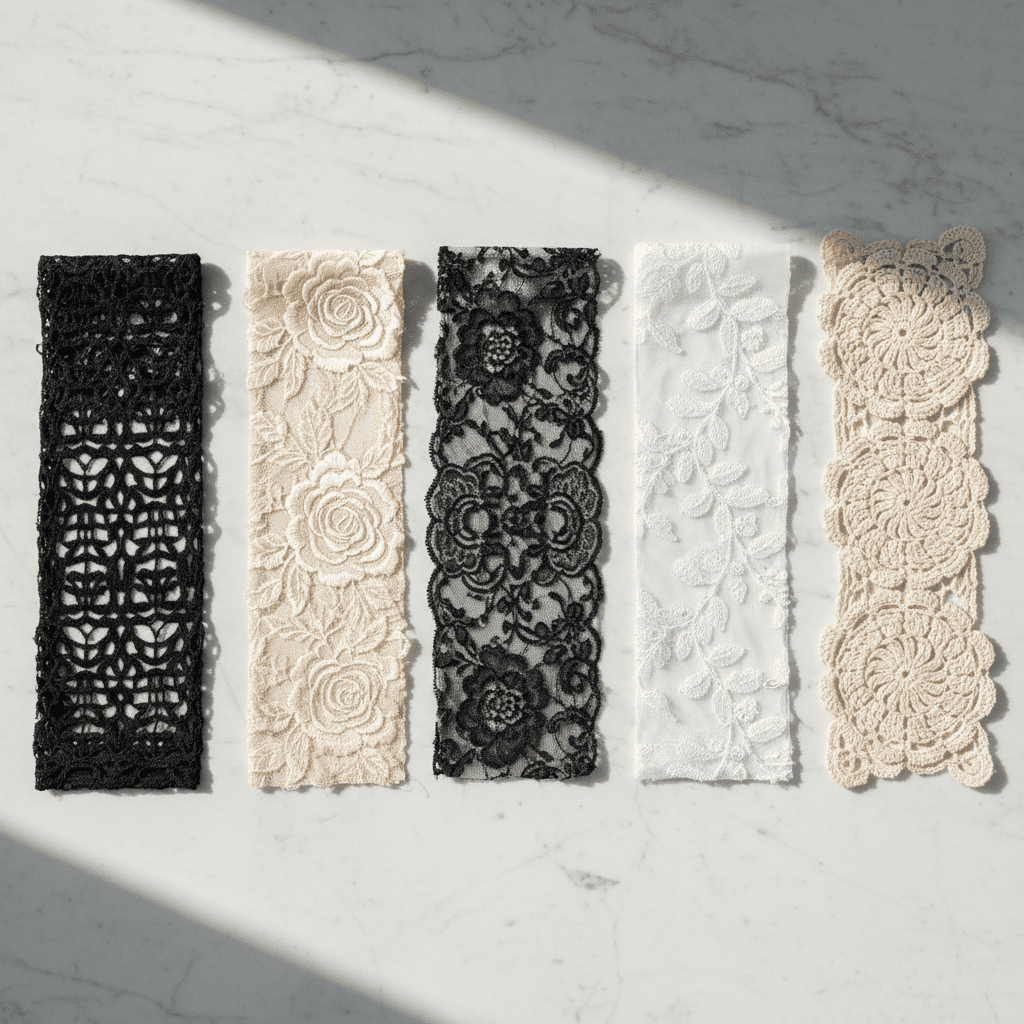
The word “lace” describes a category of openwork fabric, but it says nothing about how it was made. Lace crafts are the specific techniques and machinery used to construct that fabric. What makes these crafts so directly tied to price is that each has a fundamentally different cost structure. It’s not just about labor or materials; it’s the interplay between machine complexity, setup time, production speed, and skill. Two laces made from identical yarn can have vastly different prices simply because one required a more complex, slower, or more specialized production process.
The Main Lace Crafts and What They Cost
Raschel Lace
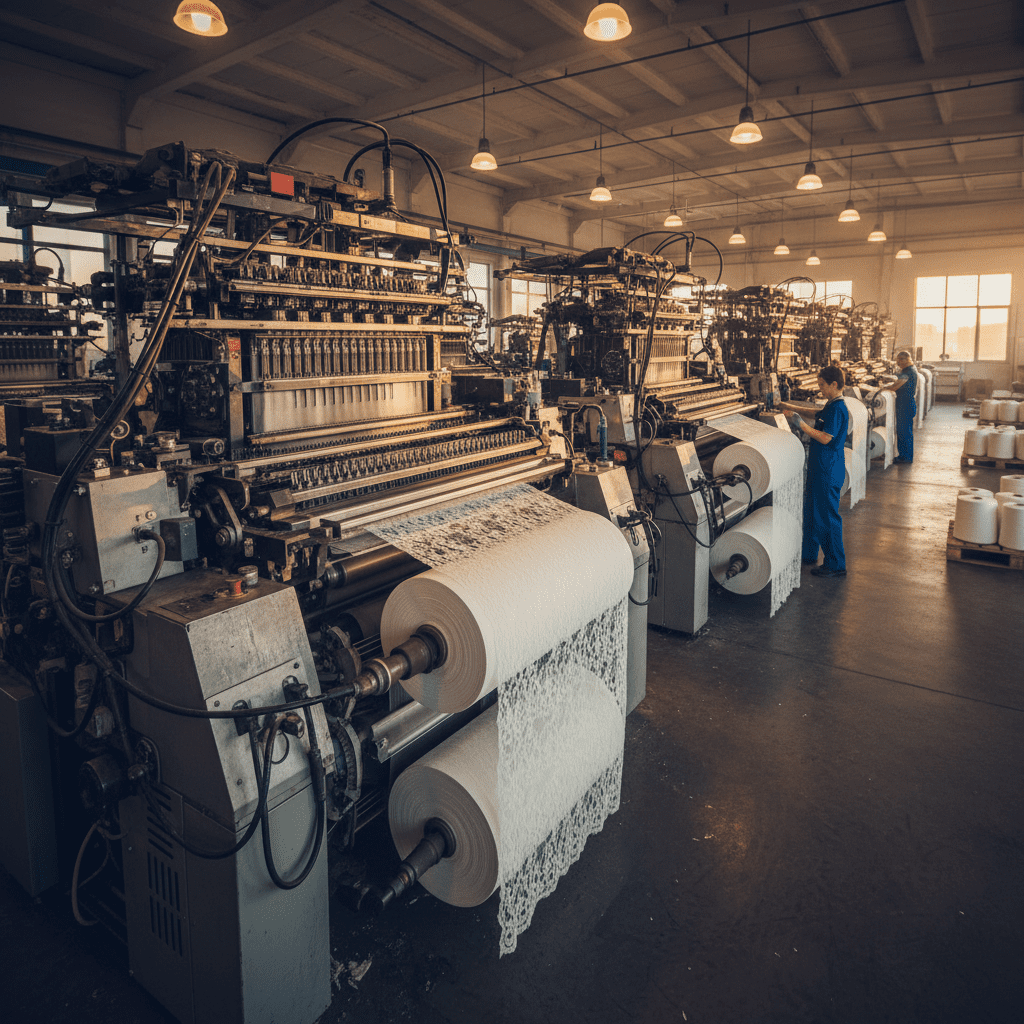
Raschel lace is the workhorse of the modern lace industry. Produced on warp-knitting machines, it is known for its efficiency and speed, making it the most common and cost-accessible lace on the market.
-
How It’s Made: Produced on high-speed warp-knitting machines with multiple guide bars.
-
Why It Costs What It Does:
-
High Efficiency: Once set up, machines produce large volumes with minimal intervention, lowering the per-meter cost.
-
Lower Setup Complexity: Simpler to program compared to Jacquard, making it suitable for standard patterns.
-
Trade-off: Struggles with highly intricate, non-repeating patterns without sacrificing speed or quality.
-
-
Best For: Lingerie trim, sportswear edging, and high-volume decorative applications where cost is a primary factor.
Jacquard Lace
Jacquard lace elevates pattern possibilities by allowing for individual needle control, a significant step up from the group-based control of Raschel machines.
-
How It’s Made: Produced on warp-knitting machines equipped with a Jacquard mechanism for precise, individual needle control.
-
Why It Costs What It Does:
-
Complex Programming: Developing and programming intricate, non-repeating designs is time-intensive.
-
Slower Production Speed: Creating complex motifs requires the machine to run more slowly.
-
Higher Setup Costs: The complexity leads to higher initial costs and minimum order quantities for custom designs.
-
-
Best For: Premium apparel, bridal collections, and applications where complex floral designs and multi-layered textures justify the higher price.
Guipure / Venice Lace
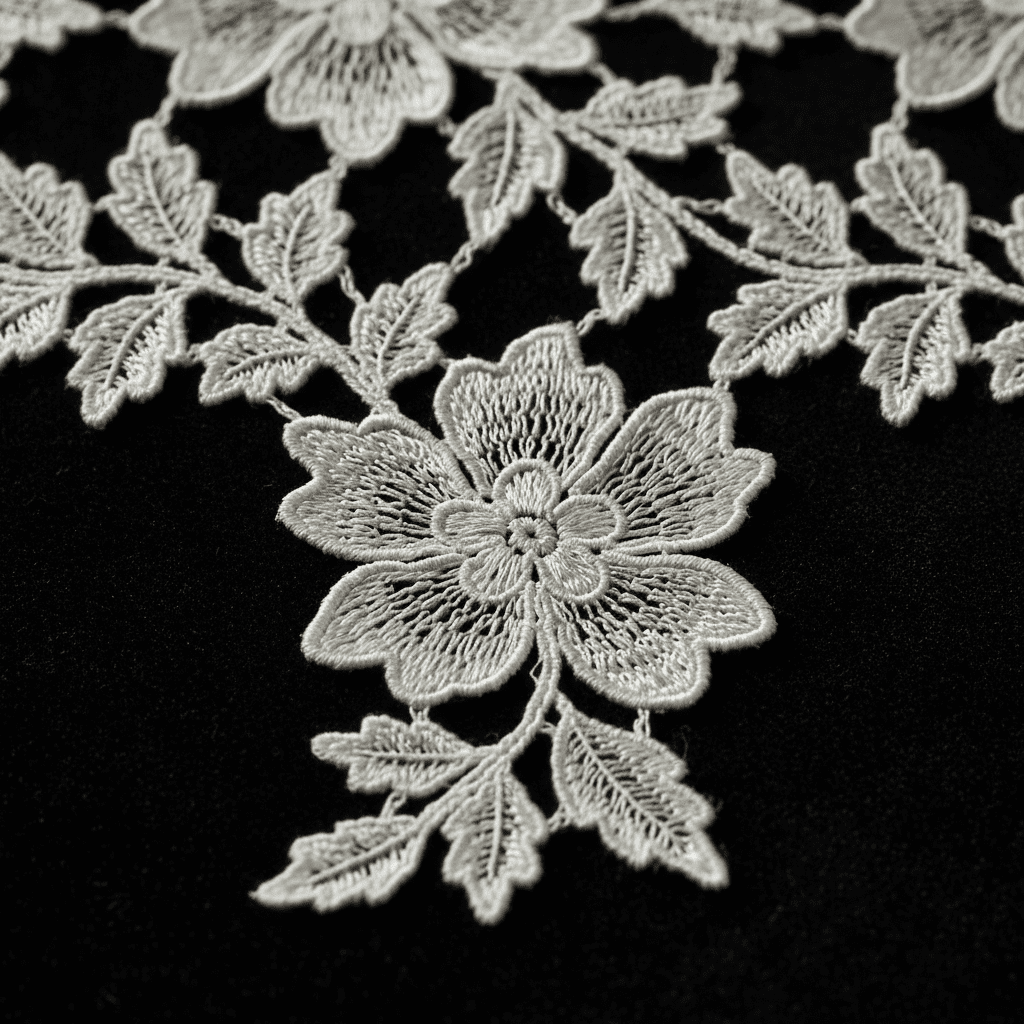
Structurally unique, Guipure lace has no mesh background. The pattern elements connect directly to each other, creating a dense, sculptural, and three-dimensional fabric.
-
How It’s Made: An embroidery-like pattern is stitched onto a base fabric that is later dissolved, leaving only the interconnected motif.
-
Why It Costs What It Does:
-
Multi-Step Process: The dissolution step (using chemical or water-soluble substrates) adds significant time and material cost.
-
Material Density: Requires more thread than net-based laces to create its self-supporting structure.
-
Precision Required: The process demands high precision to ensure the structure remains intact after the base is removed.
-
-
Best For: Bridal gowns, couture garments, and high-end accessories where the lace’s weight and sculptural quality are key design features.
Chantilly Lace
Originating in France, traditional Chantilly is a fine, delicate lace defined by a hexagonal net ground and floral motifs outlined in a heavier thread. True Chantilly is a hallmark of luxury.
-
How It’s Made: Modern genuine Chantilly is produced on specialized Leavers looms—mechanically complex machines from the 19th century.
-
Why It Costs What It Does:
-
Extreme Scarcity: Only a handful of manufacturers worldwide still operate and maintain Leavers looms.
-
Very Slow Production: These machines are notoriously slow, producing only a small amount of lace per hour.
-
High Skill Requirement: Operating a Leavers loom requires immense technical expertise.
-
-
Best For: Haute couture and luxury bridal wear where its irreplaceable, almost weightless texture and pattern depth are paramount. Note: “Chantilly-style” is often a Raschel imitation.
Embroidered Lace
This craft adds a decorative layer onto an existing base fabric, creating texture and dimension that woven or knitted lace cannot achieve alone.
-
How It’s Made: A pattern is embroidered onto a base fabric (typically net or mesh) using multi-head machines or, for luxury goods, by hand.
-
Why It Costs What It Does:
-
Additive Cost Structure: The final price includes the cost of the base fabric, embroidery thread, machine time, and finishing.
-
Variable Complexity: Costs increase with features like metallic thread, sequins, or 3D floral appliqués.
-
-
Best For: Garments where texture is key. The cost is justified when the embroidery is integral to the design, not just a decorative afterthought.
Crochet Lace
While rooted in handcraft, the vast majority of commercial crochet lace is machine-made, replicating the looped structure at industrial speeds.
-
How It’s Made: Specialized warp-knitting and braiding machines create the interlocking loop structure characteristic of crochet.
-
Why It Costs What It Does:
-
Machine vs. Handmade: The key price distinction. Machine crochet is priced competitively with other industrial laces.
-
Labor-Intensive Handmade: Genuine handmade crochet, produced in small quantities, commands a significant premium due to irreducible labor time.
-
-
Best For: Machine crochet is used for trims, home textiles, and bohemian-style apparel. Handmade crochet is a niche, artisanal product.
How Lace Is Made — The Process Behind the Price
The cost of any lace is the sum of its production stages. Understanding this process reveals where value is added.
-
Yarn Selection & Preparation: The journey starts with the fiber—nylon, polyester, cotton, or silk. Natural fibers and specialty yarns cost more and may require adjusted machine settings, increasing the baseline material cost.
-
Machine Setup & Programming: This is a major, often hidden, cost driver. Programming a new pattern into a Jacquard loom or setting up a Raschel machine is a fixed cost. For small custom orders, this cost is spread over fewer meters, driving up the per-meter price significantly.
-
Dyeing & Color Matching: Achieving a precise color match requires multiple test batches, consuming time, materials, and dye. Factories with in-house dyeing have better control over this process, affecting both cost and consistency.
-
Finishing & Quality Control: The final steps—heat-setting to stabilize the fabric, scalloping edges, trimming loose threads, and inspection—all add to the final cost. A clean, perfectly scalloped edge is not free; it is the result of specialized equipment and processing.
The History of Lace Crafts
Global Origins
Lace emerged in Europe in the late 15th century. Early forms like needle lace and bobbin lace were painstakingly handmade, stitch by stitch. This labor-intensive craft made lace one of the most expensive commodities of the era, with its use often restricted by law to nobility and clergy.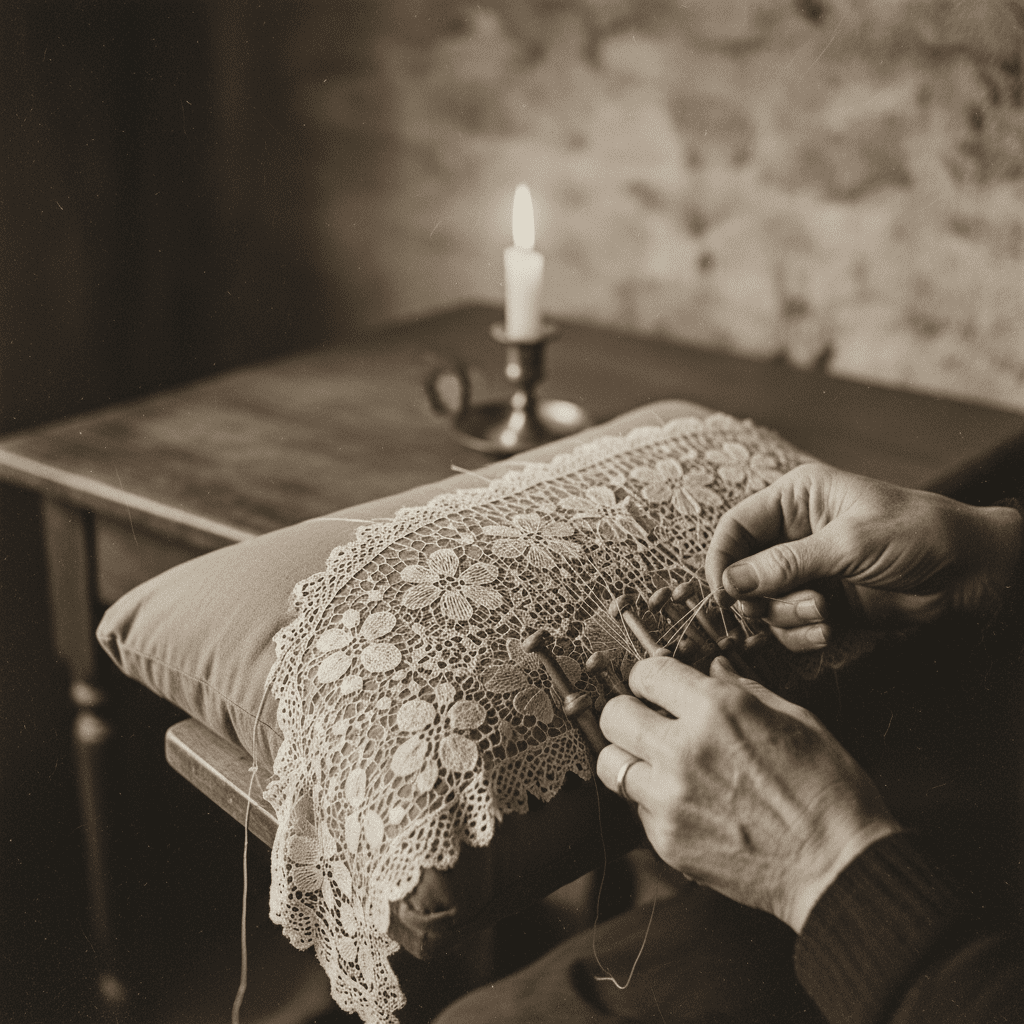
Industrial Revolution and Modern Manufacturing
The 19th century mechanized lace production. John Heathcoat’s bobbin net machine (1808) and the subsequent Leavers loom democratized lace, creating a two-tier market: machine-made lace for the middle class and handmade lace as a persistent luxury. The 20th century brought Raschel and Jacquard knitting, which dominate today’s global industry, with manufacturing concentrated in China, India, and parts of Europe. The craft knowledge once held by artisans now lives in machine programming and the institutional expertise of factories.
Modern Applications — Matching Craft to Budget
The key is to choose the right craft for the job. Mismatches—using a commodity lace for a luxury product or a premium lace where it’s not needed—are common sourcing errors.
-
Lingerie & Activewear: Raschel lace dominates due to its ideal blend of stretch, durability, and cost-efficiency for high-volume production.
-
Bridal & Couture: Guipure, Chantilly, and high-end Jacquard are standard. The garment’s value is tied to the material quality, and a compromise on the lace will show.
-
Accessories & Home Textiles: Heavier Raschel and machine crochet are practical choices, prioritizing durability and stability over fine texture.
Finding a manufacturer with genuine capability in the right craft is as important as choosing the craft itself.
FAQs
What is the most expensive type of lace craft? Genuine Chantilly lace made on Leavers looms is among the most expensive commercial laces due to slow production and scarce machinery. True handmade needle and bobbin laces are technically more expensive but operate outside the mainstream commercial supply chain.
Why does custom lace cost more than stock lace? Stock lace spreads setup costs over huge production runs. Custom lace requires dedicated programming, sampling, and dyeing for a specific order, concentrating those fixed costs onto a smaller volume and raising the per-meter price.
What is the difference between machine crochet lace and handmade crochet lace? Machine crochet lace uses industrial equipment to replicate the look at scale and is priced competitively. Handmade crochet is built stitch by stitch by an artisan, making it far more labor-intensive and expensive. The difference is in the labor, not just the look.
How does lace craftsmanship affect fabric quality?