
“Why is your lace more expensive than the other supplier?”
I hear this question at least once a week. And honestly, it’s a fair question. When you’re comparing quotes, the price gap between suppliers can feel confusing—sometimes even suspicious.
Here’s what I’ve learned after years of manufacturing lace trim: price differences almost always come down to five factors—production method, material quality, design complexity, order volume, and quality control. Once you understand these, you’ll know exactly what you’re paying for.
Let me walk you through each one.
Factor 1: Production Method
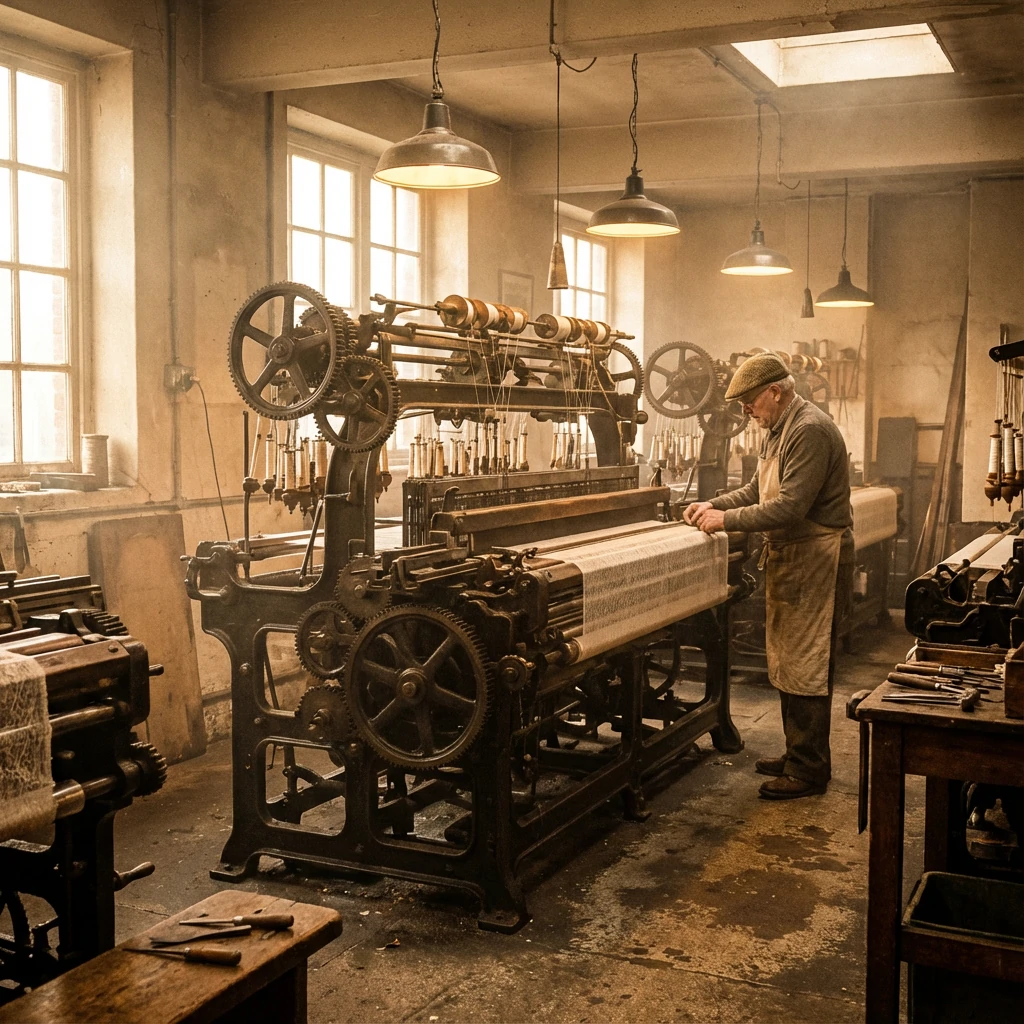
Not all lace is made the same way, and the production method is often the biggest cost driver.
Machine-made lace uses modern looms that can produce hundreds of yards per hour. It’s efficient, consistent, and affordable. Most commercial lace trim falls into this category, and there’s nothing wrong with it for everyday applications.
Leavers lace is a different story. These century-old machines run slowly—sometimes producing just a few yards per hour. The result is incredibly fine detail and a delicate hand feel that modern machines can’t replicate. But that craftsmanship comes at 5-10x the price.
Handmade lace sits at the top of the pyramid. We’re talking about techniques like bobbin lace or needle lace, where skilled artisans spend days creating a single piece. This is heirloom territory—museum-quality work that commands premium prices.
| Production Type | Speed | Detail Level | Relative Cost |
|---|---|---|---|
| Modern machine | Fast | Good | $ |
| Leavers machine | Slow | Excellent | $$$ |
| Handmade | Very slow | Exceptional | $$$$$ |
Factor 2: Material Quality
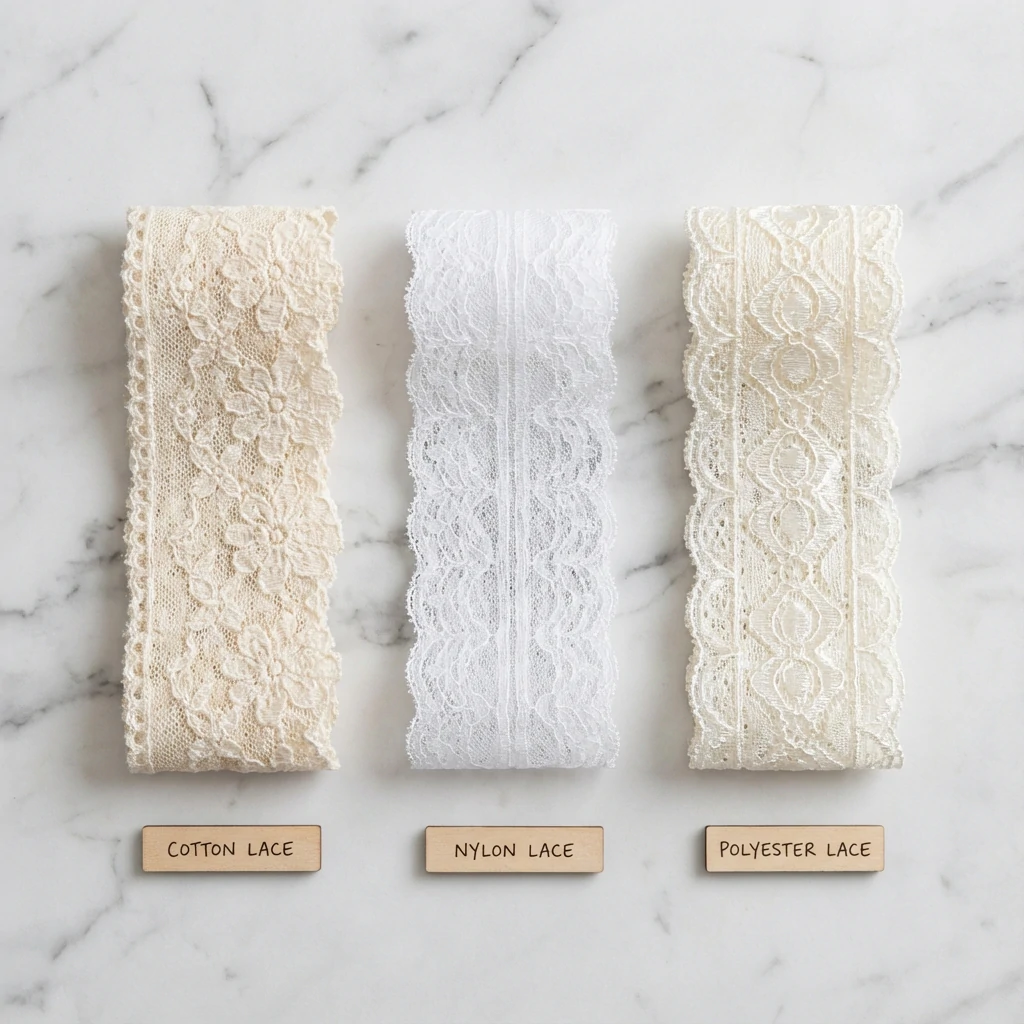
The yarn going into your lace affects everything—how it feels, how it drapes, how long it lasts, and yes, how much it costs.
Cotton lace ranges wildly in price depending on the cotton grade. Egyptian or Pima cotton creates soft, lustrous lace that holds dye beautifully. Generic cotton works fine but lacks that premium feel.
Nylon lace offers durability and a smooth finish at a lower cost than cotton. It’s the workhorse of the lingerie industry. But even here, yarn quality varies—cheap nylon feels plastic, while quality nylon has a silk-like hand.
Polyester lace is the most budget-friendly option. It resists wrinkles and holds up well to washing. The trade-off is breathability and that slightly synthetic feel some buyers notice.
Blended materials combine the best of each. A cotton-nylon blend might give you the softness of cotton with the durability of nylon—at a mid-range price point.
Factor 3: Design Complexity
A simple scallop edge costs less than an intricate floral pattern. This isn’t arbitrary—it reflects real production differences.
Complex designs require more thread, more machine time, and more skilled setup. A lace with dense embroidery, multiple thread colors, or unusual widths demands extra attention at every stage.
Width matters too. Narrow trims (under 2 inches) are straightforward to produce. Wide laces (6 inches or more) require larger looms and more careful handling, which adds to the cost.
Custom designs carry setup fees because we need to program new patterns into the machines. If you’re ordering a stock design, you skip this cost entirely. But if you want something unique to your brand, expect to pay for that exclusivity.
Factor 4: MOQ and Dye Lot Fees
Here’s where many buyers get surprised: small orders cost more per yard than large orders.
It’s not about greed—it’s about how production actually works.
Every color change requires a dye lot. Our minimum dye lot fee runs around $70, regardless of whether you’re dyeing 100 yards or 2,000 yards. Order 100 yards, and that $70 spreads across fewer units, pushing your per-yard cost up significantly.
| Order Size | Dye Lot Fee | Fee Per Yard |
|---|---|---|
| 100 yards | $70 | $0.70 |
| 500 yards | $70 | $0.14 |
| 2,000 yards | $70 | $0.035 |
Machine setup works similarly. Switching from one lace pattern to another takes time—cleaning, threading, calibration. Larger orders spread that setup time across more yards.
This is why we keep stock colors available. If you can work with white, black, ivory, or a few other standard shades, you avoid dye lot fees entirely and get better pricing.
Factor 5: Quality Control
The cheapest lace skips steps that you’ll eventually pay for anyway—just later, and in more painful ways.
Inspection catches defects before they reach your production floor. We check for broken threads, uneven edges, color inconsistencies, and pattern flaws. This takes time and trained eyes.
Proper packaging prevents damage during shipping. Lace wound too tightly creases. Lace packed without protection snags. We use tissue interleaving and careful rolling to keep your trim pristine.
Waste factors matter too. Responsible manufacturers account for the unusable sections at the beginning and end of each run. Cut-rate suppliers might ship you everything, including the flawed parts, leaving you to sort it out.
When you see a price that seems too low, ask yourself: what are they skipping?
How to Tell If a Lace Price Is Fair
Price alone doesn’t tell you much. A $0.50/yard lace might be a great deal—or a disaster waiting to happen. Here’s how to evaluate:
Request samples first. Feel the hand, check the edges, examine the pattern detail. Compare samples from different suppliers side by side.
Ask about the material composition. “Lace trim” tells you nothing. Get specific: What percentage cotton? What type of nylon? The answer reveals whether you’re comparing similar products.
Understand what’s included. Does the price include shipping? Packaging? Are there minimum order fees? A seemingly cheap quote can get expensive once you add the extras.
Calculate the true cost per garment. If premium lace adds $0.30 to your product cost but improves perceived value by $5, that’s a smart investment. If cheap lace saves $0.10 but causes production delays from defects, you’ve lost money.
FAQs
Is lace considered a luxury fabric?
It depends on the type. Handmade lace and Leavers lace are absolutely luxury materials—they’re used in couture and heirloom pieces. Machine-made lace is more accessible and used in everyday fashion. The “luxury” designation comes from craftsmanship and material quality, not just the fact that it’s lace.
Is lace more expensive than other fabrics?
Generally, yes. Lace requires more complex production than plain woven fabrics. Even machine-made lace involves intricate threading patterns that take longer to produce than basic textiles. However, budget polyester lace can be quite affordable—it’s the cotton, nylon, and handmade varieties that command higher prices.
Why is handmade lace so expensive?
Time. A skilled lace maker might spend 40+ hours creating a single yard of bobbin lace. When you factor in years of training and the scarcity of artisans who still practice these techniques, the price reflects genuine labor and expertise. Machine lace produces in minutes what handmade takes days to create.
How can I reduce lace costs without sacrificing quality?