
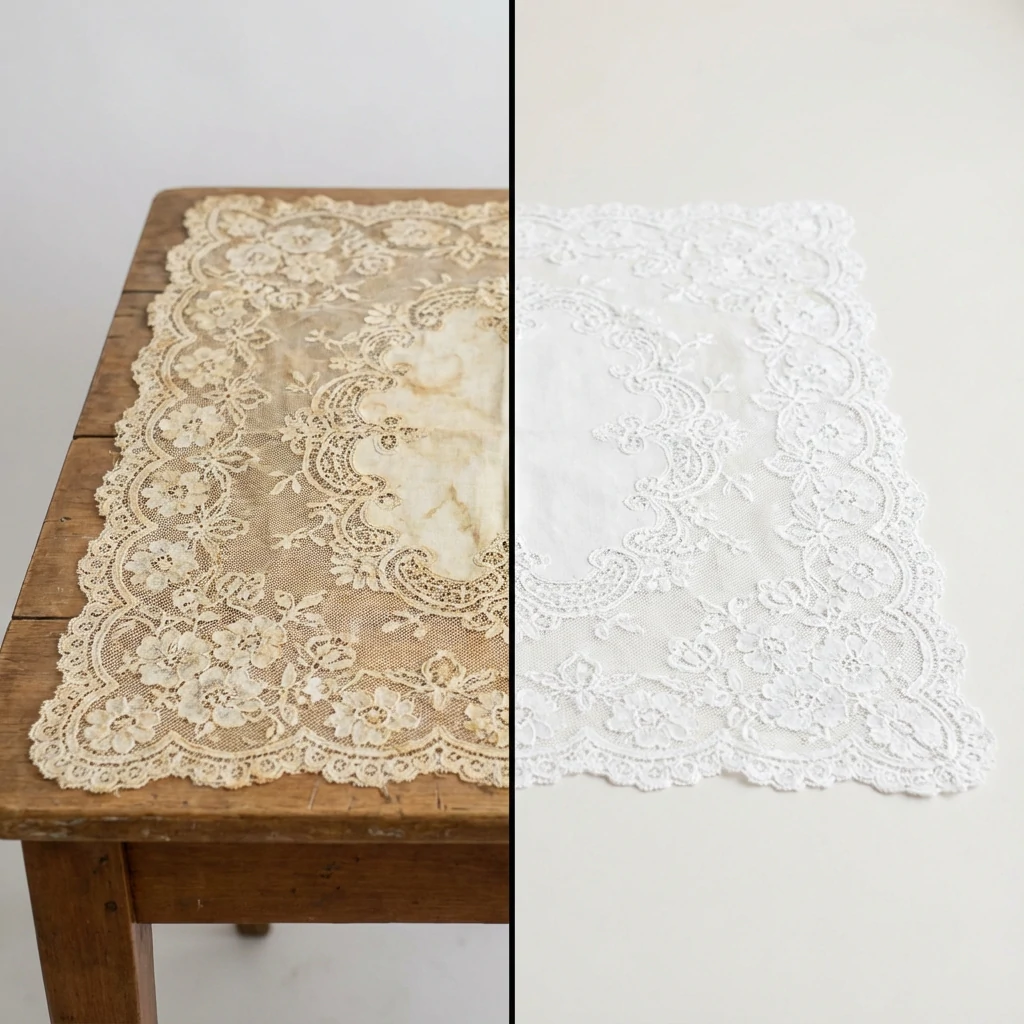
I ruined my grandmother’s lace tablecloth the first time I tried to clean it. Grabbed the chlorine bleach, soaked it overnight, and watched the delicate threads dissolve into mush by morning. That $200 lesson taught me something most cleaning guides won’t tell you: the method that saves one piece of lace will destroy another.
The difference comes down to fiber type. Cotton can handle what silk cannot. Antique lace needs gentler treatment than modern synthetics. Get this wrong, and no amount of careful technique will save your piece.
This guide gives you five whitening methods ranked from safest to riskiest. You’ll learn how to identify your lace fiber in two minutes, choose the right approach, and avoid the mistakes I made. By the end, that yellowed heirloom will look like it did decades ago.
Know Your Lace First (It Decides Everything)
Here’s the thing most guides skip: they jump straight to cleaning instructions without asking what you’re cleaning. That’s like giving someone medication without knowing their allergies. The fiber content of your lace determines which chemicals are safe, how long you can soak it, and whether heat will help or destroy it.
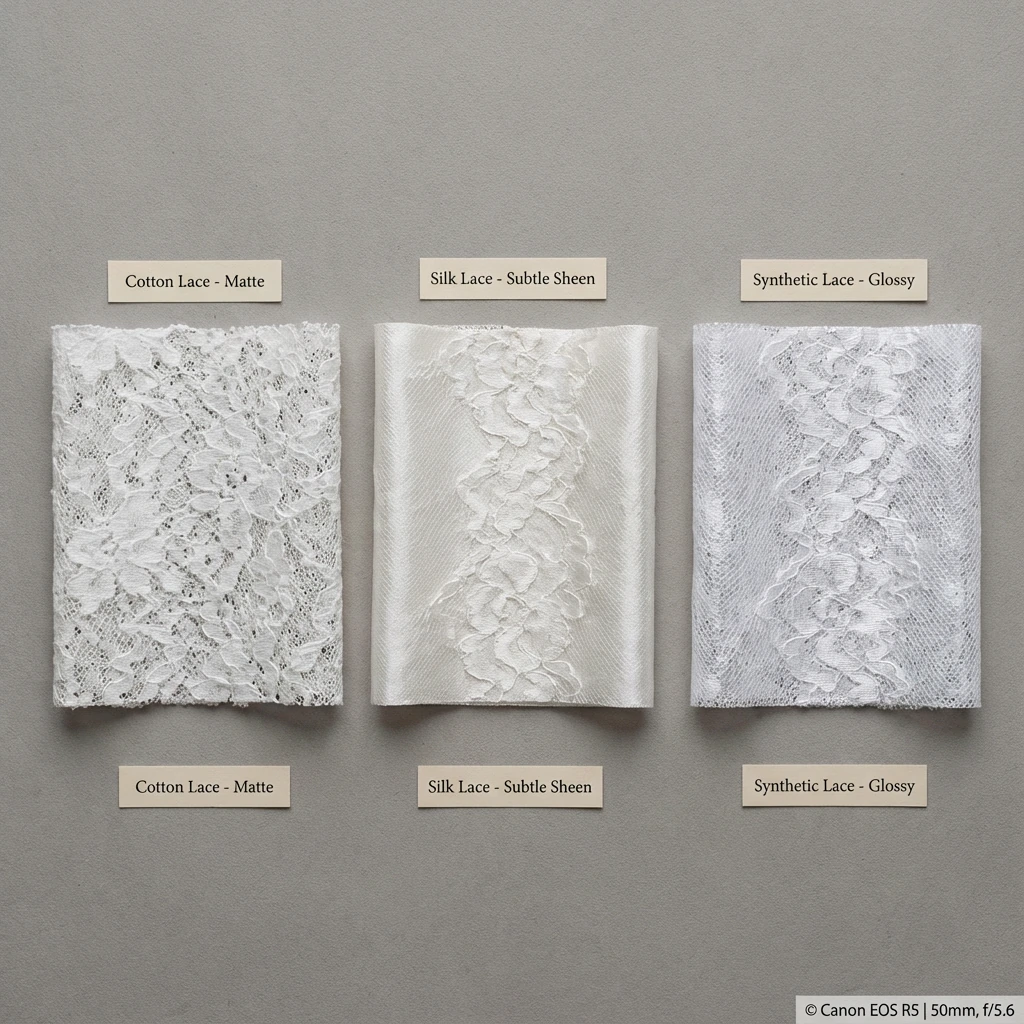
Cotton and linen are the workhorses of the lace world. They’re sturdy, absorbent, and can tolerate most cleaning agents including diluted bleach. You’ll find these fibers in tablecloths, doilies, and curtain trims—the everyday lace pieces that have accumulated decades of yellowing.
Silk is a different animal entirely. It’s protein-based, which means chlorine bleach will literally dissolve it. The same goes for wool blends. If your lace feels soft and fluid with a subtle sheen, treat it like the delicate creature it is. Stick to the gentlest methods only.
Synthetic lace—nylon, polyester, and their cousins—falls somewhere in the middle. It won’t dissolve like silk, but it can melt with heat and discolor with harsh chemicals. The good news? It’s also less prone to yellowing in the first place.
The Two-Minute Fiber Test
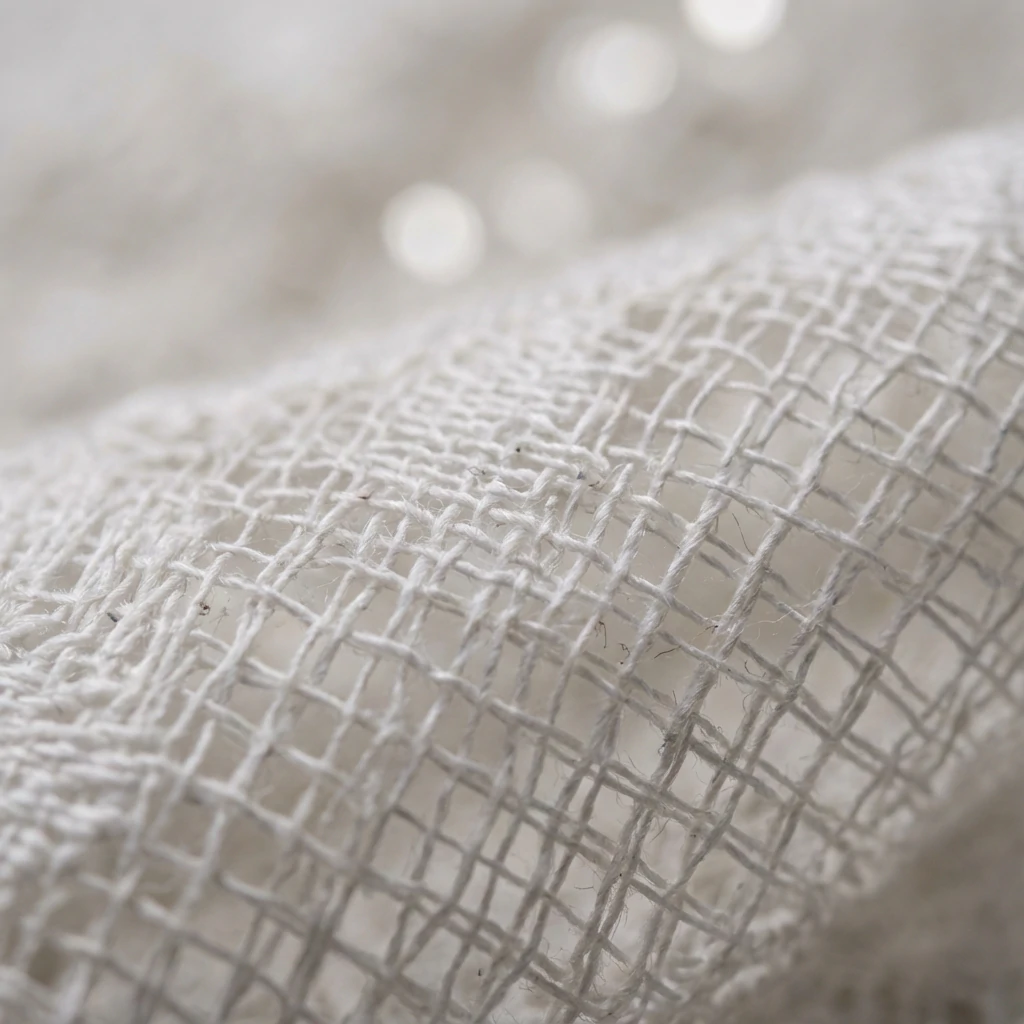
If you have a loose thread or hidden corner, the burn test tells you everything. Cotton burns steadily with an orange flame and smells like burning paper, leaving soft gray ash. Silk burns slowly and self-extinguishes, smelling like burning hair and leaving a crushable black bead. Synthetics melt and drip with a chemical smell, hardening into a plastic bead.
No test area available? Try the water test instead. Natural fibers absorb water immediately while synthetics repel it and bead up. This won’t distinguish cotton from silk, but it separates natural from synthetic.
| Fiber | Burn Behavior | Smell | Cleaning Tolerance |
|---|---|---|---|
| Cotton/Linen | Steady orange flame | Burning paper | High |
| Silk/Wool | Slow, self-extinguishes | Burning hair | Low |
| Synthetic | Melts and drips | Chemical/plastic | Medium |
[→ Want to understand lace materials deeper? See our guide to what lace is made of.]
The 5 Methods, Ranked by Safety
I always tell people to start gentle and escalate only if needed. The temptation is to reach for the strongest cleaner first, thinking it’ll work faster. But stronger isn’t better when you’re dealing with delicate textiles. The safest method that works is always the right choice.
Here’s the overview before we dive into each one:
| Method | Risk Level | Best For | Soak Time |
|---|---|---|---|
| Oxygen Bleach | ⭐ Low | Cotton, linen, most synthetics | 1-4 hours |
| Baking Soda + Vinegar | ⭐ Very Low | All fibers including silk | 1 hour |
| Lemon + Sunlight | ⭐⭐ Low-Medium | Cotton, linen only | 1-2 hours |
| Hydrogen Peroxide | ⭐⭐ Medium | Cotton, linen, sturdy synthetics | 30 min-2 hours |
| Chlorine Bleach | ⭐⭐⭐ High | White cotton only, last resort | 5-10 minutes max |
Method 1: Oxygen Bleach Soak
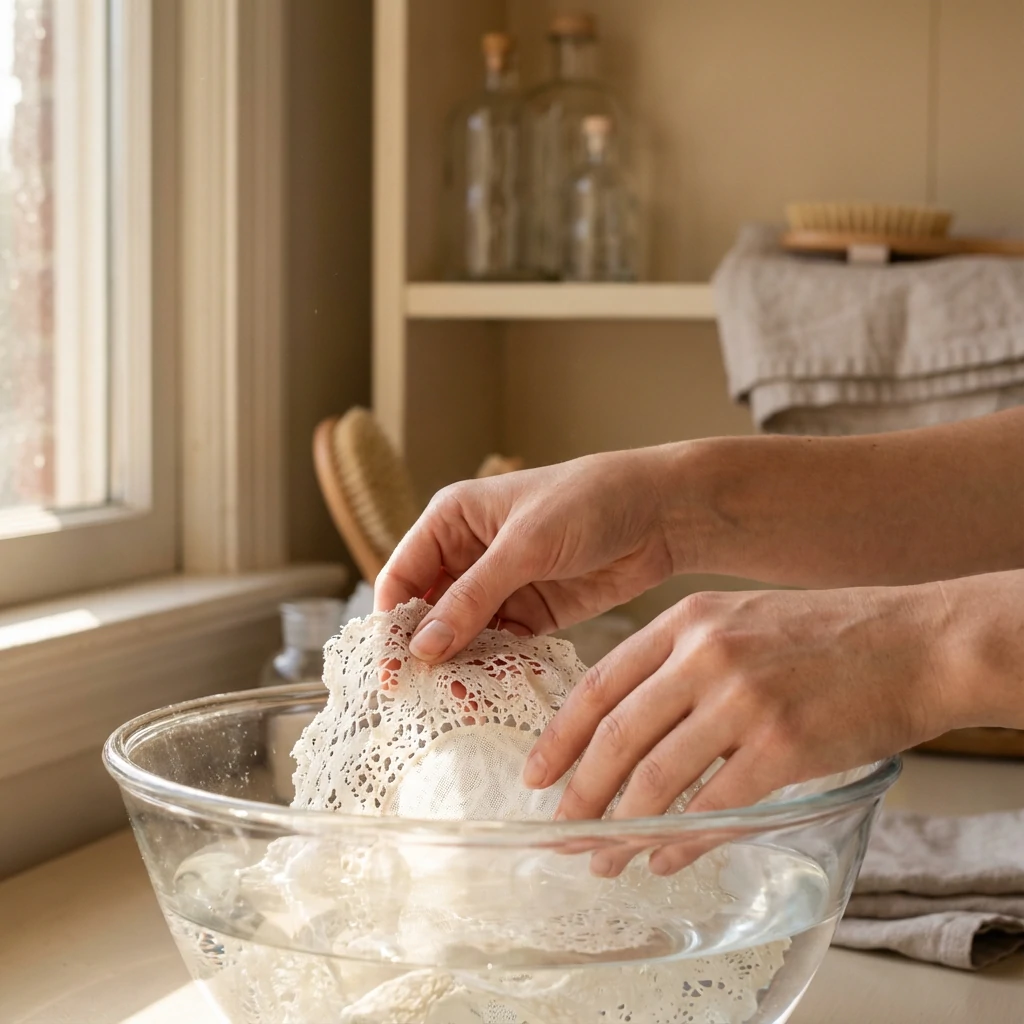
This is my go-to for most lace cleaning jobs. Oxygen bleach—sold as OxiClean, Vanish, or generic “oxy” cleaners—releases hydrogen peroxide slowly as it dissolves. The result? Gentle, steady whitening without the fiber damage that comes from harsher chemicals.
You’ll need oxygen bleach powder, cool water, and a plastic basin. Metal containers can react with the bleach, so avoid them. Dissolve one tablespoon per gallon of cool water, making sure no granules remain before adding your lace.
Submerge the piece completely and let it soak. Light yellowing lifts in one to two hours. Moderate discoloration needs two to four hours. Check every hour—you want to remove the lace as soon as it reaches your desired whiteness, not leave it sitting longer “just in case.”
Rinse thoroughly in cool water, at least two or three times until no residue remains. Then lay flat on a clean white towel to dry. The result? Brightened lace without compromising the fiber integrity.
Method 2: Baking Soda + White Vinegar
When I’m dealing with silk or any lace I’m nervous about, this is my safety method. Neither ingredient is harsh enough to damage delicate fibers, and the combination creates a gentle cleaning action that lifts grime and brightens without risk.
Start by filling your basin with cool water and adding two tablespoons of baking soda. Stir until dissolved, then submerge your lace for thirty minutes. The baking soda is a mild alkali that loosens dirt and begins breaking down the compounds that cause yellowing.
Drain the solution, refill with fresh cool water, and add one cup of white distilled vinegar. The slight fizzing is normal—it’s the acid neutralizing any remaining alkaline residue. Soak another thirty minutes, then rinse thoroughly and dry flat.
This method won’t produce dramatic whitening on heavily yellowed pieces, but it’s the only safe option for silk and the best starting point when you’re unsure of your fiber content.
Method 3: Lemon Juice + Sunlight
Before chemical bleaches existed, people whitened linens this way for centuries. Citric acid combined with UV light creates a natural bleaching effect that’s surprisingly effective on cotton and linen.
Mix equal parts lemon juice and water in a spray bottle. Lay your lace flat on a white towel and spray lightly—you want it damp, not saturated. Place in direct sunlight for one to two hours, checking periodically.
The result depends on the intensity of the sun and the severity of yellowing. Some pieces need multiple treatments over several days. Others come out beautifully after a single session.
But here’s the catch: don’t use this on silk. The acid weakens protein fibers over time. And avoid colored lace entirely—the combination of acid and UV will fade dyes unevenly.
Method 4: Hydrogen Peroxide
When oxygen bleach isn’t cutting it, hydrogen peroxide offers more whitening power. It’s the same active ingredient, just in concentrated form rather than slow-release powder.
Use the 3% pharmacy-grade solution, not the stronger versions sold for hair bleaching. Mix one part peroxide to six parts cool water, submerge your lace, and monitor closely. Start checking at thirty minutes. Don’t exceed two hours regardless of results.
The risk here is fiber weakening from prolonged exposure. Hydrogen peroxide is an oxidizer, which means it breaks molecular bonds—including the ones holding your lace together if you overdo it. It’s not recommended for silk, and I’d avoid it on anything over fifty years old.
Method 5: Chlorine Bleach (Last Resort)
I include this method because you’ll find it recommended elsewhere, and I want you to understand exactly when it’s appropriate and when it’s dangerous.
Chlorine bleach works fast and powerfully. It will absolutely whiten yellowed cotton lace. It will also destroy silk on contact, weaken synthetic fibers, and damage even cotton with repeated use. The yellowing often returns faster after chlorine treatment because the fiber structure has been compromised.
If you’ve tried everything else and you’re working with sturdy white cotton that you’re prepared to potentially sacrifice, here’s how to minimize damage: Mix one tablespoon bleach per gallon of cool water—far more diluted than you’d use for regular laundry. Submerge for five to ten minutes maximum. Remove immediately when whitening is achieved. Rinse multiple times, then neutralize with a vinegar rinse before final rinsing.
Never use chlorine bleach on silk, wool, or unknown fibers. Never leave lace soaking overnight. Never use it on pieces with sentimental or monetary value you can’t afford to lose.
The Insider’s Edge — What Most Guides Won’t Tell You
I’ve worked in the textile trade long enough to see the same mistakes repeated across thousands of damaged pieces. Here’s what you won’t find in surface-level cleaning guides—the knowledge that comes from handling lace professionally.
The Mislabeling Problem
That “100% silk” label on your vintage piece? It might be lying. Textile labeling regulations have changed over decades, and older pieces often carry inaccurate or incomplete information. I’ve seen “silk” lace that was actually rayon, and “cotton” that turned out to be blended with synthetics that melted the moment heat touched them.
When in doubt, trust the burn test over the label. A tiny thread from an inconspicuous area tells you more than any tag.
Why Old Lace Yellows Differently
Fresh yellowing from storage is usually oxidation—the fibers reacting with oxygen over time. This responds well to the cleaning methods above. But very old lace sometimes yellows from the original processing chemicals breaking down, or from previous cleaning attempts that left residue.
If your lace has brown spots rather than uniform yellowing, or if it feels stiff and brittle, you’re dealing with something more complex than surface discoloration. These pieces often need professional assessment before any cleaning attempt.
The DIY Boundary Line
Here’s my honest professional opinion: some pieces shouldn’t be cleaned at home. If your lace is over a hundred years old, visibly fragile, attached to a complex garment with beading or multiple fabrics, or carries significant monetary or sentimental value, the risk of DIY cleaning outweighs the cost of professional conservation.
Professional textile conservators charge between fifty and two hundred dollars for lace cleaning depending on size and condition. That sounds expensive until you’ve destroyed something irreplaceable.
[→ Interested in making your own lace? Check out our bobbin lace tutorial for beginners.]
The 7 Mistakes That Ruin Lace
I’ve learned every one of these the hard way, or watched someone else learn them at the cost of their piece. Here’s what to avoid.
| Mistake | What Happens | The Fix |
|---|---|---|
| Hot water | Shrinkage, distortion, melting | Always use cool water (below 30°C) |
| Chlorine on silk/wool | Fiber dissolution | No chlorine on protein fibers, ever |
| Wringing or twisting | Torn threads, distorted pattern | Press with towel, never wring |
| Machine washing antiques | Structural damage | Hand wash only |
| Skipping test patch | Whole-piece damage | Always test hidden area first |
| Over-soaking | Weakened fibers | Set timer, check regularly |
| Drying in direct sun | Uneven fading, weakened wet fibers | Dry flat in shade |
The test patch deserves extra emphasis. Every single cleaning method in this guide should be tested on a small, hidden area first. Wait until that test area is completely dry before assessing results. What looks fine when wet can reveal damage once dry.
Over-soaking is the sneakiest mistake because it feels like you’re being thorough. But even gentle solutions weaken fibers with prolonged exposure. Baking soda maxes out at one hour. Oxygen bleach at six hours. Hydrogen peroxide at two hours. Chlorine bleach at ten minutes. Set a timer.
Special Cases: Wedding Dresses & Antiques
Wedding Dress Lace
Wedding dresses present unique challenges because they typically combine multiple materials. The bodice might be silk charmeuse, the overlay cotton lace, the veil synthetic tulle, and the embellishments glued-on beading that dissolves in water.
Before attempting any cleaning, identify each material separately. Check whether beads and sequins are sewn or glued—glued embellishments often can’t survive soaking. Test colorfastness if the lace is ivory or off-white rather than pure white.
For wedding dresses with significant value, I recommend starting with spot cleaning only. Dampen a white cloth with your cleaning solution and dab at stains rather than submerging the whole piece. If you must treat the entire garment, use the baking soda method at half strength.
Antique Lace (100+ Years)
Truly antique lace requires a different mindset. You’re not just cleaning fabric—you’re preserving a textile artifact. Aggressive treatment can destroy both the physical integrity and the historical value.
Document the piece photographically before touching it. Test plain distilled water on a hidden area before introducing any cleaning agents. If the water test goes well, proceed with baking soda only, at half the normal concentration, for fifteen to thirty minutes maximum. Air dry flat on acid-free tissue paper.
If the lace is brittle, crumbling, or showing holes and tears, stop. These pieces need professional stabilization before any cleaning attempt.
[→ Planning long-term storage? Our vintage textile care guide covers preservation best practices.]
Frequently Asked Questions
Can I use regular bleach on lace?
Only on sturdy white cotton as a last resort after gentler methods have failed. Chlorine bleach destroys silk and wool immediately, damages synthetics, and weakens even cotton with repeated use. Start with oxygen bleach instead—it’s nearly as effective and far safer.
How long does it take to whiten yellowed lace?
Light yellowing lifts in one to two hours with oxygen bleach. Moderate discoloration needs two to four hours. Heavily yellowed pieces may require four to eight hours or multiple treatment cycles. Very old staining sometimes won’t respond to home methods at all.
Will whitening damage the lace pattern?
Not if done correctly. The cleaning solutions work on fiber discoloration, not structure. Damage comes from wrong method for fiber type, excessive agitation, over-soaking, or wringing. Follow the guidelines and your pattern stays intact.
How do I prevent lace from yellowing again?
Storage is everything. Wrap clean lace in acid-free tissue paper, not plastic. Store in a cool, dark, dry location away from direct light. Wash hands before handling to avoid transferring oils. Clean pieces before long-term storage—dirt accelerates yellowing. Refold stored pieces every year or two to prevent permanent creasing.