
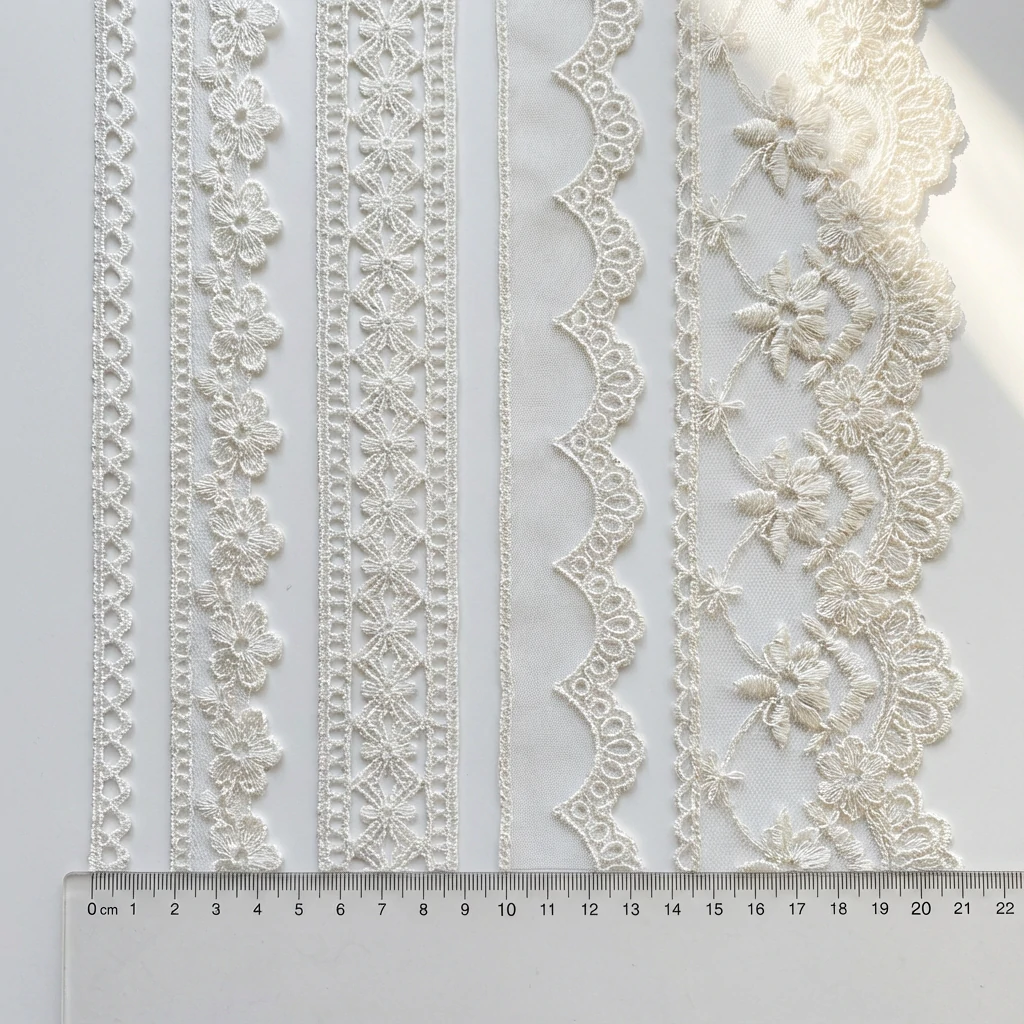
When sourcing lace trim, one of the first questions you’ll face is: what size do I need?
Lace sizes range from delicate 5mm edgings to dramatic 15cm borders—and picking the wrong size is one of the most common mistakes in product development. Too small, and the lace disappears. Too large, and it overwhelms your design (and your budget).
This guide breaks down lace sizes by product type. Whether you’re sourcing for lingerie, bridal wear, or home textiles, you’ll learn which lace trim sizes work best—and why size matters more than most buyers realize.
Understanding Lace Sizes: The Basic Categories
Before diving into specific applications, here’s how lace sizes are typically categorized in the industry:
| Size Category | Width Range | Common Names |
|---|---|---|
| Small | Under 2cm | Edging, picot trim, insertion lace |
| Medium | 2–5cm | Galloon, scalloped trim |
| Large | 5–10cm | Border lace, flounce trim |
| Extra-Large | Over 10cm | Panel lace, allover lace borders |
These categories aren’t rigid standards—different suppliers may use slightly different cutoffs. But understanding this framework helps you communicate clearly when discussing lace sizes with factories. When you say “medium-sized lace,” everyone knows you’re talking about the 2–5cm range.
It’s worth noting that lace sizes are almost always measured by width (the shorter dimension), not length. Length is sold by the meter or yard and is essentially unlimited.
Small Lace Sizes (Under 2cm): Subtle Details
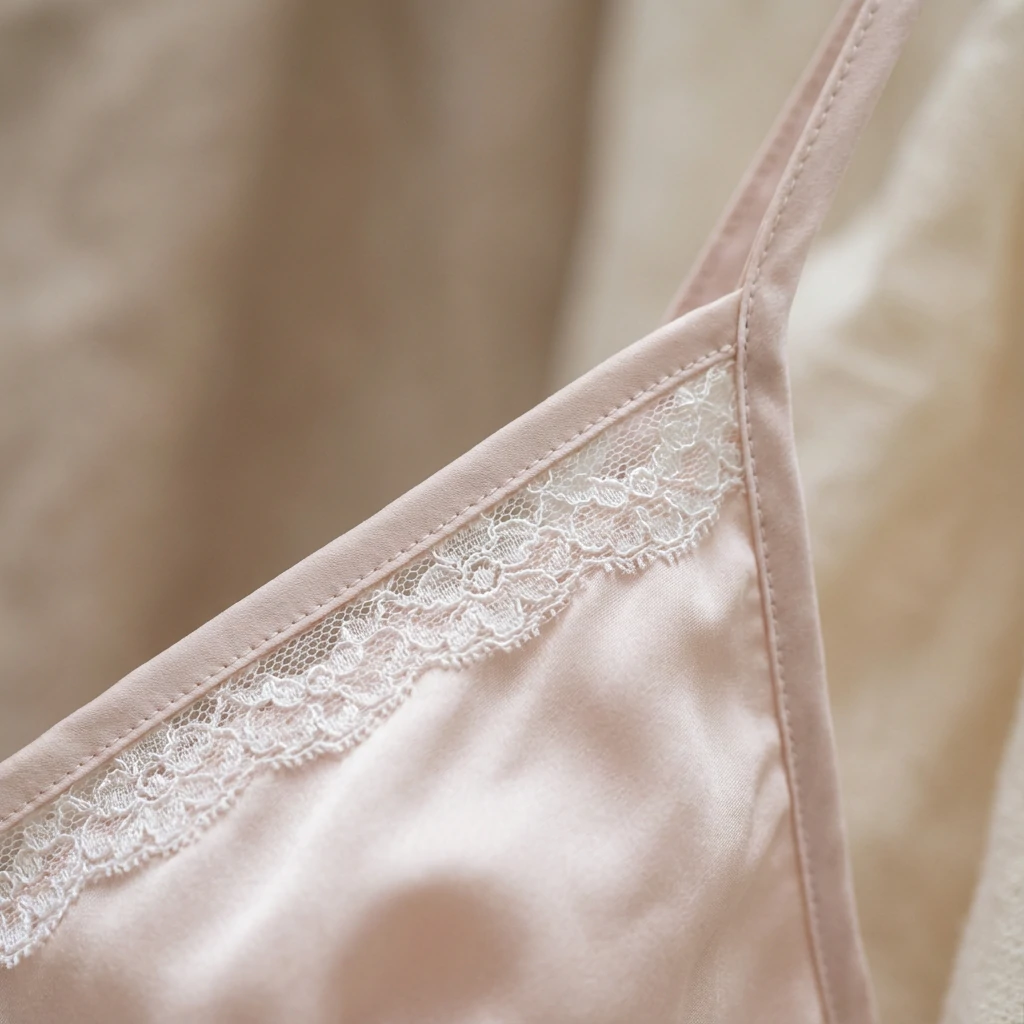
Small lace sizes are all about subtle refinement. These aren’t meant to be the star of your design—they add polish and finish without demanding attention. Think of them as the detail that elevates a garment from ordinary to carefully crafted.
You’ll find small-sized lace most commonly on lingerie elastic edges and strap trims, where comfort matters as much as appearance. Baby clothing necklines and cuffs frequently use these sizes, as do sleeve hems on blouses and decorative insertion seams. The scale works because these applications don’t need lace to be a focal point.
The practical benefits of choosing smaller lace sizes are significant: lower cost per meter, easier sewing that works with standard machines, and proportions that don’t overpower small garments. However, small lace has clear limitations. On large items like tablecloths or curtains, these sizes look cheap—the delicate scale simply gets lost. Very small trims under 1cm can also create production challenges, as they’re difficult to align consistently during sewing.
Recommendation: If lace is meant to be an accent rather than a feature, small sizes are your best choice. Budget around $0.03–0.15/meter depending on material.
Medium Lace Sizes (2–5cm): The Versatile Standard
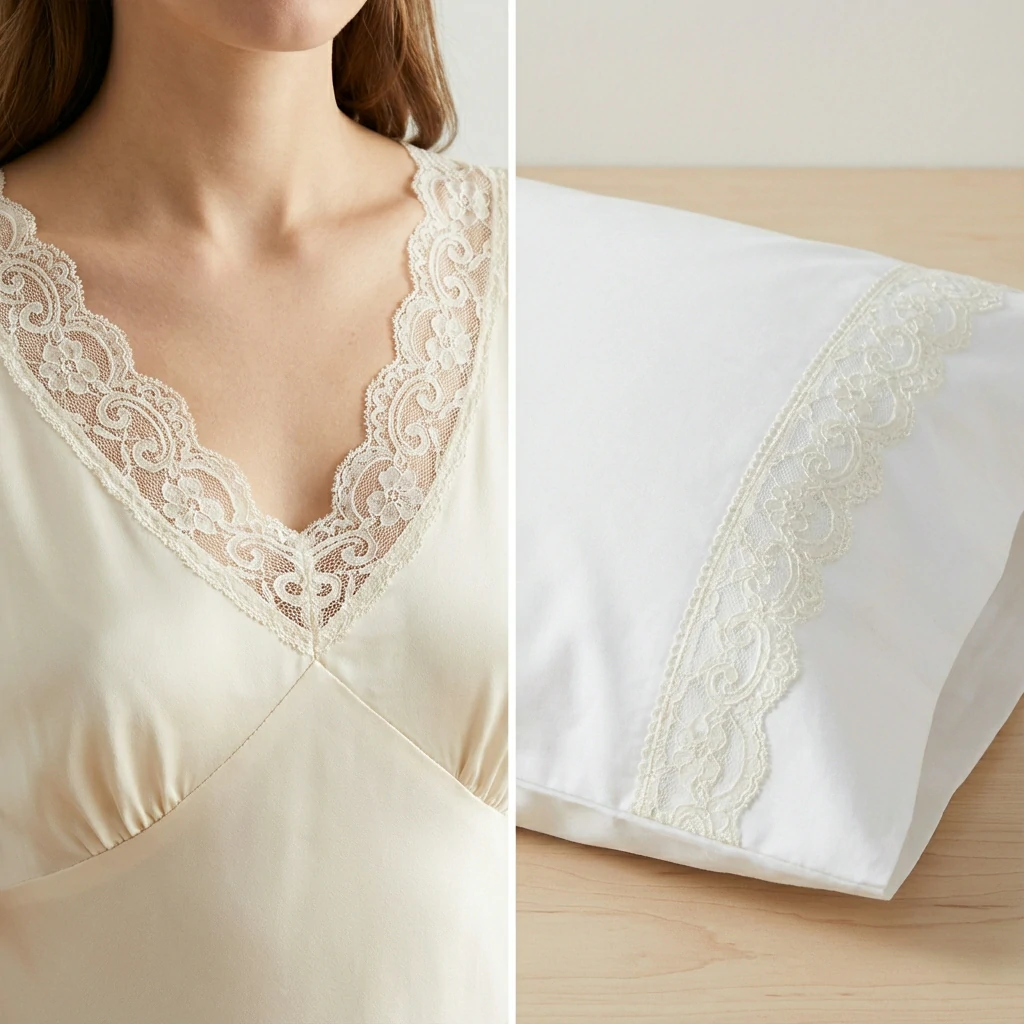
Medium lace sizes represent the industry workhorse. This range is visible enough to create impact but not so large that it dominates your design. For most applications, medium-sized lace hits the sweet spot between presence and proportion.
Dress necklines and hemlines are the classic use case—the lace is clearly visible but doesn’t compete with the garment’s silhouette. Pillowcase and sheet borders also work well in this size range. Children’s dress trims and sleeve cuffs on formal wear benefit from medium sizes because they provide enough presence without overwhelming smaller proportions.
Why are these lace sizes so popular? Three reasons: balanced visual weight that photographs well for e-commerce, an enormous selection of available patterns, and versatility across both garments and home textiles. Factories maintain their largest inventories in medium sizes because demand is consistently high across industries.
Within this range, 3–4cm is the “sweet spot” for most apparel. It’s visible in product photos—critical for online sales—but doesn’t significantly increase your per-unit cost.
Budget range: $0.08–0.30/meter for standard polyester or nylon. Cotton and blended lace will cost more.
Large Lace Sizes (5–10cm): Making a Statement
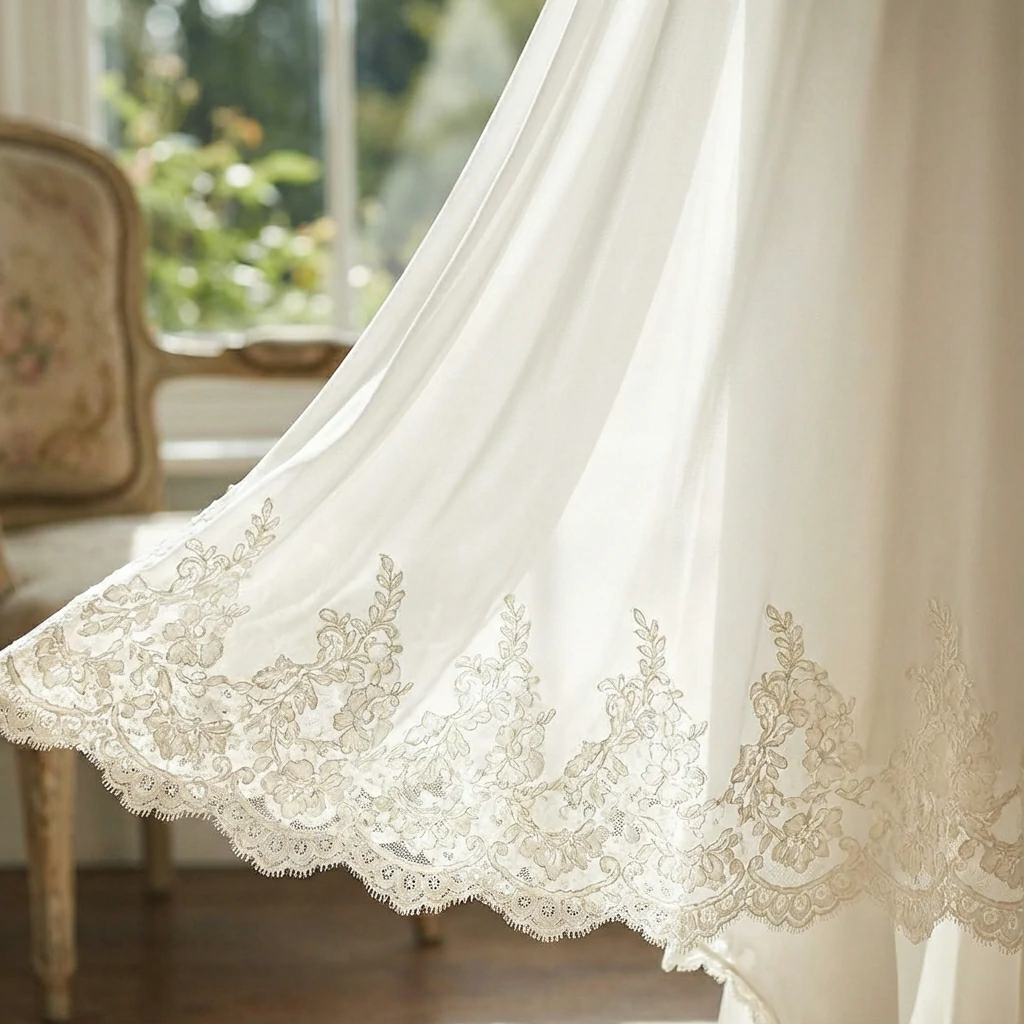
Large lace sizes move beyond accent into design feature territory. When you use lace in this size range, people notice. This is where lace stops being a finishing touch and starts defining the character of your product.
Bridal gown hemlines and trains rely on larger lace sizes to create that dramatic, romantic effect. Evening dress overlays use this range to add texture and dimension. Tablecloth and curtain borders need these sizes to provide visual weight at room scale. Luxury lingerie—bralette bands, robe hems—uses large lace to signal premium positioning to customers.
At larger sizes, several design considerations become critical. Pattern complexity matters more because the scale reveals details that would be lost in smaller lace. Scalloped edges create more visual interest than straight cuts. And color matching becomes essential—slight shade differences that would be invisible on small lace become obvious when the lace is 8cm wide.
The cost reality is straightforward: larger lace sizes use more material and often feature more intricate patterns. Expect $0.25–0.80/meter for quality options. Premium Chantilly or Guipure styles can exceed $2/meter.
Insider tip: If you need the visual impact of large lace but budget is tight, consider layering a medium-sized lace over fabric rather than using a single large piece. This achieves similar visual effect at lower material cost.
Extra-Large Lace Sizes (Over 10cm): When Lace Becomes Fabric
Extra-large lace sizes blur the line between “trim” and “fabric.” At this scale, lace becomes a structural element rather than a decorative addition. Choosing these sizes fundamentally changes how you approach both design and production.
Bridal bodices and sleeves showcase extra-large lace at its most dramatic. Stage costumes and performance wear use these sizes because the lace needs to read from a distance. Decorative furniture panels and high-fashion statement pieces round out the primary applications—all contexts where visual drama justifies added complexity and cost.
Working with extra-large lace sizes comes with special requirements. The lace often needs backing fabric for structural support, especially in garment applications. Seams may require hand-finishing rather than standard machine work. And minimum order quantities tend to be higher because fewer factories stock these sizes and pattern variety is more limited.
When should you avoid extra-large sizes? Everyday apparel (too dramatic), budget-conscious products (costs add up fast), and items requiring frequent washing (large lace is harder to maintain over time).
Typical price range: $0.50–3.00+/meter depending on pattern complexity and fiber content.
Lace Sizes by Product Type: Quick Reference
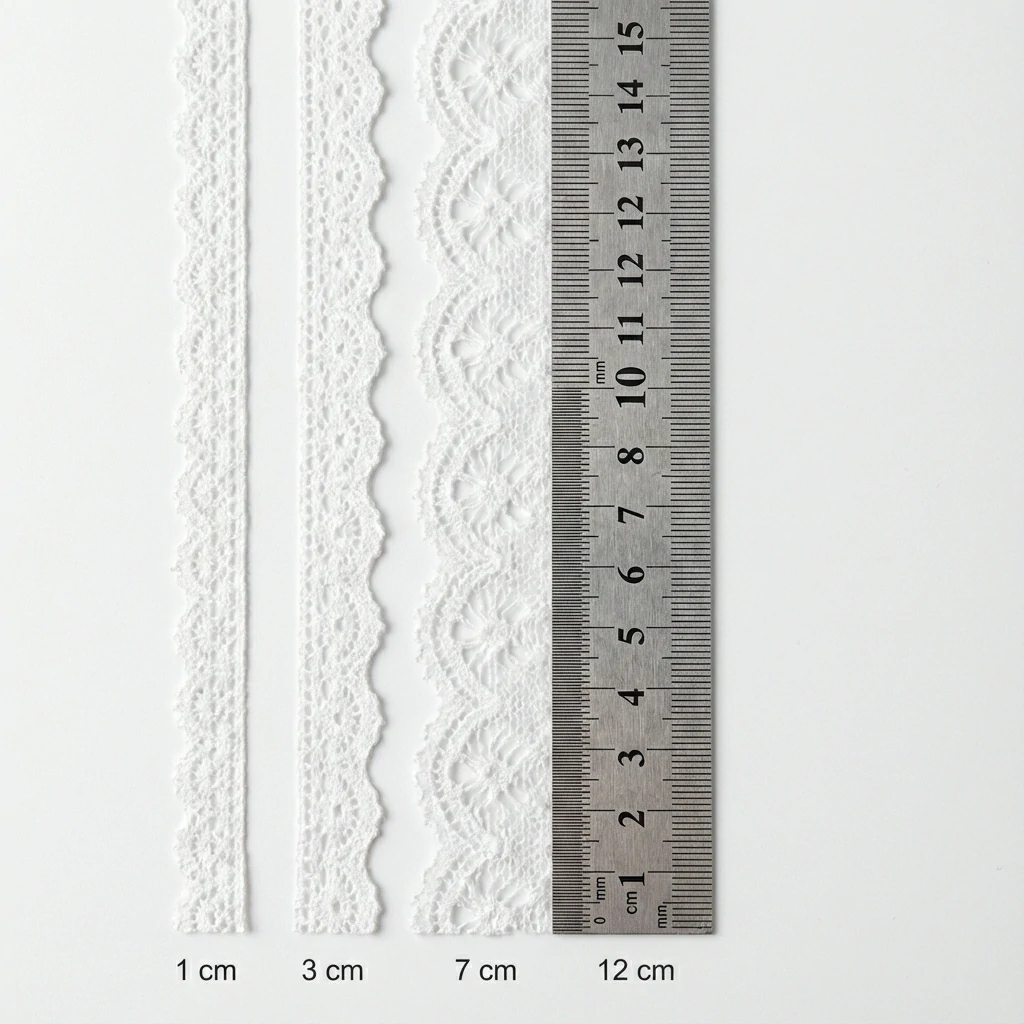
Not sure which lace size fits your product? Use this table for quick guidance:
| Product Type | Recommended Size | Why |
|---|---|---|
| Lingerie (everyday) | 1–3cm | Comfort, flexibility, cost-effective |
| Lingerie (luxury) | 3–8cm | Visual impact, premium feel |
| Bridal gowns | 5–15cm+ | Statement element, tradition |
| Children’s wear | 1–3cm | Proportion to garment size |
| Women’s blouses | 1–4cm | Subtle elegance |
| Evening dresses | 3–10cm | Depends on design focus |
| Pillowcases | 2–5cm | Visible but not overwhelming |
| Tablecloths | 5–10cm | Needs presence at table scale |
| Curtains | 5–15cm | Room-scale visibility |
The key principle: match lace size to product scale. What looks perfect on a baby dress will disappear on a tablecloth. What creates drama on a bridal gown will overwhelm a simple blouse.
Pro tip: When uncertain about lace sizes, request samples in 2–3 different sizes before committing to bulk orders. Seeing actual lace on your prototype reveals proportions that photos simply cannot convey.
Common Mistakes When Choosing Lace Sizes
After working with hundreds of brands on their lace sourcing, I’ve seen the same errors repeated across industries. Understanding these pitfalls can save you expensive sampling rounds and production delays.
Choosing size by price alone is the most frequent mistake. Smaller lace sizes cost less per meter—but that doesn’t mean they’re right for your product. A tiny $0.05 trim on a $50 dress can make the entire garment look cheap, destroying value you’ve built elsewhere in the design. The lace size needs to match your product’s positioning, not just a budget line item.
Ignoring proportion causes problems that only become obvious with finished products in hand. Small lace on a queen-size bedsheet disappears entirely—guests won’t even notice it’s there. Conversely, oversized lace on a baby dress overwhelms the tiny garment and looks costume-like rather than elegant. Always consider the scale of your final product and how the lace will read in actual use.
Forgetting about shrinkage creates quality issues that surface only after washing. Cotton and cotton-blend laces can shrink 3–5% after the first wash. On small lace, this is barely noticeable. But on larger sizes of 5cm or more, shrinkage becomes visible as puckering along seam lines. Specifying pre-shrunk treatment or choosing synthetic fibers avoids this problem.
Not testing production compatibility leads to manufacturing nightmares. Very large lace sizes (8cm+) may not feed smoothly through standard sewing machines, requiring specialized equipment or hand-finishing that wasn’t in your cost calculations. Always verify with your production team before ordering large quantities of any lace size you haven’t worked with before.
FAQs About Lace Sizes
What lace size is most commonly used?
For apparel, 2–4cm is the most popular size range. It offers good visibility without excessive cost, and pattern variety in these sizes is unmatched. For home textiles, 5–8cm is more common because products are viewed from greater distances and need more visual presence.
How do I know what lace size I need?
Start with your product type and scale. Small garments (baby clothes, lingerie) typically need smaller lace sizes (1–3cm). Large products (tablecloths, curtains, bridal gowns) need larger sizes (5cm+) to maintain visual proportion. The quick reference table above provides specific guidance by product category.
Does lace size affect price significantly?
Yes, though not linearly. Doubling the size typically increases price by 50–80%, not 100%—because some production costs remain fixed regardless of size. However, extra-large lace over 10cm can jump to premium pricing due to pattern complexity and lower production volumes.
Can I use small lace sizes on curtains?
You can, but impact will be minimal. For curtains viewed from across a room, 5cm minimum is recommended. Lace under 3cm will barely register and may look like an afterthought rather than a deliberate design choice.
How should I request lace samples in different sizes?