
You find the perfect lace. Delicate floral pattern, beautiful drape, exactly the texture your collection needs. You send an inquiry. Then comes the reply: “MOQ 2000 yards.”
For a bridal atelier producing 50 gowns a year, that’s three years of inventory sitting in storage. For an evening wear startup testing a new design, it’s a gamble you can’t afford.
Here’s what most suppliers won’t explain: MOQs aren’t arbitrary. They exist because of how lace dyeing actually works. Understanding the real cost structure changes how you negotiate—and opens solutions most designers never consider.
This guide breaks down why MOQs exist, what dye lot fees actually cost, and four practical ways to source wholesale lace without overcommitting.
Why MOQs Exist (It’s Not Just About Money)
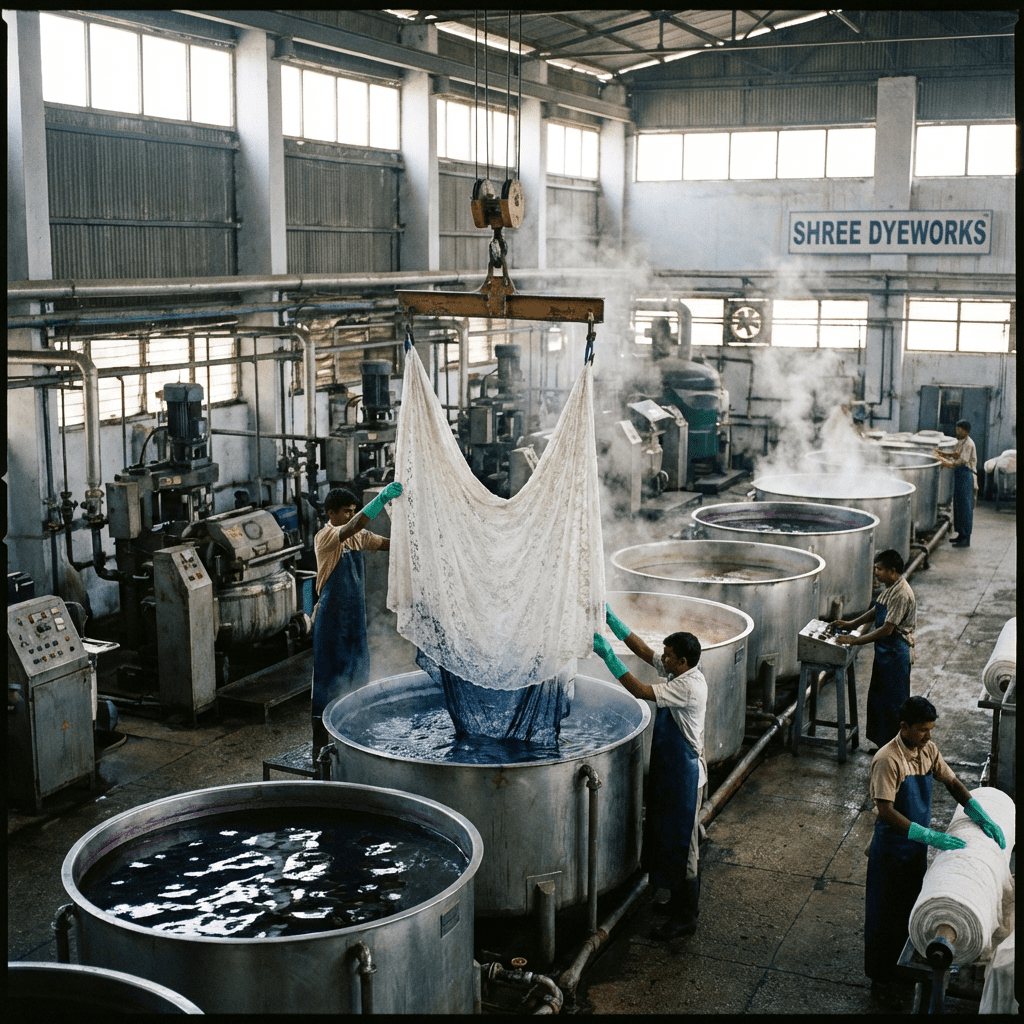
Every custom color requires a dye bath. One dye bath, one setup, one fixed cost—regardless of whether you’re dyeing 200 yards or 2000 yards.
A typical dye lot setup runs around $70 per batch. That covers dye preparation, machine time, quality testing, and color matching. The dyeing process itself doesn’t care how much fabric goes in. The cost stays the same.
Here’s what that means for your per-yard economics:
| Order Size | Dye Lot Fee | Cost Per Yard (Fee Only) |
|---|---|---|
| 200 yards | $70 | $0.35/yard |
| 500 yards | $70 | $0.14/yard |
| 2000 yards | $70 | $0.035/yard |
At 200 yards, you’re paying ten times more per yard just for the dyeing setup. Add the base material cost, and small orders become economically painful for both sides.
This is why suppliers set MOQs. It’s not about refusing small customers—it’s about making the math work. A supplier who accepts tiny orders at standard pricing is either cutting corners on quality or losing money.
The Hidden Cost: Dye Lot Fees Explained
Some suppliers quote a clean per-yard price and never mention dye lot fees. Then you place the order and discover an extra $70 tacked onto your invoice.
Dye lot fees—also called setup fees or batch fees—cover the fixed costs of creating your specific color. For large orders, suppliers often absorb this cost into the per-yard price. For small orders, they can’t.
Here’s the honest breakdown:
Large orders (2000+ yards): Dye cost runs about $3.50 per kilogram, built into your quoted price. No separate fee.
Small orders (under MOQ): You pay the $70 setup fee on top of your per-yard cost. Some suppliers negotiate, some don’t.
The suppliers who explain this upfront are the ones worth working with. Hidden fees signal a relationship that will keep surprising you—and not in good ways.
4 Real Solutions for Bridal and Evening Wear Designers
Solution 1: Choose In-Stock Colors
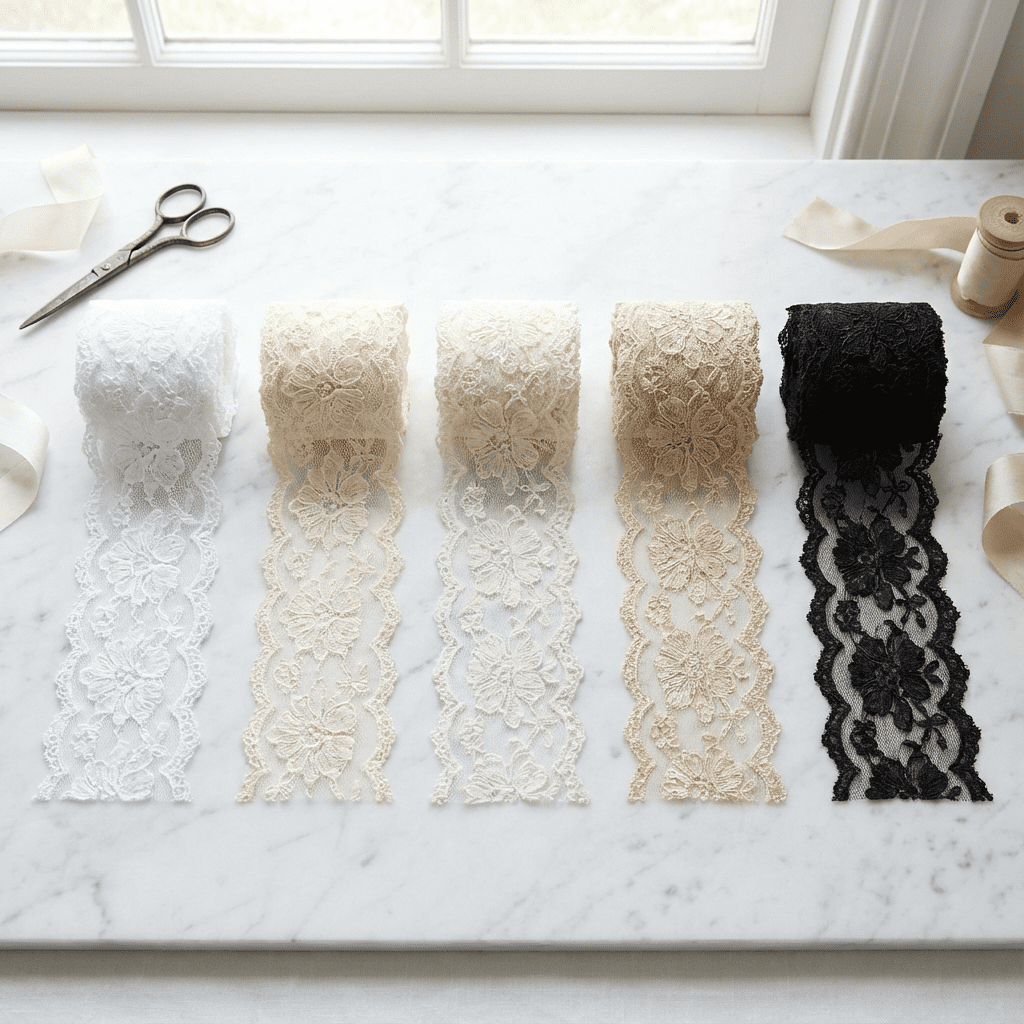
Most lace suppliers maintain stock in core colors—typically white, ivory, off-white, champagne, and black. These are pre-dyed in large batches, which means no MOQ and no dye lot fee.
For bridal work, this covers 80% of real demand. Ivory and off-white handle most traditional gowns. White works for contemporary designs. Champagne offers warmth for certain skin tones.
The limitation is obvious: you’re choosing from existing options, not creating custom shades. That blush pink you envisioned? Not available off the shelf.
But here’s the trade-off most designers miss. In-stock colors ship faster—often within days instead of weeks. For rush orders or sample development, that speed matters more than perfect color matching.
Solution 2: Start with One Hero Design
New bridal labels often launch with too many styles. Eight dress designs, four lace colors, three fabric weights—suddenly you’re negotiating MOQs across a dozen SKUs.
A smarter approach: start with one signature piece. Choose your strongest design, source the lace in stock colors, and let that single style build your reputation and cash flow.
Once you’re selling consistently, you’ll have the volume to justify custom colors. Many designers reach MOQ thresholds within 12-18 months just by focusing early.
Solution 3: Consolidate Orders with Other Designers
You need 500 yards of ivory guipure lace. Another atelier needs 600 yards of the same. Together, you’re over MOQ.
Consolidated ordering—also called order pooling—lets small buyers share dye lot costs. Each party gets their yardage, and the per-yard economics suddenly make sense.
This requires coordination, and most suppliers charge a handling fee for split shipments. Expect an extra 10-15% on top of base pricing. Still cheaper than paying the full dye lot fee alone.
Where to find pooling partners? Industry groups, designer collectives, trade show contacts. Some suppliers also facilitate this directly—ask if they maintain a waiting list for specific colors.
Solution 4: Build a Supplier Relationship Over Time
MOQs aren’t always rigid. Suppliers have flexibility for customers they trust.
Start with in-stock colors and small orders. Pay on time. Communicate clearly. After two or three successful transactions, ask about reduced MOQs for custom colors. Many suppliers will work with established accounts on smaller batches—especially if you commit to reaching full MOQ within a defined timeframe.
A deposit arrangement often helps. Put down 30% now, agree to order the remaining quantity within six months, and some suppliers will start your dye lot early.
This only works if you’ve proven reliability. First-time buyers rarely get flexibility. Repeat customers often do.
How to Evaluate a Lace Supplier
The best suppliers explain their cost structure without you asking. They tell you the MOQ, the dye lot fee, the in-stock options, and the lead times—all upfront.
Questions to ask before placing any order:
What’s the MOQ for custom colors?
Is there a dye lot fee? How much?
Which colors are in stock with no MOQ?
What’s your sample policy?
Do you offer consolidated ordering?
Red flags to watch:
Vague pricing (“depends on quantity”)
Hidden fees appearing on invoices
Reluctance to provide samples
No clear answer on lead times
A supplier willing to educate you is a supplier who wants a long-term relationship. One who obscures information is optimizing for a single transaction.
FAQs
What is a typical MOQ for wholesale lace trim?
Most suppliers set MOQs between 1000-3000 yards for custom-dyed lace. In-stock colors often have no minimum or much lower thresholds (100-300 yards).
Why do suppliers charge dye lot fees?
Dyeing requires fixed setup costs regardless of batch size. The fee covers dye preparation, machine time, and color matching. Large orders absorb this cost; small orders can’t.
Can I order less than MOQ?
Sometimes. Options include choosing in-stock colors, paying a premium dye lot fee, consolidating with other buyers, or negotiating with established suppliers who know your payment history.
How do I find wholesale lace suppliers that accept small orders?