
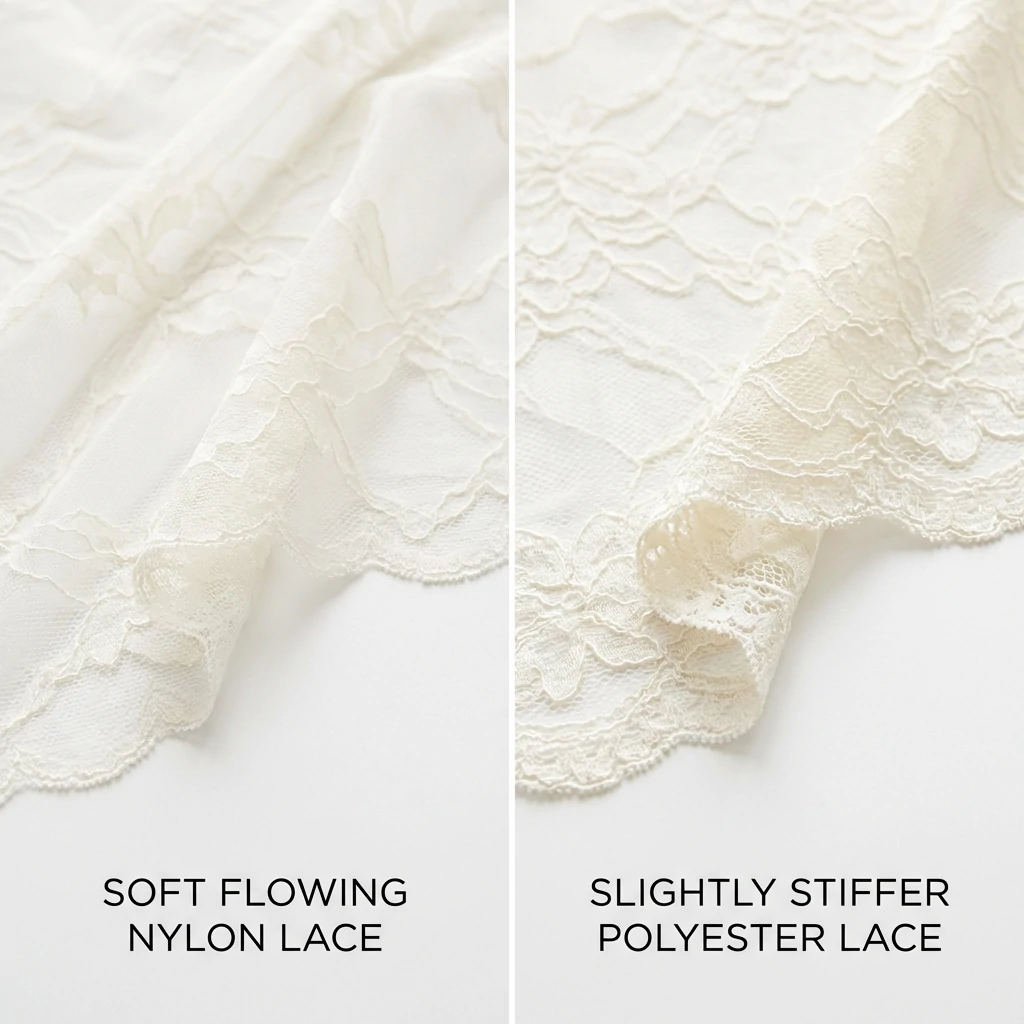
Choosing between nylon lace and polyester lace? Both are synthetic options, but they’re not interchangeable.
Nylon lace is softer, stretchier, and feels more luxurious against skin. Polyester lace is stiffer, more affordable, and holds up better to sunlight.
The right choice depends on your project. This guide breaks down every difference to help you decide.
Quick Comparison: Nylon Lace vs Polyester Lace
| Property | Nylon Lace | Polyester Lace |
|---|---|---|
| Feel | Soft, silky | Slightly stiffer |
| Stretch | More elastic | Less stretch |
| Drape | Fluid, flowing | Holds shape |
| Durability | Very strong | Strong |
| UV Resistance | Poor (yellows) | Excellent |
| Moisture | Absorbs more | Dries faster |
| Dye Uptake | Harder to dye | Takes dye well |
| Price | Higher | Lower |
| Best For | Lingerie, bridal | Décor, everyday wear |
What is Nylon Lace?
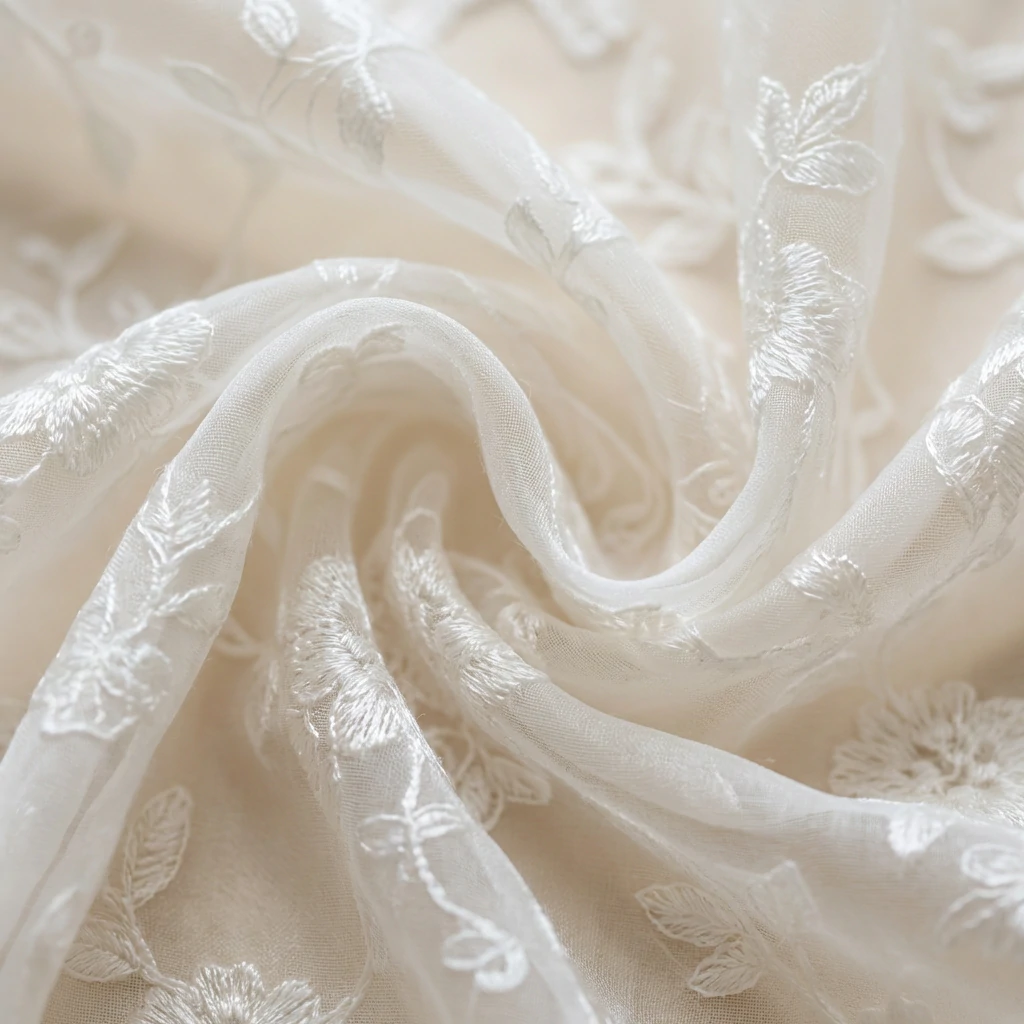
Nylon lace is made from polyamide fibers — the same material used in stockings and high-end hosiery.
DuPont invented nylon in 1935. It quickly became the go-to synthetic for delicate, skin-touching applications.
Key characteristics:
Exceptional softness. Nylon fibers are smoother than polyester at the microscopic level. This translates to a silkier hand feel.
Natural stretch. Nylon has inherent elasticity, even without adding spandex. This makes nylon lace more forgiving and comfortable.
Superior drape. The fabric flows and moves naturally. It doesn’t stand away from the body.
Higher moisture absorption. Nylon absorbs 4-8% of its weight in water. Good for breathability, slower for drying.
Common nylon lace types:
Chantilly-style lace
Lingerie lace trim
What is Polyester Lace?
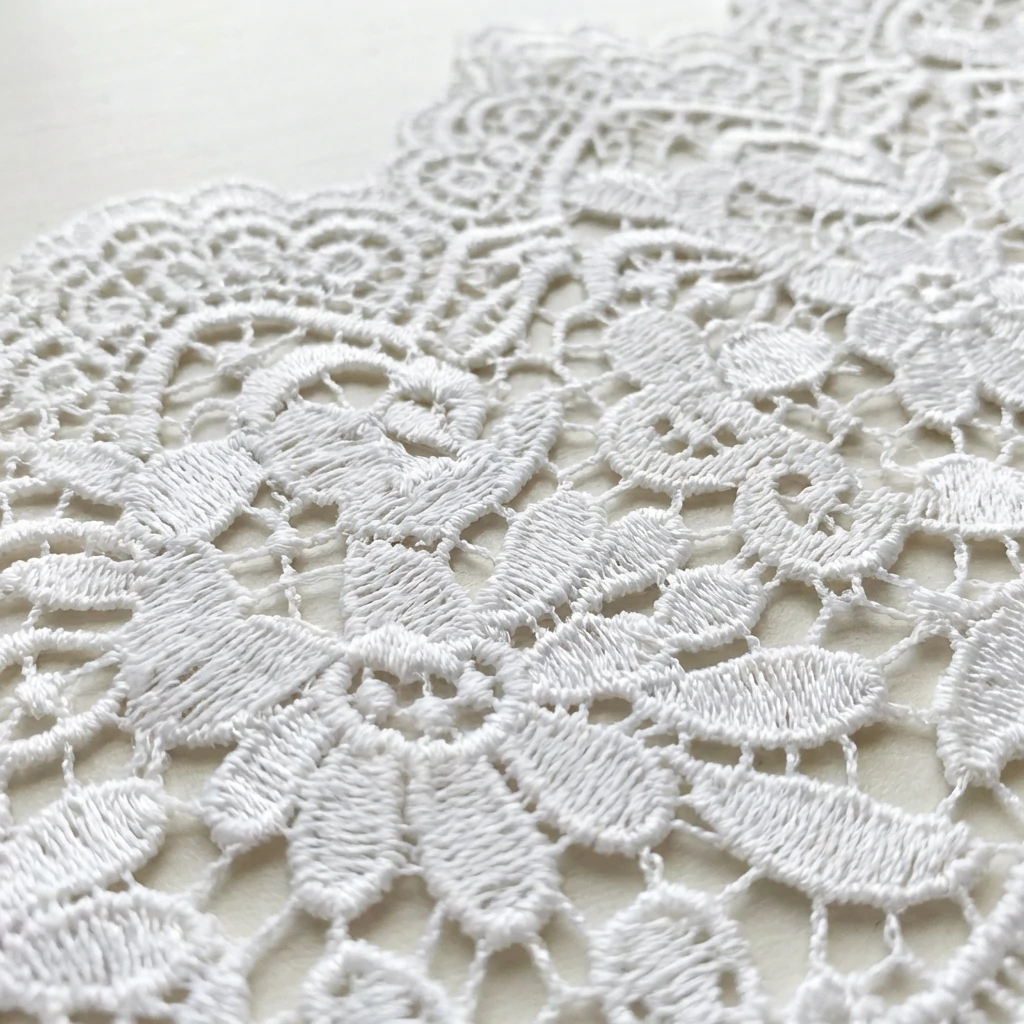
Polyester lace is made from petroleum-based synthetic fibers developed in the 1940s.
It’s the most widely produced synthetic fiber globally — affordable, versatile, and easy to manufacture.
Key characteristics:
Excellent shape retention. Polyester holds its structure well. Patterns stay crisp even after washing.
UV and fade resistance. Polyester resists sun damage and color fading far better than nylon. Ideal for items exposed to light.
Quick drying. Absorbs less than 0.5% moisture. Dries rapidly after washing.
Cost-effective. Lower raw material and production costs make polyester lace more budget-friendly.
Common polyester lace types:
Guipure lace
Decorative lace trim
Nylon vs Polyester Lace: Key Differences Explained
Let’s dive deeper into each factor that separates these materials.
Hand Feel and Comfort
Nylon wins for skin contact.
The fiber structure of nylon creates a smoother, softer surface. When you run your hand across nylon lace, it glides. Polyester lace feels slightly rougher, with more texture.
For intimate apparel, bras, underwear, and anything worn directly against skin — nylon lace provides noticeably better comfort.
Polyester lace works fine for outerwear or decorative applications where skin contact is minimal.
Stretch and Recovery
Nylon is naturally more elastic.
Even without spandex content, nylon fibers have give. This makes nylon lace move with the body and recover its shape after stretching.
Polyester has minimal inherent stretch. To create stretch polyester lace, manufacturers must blend in elastane — adding cost and complexity.
For form-fitting garments, nylon-based stretch lace performs better.
Drape and Movement
Nylon drapes more fluidly.
Nylon lace falls softly and conforms to curves. It moves gracefully with body movement.
Polyester lace tends to hold its shape more rigidly. This can be desirable for structured elements but looks stiff in flowing applications.
For veils, overlays, and romantic silhouettes — nylon’s drape is superior.
Durability and Longevity
Both are durable, but different.
Nylon has higher tensile strength and abrasion resistance. It withstands repeated wear and friction without breaking down.
However, nylon degrades under prolonged UV exposure. White nylon lace yellows over time when exposed to sunlight.
Polyester resists UV damage excellently. Colors stay vibrant, whites stay white — even with sun exposure.
| Durability Factor | Nylon Lace | Polyester Lace |
|---|---|---|
| Abrasion resistance | Excellent | Good |
| Tear strength | Excellent | Good |
| UV resistance | Poor | Excellent |
| Color retention | Fades faster | Holds color |
| Yellowing risk | High | Low |
Dyeing and Color
Polyester takes dye more readily.
Polyester fibers accept dyes easily during manufacturing. This allows for vibrant, saturated colors at lower cost.
Nylon requires different dye chemistry and processes. Achieving deep, consistent colors costs more.
For colorful lace applications, polyester offers more options at better prices. For classic white or ivory, both work well — though nylon’s yellowing risk matters for long-term storage.
Price Point
Polyester is significantly cheaper.
Raw polyester costs less than nylon. Production processes are simpler and more efficient.
Expect polyester lace to cost 20-40% less than comparable nylon lace.
For budget-conscious projects, high-volume production, or decorative applications — polyester’s price advantage is meaningful.
For premium products where quality perception matters — nylon’s superior hand feel justifies the investment.
Which Lace is Better for Your Project?
The right choice depends entirely on application.
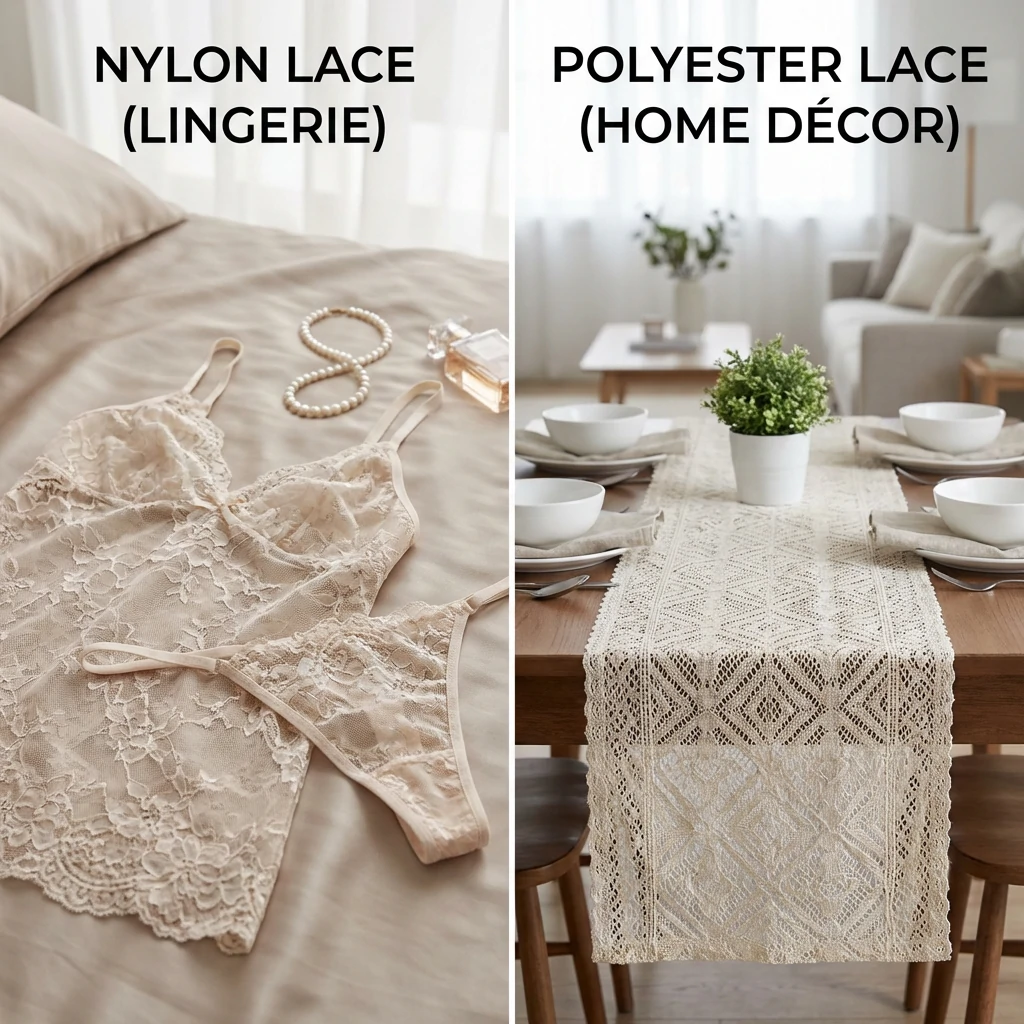
Choose Nylon Lace For:
Lingerie and intimate apparel. Skin comfort is paramount. Nylon’s softness and stretch make it the industry standard for bras, underwear, bodysuits, and sleepwear.
Bridal veils and formal wear. The fluid drape creates romantic movement. High-end bridal almost exclusively uses nylon or silk tulle and lace.
Stretch lace applications. When you need lace that moves with the body — yoga wear, dancewear, shapewear — nylon-based stretch lace performs best.
Premium products. If your brand positioning emphasizes quality and luxury, nylon lace supports that perception.
Choose Polyester Lace For:
Home décor and crafts. Tablecloths, curtains, decorative accents — polyester’s UV resistance and affordability make it practical for home use.
Everyday garments. Casual tops, overlay details, trim applications where ultimate softness isn’t critical.
Outdoor or sun-exposed items. Anything that will face sunlight should use polyester to prevent yellowing and fading.
Budget-conscious production. When cost matters more than premium feel, polyester delivers value.
High-volume manufacturing. Polyester’s lower cost and consistent quality suit mass production.
The Middle Ground: Blended Lace
Many laces blend nylon and polyester to balance properties:
Nylon provides softness and stretch
Polyester adds stability and color retention
The blend optimizes cost and performance
Check fiber content labels carefully. A 60% nylon / 40% polyester blend behaves differently than 60% polyester / 40% nylon.
Frequently Asked Questions
What is the best material for lace?
It depends on use. For lingerie and skin-contact applications, nylon lace is best due to its softness and stretch. For décor and everyday wear, polyester lace offers better value and UV resistance. Silk remains the ultimate luxury option but at significantly higher cost.
Which is better to wear, nylon or polyester?
For comfort against skin, nylon is better. It’s softer, more breathable, and moves with your body. Polyester works fine for outerwear layers where skin contact is minimal. Many activewear brands blend both to balance comfort and durability.
Are polyester laces good?
Yes, for the right applications. Polyester lace offers excellent color retention, UV resistance, and value. It’s ideal for decorative use, home textiles, and garments where softness isn’t the priority. It’s not the best choice for premium lingerie or delicate bridal wear.
What makes lace look cheap?
Several factors make lace appear low-quality:
Stiff, plasticky hand feel — often from poor-quality polyester
Inconsistent pattern alignment — production quality issue
Visible base mesh — the background showing through the design
Rough edges — unfinished or poorly cut borders
Synthetic sheen — overly shiny appearance that looks artificial
Quality lace — whether nylon or polyester — has soft hand feel, clean pattern definition, and refined finishing.
Conclusion
Nylon lace and polyester lace serve different purposes in the textile world.
Choose nylon when softness, stretch, and skin comfort matter most. It’s the standard for lingerie, bridal, and premium applications.
Choose polyester when budget, UV resistance, and color vibrancy are priorities. It excels in décor, everyday wear, and high-volume production.
Neither is universally “better.” The right choice aligns material properties with project requirements.
For B2B buyers sourcing lace, consider:
End-use application and customer expectations
Price positioning and margin requirements
Environmental exposure (UV, washing frequency)
Required stretch and recovery properties