
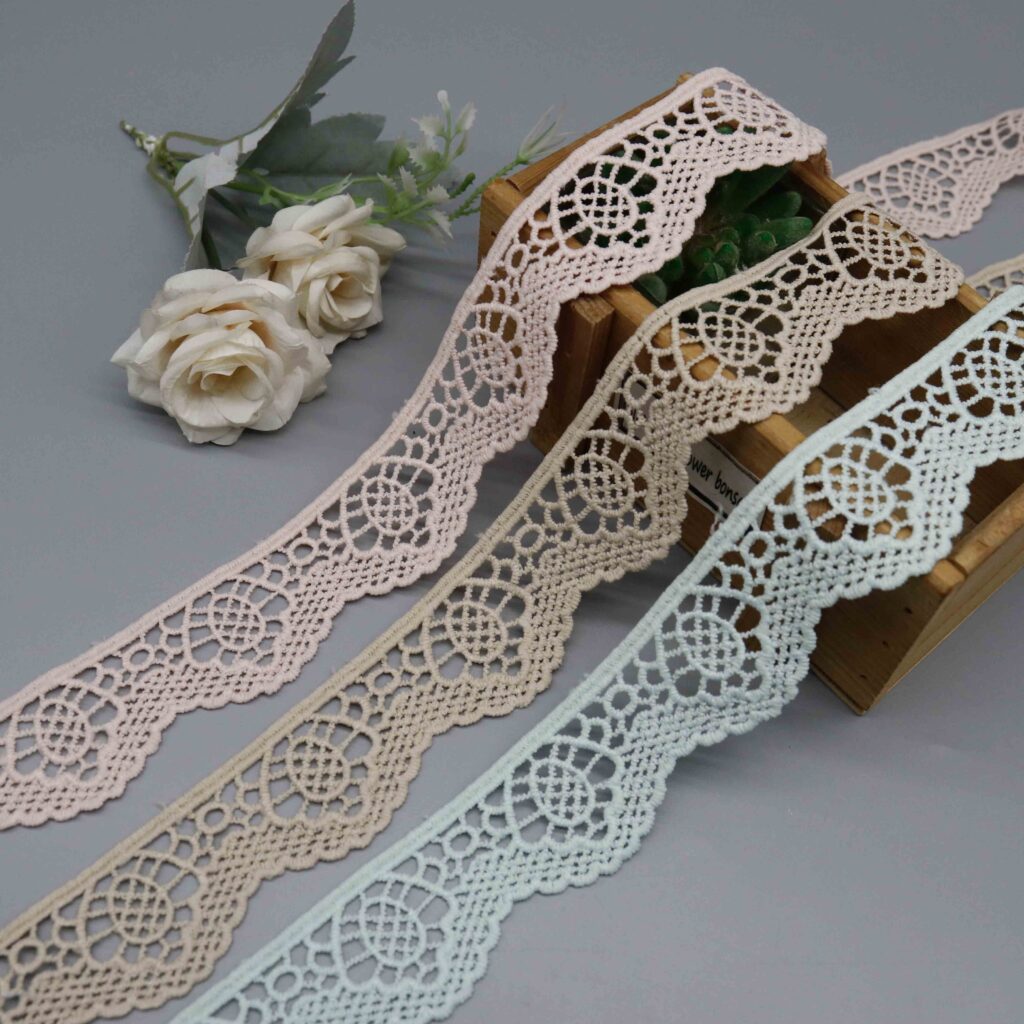
Two rolls of water-soluble lace sit on your desk. One costs $2 per yard. The other costs $10. They look similar in photos.
So what justifies that 5x price gap?
This guide breaks down the real differences between premium and budget water-soluble lace trim—what to look for, how to test quality fast, and when cheaper options actually make sense.
What Makes Water-Soluble Lace “Premium”?
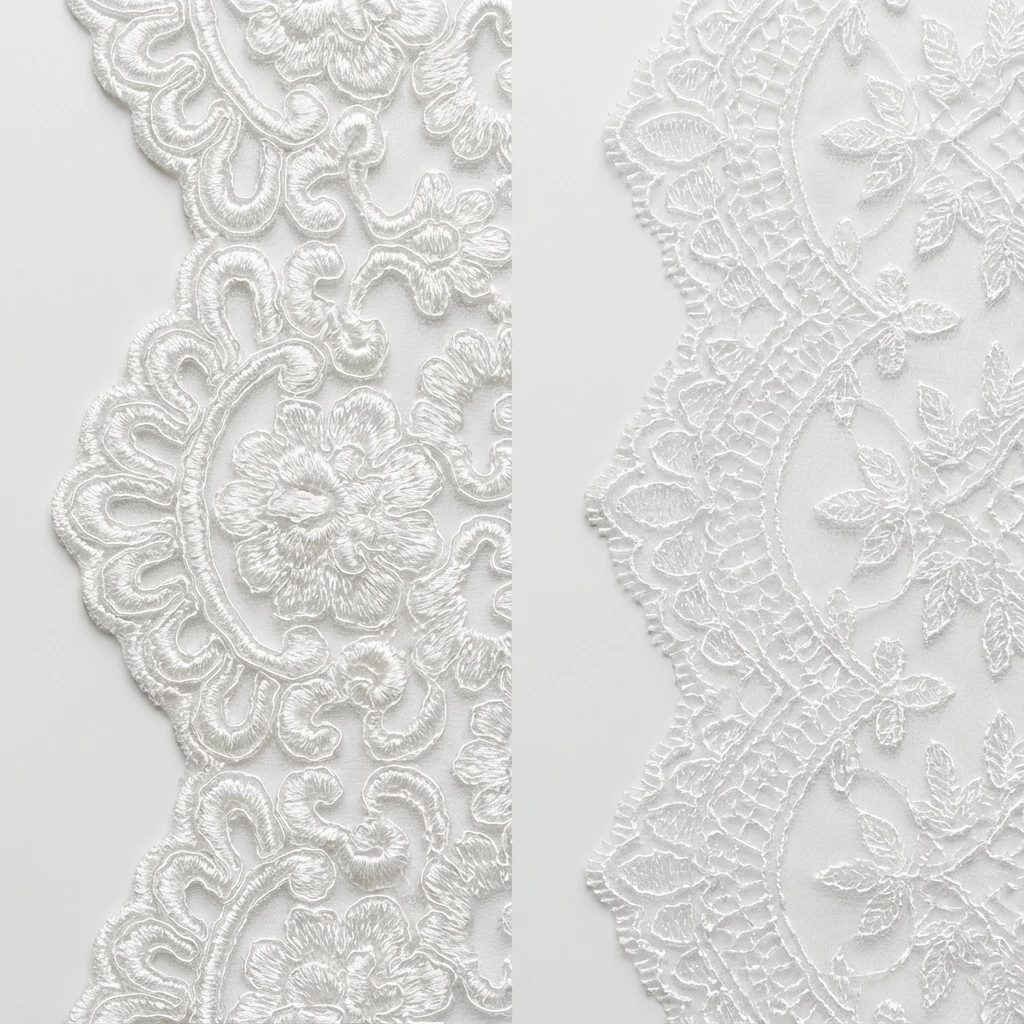
Water-soluble lace starts as embroidery on a dissolvable backing. After the design is stitched, the backing dissolves in water, leaving only the thread pattern behind.
That process sounds simple. The quality differences hide in the details:
Thread quality: Virgin polyester vs recycled fiber
Stitch density: How tightly the pattern is embroidered
Machine precision: Industrial multi-head vs older single-head equipment
Post-processing: Chemical softening, heat setting, finishing treatments
Premium lace isn’t just about looking better. It performs better—through washing, handling, and years of wear.
5 Key Differences Between Premium and Budget Lace
1. Thread Density and Stitch Count
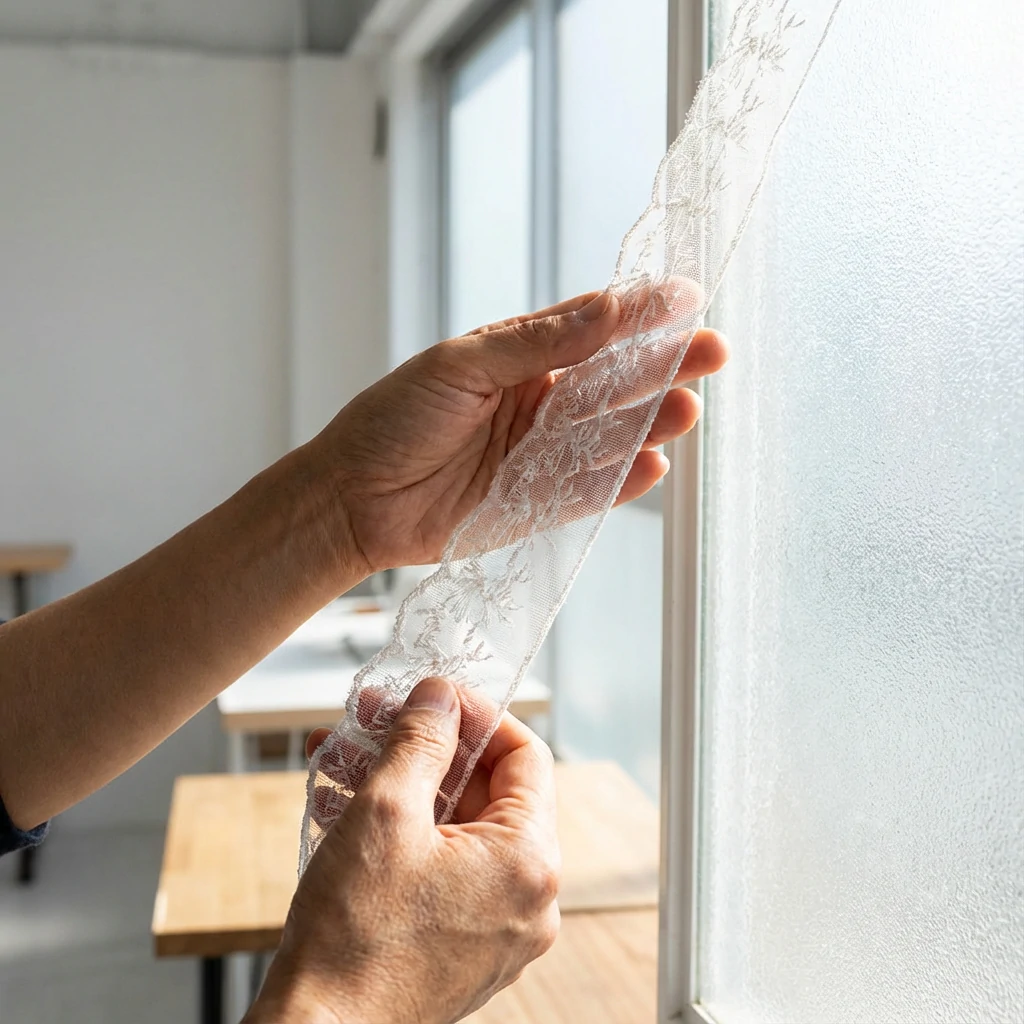
Hold budget lace up to light. You’ll see gaps between stitches. The pattern looks thin, almost skeletal.
Premium lace blocks more light. The embroidery is denser, creating a fuller, more substantial look.
| Quality Level | Stitch Density | Visual Effect |
|---|---|---|
| Budget | 30,000-50,000 stitches/m² | Sparse, see-through |
| Mid-range | 50,000-80,000 stitches/m² | Adequate coverage |
| Premium | 80,000+ stitches/m² | Rich, dimensional |
Higher stitch count also means better durability. Fewer gaps mean fewer weak points where threads can snag or break.
2. Thread Material Quality
Not all polyester is equal. Not all nylon is equal.
Budget lace often uses:
Recycled polyester (uneven thickness, weaker tensile strength)
Lower-denier threads (thinner, less durable)
Single-ply construction
Premium lace typically uses:
Virgin polyester or high-grade nylon
Consistent thread thickness throughout
Multi-ply or twisted threads for strength
The difference shows up after washing. Budget thread loses sheen and starts pilling. Premium thread stays smooth.
3. Edge Finishing
Run your finger along the edge of budget lace. Feel for rough spots, loose threads, or uneven cuts.
Premium lace has:
Clean, sealed edges
No stray threads
Consistent width throughout the roll
Budget lace often has:
Fraying edges
Visible cutting marks
Width variations of 2-3mm within the same roll
For garment production, inconsistent edges mean more trimming, more waste, and more labor cost.
4. Pattern Clarity and Detail
Compare the same floral pattern in budget vs premium versions:
Budget: Petals blur together. Fine details disappear. The design looks flat.
Premium: Each petal is distinct. Small details (stamens, leaf veins) remain visible. The pattern has depth.
This matters most for bridal and evening wear where close inspection is expected. A bride will notice blurry roses on her dress.
5. Post-Processing Quality
Raw lace off the machine feels stiff and rough. Post-processing transforms it.
Premium processing includes:
Enzyme washing for softness
Heat setting for shape stability
Color fastness treatment
Quality control inspection
Budget lace often skips:
Proper softening (feels plasticky)
Heat setting (distorts after ironing)
Color treatment (bleeds in first wash)
Ask suppliers about their finishing process. Vague answers suggest minimal post-processing.
How to Spot Quality in 60 Seconds
You’re at a trade show or receiving samples. Here’s a fast quality check:
1. The Light Test (10 seconds)
Hold lace against a bright light
Premium: Even density, no thin spots
Budget: Visible gaps, uneven coverage
2. The Stretch Test (15 seconds)
Gently pull the lace widthwise
Premium: Returns to shape, no distortion
Budget: Stays stretched, threads shift
3. The Edge Check (15 seconds)
Examine 30cm of edge closely
Premium: Clean finish, no loose threads
Budget: Fraying, uneven cuts
4. The Rub Test (20 seconds)
Rub lace against white cotton 10 times
Premium: No color transfer
Budget: Color on the cotton = poor dye fastness
If lace fails any of these, request a different sample or reconsider the supplier.
When Budget Lace Makes Sense
Premium lace isn’t always necessary. Budget options work for:
Single-use items: Costume pieces, event decorations
Hidden applications: Backing layers, internal reinforcement
Low-stress positions: Areas with minimal friction or washing
Prototype development: Testing designs before committing to premium materials
The key is matching quality level to end-use requirements. A Halloween costume doesn’t need bridal-grade lace.YiTuo Is a Reliable Supplier with OTEX, BCI, and GRS Certificates.
Supplier Questions That Reveal Quality
What you ask matters. These questions separate serious suppliers from resellers:
| Question | Good Answer | Red Flag |
|---|---|---|
| “What’s your stitch count per square meter?” | Specific number (e.g., “85,000”) | “Very dense” or “high quality” |
| “Is the thread virgin or recycled?” | Direct answer with specs | “It’s polyester” (no detail) |
| “What post-processing do you apply?” | Lists specific treatments | “Standard finishing” |
| “Can you provide a wash test report?” | Yes, with documentation | “It won’t fade” (no proof) |
| “What’s your width tolerance?” | “+/- 1mm” or similar spec | “Very consistent” |
Vague answers usually mean the supplier doesn’t control manufacturing—they’re buying from someone else who might be buying from someone else.There are many original (direct) factories, but few of them are high-quality. Yituo is a direct manufacturer with guaranteed quality and a mature supply chain system — not a trader profiting from the price difference.
FAQs
What’s a fair price range for premium water-soluble lace trim?
For polyester-based water-soluble lace, expect $6-15 per yard for genuine premium quality (depending on width and pattern complexity). Below $4 usually means compromises in thread quality or stitch density. Prices vary by region—Chinese manufacturers offer competitive rates while European lace commands higher premiums.
Can budget lace pass quality inspection for export?
It depends on the buyer’s standards. Basic budget lace often fails AQL inspection for defects like loose threads, width variation, and color bleeding. If your customer requires inspection certificates, request test reports from your supplier before ordering bulk.
How do I request samples that reflect bulk quality?
Ask for production samples, not showroom samples. Specify: “Send samples from current production stock, not specially prepared pieces.” Better yet, request a sample cut from a roll they have in inventory right now. Showroom samples are often cherry-picked.
Does water-soluble lace shrink after washing?
Minimal shrinkage if properly heat-set during manufacturing—typically under 2%. Budget lace without proper heat setting can shrink 5-8% and distort in shape. Always test-wash samples before production cutting to determine actual shrinkage for your batch.
How do I verify a supplier’s quality claims?