
Ruffled lace adds instant volume and femininity to any project. Unlike flat lace trim that lies smooth against fabric, ruffled lace creates movement and dimension—making it a favorite for everything from baby clothes to bridal accessories.
But not all ruffled lace is the same. Choosing the wrong type can mean a project that looks cheap, doesn’t sew properly, or falls flat after washing.
This guide explains what ruffled lace is, where it works best, and how to select the right style for your specific application.
What Is Ruffled Lace?
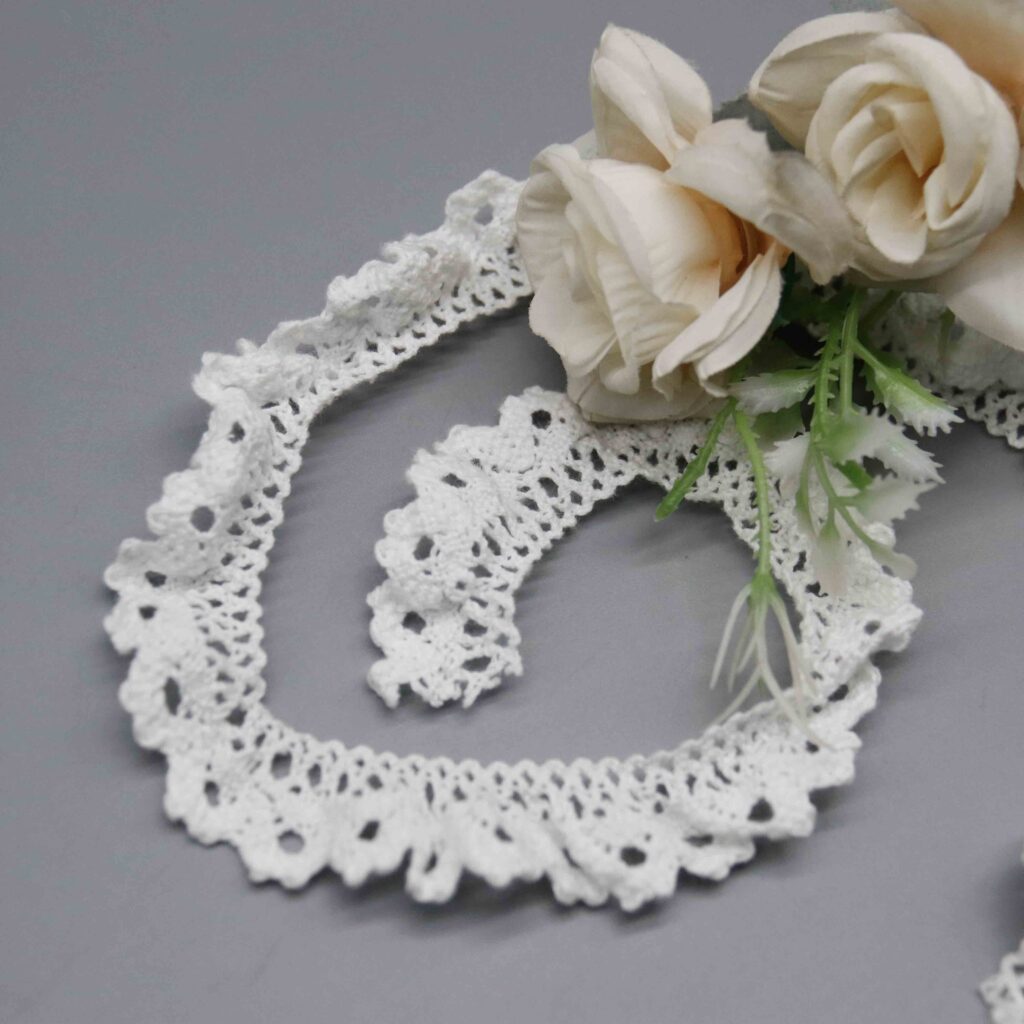
Ruffled lace is lace trim that has been gathered or pleated along one edge to create a wavy, dimensional effect. Instead of lying flat, the lace billows out in soft folds that add texture and visual interest.
The gathering is done during manufacturing—you buy it ready to use. One edge (the header) remains flat for easy attachment, while the other edge (the ruffle) flows freely.
Common types of ruffled lace:
| Type | Description | Best For |
|---|---|---|
| Single-edge ruffle | Gathered on one side only, flat header on the other | Hemlines, edges, borders |
| Double-edge ruffle | Gathered in the center, ruffles on both sides | Center trim, insertions |
| Stretch ruffle | Made with elastic thread, stretches and recovers | Cuffs, necklines, fitted garments |
| Box pleat ruffle | Folded in structured pleats rather than soft gathers | Formal wear, structured designs |
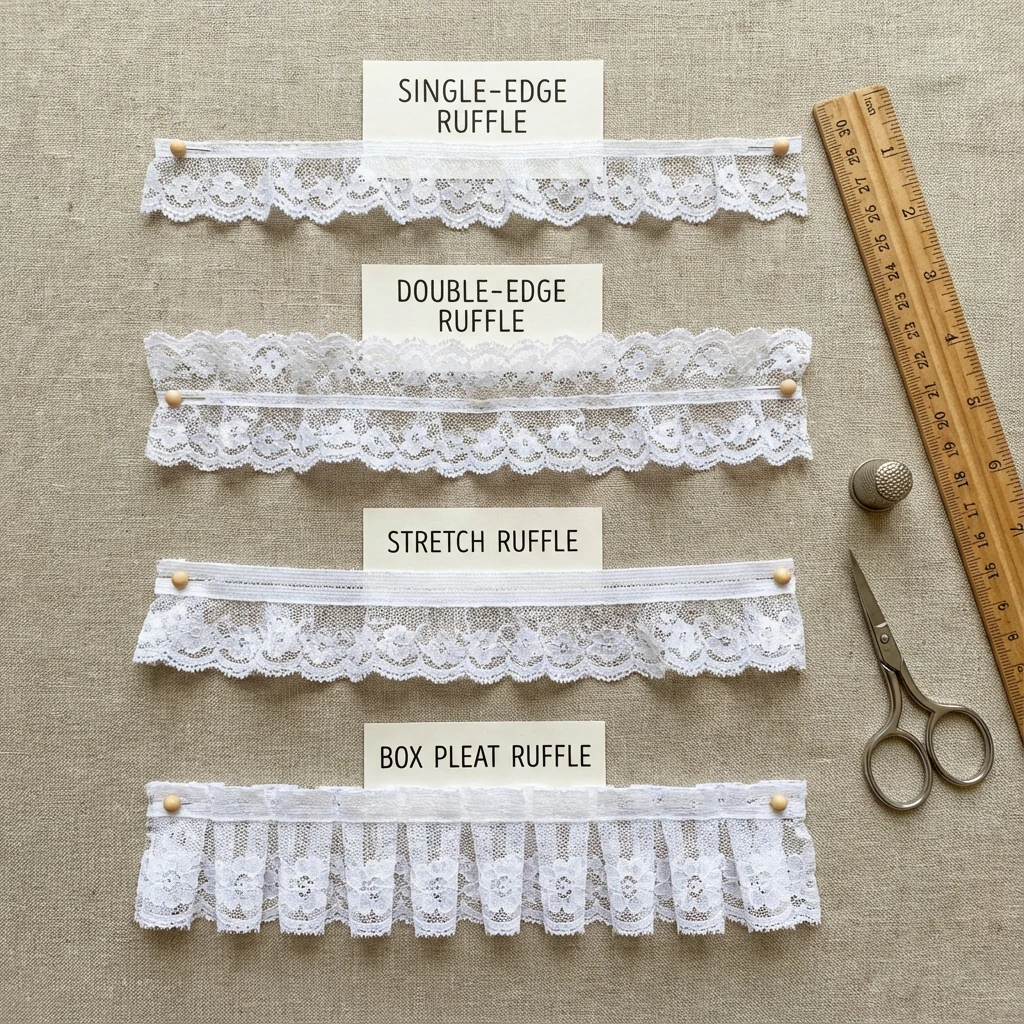
Ruffled lace comes in various widths, typically from 2cm to 15cm when measured with the ruffle extended. The width you choose dramatically affects the final look—narrow ruffles read as delicate detail, while wide ruffles make a bold statement.
Where Is Ruffled Lace Used?
Ruffled lace appears across multiple product categories. Understanding these applications helps you identify opportunities for your own designs.
Children’s Clothing
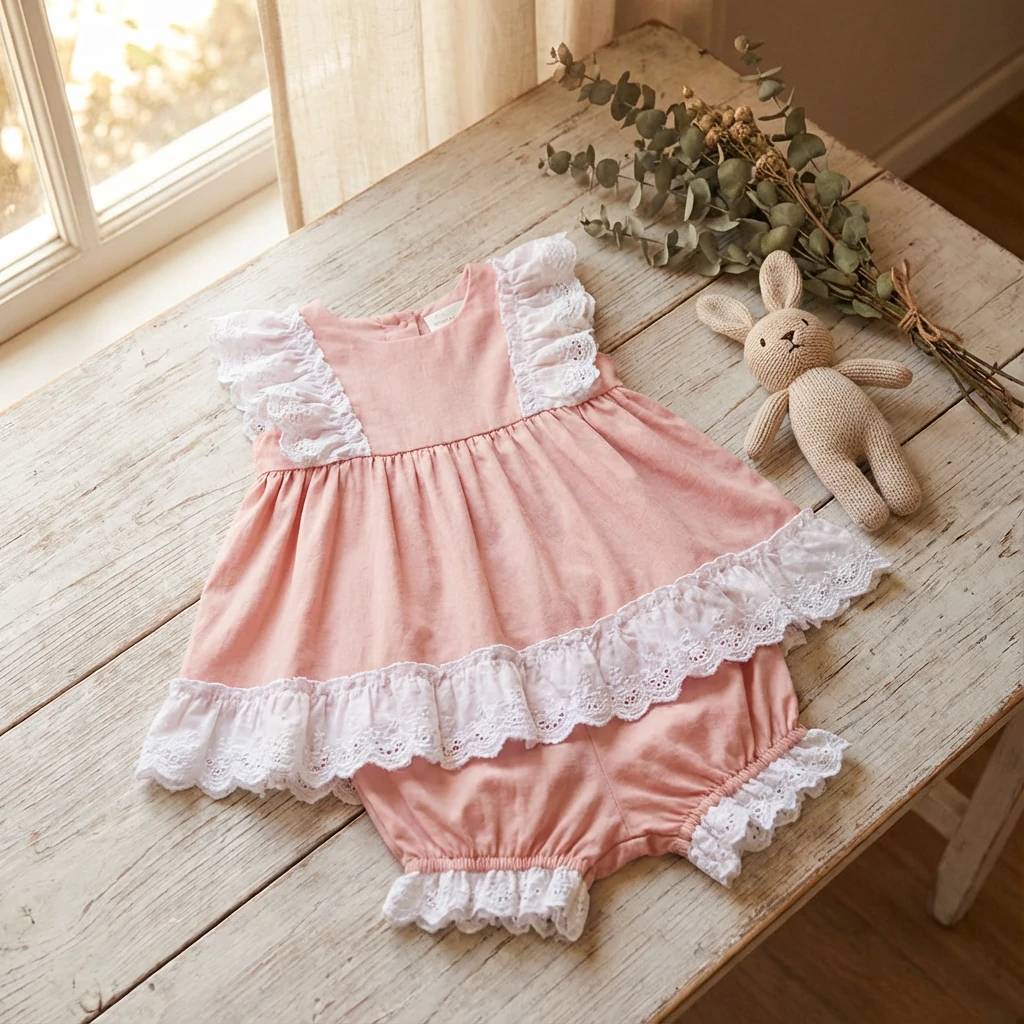
This is the largest market for ruffled lace. The soft, playful texture suits the aesthetic of baby and toddler clothing perfectly. You’ll find ruffled lace on diaper covers and bloomers, dress hemlines and sleeves, romper legs, sock trims, and headbands.
For children’s wear, softer gathers and medium widths (3-5cm) work best. The ruffle should move naturally without looking stiff or overwhelming small garments.
Women’s Fashion
Ruffled lace adds romantic detail to women’s clothing. Common applications include blouse necklines and cuffs, lingerie and sleepwear, skirt and dress hems, and vintage-style accessories.
Fashion applications often use finer lace with denser gathers for an elegant rather than cute effect. Black, ivory, and nude colors dominate this category.
Home Textiles
Ruffled lace transforms plain household items into decorative pieces. Applications include pillowcase edges, bedsheet borders, tablecloth trim, curtain tiebacks, and lampshade decoration.
Home textile applications typically use wider ruffled lace (5-10cm) since these items are viewed from a distance and need visual presence.
Accessories
Smaller projects use ruffled lace as a primary design element. These include hair accessories (scrunchies, headbands), gift packaging and craft projects, and decorative shoe clips.
Ruffled Lace vs Flat Lace: When to Choose Which
Both ruffled and flat lace have their place. Choosing the right type depends on the effect you want and practical considerations.
| Factor | Ruffled Lace | Flat Lace |
|---|---|---|
| Visual effect | Dimensional, playful, romantic | Clean, elegant, subtle |
| Volume | Adds significant volume | Lies flat against fabric |
| Cost per meter | Higher (more material used in gathering) | Lower |
| Sewing difficulty | Easier (flat header guides placement) | Moderate (entire edge attaches) |
| Best for | Statement trim, feminine styles | Understated elegance, layering |
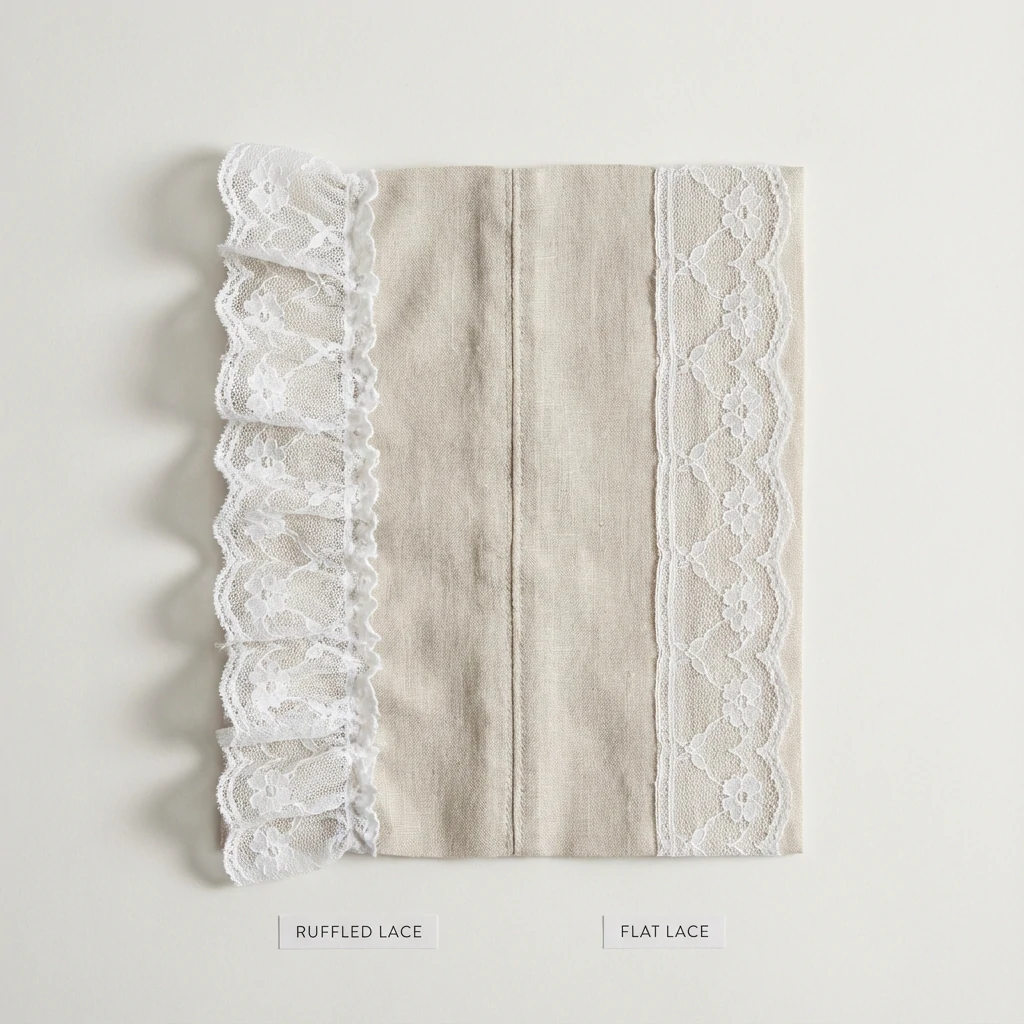
Choose ruffled lace when:
You want the trim to be a focal point rather than a subtle detail. The gathered texture draws the eye and adds visual weight. If your design needs softness, movement, or a romantic feel, ruffled lace delivers.
Choose flat lace when:
You need lace to blend into the design rather than stand out. Flat lace works better for layering, overlay applications, and situations where bulk would be a problem. It’s also the better choice when budget is tight.
The hybrid approach:
Some designers use both—flat lace for body overlay and ruffled lace for edge finishing. This creates visual interest without overwhelming the garment.
How to Choose the Right Ruffled Lace
Selecting ruffled lace involves several decisions. Getting these right ensures your finished product looks professional.
By Width
Width is measured with the ruffle extended flat. As a general guide, use 2-3cm for delicate accents and small items, 4-6cm for most garment applications, and 7-10cm+ for home textiles and statement pieces.
The scale should match your project. A 10cm ruffle on a baby bonnet looks absurd. A 2cm ruffle on a king-size pillowcase disappears.
By Material
Material affects both appearance and performance.
Polyester ruffled lace is the most common and affordable. It’s durable, washable, and holds its shape well. However, it can look shiny or synthetic on natural-fiber fabrics.
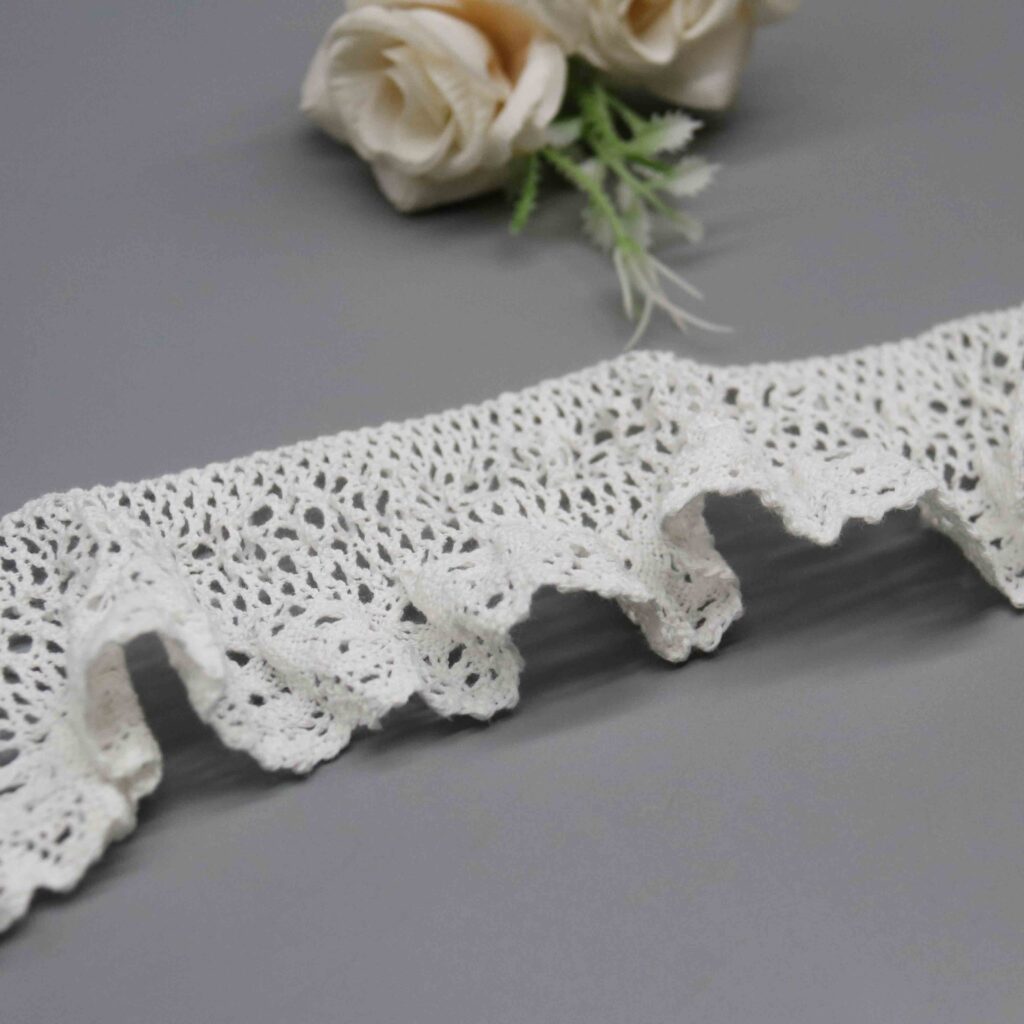
Cotton ruffled lace has a softer, more natural appearance. It breathes well and suits organic or vintage aesthetics. The downside is potential shrinkage and less crisp ruffle definition after washing.
Nylon ruffled lace is lightweight and smooth. It works well for lingerie and delicate applications. It’s also the best choice when you need stretch.
Blended materials combine properties. Cotton-poly blends offer natural appearance with better durability.
By Gather Density
Gather density describes how tightly the lace is gathered. This significantly affects the final look.
Light gathering creates a gentle wave. The ruffle lies relatively flat with soft movement. This works for understated, elegant applications.
Dense gathering creates full, bouncy ruffles with lots of volume. This suits playful children’s wear and statement designs. Dense gathers use more material, so expect higher cost per meter.
By Color
Most ruffled lace comes in white, ivory, or black. These neutrals work across many applications. Matching your fabric exactly isn’t necessary—a slight contrast often looks intentional and elegant.
If you need specific colors, ask your supplier about dyeing options. Polyester requires special dyes. Cotton and nylon accept standard fabric dyes more easily.
Common Mistakes When Buying Ruffled Lace
Avoid these errors that waste money and compromise your finished products.
Mistake 1: Ignoring shrinkage
Cotton ruffled lace can shrink 5-8% on first wash—more than flat lace because the gathers tighten. If you don’t pre-wash before sewing, your finished item will pucker after laundering.
Solution: Always pre-wash cotton ruffled lace. Or choose polyester if shrinkage is a concern.
Mistake 2: Mismatching gather density to fabric weight
Dense, heavy ruffles on lightweight fabric cause the fabric to sag and pull. The trim overpowers the garment. Conversely, light gathers on heavy fabric look sparse and cheap.
Solution: Match ruffle density to fabric weight. Light fabrics need light gathers. Heavy fabrics can support dense ruffles.
Mistake 3: Calculating yardage wrong
Ruffled lace doesn’t stretch around corners and curves like flat lace. You need more length than you might expect, especially for circular items like skirt hems.
Solution: Measure your project, then add 15-20% extra. For circles and curves, add 25%. It’s better to have leftover trim than to run short mid-project.
Mistake 4: Choosing by price alone
The cheapest ruffled lace often has uneven gathers, poor color consistency, and weak header construction that unravels during sewing. These problems create bigger costs in wasted time and materials.
Solution: Request samples before bulk orders. Check gather consistency, header strength, and color match across the sample.
FAQs
What is the difference between ruffle and frill?
The terms are often used interchangeably. Technically, a ruffle is gathered fabric creating soft waves, while a frill is pleated fabric creating more structured folds. In practice, “ruffled lace” and “frilly lace” describe the same products. Use whichever term your supplier recognizes.
Can ruffled lace be ironed?
Yes, but carefully. Use low heat and steam for polyester—high heat melts synthetic fibers. Cotton tolerates higher heat. Always iron from the back side, and don’t press the ruffles completely flat or you’ll lose the dimensional effect. Steam and finger-press to reshape ruffles after washing.
How much ruffled lace do I need?
Measure the edge where lace will attach. For straight edges, add 10% extra. For curved edges, add 20-25%. For gathered applications (where you’ll gather the header as well), multiply by 1.5 to 2 times. When in doubt, buy extra—having leftover trim is better than running short.
Does ruffled lace work on stretch fabrics?