
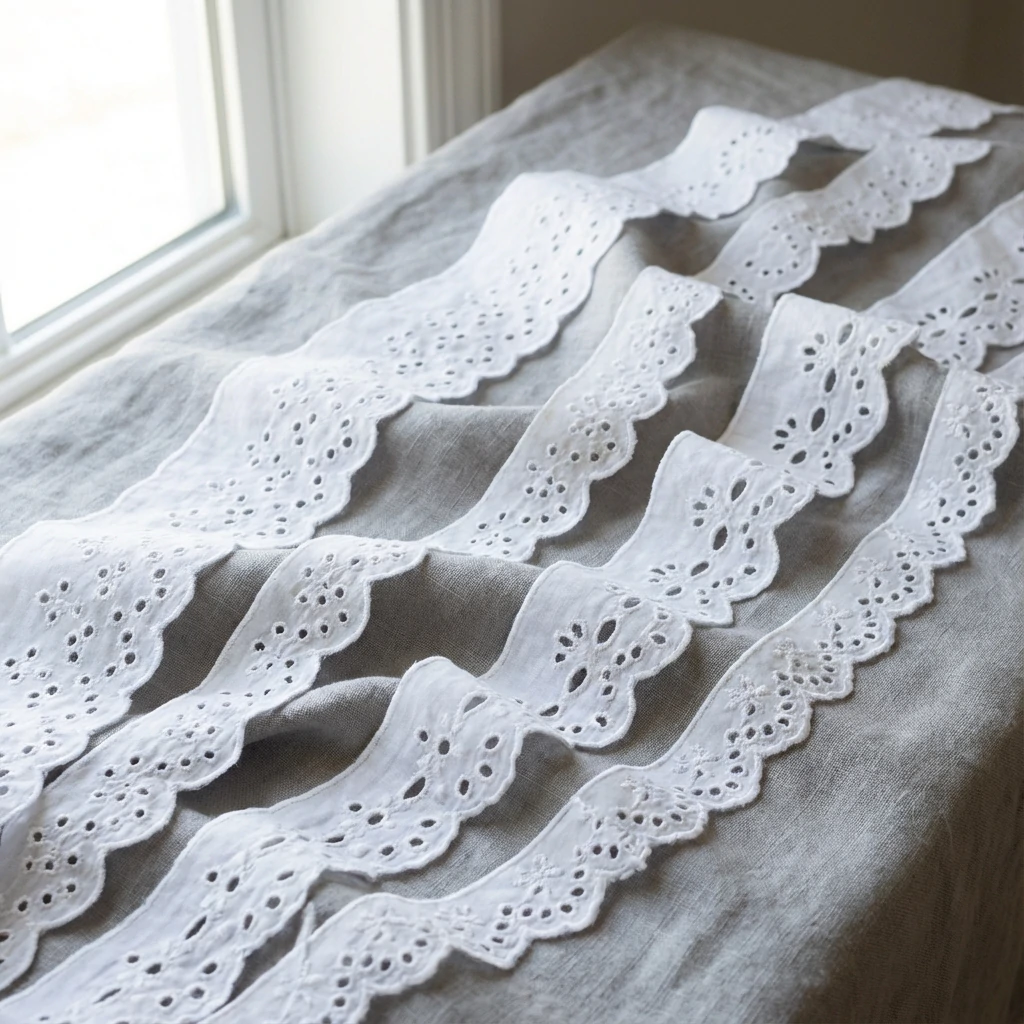
Eyelet lace is one of the most recognizable trims in fashion. Those small, embroidered holes arranged in decorative patterns have appeared on everything from Victorian-era petticoats to modern summer dresses. The style is timeless—but choosing the right eyelet lace for your project requires understanding the differences between types, materials, and applications.
This guide explains what eyelet lace is, how it differs from other lace types, where it’s commonly used, and how to select the right variety for your specific needs.
What Is Eyelet Lace?
Eyelet lace is a type of embroidered fabric or trim featuring small holes (eyelets) as part of its decorative pattern. Unlike traditional lace made from interlocking threads, eyelet lace starts with a base fabric—usually cotton—that is then embroidered and cut to create the characteristic openwork design.
Each eyelet is created by punching or cutting a small hole in the fabric, then finishing the edges with dense embroidery stitches that prevent fraying. The result is a structured, durable trim with a distinctive perforated appearance.
The technique originated in Eastern Europe and became hugely popular in England during the Victorian era, where it was known as “broderie anglaise” (English embroidery). Today, most commercial eyelet lace is produced by machine, making it affordable while maintaining the classic aesthetic.
What sets eyelet lace apart from other lace types is its construction. Regular lace is typically an openwork fabric created entirely from thread. Eyelet lace has a solid fabric base with holes cut into it. This gives eyelet lace more structure and durability than many traditional laces.
Types of Eyelet Lace
Eyelet lace comes in several forms, each suited to different applications.
By Material
Cotton eyelet is the traditional choice and remains the most popular. It’s breathable, soft against skin, and has a classic appearance that suits vintage and romantic styles. Cotton eyelet works well for summer clothing, baby garments, and home textiles. The main consideration is that cotton can shrink and wrinkle.
Polyester eyelet offers greater durability and easier care. It resists shrinking, holds its shape through washing, and maintains crisp edges. Polyester works well for items that need frequent laundering or where low maintenance matters. The trade-off is slightly less breathability and a somewhat shinier appearance.
Cotton-polyester blends combine benefits of both materials. You get the natural look and feel of cotton with improved durability and wrinkle resistance. Blends are increasingly common in commercial eyelet lace.
Stretch eyelet incorporates spandex or elastic threads, allowing the trim to stretch and recover. This type works for fitted garments, lingerie, and applications where flexibility matters.
By Form
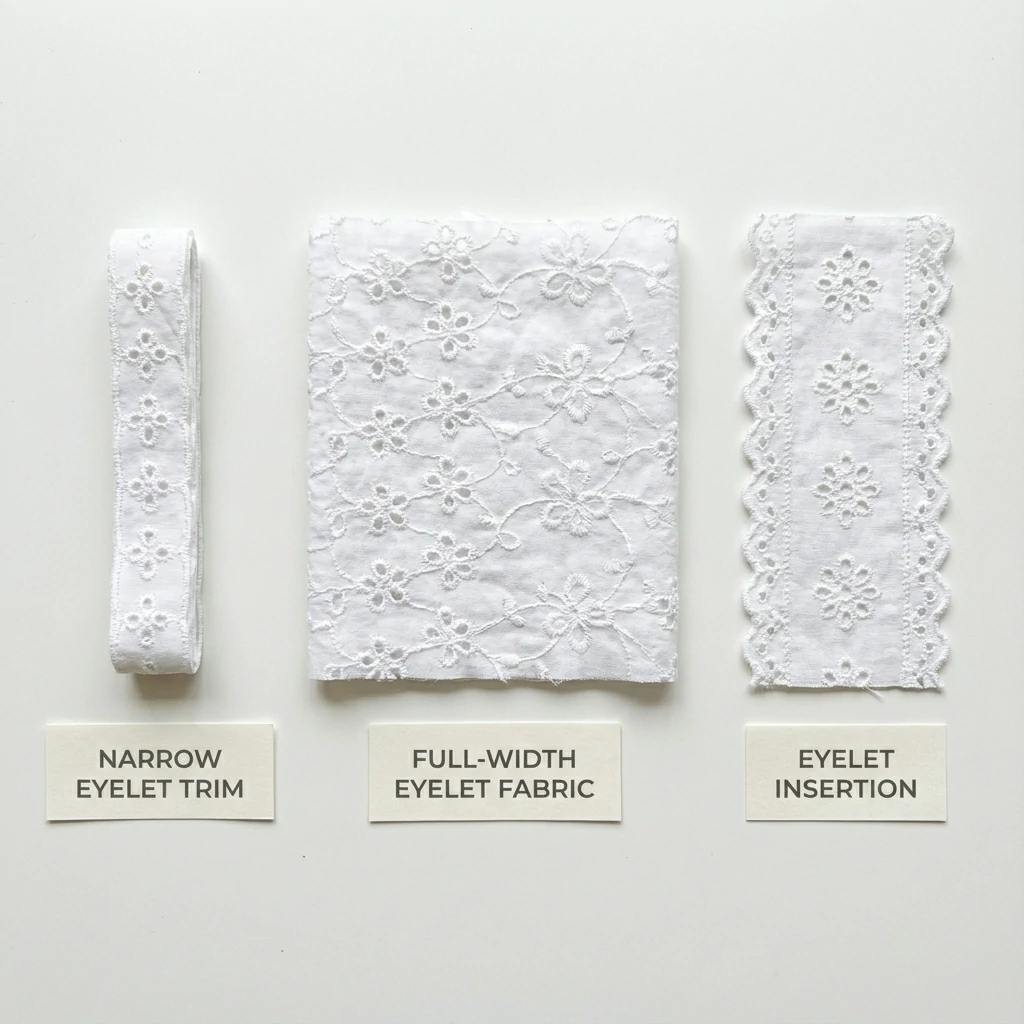
Eyelet trim is narrow strips of eyelet lace, typically 1-10cm wide, used as decorative edging. Trim usually has one finished edge (the scalloped or decorative side) and one raw edge for attachment.
Eyelet fabric is full-width material (typically 110-150cm) covered entirely in eyelet embroidery. It’s used for garment construction—entire dresses, blouses, or skirts made from the fabric itself.
Eyelet insertion is trim designed to be sewn between two pieces of fabric rather than at an edge. Both edges are finished and meant to be visible.
Where Is Eyelet Lace Used?
Eyelet lace appears across multiple product categories, making it one of the most versatile decorative trims available.
Women’s Clothing
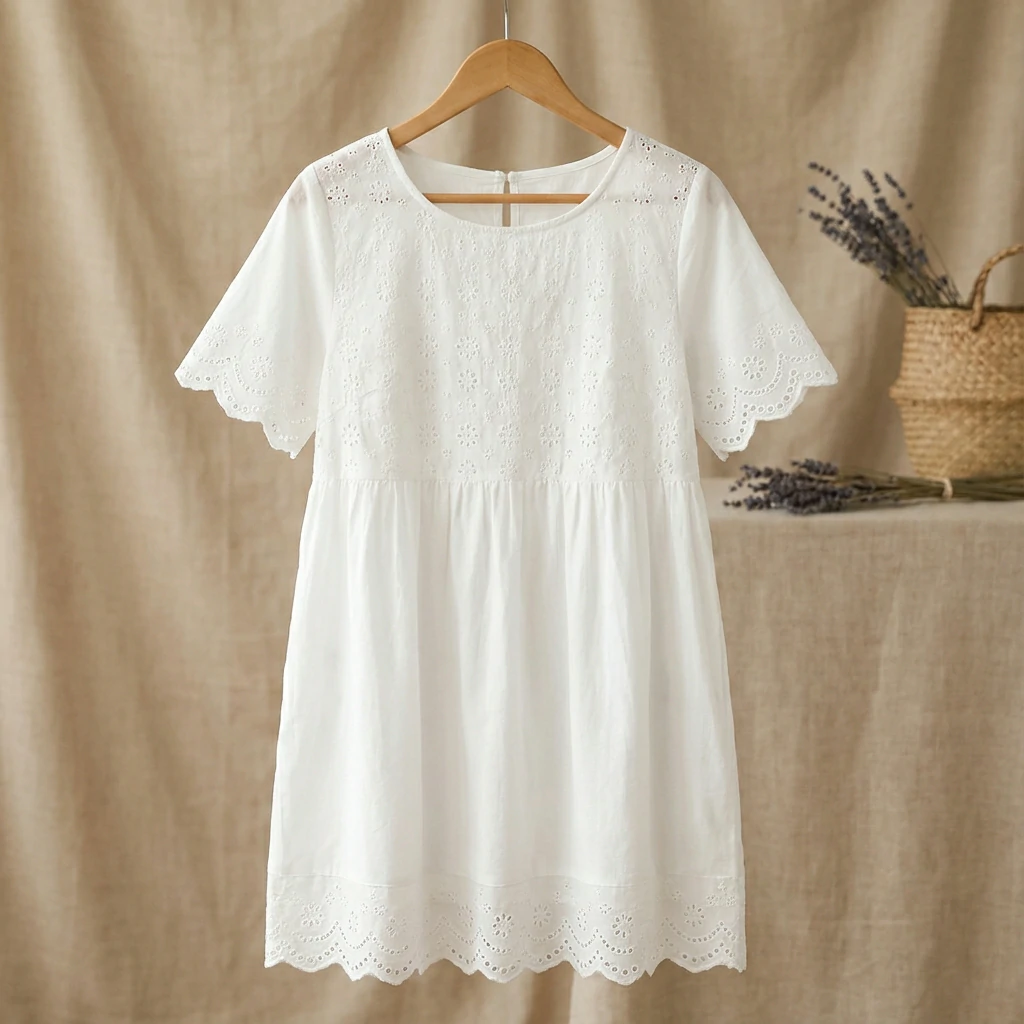
Summer dresses are the signature application for eyelet lace. The perforated design allows airflow, making eyelet ideal for warm weather. Full eyelet fabric dresses are a seasonal staple, while eyelet trim adds detail to necklines, hemlines, and sleeves of otherwise plain garments.
Blouses and tops use eyelet for feminine detailing. Collar edges, cuffs, and front plackets frequently feature eyelet trim. Romantic and bohemian styles particularly favor this material.
Skirts incorporate eyelet as hem trim or as tiered ruffles. The structured nature of eyelet holds its shape in gathered applications better than softer laces.
Children’s Clothing
Baby and toddler clothing represents a major market for eyelet lace. The soft cotton construction suits sensitive skin, while the traditional aesthetic appeals to parents seeking classic styles. Christening gowns, special occasion dresses, bloomers, and bonnets all commonly feature eyelet trim.
The durability of eyelet lace matters for children’s wear—it survives frequent washing better than many delicate trims.
Lingerie and Sleepwear
Eyelet trim appears on bras, panties, slips, and nightgowns. The breathability makes it comfortable against skin. Cotton eyelet is particularly popular for everyday lingerie where comfort matters more than sheer glamour.
Home Textiles
Pillowcases and bed linens use eyelet trim for decorative borders. The classic look suits traditional bedroom decor. Curtains and valances incorporate eyelet for a vintage cottage aesthetic. Tablecloths and napkins feature eyelet edging for formal and country-style dining.
Eyelet Lace vs Regular Lace: Key Differences
Understanding how eyelet differs from other lace types helps you choose the right material for your project.
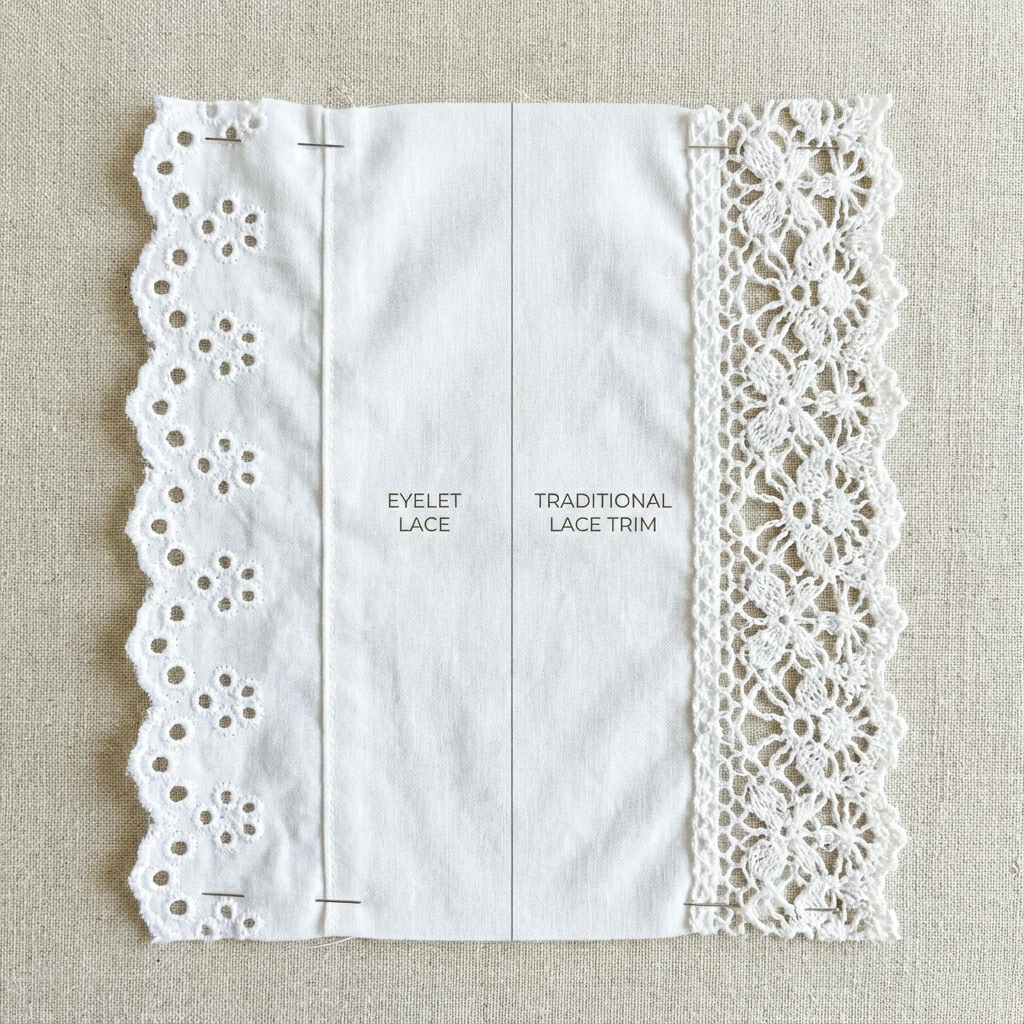
| Feature | Eyelet Lace | Regular Lace |
|---|---|---|
| Construction | Embroidered holes in solid fabric | Openwork created from thread |
| Structure | Firm, holds shape | Soft, drapes easily |
| Durability | High—fabric base provides strength | Varies—often more delicate |
| Breathability | Good, but less than open lace | Excellent in open weaves |
| Opacity | More opaque (solid fabric base) | More transparent |
| Style | Classic, vintage, cottage | Romantic, elegant, delicate |
| Best for | Structured trims, everyday wear | Overlay, special occasion |
Choose eyelet lace when:
You need trim that holds its shape. The fabric base means eyelet doesn’t stretch or distort as easily as softer laces. It works better for gathered applications, structured garments, and items that need to maintain crisp lines.
You want durability for everyday items. Eyelet survives regular washing and wear better than many delicate laces. For children’s clothing, workwear-adjacent applications, or frequently laundered items, eyelet is the practical choice.
You prefer a classic or vintage aesthetic. Eyelet has distinct historical associations—Victorian fashion, cottage style, traditional baby clothing. If that’s your target aesthetic, eyelet delivers the look authentically.
Choose regular lace when:
You need transparency or overlay effects. Eyelet’s fabric base makes it relatively opaque. For sheer applications or romantic overlay effects, traditional lace works better.
You want maximum drape and softness. Eyelet is structured by nature. If you need trim that flows and moves with fabric, softer lace types are more suitable.
How to Choose the Right Eyelet Lace
Selecting eyelet lace involves matching the trim to your specific application. Consider these factors:
Width
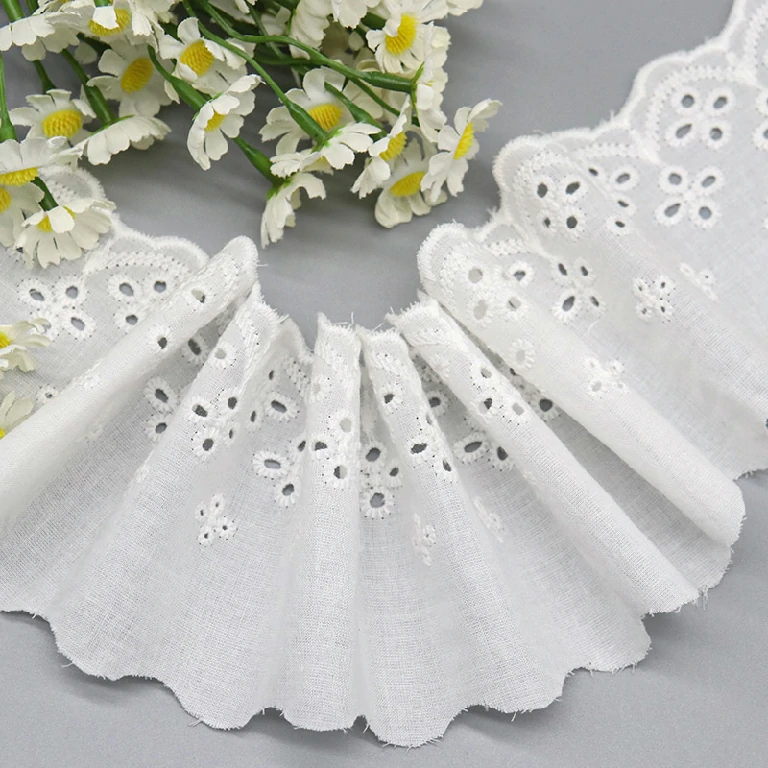
Eyelet trim ranges from narrow 1cm edging to wide 10cm+ borders. Narrow widths (1-3cm) suit subtle accents—sleeve edges, collar trim, delicate finishing. Medium widths (3-6cm) work for most garment applications—hemlines, tier edging, decorative borders. Wide widths (6cm+) make statements—significant design elements rather than subtle details.
Match width to garment scale. Narrow trim on a full skirt disappears. Wide trim on a baby bonnet overwhelms.
Eyelet Size and Density
Eyelet holes vary from tiny pin-prick perforations to larger oval openings. Smaller, denser eyelets create delicate, traditional looks. Larger, more spaced eyelets read as bolder and more modern.
Consider your fabric weight. Delicate eyelets suit lightweight fabrics. Larger, bolder patterns work on medium-weight materials.
Edge Style
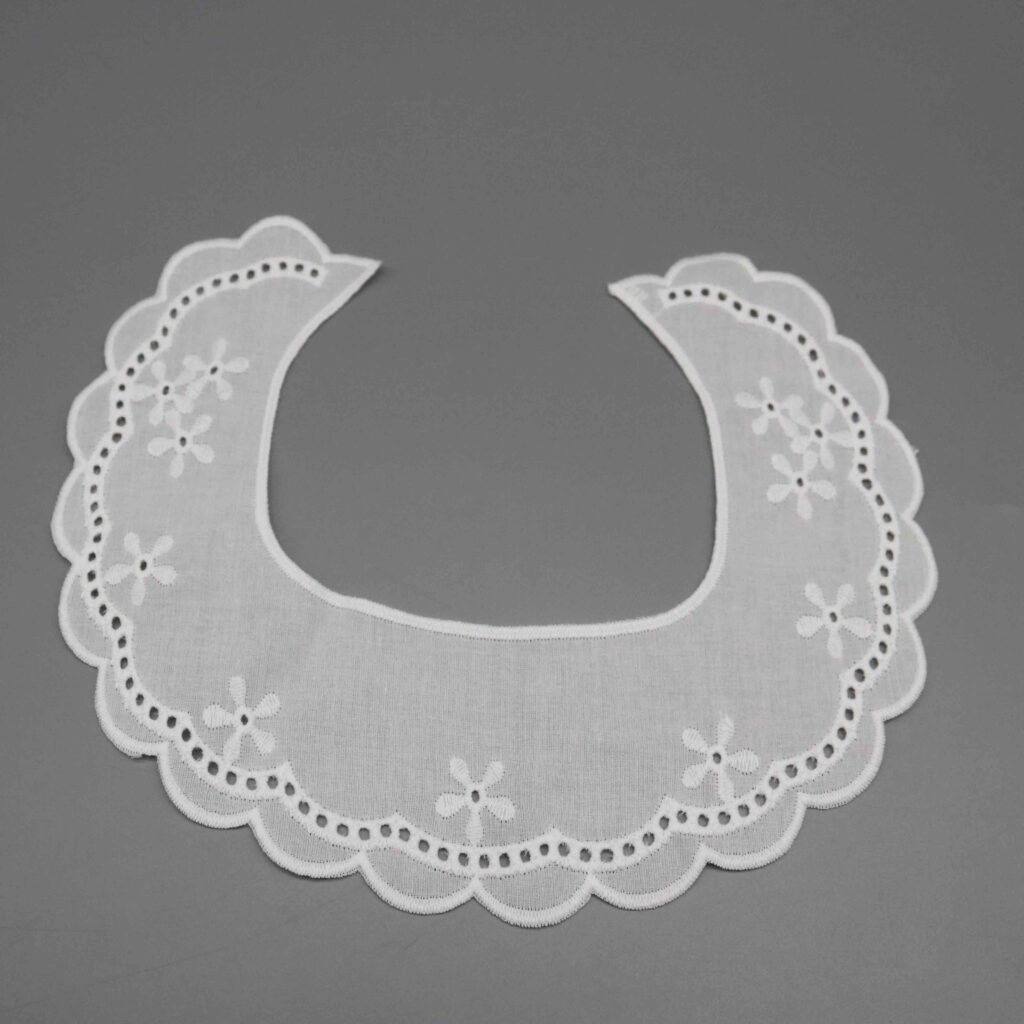
Most eyelet trim features a scalloped edge—the decorative border created by the embroidery pattern. Scallop styles vary from gentle waves to pointed peaks to elaborate curves. Match the scallop style to your overall design aesthetic.
Some eyelet comes with straight edges on both sides, intended for insertion applications rather than edge finishing.
Color
White and off-white dominate the eyelet market, reflecting the traditional aesthetic. Black eyelet offers a more dramatic option. Colored eyelet exists but is less common—ask suppliers about availability or consider dyeing white cotton eyelet yourself.
When matching white eyelet to fabric, pay attention to undertones. Bright white eyelet against cream fabric looks mismatched. Request samples to verify color compatibility before ordering in quantity.
FAQs
What is the difference between eyelet and broderie anglaise?
They’re the same thing. “Broderie anglaise” is the French/British term for eyelet embroidery, literally meaning “English embroidery.” In the US market, “eyelet” or “eyelet lace” are more common terms. Both refer to embroidered fabric featuring decorative holes with finished edges.
Can eyelet lace be dyed?
Cotton eyelet accepts fabric dye well. Use fiber-reactive dyes for best results. Polyester eyelet requires special polyester dyes and higher temperatures. Blended eyelet may dye unevenly—test on a sample first. Note that the embroidery thread may absorb dye differently than the base fabric, potentially creating contrast effects.
Is eyelet lace suitable for winter clothing?
The perforated design makes eyelet inherently breathable—a benefit in summer but potentially problematic in winter. However, eyelet trim (as opposed to full eyelet fabric) can work on winter garments as decorative detail. The small amount of trim won’t significantly affect warmth. Full eyelet fabric garments are best reserved for warm weather.
How do I care for eyelet lace garments?