
You’ve probably noticed that some lace lingerie moves with your body, while others fight you every time you bend over. That scratchy, stiff sensation? That’s traditional lace. But here’s the thing—it doesn’t have to be that way.
Stretch lace is decorative lace woven with elastic fibers like spandex or Lycra. The result? Lace that stretches, hugs your curves, and snaps right back without losing its shape. If you’ve ever worn lingerie that felt like a second skin instead of a cage, you’ve experienced stretch lace.
This guide breaks down the types of stretch lace, where it’s used, and how to pick the right one—whether you’re shopping for yourself or sourcing for production.
What Makes Stretch Lace Different
Traditional lace sits rigid on your body. It doesn’t budge, doesn’t give, and definitely doesn’t forgive a big lunch. Stretch lace, on the other hand, contains elastic fibers that let the fabric expand and contract with your movements.
The secret is in the construction. Manufacturers weave 5% to 20% spandex or Lycra directly into the lace structure. This allows the lace to stretch anywhere from 15% to over 100% beyond its original size—then return to form without any visible distortion.
I used to grab any lace garment that looked pretty, only to regret it hours later when it dug into my skin or bunched awkwardly at the waist. Once I understood the difference, I never went back to rigid lace for anything fitted.
Here’s how the two compare in real-world wear:
| Rigid Lace | Stretch Lace |
|---|---|
| Fights body movement | Moves with you |
| Bunches at curves | Hugs curves smoothly |
| Gaps when you bend | Stays flat against skin |
| Loses shape over time | Returns to original form |
This is why nearly all modern lingerie brands have switched to stretch lace for bra bands, underwear, and bodysuits. It simply performs better on a moving body.
Types of Stretch Lace
Not all stretch lace behaves the same way. Three factors determine how it performs: stretch direction, material composition, and something called modulus. Let’s break each one down.
Stretch Direction: 2-Way vs 4-Way
The terms “2-way” and “4-way” refer to how many directions the lace can stretch. Two-way stretch means the fabric only expands in one direction—usually horizontally, across the width. Four-way stretch means it expands both horizontally and vertically.
Here’s a fun fact most brands won’t tell you: 4-way stretch costs significantly more to produce. So if a product label just says “stretch lace” without specifying the direction, it’s almost always 2-way. That’s fine for bra bands and waistbands, but if you need lace that moves in all directions—like for a fitted bodysuit—you’ll want to confirm it’s 4-way.
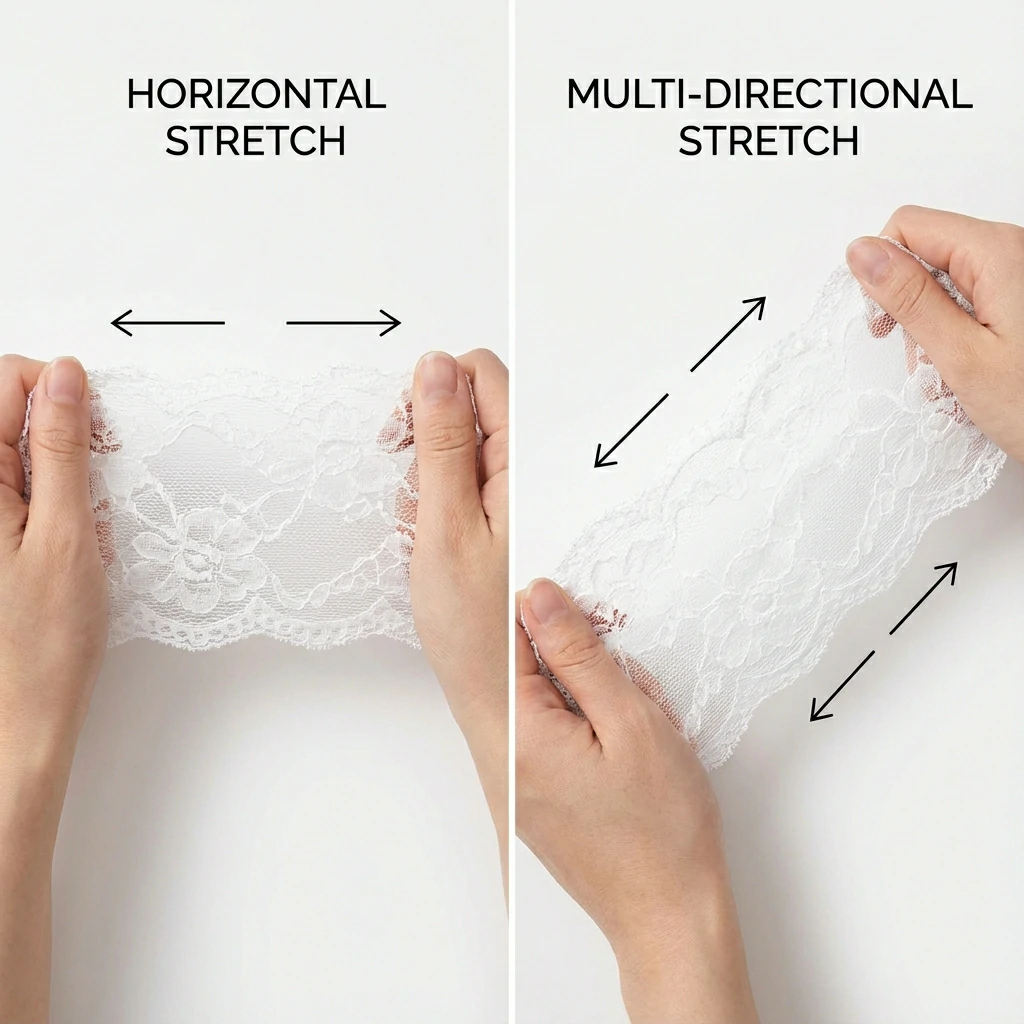
| Stretch Type | Best Applications |
|---|---|
| 2-Way (horizontal) | Bra bands, waistbands, vertical trim |
| 4-Way (multi-directional) | Full body panels, fitted garments, plus-size lingerie |
Material Composition
The base fiber determines how the lace feels against your skin, while the spandex content controls how much it stretches. Different combinations serve different purposes.
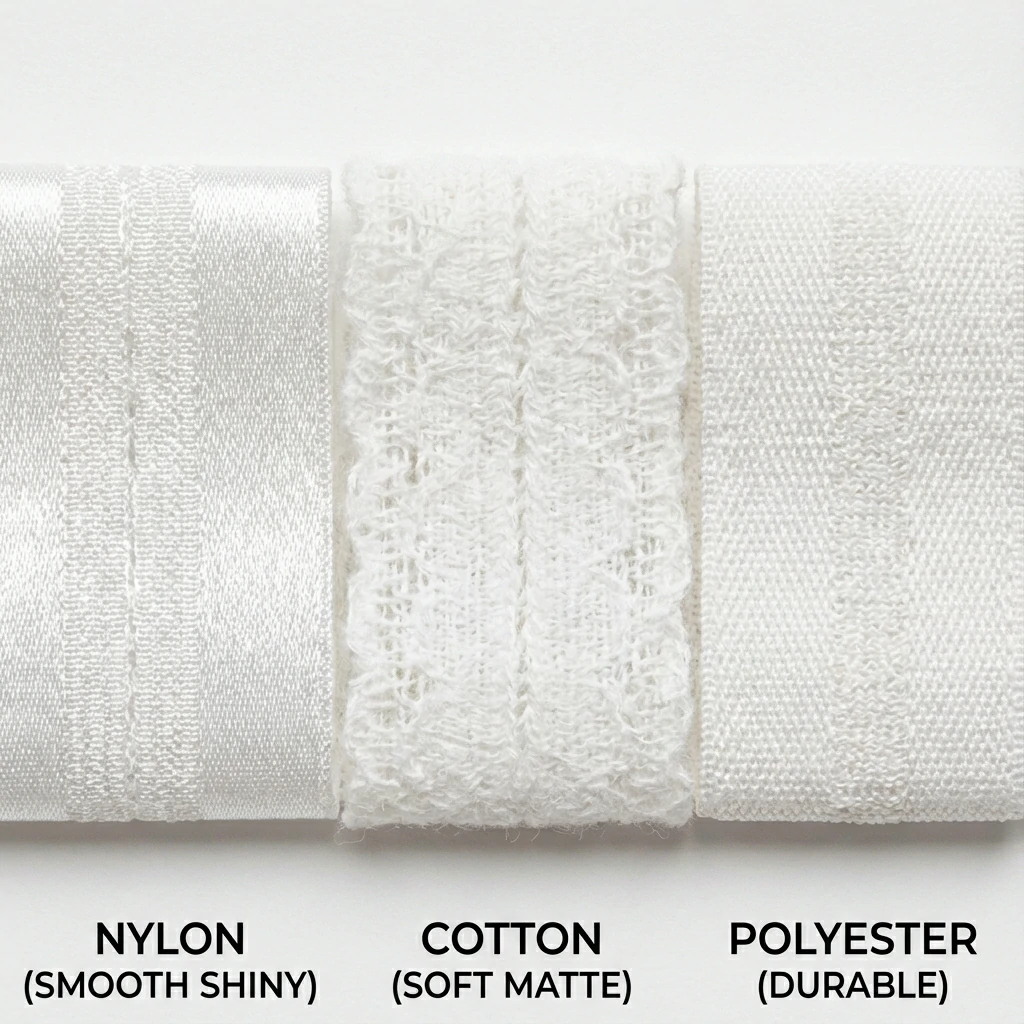
| Composition | Feel | Ideal Use |
|---|---|---|
| Nylon + Spandex | Smooth, silky | Lingerie, shapewear |
| Cotton + Spandex | Soft, breathable | Casual wear, sensitive skin |
| Polyester + Spandex | Durable, color-stable | Activewear, frequent washing |
Higher spandex percentages mean more stretch—but also higher cost and a different hand feel. Most quality lingerie lace contains 10-15% spandex, which provides excellent stretch without feeling rubbery.
Modulus: The Detail Most People Miss
This is where it gets interesting. Modulus refers to how much force is required to stretch the lace. Think of it as the “firmness” of the stretch. Low-modulus lace stretches easily with minimal effort—it feels soft and forgiving. High-modulus lace requires more force to stretch, which means it provides structural support.
Here’s the thing most people learn too late: a soft-stretch lace on a plus-size bra band will stretch out and lose support within months. That same lace on a size small? Works perfectly for years. The difference isn’t quality—it’s physics. Larger body sizes create more tension across the fabric, so you need lace that can handle that tension without fatiguing.
The modulus has to match the body size and application.
Common Uses for Stretch Lace
Lingerie and Underwear
This is the biggest application by far. Stretch lace appears on bra bands and cup overlays, underwear waistbands and leg openings, bodysuits, teddies, chemises, and slips. Anywhere the lace needs to move with the body rather than restrict it, stretch lace is the standard choice.
The combination of aesthetics and functionality makes it irreplaceable. You get the delicate, decorative look of traditional lace with the comfort and flexibility of modern performance fabrics.
Plus-Size Lingerie
This category deserves special attention. Plus-size garments face significantly more tension across larger body areas, and standard soft-stretch lace simply can’t handle it. The lace stretches beyond its intended range, the elastic fibers fatigue and lose their memory, and within a few months the garment sags, gaps, and loses support entirely.
The fix is straightforward: use high-modulus stretch lace for any plus-size application. It feels slightly firmer on the roll, but it performs correctly on larger frames and maintains its shape through months of wear.
Apparel Trim and Bridal
Beyond lingerie, stretch lace appears on apparel trim for t-shirts, tank tops, sleeve hems, and necklines. The stretch allows the trim to move with the garment instead of pulling or puckering when the wearer moves.
I’ve worked with bridal designers who swear by 4-way stretch for mermaid gowns. The bodice panels conform to the bride’s curves, the sleeves allow natural arm movement, and the back panels on fitted silhouettes move gracefully with every step down the aisle.
How to Choose the Right Stretch Lace
Choosing the right stretch lace comes down to matching three factors: stretch direction to application, modulus to body size, and material to use case.
Match Stretch Direction to Application
| Application | Recommended Stretch |
|---|---|
| Waistbands, bra bands | 2-way (horizontal) |
| Full body panels | 4-way |
| Vertical trim | 2-way (horizontal) |
| Fitted sleeves | 4-way |
Match Modulus to Body Size
| Size Range | Recommended Modulus |
|---|---|
| XS–L | Low to medium |
| XL and above | High |
| Control garments | Always high |
Match Material to Use Case
For daily wear or sensitive skin, cotton-spandex blends offer the best comfort. For special occasions where you want a luxury feel, nylon-spandex creates that smooth, silky drape. For activewear or garments that will be washed frequently, polyester-spandex holds up best over time.
Always Check Recovery Rate
Before committing to any stretch lace, do a simple test. Stretch a sample firmly and release it. Quality stretch lace snaps back immediately with no visible distortion. If it stays stretched or the threads shift permanently, that lace will bag out after a few wears. Walk away.
Why High-Modulus Matters for Plus-Size
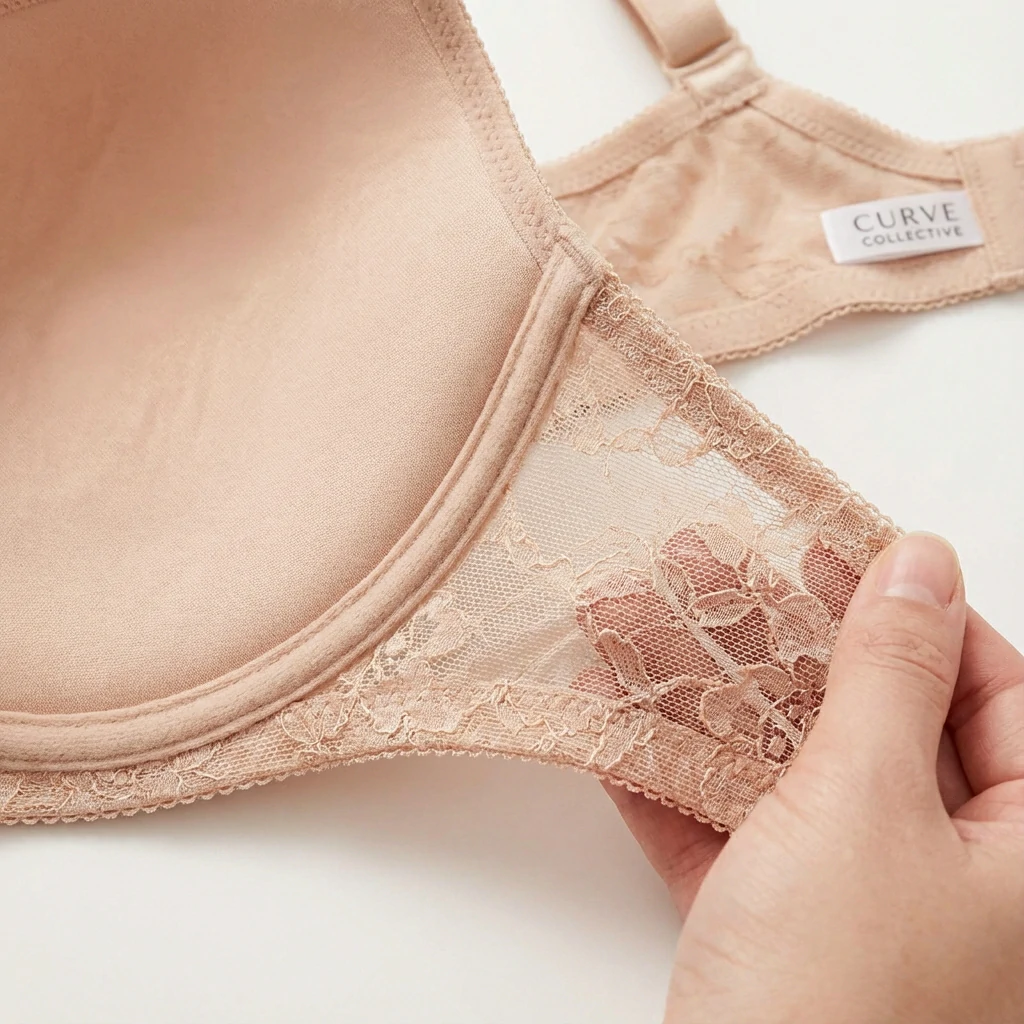
Here’s something most garment makers learn the hard way.
Standard stretch lace—the kind that feels soft and comfortable off the roll—is engineered for standard body sizes. When you scale up a pattern for plus sizes, the lace faces exponentially more tension across a larger surface area. The elastic fibers work harder with every movement, and over time they fatigue.
What happens with the wrong modulus? The lace stretches beyond its intended range. The elastic fibers lose their memory and stop bouncing back. The garment starts to sag and gap in all the wrong places. Customer complaints pile up.
The fix is simple: specify high-modulus stretch lace for any plus-size application. When sourcing, ask suppliers directly: “What is the modulus rating on this lace?” If they can’t answer that question, they may not understand the technical requirements for extended sizing—and you should find a supplier who does.
Yituolace is a reliable supplier, and elastic lace is their flagship product.
FAQs
What is stretch lace made of?
Most stretch lace combines a base fiber—nylon, cotton, or polyester—with 5-20% spandex or Lycra. The base fiber determines the look and feel of the lace, while the elastic fiber provides the stretch and recovery properties.
What is the difference between 2-way and 4-way stretch lace?
Two-way stretch lace expands in one direction only, usually horizontally. Four-way stretch lace expands both horizontally and vertically. Four-way offers more flexibility for body-conforming applications but costs more to produce.
Can stretch lace be used for plus-size garments?
Yes, but you need high-modulus stretch lace. Standard soft-stretch lace will overstretch and lose support on larger body sizes within months. Always verify modulus specifications when sourcing for extended sizes.
How do I care for stretch lace?
Hand wash or use a mesh laundry bag on a gentle cycle with cold water only. Skip the tumble dryer entirely—heat destroys spandex fibers faster than anything else. Lay flat or hang dry away from direct sunlight.
Does stretch lace lose elasticity over time?