
If you’ve ever sourced decorative trim, you know the frustration. The sample looks gorgeous—thick, lustrous, perfect drape. Then the bulk order arrives, and it’s thin, dull, and sheds after one wash. The product listing said “tassel trim.” Technically true. But that term covers everything from dollar-store cotton fringe to handcrafted bullion that costs twenty times more.
Tassel trim is a decorative edging made of hanging threads, cords, or twisted strands attached to a woven header tape. The header tape is what you sew onto your product. The hanging part creates the visual effect.
This guide breaks down the four main types, what each one is made of, and how to choose the right grade for your application.
The Two Components That Matter
Every tassel trim has two parts: header tape and hanging strands.
The header tape is the structural base—a narrow woven band where your sewing machine engages. A poorly constructed tape will fray during production and jam your machines. A good one feeds smoothly and holds stitches without pulling.
The hanging strands create the visual magic. Material, length, density, and construction determine how the trim moves, catches light, and lasts. Here’s what separates professional-grade from cheap: consistency. Every strand should hang at the same length with uniform spacing. Inconsistency is the first sign of a supplier cutting corners.
The Four Main Types
| Type | Material | Price | Best For |
|---|---|---|---|
| Cotton Tassel | Cotton thread | $ | Boho decor, DIY crafts |
| Chainette Fringe | Rayon/polyester | $$ | Garments, lightweight curtains |
| Beaded Fringe | Glass/acrylic beads | $$$ | Lampshades, evening wear |
| Bullion Fringe | Metallic twisted cord | $$$$ | Luxury drapery, stage costumes |
Cotton Tassel Trim
The entry-level option. Cheap, casual, almost rustic. Works for bohemian decor and craft projects where durability isn’t critical.
The problem? Cotton absorbs moisture, tangles easily, and frays over time. I’ve seen buyers source cotton for curtain projects to save money. Six months later, the tassels have matted together and lost all appeal. Initial savings disappear fast.
Chainette Fringe
Rayon or polyester threads twisted into fine chains. Smooth, silky, excellent drape. This is the workhorse of the garment industry—dance costumes, flapper dresses, casual curtain tiebacks.
Quality varies widely. Low-grade chainette looks plastic and reflects light harshly. High-grade uses premium rayon with natural sheen. Always request samples first.
Beaded Fringe
Glass or acrylic beads that catch and reflect light. Beautiful for lampshades and stationary decor.
The challenge is durability. Beads crack or detach if handled roughly. Cheap versions string beads on thin thread that breaks easily. For garments or anything with regular movement, proceed with caution.
Bullion Fringe
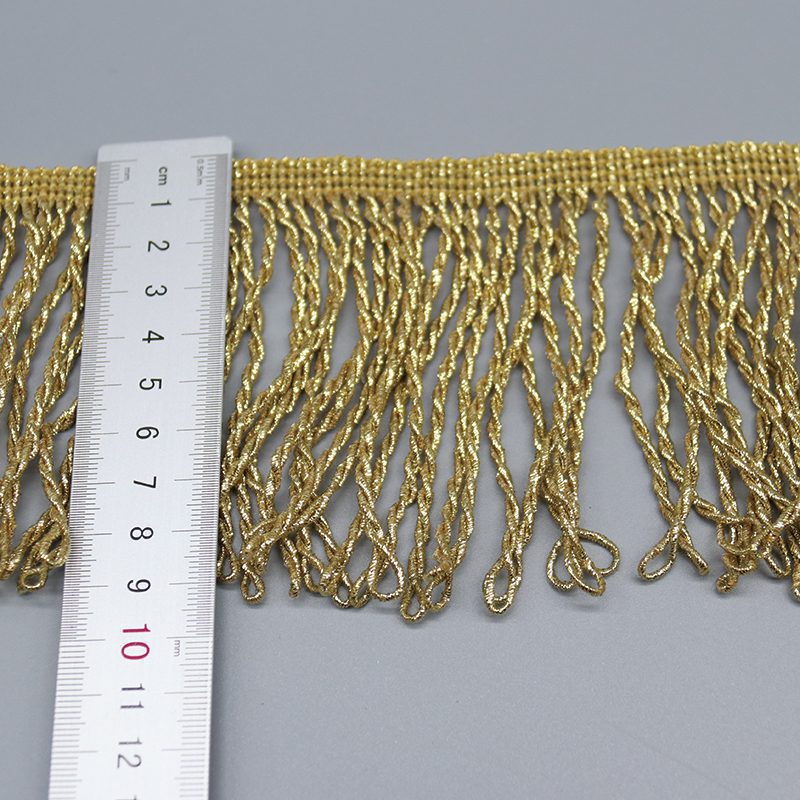
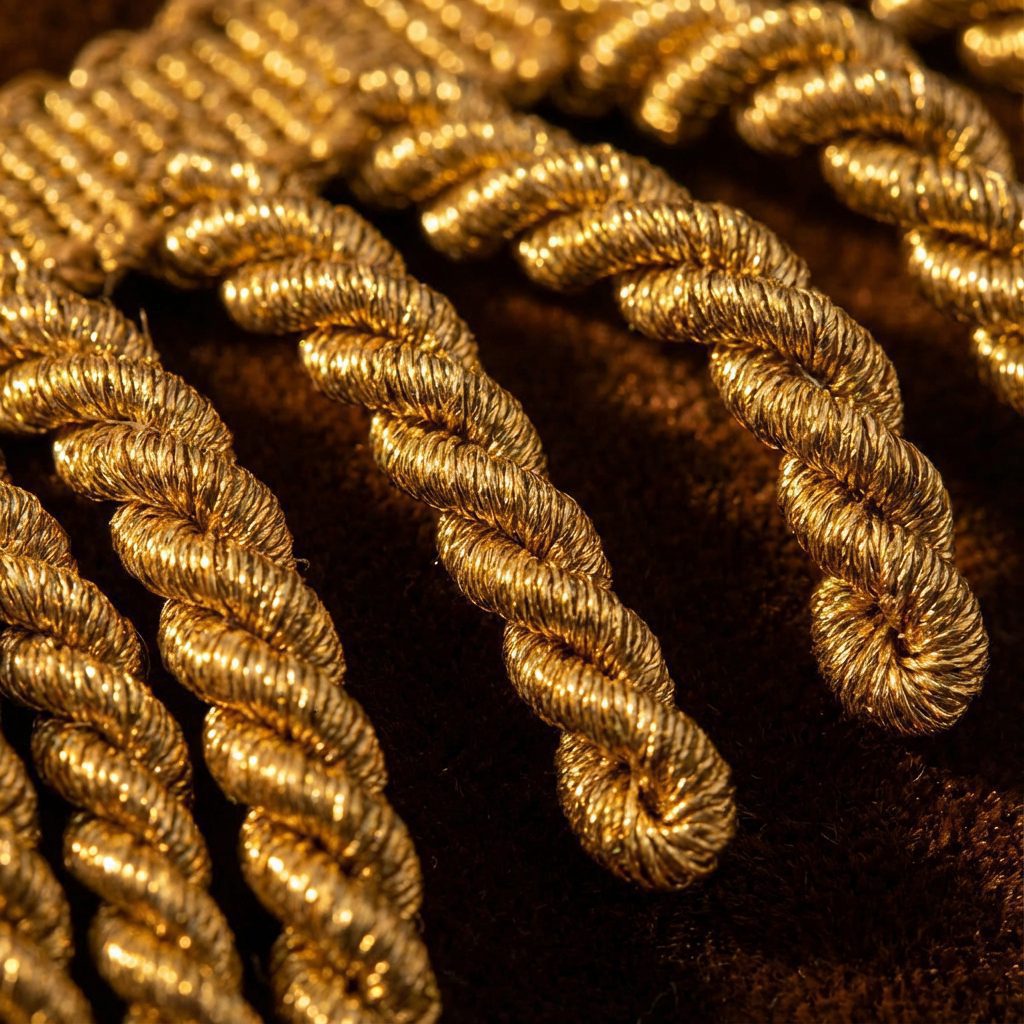
The top of the market. Metallic cords twisted into spiral coils—like a spring stretched out. This construction creates incredible depth, weight, and light reflection.
The spiral twist catches light at multiple angles as it moves, creating a shimmering effect flat threads can’t replicate. High-end drapery manufacturers use bullion because nothing else delivers the same visual impact. Stage costume designers choose it for how it moves under theatrical lighting.
The trade-off: higher cost and careful handling required. Rush it through production and you’ll damage the spirals. Treat it properly and it looks stunning for decades.
Bullion Fringe: Color and Spec Options
| Finish | Character | Best Applications |
|---|---|---|
| Bright Gold | Glamorous, high-shine | Stage curtains, evening wear |
| Antique Gold | Vintage, sophisticated | Traditional drapery, upholstery |
| Silver | Cool, modern | Contemporary decor, bridal |
| Bronze | Earthy, understated | Rustic luxury interiors |
Bright gold pops under stage lights but can look garish in daylight. Antique gold works in more contexts but lacks drama.
Length ranges from 3 to 30 cm. Shorter for subtle edges, longer for dramatic movement. Density affects both appearance and cost—higher density means fuller look but proportionally higher price.
Where to Use Each Type
Drapery: Chainette for everyday curtains. Bullion for luxury settings—hotel lobbies, high-end residences, theatrical venues. When clients pay premium prices, they notice the difference.
Lampshades: Beaded fringe interacts beautifully with light sources. Bullion for statement lamps where you want weight and presence.
Costumes: Chainette for practice wear and mid-range costumes. Bullion dominates competition wear and professional stage costumes—under stage lighting, it shimmers in ways chainette cannot match.
Upholstery: Bullion works because metallic twisted cords resist fraying and matting. Cotton and chainette fail here—they can’t handle daily abrasion.

How to Choose: Quick Checklist
Match application to quality tier:
| Application | Choice |
|---|---|
| Disposable/temporary | Cotton |
| Standard commercial | Chainette |
| Premium products | High-grade chainette or beaded |
| Luxury/performance | Bullion |
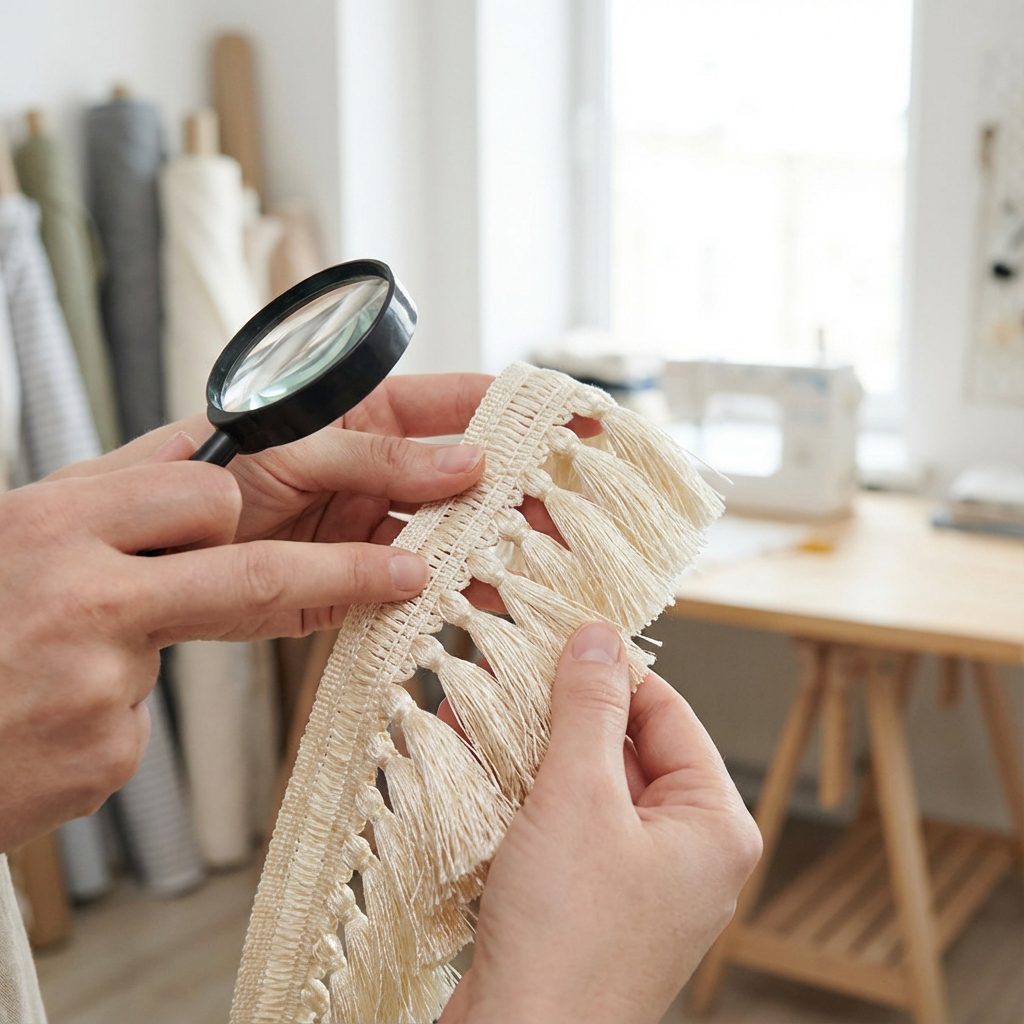
Evaluate the header tape:
Consistent width throughout
Clean edges that won’t fray
Firm weave that holds stitches
Test strand consistency:
Unroll several meters from different points
Compare length, spacing, twist tension
For bullion: stretch and release—should snap back uniformly
Request wash testing for any application involving regular cleaning. Better to discover problems with samples than finished inventory.
Common Sourcing Mistakes
Choosing on price alone — Budget trim causes production problems that eliminate savings
Ignoring header tape — Gorgeous fringe on weak tape falls apart in use
Mismatching trim to application — Delicate beaded fringe on high-use garments fails fast
Skipping samples — Catalog photos don’t reveal true quality
FAQs
What’s the difference between fringe and tassel trim?
Terms overlap and suppliers use them interchangeably. Focus on construction and material, not the name.
How do you attach tassel trim to curtains?
Sew the header tape using straight stitch along top and bottom edges. For heavy trims like bullion, use heavier needle and stronger thread.
How long does quality tassel trim last?