
You ordered 5,000 meters of red lace trim. It looked perfect in the sample. Three washes later, your customer calls: the lace turned pink.
Color fastness problems cost more than returns. They cost trust.
This guide breaks down why lace trim loses color, how synthetic and cotton materials differ, and what tests to run before placing your next order.
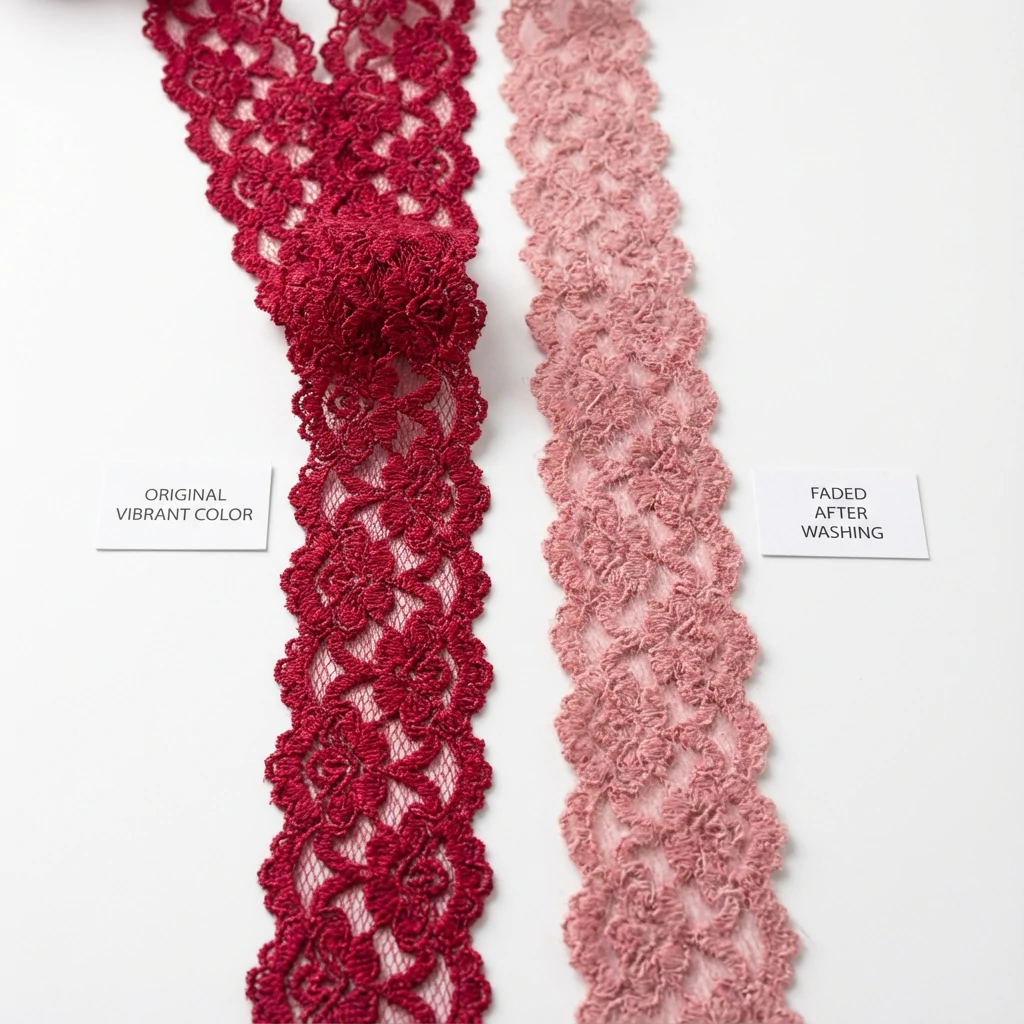
Why Lace Trim Loses Color
How Dye Bonds to Fiber
Dye doesn’t just sit on the surface. It bonds with the fiber at a molecular level. How strong that bond is determines whether your lace stays vibrant or fades after the first wash.
Different fibers accept dye differently:
Synthetic fibers (nylon, polyester): Require heat to open the fiber structure. Once dyed, the color locks in tight.
Cotton fibers: More porous, absorb dye easily. But that same porosity means color can escape just as easily.
Three Ways Color Escapes
| Problem | What Happens | Common Trigger |
|---|---|---|
| Wash fading | Color bleeds into water | Hot water, harsh detergent |
| Light fading | UV rays break down dye molecules | Sun exposure, fluorescent lighting |
| Rub-off (crocking) | Color transfers to other fabrics | Friction during wear or production |
Most complaints come from wash fading. But light fading is the silent killer—it happens slowly, and by the time you notice, it’s too late.
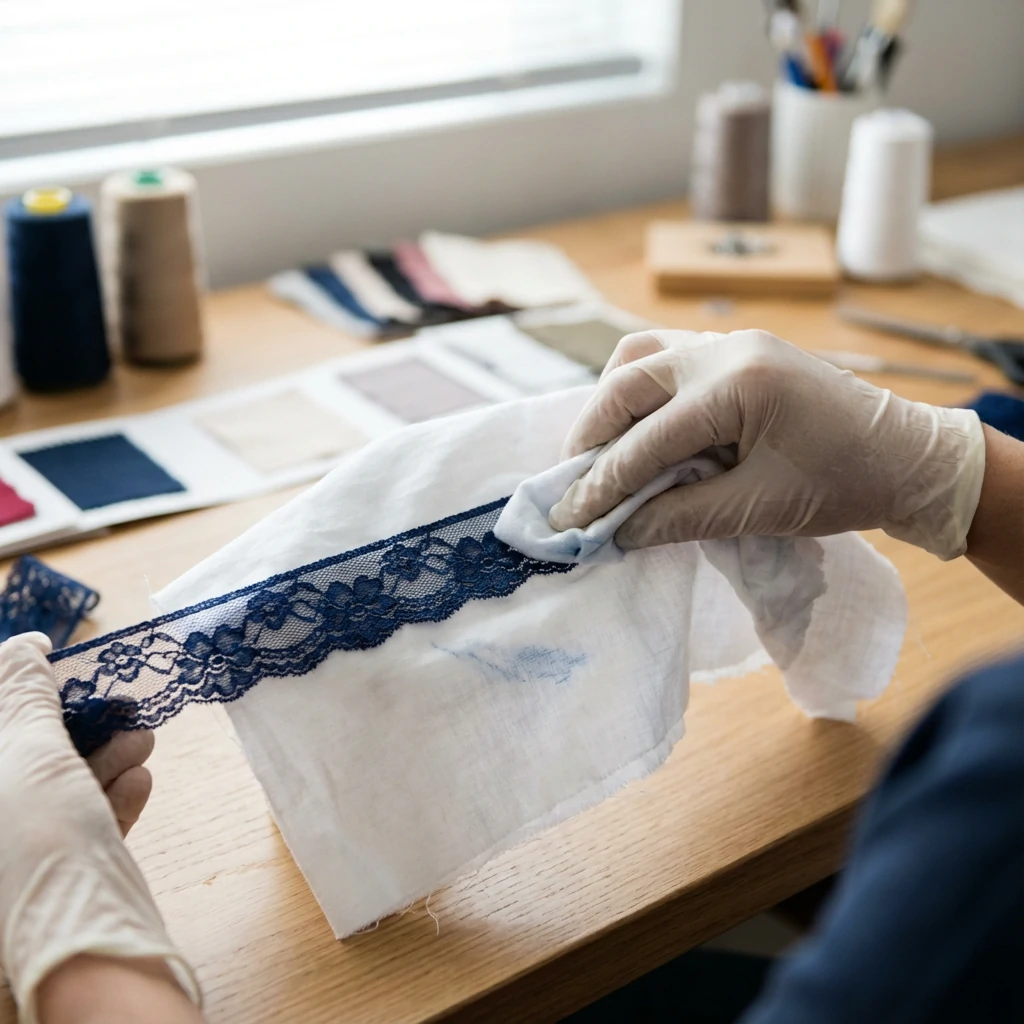
Synthetic vs Cotton: How They Compare
Nylon & Polyester Lace Trim
Strengths:
Color penetrates deep into the fiber
Generally scores higher on wash fastness tests
Resistant to mildew and moisture damage
Watch out for:
High heat during ironing can shift certain dye colors
Some cheap dyes perform poorly on synthetics despite the fiber’s advantages
A well-dyed nylon lace trim typically rates 4-5 on wash fastness tests. That’s considered excellent.
Cotton Lace Trim
Strengths:
Wide range of dye options (reactive, direct, vat dyes)
Natural feel preferred for baby wear and sensitive skin applications
Watch out for:
More prone to wash bleeding, especially in dark colors
Sun exposure causes noticeable fading faster than synthetics
Requires better dye quality to match synthetic performance
Cotton lace needs extra attention. A grade 3 wash fastness on cotton might be acceptable for some uses—but not for products washed frequently.
How to Test Color Fastness Before Ordering
Don’t wait for customer complaints. Test before you commit to large orders.
Quick Tests You Can Do In-House
1. Wet Rub Test
Dampen a white cotton cloth
Rub it firmly against the lace trim 10 times
Check the cloth for color transfer
If you see obvious color on the cloth, that’s a red flag. Request test reports or find another supplier.
2. Simple Wash Test
Place a sample in warm water (40°C) with mild detergent
Agitate for 30 minutes
Check water color and lace appearance after drying
This won’t give you a lab-grade rating, but it catches the worst offenders.
What to Ask Your Supplier
Request test reports based on ISO 105 standards. Here’s what matters:
| Test Code | What It Measures | Acceptable Rating |
|---|---|---|
| ISO 105-C06 | Wash fastness | 4 or higher |
| ISO 105-X12 | Rub fastness (dry/wet) | 3-4 dry, 3 wet minimum |
| ISO 105-B02 | Light fastness | 4 or higher for outdoor use |
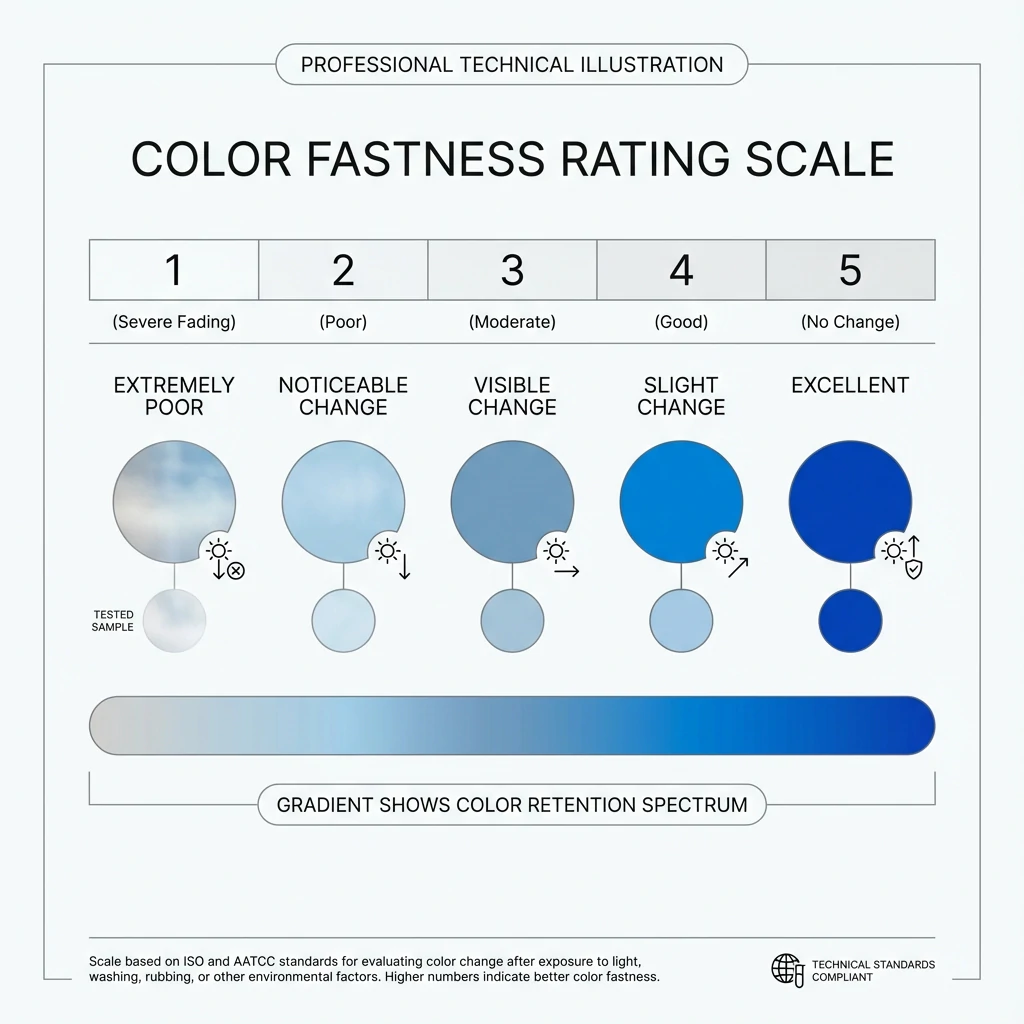
Rating scale runs 1-5. Higher is better. Grade 1 means severe color change. Grade 5 means almost no change.
If a supplier can’t provide these reports, that tells you something.
Preventing Fading: Sourcing & Care Tips
Questions to Ask Before Ordering
“What color fastness rating does this trim achieve on ISO 105-C06?”
“Was the dye process done in-house or outsourced?”
“Can you provide a test report for this specific color/batch?”
Suppliers with in-house dyeing typically have better quality control. Outsourced dyeing adds variables.
Care Instructions for Your End Products
Pass these guidelines to your customers or include on care labels:
Wash in cold water (below 30°C when possible)
Turn garments inside out to reduce friction on lace trim
Avoid direct sunlight when drying
Skip chlorine bleach—it destroys most dyes
Dark colors (black, navy, deep red) require extra care. They contain more dye, which means more potential for bleeding.
FAQs
What color fastness rating should I require for lace trim?
For most apparel, require grade 4 or higher on wash fastness (ISO 105-C06). For items washed frequently—like lingerie or activewear—grade 4-5 is safer. Light fastness requirements depend on whether the product sees sun exposure.
Does darker lace trim fade more than lighter colors?
Dark colors don’t fade more, but they show fading more visibly. A black lace trim fading to dark gray is more noticeable than cream fading slightly. Dark colors also have higher bleeding risk because they contain more dye concentration.
Can faded lace trim be re-dyed?
Technically yes, but rarely worth it. Re-dyeing requires the exact same dye type and process. Results are inconsistent. Prevention through proper sourcing is far more cost-effective than correction.
How does stretch lace compare in color fastness?
Stretch lace contains elastane (spandex) mixed with nylon or cotton. The elastane itself doesn’t hold dye—only the base fiber does. This means the color distribution can look uneven if dye quality is poor. Request samples and test before bulk orders.
Should I test every color in a collection?