
Search “where to buy lace” and you get a flood of Etsy shops and craft store links. Useful if you need two yards for a DIY project. Useless if you’re sourcing 500 meters for production.
For bulk lace trim, three channels dominate: wholesale markets, trade shows, and direct factories. Each serves different needs, different order sizes, and different stages of your business.
This guide breaks down where to source lace trim, what each channel actually costs, and how to pick the right one for your situation.
The 3 Main Sourcing Channels
1. Wholesale Markets
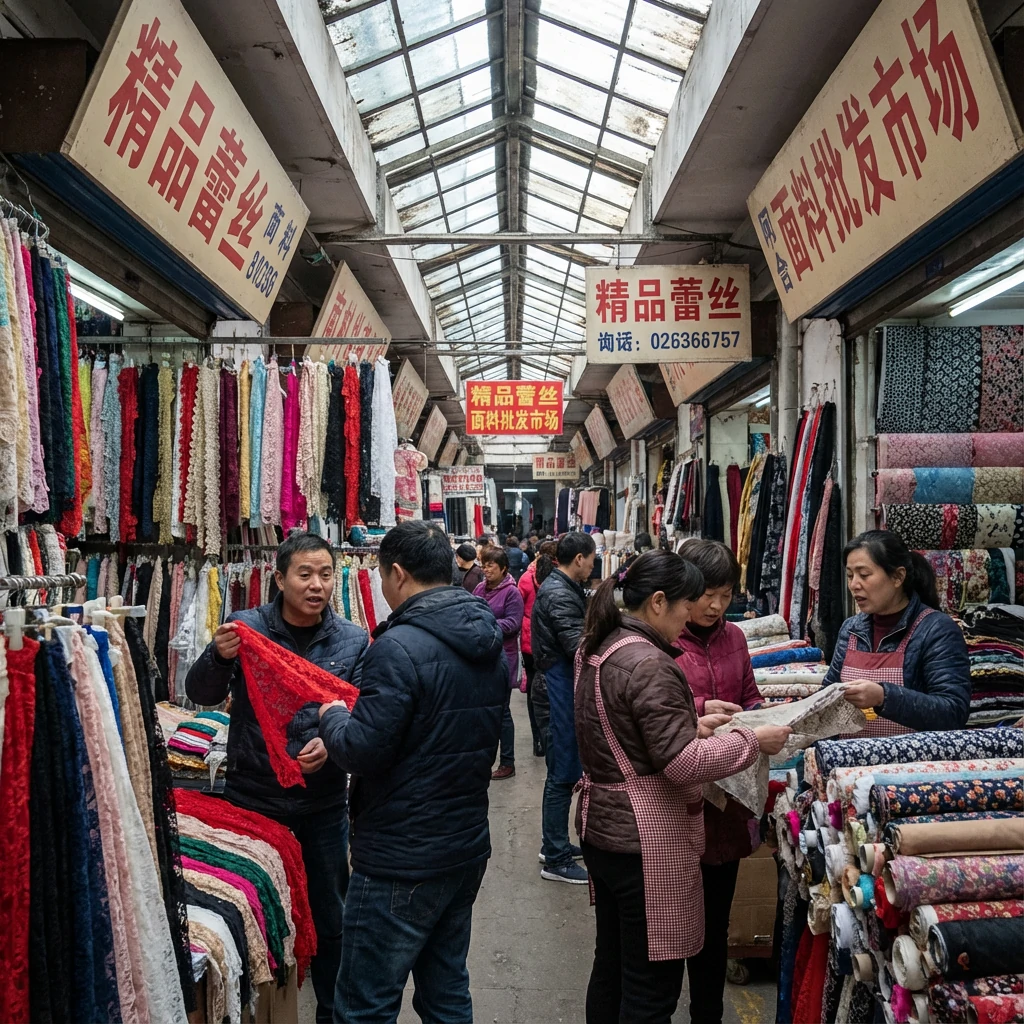
Wholesale textile markets cluster suppliers in one physical location. You walk in, browse stalls, touch the product, and negotiate on the spot.
Major markets for lace trim:
| Market | Location | Known For |
|---|---|---|
| Zhongda Fabric Market | Guangzhou, China | Huge variety, fast turnaround |
| Keqiao Textile City | Shaoxing, China | Woven fabrics, trims |
| Yiwu International Trade City | Yiwu, China | Small commodities, accessories |
Advantages:
The biggest draw is immediacy. You see the product before you buy. You compare ten suppliers in one afternoon. Many vendors keep stock on hand, so you can buy small quantities and ship within days.
Minimum orders are often flexible—some stalls sell as little as 50-100 yards. For startups testing new designs or businesses needing quick restocks, this flexibility matters.
Disadvantages:
Quality varies wildly from stall to stall. The lace on display might not match what gets packed in your shipment. Pricing lacks transparency—first-time buyers often pay tourist rates unless they know how to negotiate.
Communication can be challenging without Mandarin or a sourcing agent. And unless you’re already in Asia, the travel costs add up.
Best for: Quick restocks, testing new products, buyers who want to see before they buy.
2. Trade Shows
Industry trade shows gather manufacturers, suppliers, and buyers under one roof for a few days each year. This is where brands discover new suppliers and suppliers showcase their latest products.
Key shows for lace and trims:
| Show | Location | Timing |
|---|---|---|
| Intertextile Shanghai | Shanghai, China | March & September |
| Première Vision | Paris, France | February & September |
| Texworld USA | New York, USA | January & July |
Advantages:
Trade shows let you compare dozens of suppliers in a structured environment. Everyone has samples ready. Everyone speaks at least some English. The atmosphere encourages relationship-building over quick transactions.
You’ll also spot trends before they hit the mainstream. Suppliers bring their newest developments to shows, so it’s a good way to stay ahead if design innovation matters to your brand.
Disadvantages:
Shows happen only a few times per year. Miss the window, and you’re waiting months. Travel, accommodation, and entry fees add significant cost—especially for smaller businesses.
The pace is intense. Three days isn’t enough to vet every supplier thoroughly. You’ll collect business cards, but the real work of sampling and negotiation happens afterward.
Best for: Finding new long-term suppliers, trend scouting, expanding your supplier network.
3. Direct Factory
Working directly with the factory that manufactures your lace trim cuts out every middleman. You negotiate with the people who control production, quality, and pricing.
Advantages:
Price is the obvious win. Without distributors or trading companies taking margins, factory-direct pricing runs 20-40% lower than wholesale markets for equivalent quality.
Customization becomes possible. Need a specific color? A modified pattern? A different width? Factories can adjust production to your specs. Wholesale markets sell what’s already made. Factories make what you need.
Quality control improves because you’re talking directly to the source. Issues get resolved faster. You can request production samples, visit the facility, and build accountability into the relationship.
Disadvantages:
MOQs are higher—often 1,000+ yards for stock items, 2,000+ for custom colors or patterns. Small brands testing new products may not have the volume to meet minimums.
Lead times are longer. Custom production takes 2-4 weeks. Dyeing requires scheduling. You need to plan ahead rather than buying on impulse.
Finding reliable factories takes effort. Not every manufacturer works with small brands. Not every factory communicates clearly. Vetting requires time, samples, and often a trial order.
Best for: Established brands with consistent volume, buyers who need custom specs, anyone prioritizing cost efficiency at scale.
Quick Comparison
| Factor | Wholesale Market | Trade Show | Direct Factory |
|---|---|---|---|
| Price | $$ | $$-$$$ | $ |
| MOQ | Low (50-100 yds) | Varies | High (1,000+ yds) |
| Speed | Fast (days) | Slow (follow-up needed) | Medium (2-4 weeks) |
| Customization | Limited | Medium | Full |
| Quality Control | Variable | Medium | High |
| Best For | Quick restocks, testing | Finding suppliers | Scale production |

How to Evaluate Any Supplier
Regardless of channel, the vetting process is the same. Ask the right questions upfront to avoid problems later.
Questions to ask:
What’s your MOQ for this style? — Reveals if they fit your order size
Can I get samples before ordering? — Legitimate suppliers always say yes
What’s the lead time for production? — Sets realistic expectations
What are your payment terms? — Standard is 30% deposit, 70% before shipping
Red flags to watch:
Vague pricing (“depends on quantity” without specifics)
Reluctance to provide samples
No clear production timeline
Pushing for full payment upfront
Verification steps:
Start with samples. Order the actual product, not just a swatch card. Wash it, stretch it, sew it. See how it performs under real conditions.
Then place a small trial order—even if it means paying a higher per-unit cost. A $500 test order that reveals problems saves you from a $10,000 disaster.
Which Channel Should You Choose?
The answer depends on where you are in your business.
Just starting out? Wholesale markets offer low MOQs and fast turnaround. You’ll pay more per yard, but you won’t get stuck with inventory you can’t sell.
Looking for new suppliers? Trade shows give you concentrated access to vetted manufacturers. Budget for the trip, prepare your questions, and follow up aggressively afterward.
Ready to scale? Direct factory relationships deliver the best economics. Higher MOQs require commitment, but the price advantage and customization options justify the investment once your volume supports it.
Many buyers use all three channels at different stages. They test at wholesale markets, discover suppliers at trade shows, then transition to factory-direct once they’ve found the right partner.
FAQs
Where can I buy lace trim in bulk?
Wholesale textile markets (like Guangzhou’s Zhongda), trade shows (like Intertextile Shanghai), and direct factories all serve bulk buyers. The right choice depends on your order volume, customization needs, and timeline.
What is the best wholesale market for lace trim?
Zhongda Fabric Market in Guangzhou offers the widest variety of lace trim in Asia. Thousands of stalls carry everything from basic cotton lace to specialized embroidered trims.
How do I find a reliable lace supplier?
Start with trade shows or verified B2B platforms. Request samples before committing. Place a small trial order. Check communication responsiveness and quality consistency before scaling up.
What MOQ should I expect from lace trim factories?