
Black lace trim sounds simple until you start sourcing. You find what looks like the same product at $0.30/yard and $3.00/yard. Both are “black lace trim.” Both look similar in photos.
The difference? Material, construction, and dye quality. Get this wrong, and you’re dealing with fading, fraying, or trim that looks cheap next to quality fabric.
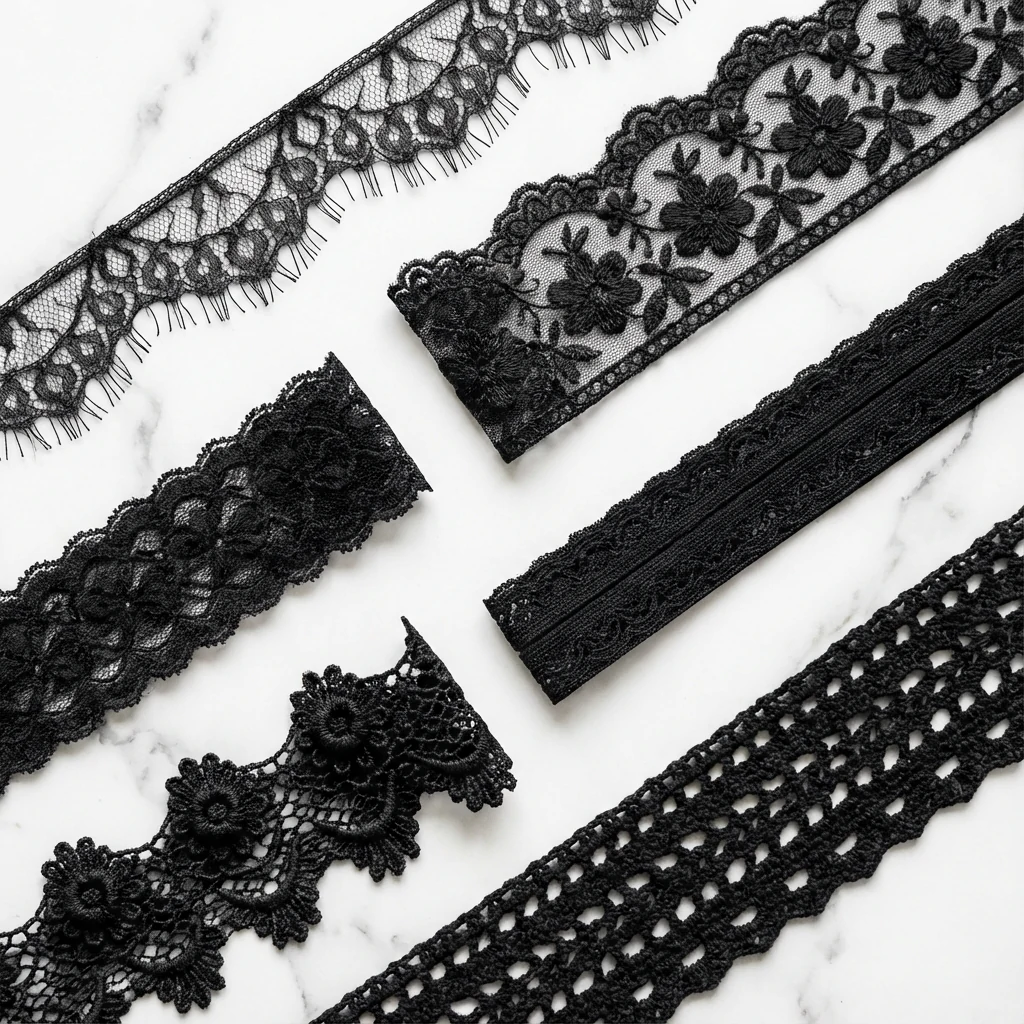
This guide breaks down the five most common black lace trim types, where each works best, and the sourcing details that separate quality from problems.
5 Common Types of Black Lace Trim
1. Eyelash Lace Trim
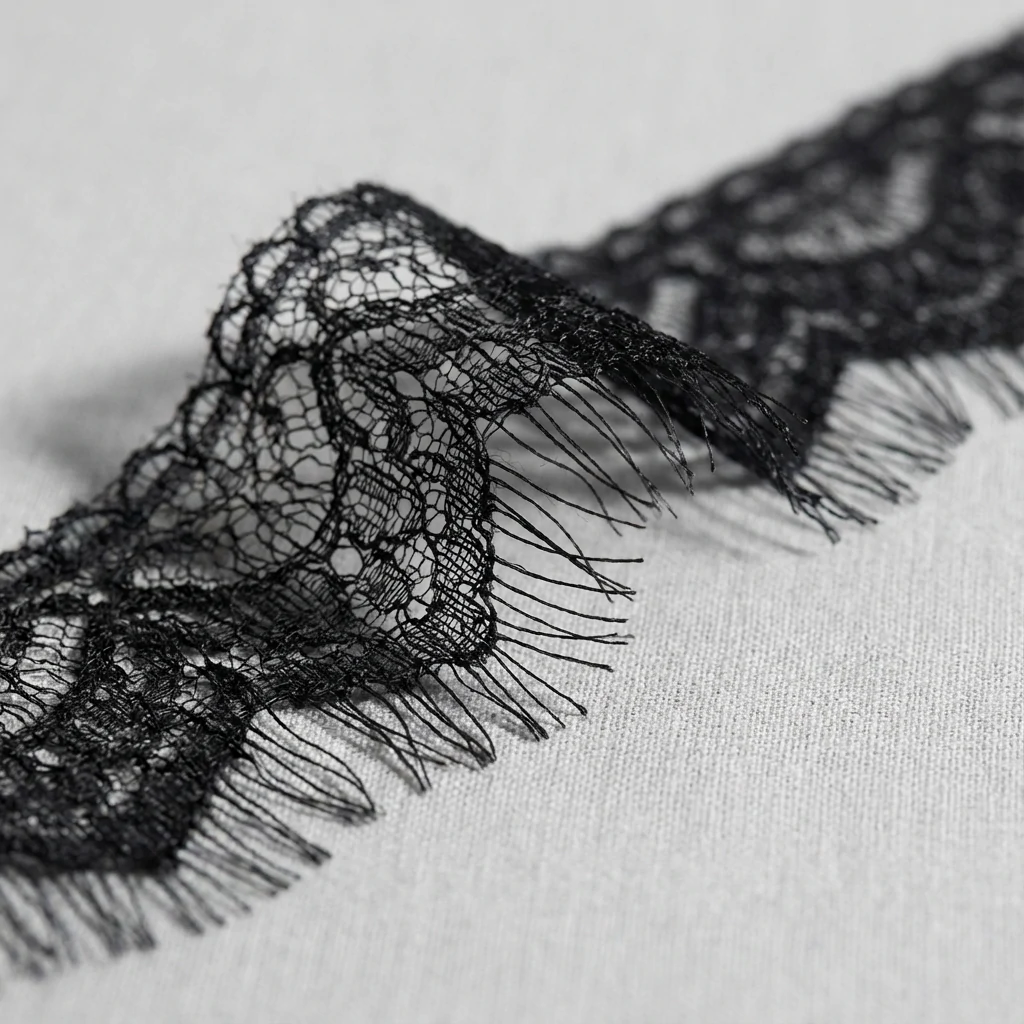
Eyelash lace gets its name from the delicate, hair-like threads extending from one edge. These soft “lashes” create a romantic, feathered border.
The construction matters more than most buyers realize. Quality eyelash trim has dense, evenly-spaced lashes that stay anchored through handling and washing. Cheap versions shed after minimal use.
Best for: Lingerie hems, sleepwear edges, evening dress necklines.
What to check: Pull a few lashes during sampling. If they release easily, expect production problems and customer complaints.
2. Embroidered Lace Trim
Embroidered trim features stitched patterns on a base fabric—either cotton voile or nylon mesh. The black thread creates contrast and definition against the base.
Stitch density determines quality. Higher density means sharper pattern definition and better durability. Sparse stitching looks flat and wears poorly.
Best for: Evening wear accents, formal dress edging, upscale lingerie.
What to check: Ask suppliers for stitch count specs. Compare samples under good lighting—quality differences become obvious.
3. Stretch Lace Trim
Stretch lace contains spandex or Lycra woven into the structure. It expands with body movement and snaps back without losing shape.
Two types exist: 2-way stretch (horizontal only) and 4-way stretch (horizontal and vertical). Most bra bands need 2-way. Full body panels need 4-way.
Best for: Lingerie, shapewear, dancewear, activewear.
What to check: Test recovery after stretching. Quality stretch lace returns to shape immediately. Poor quality stays stretched.
4. Guipure Lace Trim
Guipure—also called chemical lace—has no mesh background. The pattern appears to float, connected only by thread bars between motifs.
This is premium territory. Black guipure creates bold, graphic impact because there’s nothing behind the design. Light and skin show through the negative spaces.
Best for: Cocktail dresses, high-end evening wear, statement garment details.
What to check: Connection points between motifs need reinforcement. Weak bars mean the trim falls apart during cutting and sewing.
5. Crochet Lace Trim
Crochet trim has a distinctive looped texture that reads as handmade. The black version offers a bohemian aesthetic with an edgy twist.
Cotton crochet feels authentic but wrinkles. Polyester crochet holds shape but can look plastic in cheap versions. Cotton-poly blends often balance both concerns.
Best for: Bohemian fashion, casual apparel, home textiles.
What to check: Edge finishing quality. Poorly finished edges fray during application and wear.
Quick Comparison
| Type | Stretch | Look | Price | Best Application |
|---|---|---|---|---|
| Eyelash | None | Soft, romantic | $$ | Lingerie, sleepwear |
| Embroidered | None | Detailed, refined | $$-$$$ | Evening wear |
| Stretch | Yes | Fitted, flexible | $$ | Lingerie, shapewear |
| Guipure | None | Bold, graphic | $$$$ | Cocktail, statement pieces |
| Crochet | None | Artisanal, textured | $$ | Boho, casual wear |
Sourcing Black Lace Trim: 4 Things to Verify
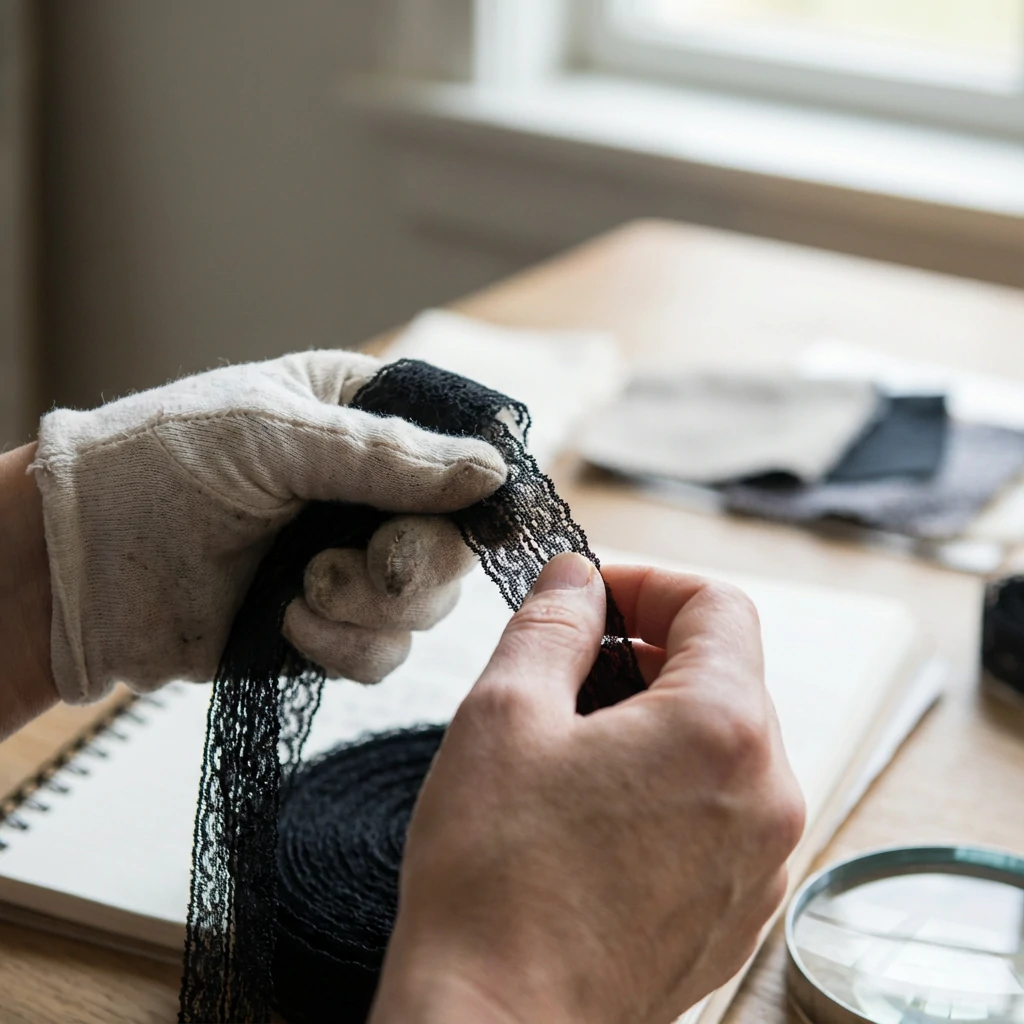
Black lace has specific quality concerns beyond general lace sourcing. Here’s what to check before committing to orders.
1. Dye Fastness
Black dye fades more noticeably than other colors. A “black” that turns gray after a few washes ruins your product reputation.
What to ask: Request colorfastness test results. Look for Grade 4 or higher on standard wash tests. If the supplier can’t provide this, order samples and run your own wash tests before production orders.
2. Material Composition
Same visual appearance, different performance. Nylon-base black lace holds dye better and resists fading. Cotton-base breathes better but may fade faster.
What to ask: Get exact fiber content percentages. Match material to your garment’s care requirements.
3. Edge Quality
Black shows every flaw. Loose threads, uneven cuts, and rough edges that might hide in lighter colors become obvious in black.
What to ask: Request close-up photos of edges before ordering. Run your finger along sample edges—any roughness indicates cutting corners in production.
4. Color Consistency Across Batches
“Black” varies. One batch might run warm (brownish), another cool (bluish). This creates matching nightmares if you’re using multiple shipments in the same product line.
What to ask: Can the supplier maintain color consistency across reorders? Do they keep color standards on file? Established suppliers track dye formulas to ensure batch matching.
FAQs
What is black lace trim used for?
Black lace trim appears in lingerie, evening wear, gothic fashion, and home textiles. Common applications include bra edging, nightgown hems, dress necklines, and decorative accents on cushions or lampshades.
What’s the difference between cheap and expensive black lace trim?
Three things: dye quality (cheap black fades to gray), stitch density (cheap versions have sparse, flat patterns), and edge finishing (cheap trim frays during handling). Price differences reflect production quality, not just material costs.
How do I test black lace trim quality before ordering?
Order samples and run wash tests—wash three times in warm water, then check for fading and fiber damage. Pull threads along edges to test construction. Compare against your fabric under actual lighting conditions.
What MOQ should I expect for black lace trim?
Stock black trim often has lower MOQs (100-500 yards) since it’s a standard color most suppliers keep on hand. Custom black variations or specialty constructions may require 1000+ yards.
SEO Metadata
Title Tag: Black Lace Trim: Types, Uses & Sourcing Guide | [Brand]
Meta Description: Compare 5 types of black lace trim for B2B sourcing. Learn dye fastness testing, quality checks, and what separates premium from cheap black lace.
URL Slug: black-lace-trim-guide
Visual Plan
Featured Image:
Concept: Flat lay of 5 black lace trim types arranged on white marble
Alt: “Five types of black lace trim including eyelash, embroidered, stretch, guipure, and crochet styles”
Body Image 1:
Concept: Close-up comparison showing stitch density difference
Alt: “High density vs low density embroidered black lace trim comparison”
Body Image 2:
Concept: Before/after wash test showing fading on low-quality sample