
Chenille applique brings a distinctive retro charm that flat embroidery simply can’t match. The plush, textured surface catches light differently and adds dimension to any garment. Whether you’re customizing a varsity jacket, branding team uniforms, or adding personality to casual wear, chenille applique delivers a look that stands out.
But not all chenille appliques are created equal. Understanding the different types, applications, and quality factors helps you choose the right option for your project—and avoid common mistakes that lead to peeling, fraying, or disappointing results.
What Is Chenille Applique?
Chenille applique is a decorative patch or emblem made from chenille fabric—a material characterized by its fuzzy, caterpillar-like texture. The name “chenille” comes from the French word for caterpillar, describing the soft, tufted surface that gives this material its signature look.
Unlike flat embroidered patches, chenille applique creates a raised, three-dimensional effect. The plush pile adds visual depth and a tactile quality that makes garments feel more premium. This texture photographs well and creates instant visual interest.
The construction typically involves cutting chenille fabric into shapes—letters, numbers, logos, or custom designs—then finishing the edges with embroidery thread or felt backing. Quality chenille applique features tight, consistent pile with cleanly finished borders that resist fraying.
Chenille vs Embroidered Patches
| Feature | Chenille Applique | Embroidered Patch |
|---|---|---|
| Texture | Raised, fuzzy, 3D | Flat, smooth |
| Look | Retro, varsity, sporty | Classic, professional |
| Weight | Heavier | Lighter |
| Cost | Higher | Lower |
| Best for | Jackets, sportswear, casual | Uniforms, caps, bags |
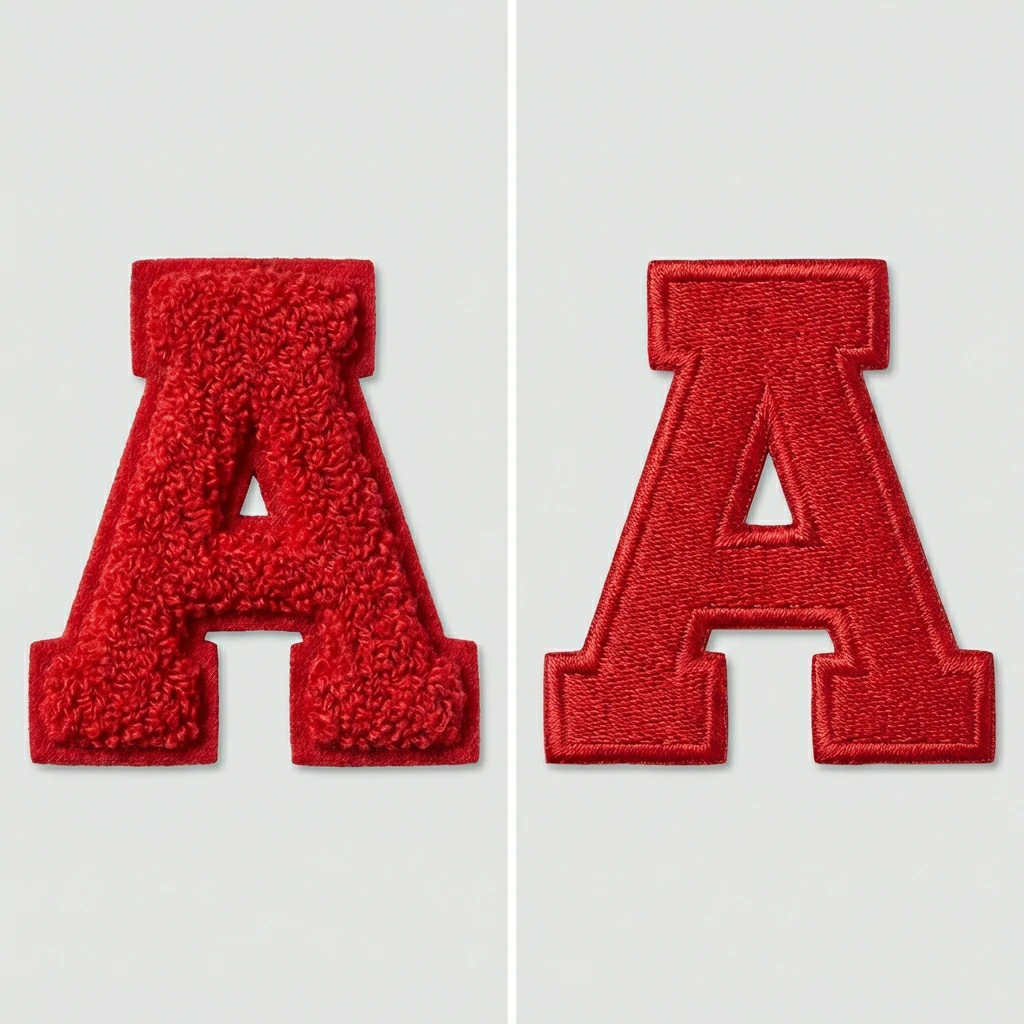
Chenille works best when you want that classic American varsity aesthetic or when texture and dimension matter more than fine detail. Embroidery wins when you need intricate designs or lightweight applications.
Types of Chenille Applique
Chenille applique comes in several varieties, each suited to different applications.
By Shape and Design
Letters and numbers are the most common chenille appliques. These range from simple block letters to elaborate script styles. Varsity letters typically measure 4-8 inches tall, while smaller accent letters run 1-3 inches.
Custom shapes include mascots, logos, emblems, and decorative motifs. These require more complex cutting and construction but allow for unique branding and personalization.
Chenille patches combine the plush chenille texture with embroidered details—often a chenille base with embroidered outlines, text, or accent elements. This hybrid approach offers the best of both techniques.
By Size
Small chenille appliques (under 3 inches) work for subtle accents—sleeve details, collar embellishments, or hat decorations. Medium sizes (3-6 inches) suit chest logos and standard letter applications. Large appliques (6+ inches) create impact on jacket backs, the signature placement for varsity-style designs.
By Backing Type
Iron-on chenille applique features heat-activated adhesive on the back. You apply it using a household iron or heat press. This type is convenient for DIY projects but may not withstand heavy washing as well as sewn applications.
Sew-on chenille applique has no adhesive backing and must be stitched to the garment. This creates the most durable attachment—essential for items that will see heavy use or frequent laundering.
Some products offer both options: adhesive for initial positioning, with sewing recommended for permanent attachment.
By Construction Quality
Economy chenille uses shorter pile and less dense tufting. It costs less but may look thin or flatten quickly with wear and washing.
Premium chenille features dense, consistent pile that maintains its plush appearance over time. The edges are tightly finished with quality embroidery thread, and the backing material is sturdy enough to prevent distortion.
Where Chenille Applique Is Used
Chenille applique appears across multiple applications, though certain uses dominate the market.
Varsity and Letterman Jackets
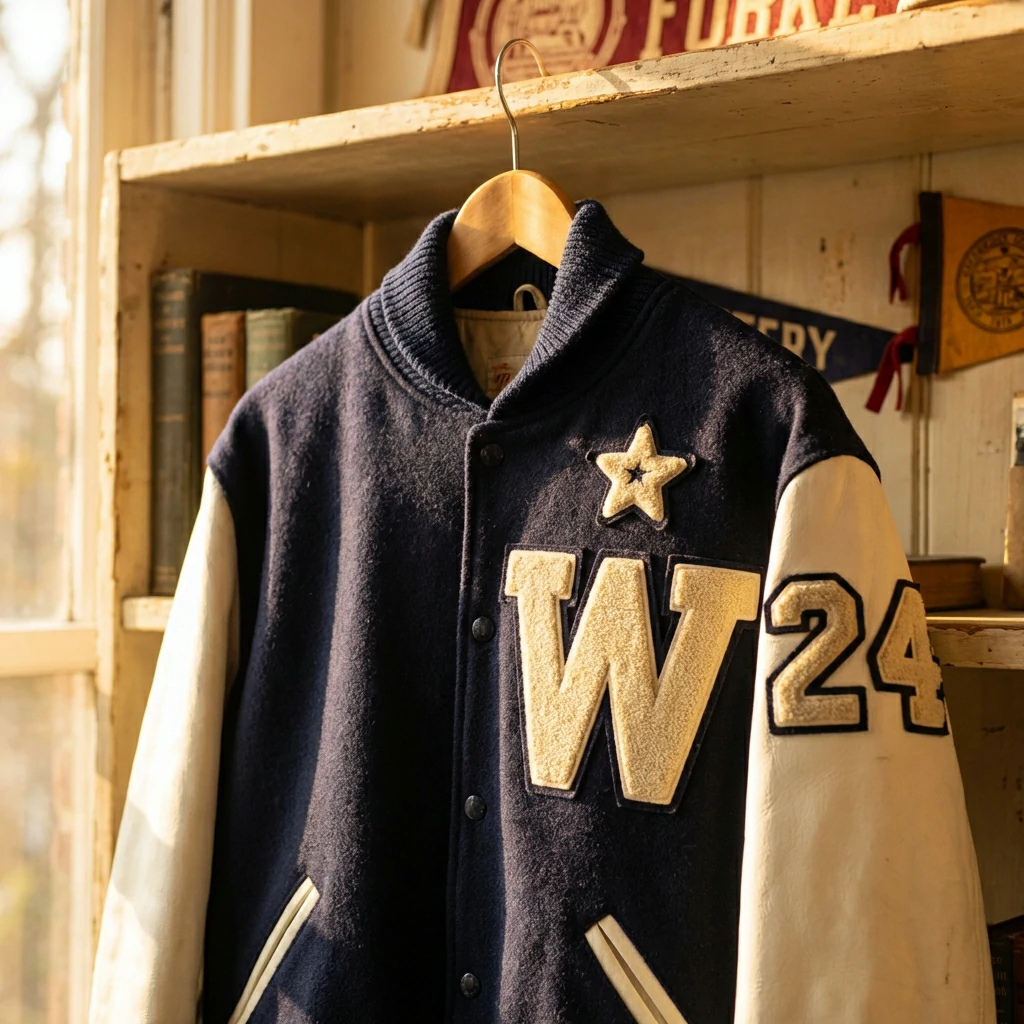
This is the signature application for chenille applique. The classic American varsity jacket features chenille letters and patches representing school, team, or achievement. This tradition dates back over a century and remains popular for high school and college athletics, academic achievements, and retro fashion.
Sportswear and Team Uniforms
Beyond varsity jackets, chenille applique appears on warm-up gear, hoodies, and team apparel. The textured surface adds visual interest and helps team logos stand out. Professional and amateur sports organizations use chenille for a premium, distinctive look.
Casual Fashion
Streetwear and fashion brands incorporate chenille applique for its retro aesthetic. Hoodies, sweatshirts, and jackets featuring oversized chenille logos or graphics tap into nostalgia while adding tactile dimension that flat printing can’t achieve.
Headwear
Caps and beanies use smaller chenille appliques for front logos or side accents. The dimensional quality helps headwear stand out, particularly for brands seeking a premium feel.
Children’s Clothing
Playful chenille letters and shapes add personality to children’s garments. The soft texture appeals to kids, while the dimensional quality satisfies parents looking for special-occasion or photo-worthy pieces.
How to Choose the Right Chenille Applique
Selecting the right chenille applique involves matching product characteristics to your specific needs.
Match Size to Placement
Consider where the applique will go. Back-of-jacket applications can handle large 8-10 inch designs. Chest logos typically work best at 3-5 inches. Sleeve and collar accents should stay under 3 inches to avoid overwhelming the space.
Choose the Right Backing
For garments that will be washed frequently or worn heavily, choose sew-on backing and stitch the applique securely. For decorative items, costumes, or light-use applications, iron-on backing offers convenience.
If you’re unsure, look for products with iron-on backing that also recommend sewing—you get easy initial placement with the option for permanent reinforcement.
Evaluate Quality Indicators
Dense, consistent pile indicates quality chenille. The surface should look full and even, not sparse or patchy. Run your hand across it—premium chenille feels plush and springs back.
Check edge finishing. Clean, tight embroidery around the border prevents fraying and creates crisp definition. Loose or uneven edge stitching suggests lower quality and shorter lifespan.
Examine the backing material. It should be firm enough to hold shape but flexible enough to conform to curved surfaces without buckling.
Consider Color Matching
Chenille is typically available in a wide range of solid colors. When matching to specific brand colors or coordinating with garments, request samples before ordering in quantity. Color can appear different in photos than in person, and dye lots may vary.
How to Apply Chenille Applique
Proper application ensures your chenille applique looks good and lasts.
Iron-On Application
Step 1: Preheat your iron to the temperature specified by the product (typically medium-high, no steam). Position the applique on the garment and cover with a pressing cloth or parchment paper.
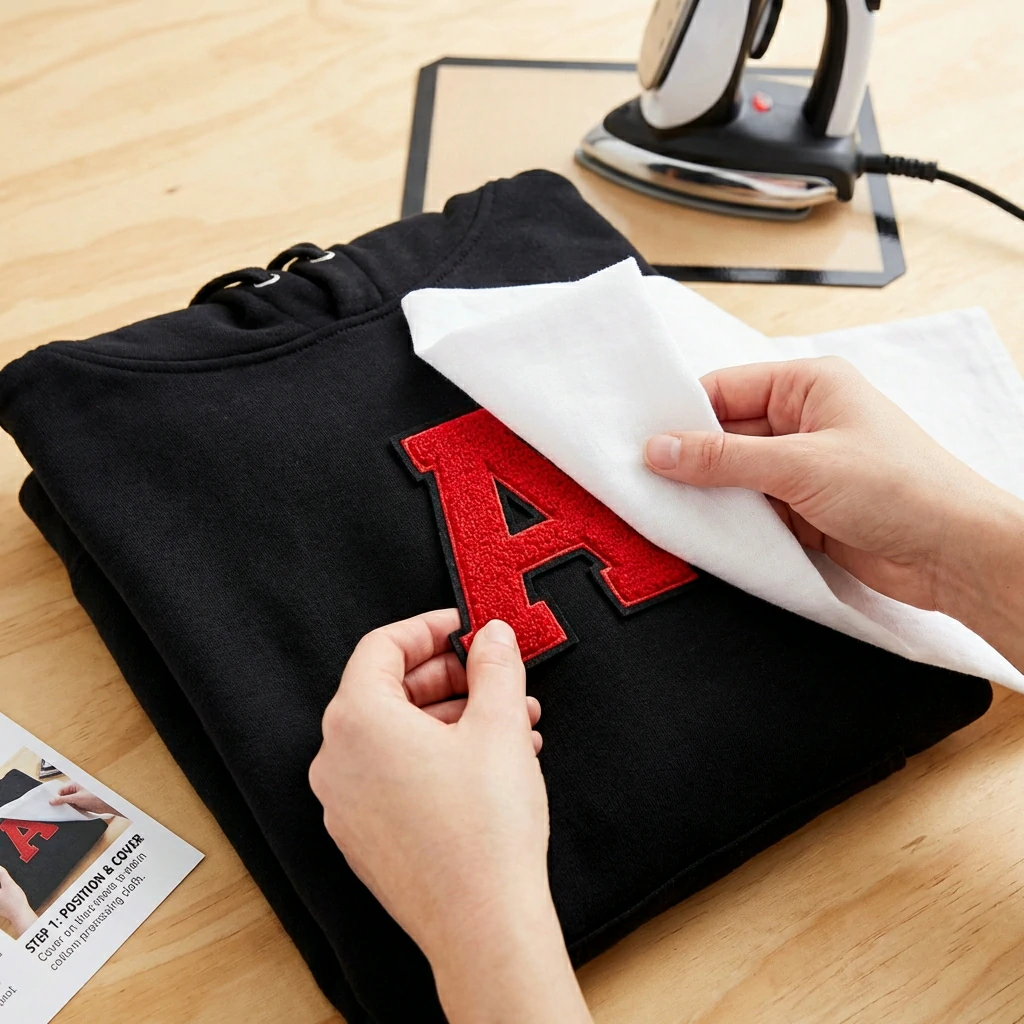
Step 2: Apply firm, even pressure for 15-30 seconds. Press down hard—light pressure won’t activate the adhesive properly.
Step 3: Flip the garment and press from the back side for another 15-30 seconds. Allow to cool completely before handling. Test the edges to ensure they’re fully bonded.
Sew-On Application
Position the applique and pin or baste in place. Using a sewing machine with a zigzag stitch, sew around the perimeter of the applique, catching the edge with each stitch. For hand sewing, use a whip stitch or blanket stitch around the edge.
For iron-on appliques that you’re reinforcing with stitching, apply the iron-on adhesive first to hold the applique in position, then sew around the edges.
Common Mistakes to Avoid
Insufficient heat or pressure leaves iron-on adhesive partially bonded—the applique peels off after the first wash. Use firm pressure and adequate time.
Washing too soon after application can cause failure. Wait at least 24 hours before washing, and turn the garment inside out.
Using hot water or high dryer heat stresses the bond and the chenille pile. Wash in cool water and tumble dry low or air dry.
FAQs
What is the difference between chenille and embroidered patches?
Chenille patches feature a raised, fuzzy texture made from tufted chenille fabric. Embroidered patches have a flat, smooth surface created by stitching thread onto a backing. Chenille offers more dimension and a retro varsity look, while embroidery allows finer detail and lighter weight.
Can chenille applique be washed?
Yes, but with care. Turn the garment inside out, wash in cool water on a gentle cycle, and avoid high dryer heat. Properly applied chenille applique—especially sewn applications—holds up well to regular washing. The pile may flatten slightly over time but should remain attached and attractive with proper care.
How long does chenille applique last?
Quality chenille applique that’s properly applied can last the lifetime of the garment. The pile may soften and flatten slightly with wear and washing, developing a broken-in look that many people find appealing. Poorly applied applique or low-quality products may peel, fray, or deteriorate within months.
Can I make my own chenille applique?