
Lace is more than just a decorative fabric—it is a testament to human creativity, patience, and craftsmanship. For over five centuries, this delicate textile has adorned the collars of kings, the veils of brides, and the runways of modern fashion houses. The history of lace traces a fascinating journey from the workshops of Renaissance Europe to the industrial centers of modern China, reflecting broader shifts in trade, technology, and global manufacturing.
Origins of Lace: Where Did It All Begin?
The exact origins of lace remain a subject of debate among textile historians. While decorative openwork textiles existed in ancient civilizations, lace as we recognize it today—an independent fabric created entirely from thread without a base cloth—emerged in Europe during the late 15th and early 16th centuries.
Two regions claim the honor of being lace’s birthplace: Italy and Flanders (modern-day Belgium). Both developed distinct techniques that would define the craft for centuries to come.
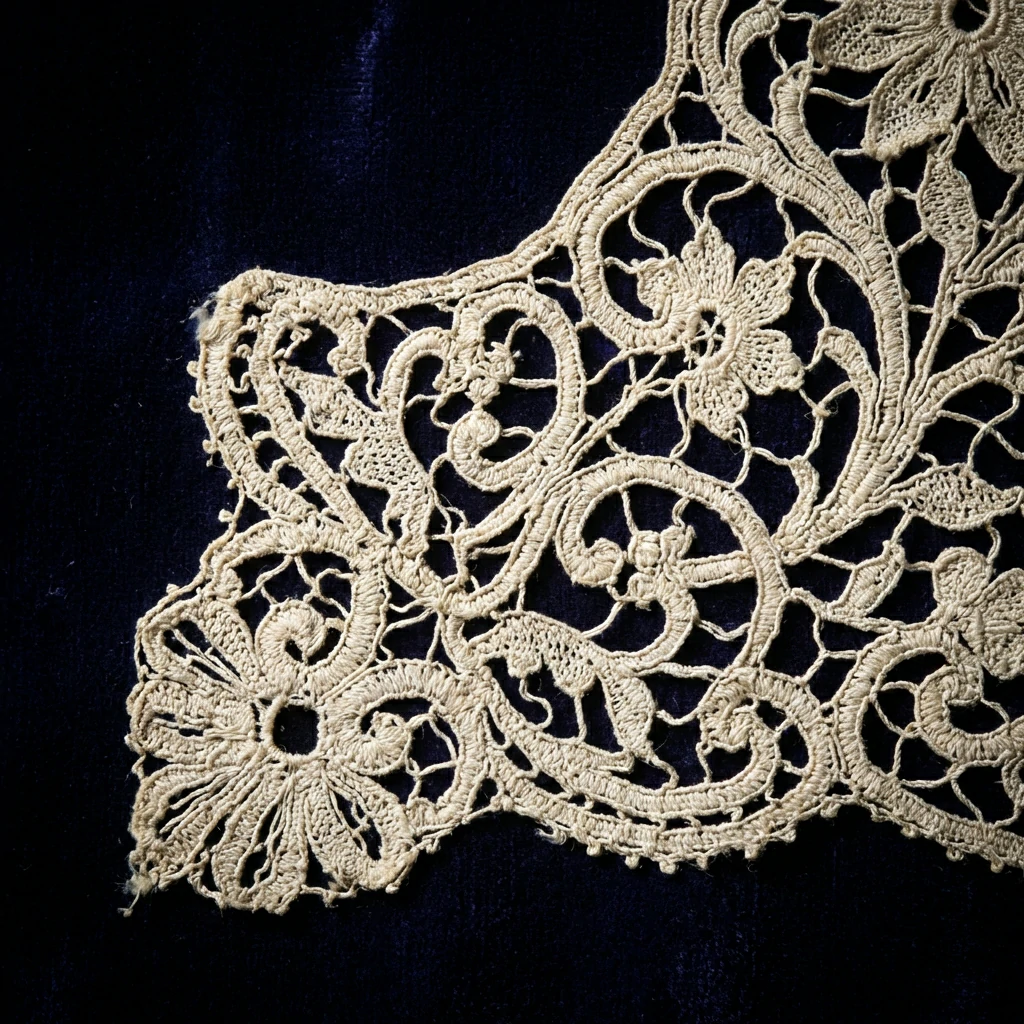
Needle lace (punto in aria) originated in Italy, particularly in Venice. This painstaking technique involves building up the fabric stitch by stitch using a single needle and thread, creating dense, sculptural designs. The term “punto in aria” translates to “stitches in the air,” reflecting the seemingly magical way the fabric appears to materialize from nothing.
Bobbin lace developed in Flanders, where artisans used multiple threads wound on bobbins, twisting and crossing them around pins stuck into a pillow following a pattern. This method allowed for faster production and created flowing, more delicate designs than needle lace.
Both techniques required extraordinary skill and patience. A single piece of fine lace could take months or even years to complete, making it one of the most labor-intensive textiles ever created.
The Golden Age of European Lace (16th-18th Century)
The 16th through 18th centuries marked the golden age of European lace, when this exquisite fabric became the ultimate symbol of wealth, status, and refinement.
Venice: The Needle Lace Capital
Venice dominated the early lace trade with its magnificent needle lace. Venetian punto in aria and later Gros Point de Venise featured bold, three-dimensional designs with raised scrollwork and floral motifs. These pieces adorned the elaborate ruffs and collars of European nobility, and the Vatican commissioned Venetian lace for clerical vestments.
The Venetian lace industry was so valuable that the Republic of Venice enacted strict laws to prevent lacemakers from emigrating and sharing their secrets with foreign competitors.
Flanders: Masters of Bobbin Lace
Meanwhile, Flemish cities like Brussels, Bruges, and Mechlin (Mechelen) became renowned for their exceptionally fine bobbin lace. Mechlin lace was prized for its delicate hexagonal mesh ground and outlined designs, while Valenciennes lace (produced in a city that shifted between French and Flemish control) became famous for its diamond-shaped mesh and intricate patterns.
Flemish lace was so fine that it was said a single ounce of flax thread could be spun into lace worth more than its weight in gold.
France Enters the Competition
France, initially dependent on Italian and Flemish imports, developed its own lace industry under royal patronage. Catherine de Medici, the Italian-born Queen of France, brought her passion for lace to the French court. Later, King Louis XIV’s minister Jean-Baptiste Colbert established royal lace manufactories to reduce expensive imports.
The result was Alençon lace, a needle lace that combined Italian techniques with French aesthetics. Known as the “Queen of Lace,” Alençon featured a distinctive horsehair-reinforced outline (cordonnet) that gave its designs exceptional clarity. A single piece could require 12 to 15 hours of work per square centimeter.
Lace as Status Symbol
During this era, lace served as a powerful marker of social status. Sumptuary laws in various countries attempted to restrict lace wearing to the nobility, though these regulations were frequently ignored by wealthy merchants eager to display their success.
The amounts spent on lace were staggering. Aristocrats might own lace collections worth more than entire estates, and both men and women competed to display the finest examples on their cuffs, collars, and accessories.
Lace and Fashion: A Royal Love Affair
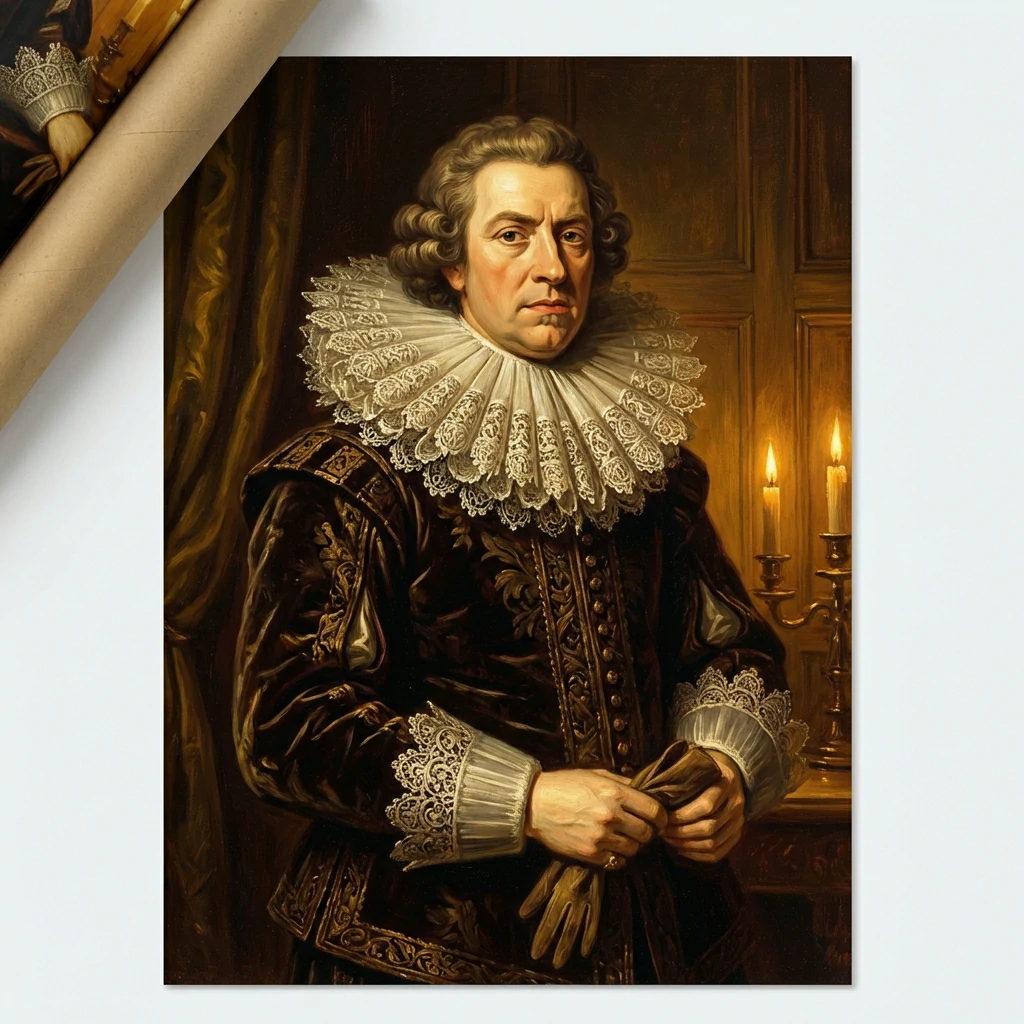
The relationship between lace and fashion evolved dramatically across the centuries, with each era finding new ways to showcase this precious textile.
In the late 16th century, the starched ruff—that iconic wheel-like collar—reached extraordinary proportions, requiring yards of fine lace. By the early 17th century, fashion shifted to falling collars and cravats, which displayed lace in softer, more flowing arrangements.
The 18th century brought even more refined applications. Lace appeared on sleeve ruffles (engageantes), cap borders, and the elaborate trimmings of court dress. Both men and women wore lace extensively, though men’s fashion gradually reduced its use after the French Revolution.
A pivotal moment came in 1840 when Queen Victoria chose to wear a gown trimmed with English Honiton lace for her wedding to Prince Albert. This decision, partly motivated by a desire to support the struggling English lace industry, forever cemented the association between lace and bridal fashion—a connection that endures to this day.
The Industrial Revolution: Democratizing Lace
The 19th century brought revolutionary changes to lace production. In 1809, English inventor John Heathcoat patented a machine capable of producing net fabric that mimicked the ground of bobbin lace. Subsequent innovations by John Leavers and others led to machines that could produce increasingly complex lace patterns.
The lace machine industry centered in Nottingham, England, and later spread to Calais, France, and other manufacturing centers. These machines could produce in hours what hand lacemakers required months to create.
The impact was profound and double-edged. Machine-made lace democratized the fabric, making it affordable for the growing middle class. Lace curtains, tablecloths, and dress trimmings became accessible to ordinary households for the first time.
However, the handmade lace industry suffered devastating decline. Thousands of lacemakers who had depended on the craft for their livelihood found their skills suddenly devalued. Many traditional lace-making centers never recovered.
Yet handmade lace never entirely disappeared. Connoisseurs continued to prize hand-crafted pieces for their superior artistry, and the craft survived as both a luxury trade and a cherished folk tradition in various regions.
The Rise of Chinese Lace: From Imported Craft to Global Leader
While lace originated in Europe, one of the most remarkable chapters in its history unfolded thousands of miles away in China. Over the course of little more than a century, China transformed from a country with no lace tradition into the world’s dominant producer—a story of cultural exchange, entrepreneurship, and industrial ambition.
Early Introduction: Missionaries and Coastal Roots
Lace-making arrived in China during the late 19th and early 20th centuries, introduced primarily by Western missionaries working in coastal regions. These missionaries, seeking to provide economic opportunities for local women, established training programs that taught European lace techniques.
The coastal provinces of Fujian and Zhejiang proved particularly receptive to this new craft. These regions already possessed strong textile traditions, skilled female workers accustomed to detailed handwork, and access to international trade routes through their ports.
What began as small charitable enterprises would eventually grow into a major industry, though the path was neither straight nor easy.
Amoy Lace Guild: The Fujian Pioneer
The story of Chinese lace often begins with the Amoy Lace Guild, established in 1885 by missionaries in Xiamen (then known internationally as Amoy), Fujian Province.
The guild trained local women in bobbin lace techniques, initially using imported patterns and European linen thread. The work was painstaking—the same demanding craft that had occupied European women for centuries—but Chinese workers proved remarkably adept at mastering the intricate techniques.
Quality improved rapidly, and Amoy lace began attracting international attention. The breakthrough moment came at the 1904 St. Louis World’s Fair (Louisiana Purchase Exposition), where Amoy lace won a silver medal. This recognition announced to the world that China could produce lace of international caliber.
The Amoy Lace Guild continued operating for decades, training generations of lacemakers and establishing Fujian as a center of Chinese lace production.
Xiaoshan Lace: The Hometown of Chinese Lace
A second major center emerged in Xiaoshan, Zhejiang Province, where Italian missionaries introduced lace-making in 1919. Xiaoshan possessed advantages that would prove decisive: an established textile manufacturing base, abundant skilled labor, and proximity to Shanghai’s international markets.
Local artisans didn’t merely copy European techniques—they adapted and innovated. Xiaoshan lacemakers developed distinctive patterns incorporating Chinese aesthetic elements and created new technical approaches suited to local conditions and materials.
The industry flourished despite the turbulent decades of war and revolution that China experienced in the mid-20th century. By the time stability returned, Xiaoshan had earned the title “Hometown of Chinese Lace” (中国花边之乡).
In recognition of its cultural significance, traditional Xiaoshan lace-making techniques were designated as national intangible cultural heritage, ensuring that the handcraft knowledge accumulated over a century would be preserved even as industrial production expanded.
Industrial Transformation and Global Dominance
The late 20th century brought dramatic transformation to Chinese lace production. As China opened to international trade and investment, textile manufacturers gained access to modern machinery, including sophisticated computerized lace machines from Europe.
The results were remarkable. Chinese manufacturers combined competitive pricing, diverse design capabilities, and massive production capacity to capture an ever-larger share of the global lace market.
Today, China stands as one of the world’s largest lace producers, supplying everything from budget trims for fast fashion to high-end custom lace for luxury brands. Chinese lace exports reach markets across Europe, North America, Southeast Asia, and beyond.
The industry has matured beyond simple manufacturing. Leading Chinese lace companies now employ their own designers, develop proprietary patterns, and offer comprehensive services from concept to delivery. They have moved up the value chain from contract manufacturing to become full partners in the global fashion supply chain.
Importantly, this industrial success has not entirely displaced traditional craftsmanship. Some manufacturers maintain handmade lace production alongside their machine operations, preserving traditional skills while meeting modern demand. Others incorporate traditional Chinese motifs into contemporary designs, creating products that bridge Eastern and Western aesthetics.
Lace Today: Heritage and Innovation
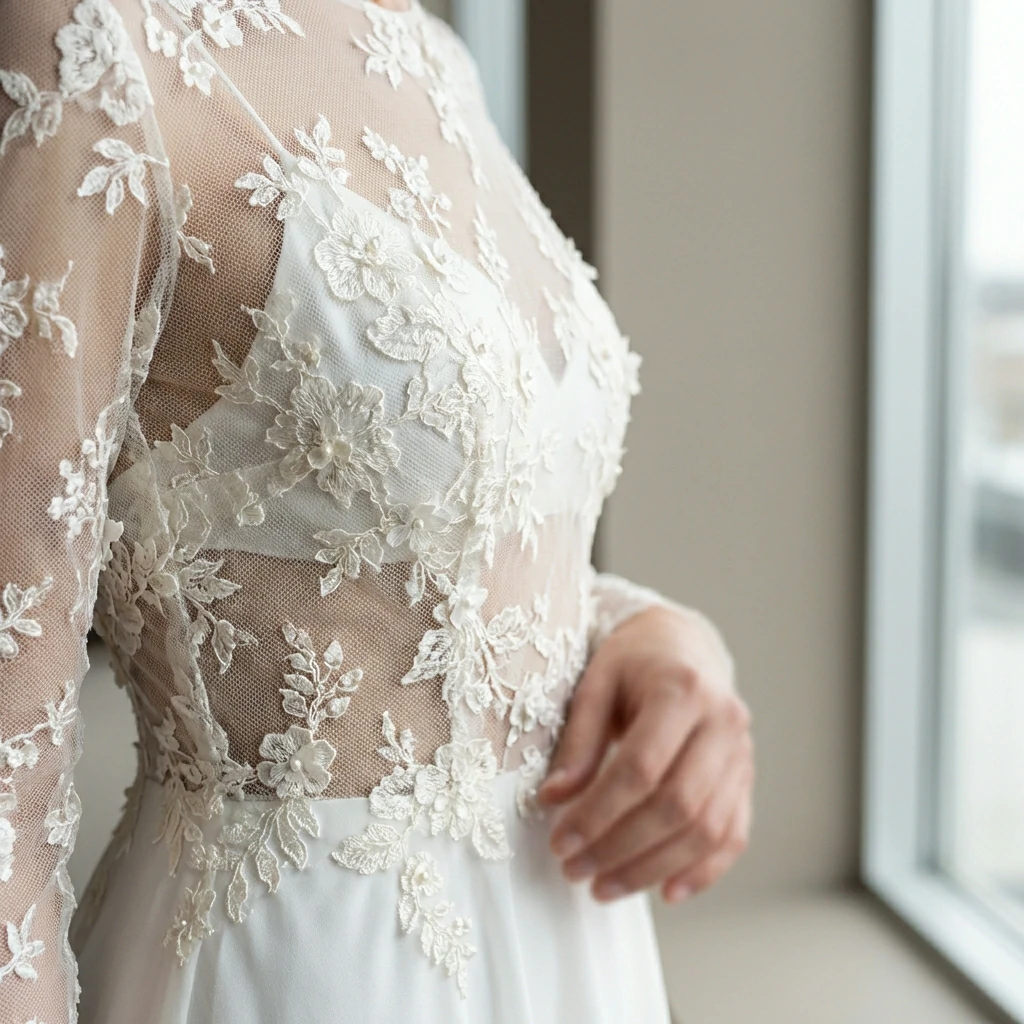
The 21st century finds lace occupying a unique position—simultaneously an industrial commodity and a treasured heritage craft.
Handmade lace survives in various forms around the world. In Europe, organizations like the Lace Guild (founded in the UK in 1976) promote bobbin and needle lace as hobbies and art forms. Traditional lace-making centers in Belgium, Italy, and elsewhere maintain their craft traditions, often supported by cultural heritage programs and tourism.
In fashion, lace remains eternally relevant. Designers from haute couture houses to fast-fashion brands incorporate lace into their collections season after season. Bridal wear continues its centuries-old love affair with lace, while contemporary designers find new applications in streetwear, lingerie, and home décor.
Sustainability has emerged as a growing concern in the lace industry, as in textiles generally. Some manufacturers are exploring organic and recycled materials, while others emphasize the inherent sustainability of durable, timeless lace pieces that transcend seasonal trends.
The market has stratified into distinct segments: mass-produced machine lace for everyday applications, premium machine lace for fashion and interiors, and handmade lace for collectors, heritage enthusiasts, and luxury applications. Each segment serves different needs while contributing to lace’s continued vitality.
Conclusion
The history of lace spans more than five centuries and multiple continents—a remarkable journey for a fabric made of nothing but thread and air. From the workshops of Renaissance Venice to the factories of modern China, lace has continuously adapted to changing technologies, tastes, and economic realities.
What began as an exclusive luxury affordable only to royalty and aristocracy has become accessible to consumers worldwide, yet handmade lace retains its status as a treasured art form. The craft that once employed thousands of European women now supports industries across Asia while inspiring hobbyists and artists globally.
As we look to the future, lace seems certain to continue evolving. New materials, manufacturing techniques, and design approaches will emerge. Yet the fundamental appeal of lace—its delicacy, its intricacy, its transformation of simple thread into something magical—remains as powerful today as it was five hundred years ago.