
Lace requires gentle handling to prevent tearing, stretching, and fraying of its delicate threads. The key to washing lace successfully is knowing your fabric type, using cold water with mild detergent, and avoiding any rough treatment. Whether you’re cleaning everyday cotton lace or precious antique pieces, the right techniques will keep your lace beautiful for years.
Types of Lace Fabric and How to Handle Each
Different lace types need different care methods based on their fiber content and age. Here’s how to handle each type:
- Cotton or Linen Lace (Natural Fiber): Traditional cotton and linen laces breathe well but can shrink when exposed to heat. Hand wash these in cool water with mild detergent, avoiding hot water and dryers completely. If your piece is vintage cotton or linen, treat it as carefully as antique lace.
- Synthetic Lace (Nylon, Polyester): Modern synthetic laces offer more durability and can handle gentle machine washing. Always use cold water, a delicate cycle, and place the lace in a mesh laundry bag first. Even though synthetics are stronger, high heat will warp or melt the fibers, so never use hot water or high-temperature ironing.
- Silk Lace: Silk fibers weaken dramatically when wet, making this the most delicate lace type. Dry cleaning is safest, but if you must wash silk lace, use only cold water and special silk detergent. Never wring silk lace – press water out gently with a towel instead.
- Antique or Vintage Lace: Heirloom pieces need the most careful treatment since aged fibers become brittle over time. Avoid washing unless absolutely necessary, as any cleaning causes irreversible changes like slight shrinkage. When you must clean antique lace, hand wash in distilled lukewarm water with very mild soap, or consult a textile conservator for valuable pieces.
Hand Washing Lace (Preferred Method)
Hand washing gives you complete control over the cleaning process and minimizes risk of damage. This method works for all lace types and should be your go-to approach.
1. Fill a basin with cool water and detergent
Use cold or lukewarm water – never hot – to prevent shrinkage and protect delicate fibers. Add a small amount of pH-neutral detergent designed for delicates, like Woolite or baby shampoo. Mix the water thoroughly to dissolve the detergent completely before adding your lace.
2. Submerge the lace item
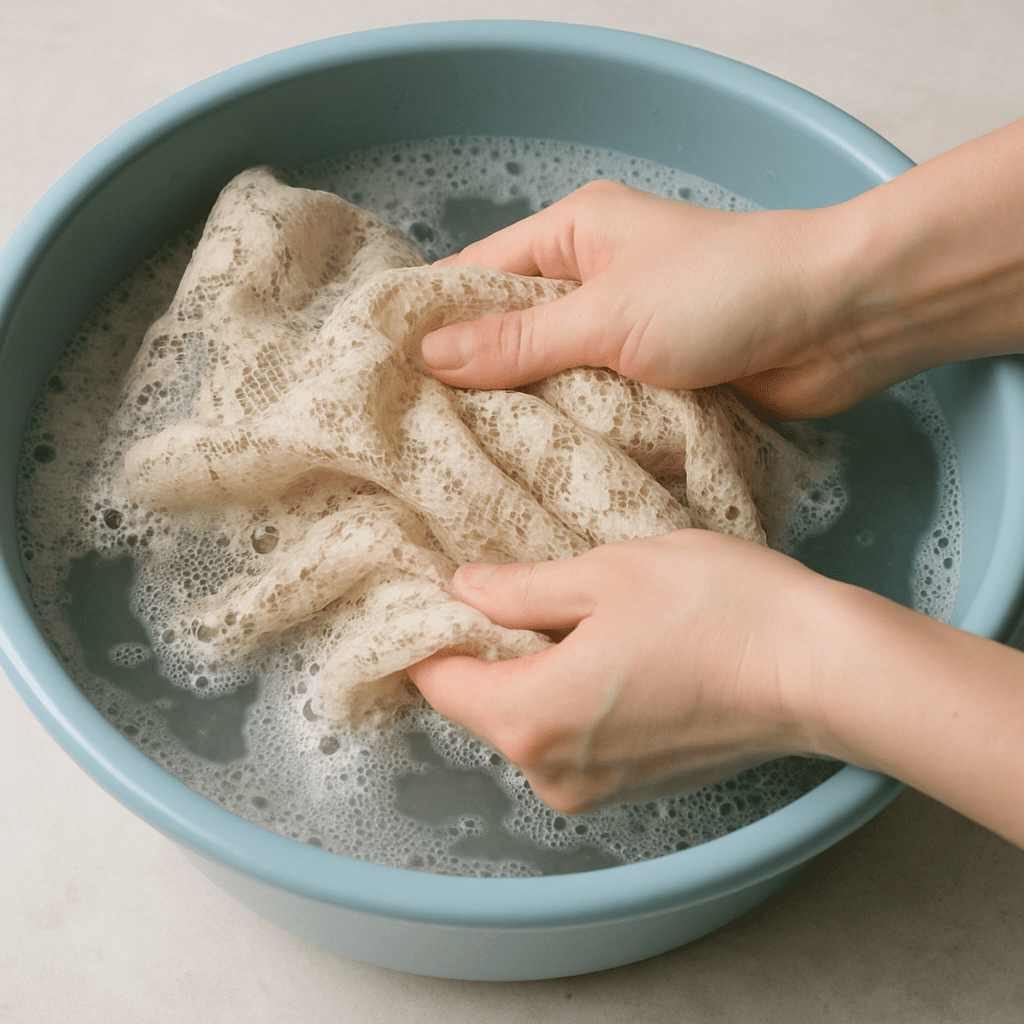
Place your lace piece into the soapy water, making sure it’s fully immersed. Wash only one item at a time to prevent tangling. Let the lace soak for 5-10 minutes to loosen dirt without any agitation.
3. Gently agitate and cleanse
Swish the lace slowly through the water using your hands. Press the fabric gently between your fingers to work the soap through, but never scrub or twist. For stains, lightly dab the area with your fingertip in a circular motion rather than rubbing harshly.
4. Rinse thoroughly
Lift the lace out carefully and drain the soapy water completely. Refill your basin with clean cool water and submerge the lace again. Repeat this rinse process twice to remove all detergent residue, which can stiffen fabric or attract dirt if left behind.
5. Remove excess water carefully
Never wring or twist wet lace – this will tear the delicate fibers. Support the item from underneath as you lift it from the water. Lay the lace flat on a clean towel, roll the towel up with the lace inside, and press gently to absorb moisture.
Machine Washing Lace (When Appropriate)
Machine washing works only for sturdy synthetic or stable cotton laces. Even then, you must take specific precautions to protect the fabric.
1. Use a Mesh Laundry Bag
Always place lace items inside a zippered mesh bag before putting them in the machine. This barrier prevents direct contact with the washer’s drum and keeps the lace from snagging on other garments.
2. Choose Delicate Settings
Select your washer’s delicate or “hand-wash” cycle for the gentlest agitation and spin. Set the water temperature to cold – lukewarm at most. These settings minimize stress on the lace fibers and prevent shrinkage.
3. Mild Detergent Only
Use the same gentle detergent you’d choose for hand washing, adding just a small amount. Skip bleach, fabric softener, and any harsh additives. Add a teaspoon of white vinegar to the rinse cycle as a natural softener if desired.
4. Light Load
Wash lace alone or with only a few other delicate items. Heavy clothing like jeans or towels will crush and damage lace. The more room your lace has to move freely, the less likely it will stretch or tear.
5. Skip the Spin (if possible)
Excessive spinning stretches lace out of shape. Set a slow or short spin cycle if your washer allows it. You can also remove the item before the final spin and press water out manually using the towel method.
6. Remove Promptly and Air Dry
Take lace out immediately when the cycle ends. Leaving wet lace bunched up sets wrinkles and can cause embellishments to bleed or rust. Never put delicate lace in a hot dryer – always air dry using the methods described below.
Drying, Ironing, and Storing Lace Fabric
Proper drying and storage are just as important as washing. These steps prevent shrinkage, distortion, and long-term damage.
Drying Lace
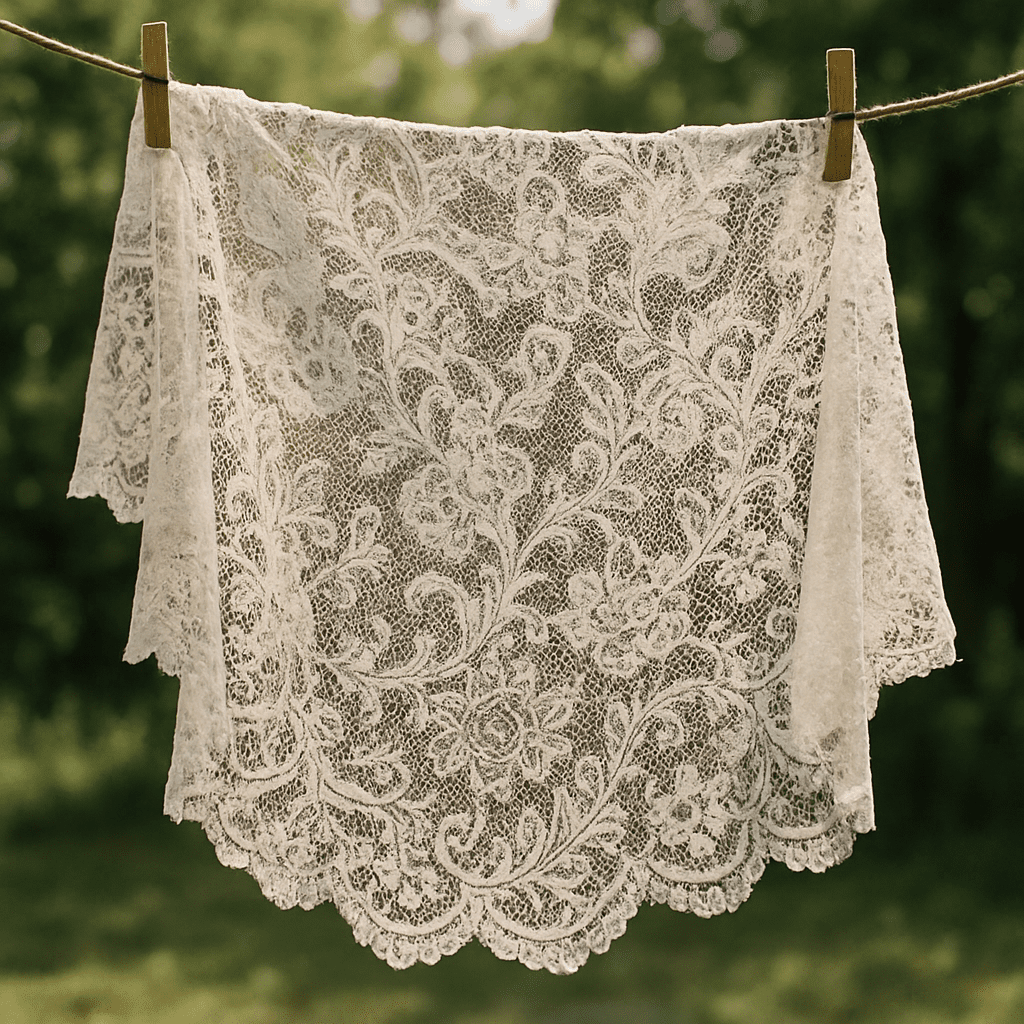
Air drying is the only safe method for lace. Heat from dryers will shrink or melt fibers, while tumbling causes snags and tears.
- Blot out excess water: Lay the wet lace flat on an absorbent towel and roll it up, pressing as you go. You can also sandwich the item between two towels and press down. This removes moisture without wringing or twisting the delicate fabric.
- Dry flat whenever possible: Spread the lace on a drying rack or table covered with a dry towel. Reshape the item gently, straightening edges and corners. Keep lace away from direct sunlight while drying to prevent fading and yellowing.
- Hang with caution: If you must hang lace to dry, use padded hangers to support garments and minimize stress points. Lace curtains can be rehung while damp to dry in place, but only if the fabric is sturdy enough to handle the weight without stretching.
- Avoid the dryer: Never tumble dry delicate lace – the heat and agitation cause permanent damage. Even on low heat, dryers can make fibers brittle and ruin elastic or embellishments. Air drying takes patience but preserves your lace perfectly.
Ironing Lace
Most lace dries without severe wrinkles when laid flat. If you need to iron, extreme caution is essential.
- Use the lowest heat setting: Set your iron to the coolest temperature appropriate for the fiber type. Synthetic lace needs the “nylon” setting, while cotton or linen can handle medium-low heat. High temperatures will burn or melt lace instantly.
- Always use a pressing cloth: Place a clean cotton cloth over the lace before ironing. This protects the fabric from direct heat and prevents the iron from catching on raised thread patterns. Keep the iron moving constantly.
- Iron on the reverse side or face-down: Turn garments inside out to iron lace from behind. Alternatively, lay lace face-down on a thick towel and iron from the back. This preserves the dimensional texture of the lace pattern.
- Use light pressure and steam if needed: Let heat do the work rather than pressing down hard. Steam from a distance can relax wrinkles without direct contact. Test a small area first, as some laces spot when exposed to water.
- Iron small sections at a time: Work methodically through large pieces, repositioning your pressing cloth as you go. Make sure finished sections stay flat and don’t get re-wrinkled as you move the item.
FAQs
Can I use bleach to whiten yellowed lace?
Never use chlorine bleach on lace – it weakens fibers and causes permanent yellowing. Instead, soak white lace in equal parts white vinegar and cool water for 15-20 minutes, then rinse thoroughly.
How often should I wash my lace items?
Wash lace only when necessary, not after every wear. Frequent washing causes wear and tear. Air out lace garments between uses and spot-clean small stains rather than doing full washes.
Can I remove old stains from vintage lace?
Treat old stains gently with mild solutions like vinegar or cornstarch for oil. Sometimes it’s better to accept light staining rather than risk damaging fragile antique fibers with aggressive treatments.
Is it safe to wash lace with beads or sequins?
Embellished lace usually needs professional cleaning. If you must wash at home, work quickly with cold water and dry immediately to prevent rust. Consider spot-cleaning around embellishments instead of full immersion.