
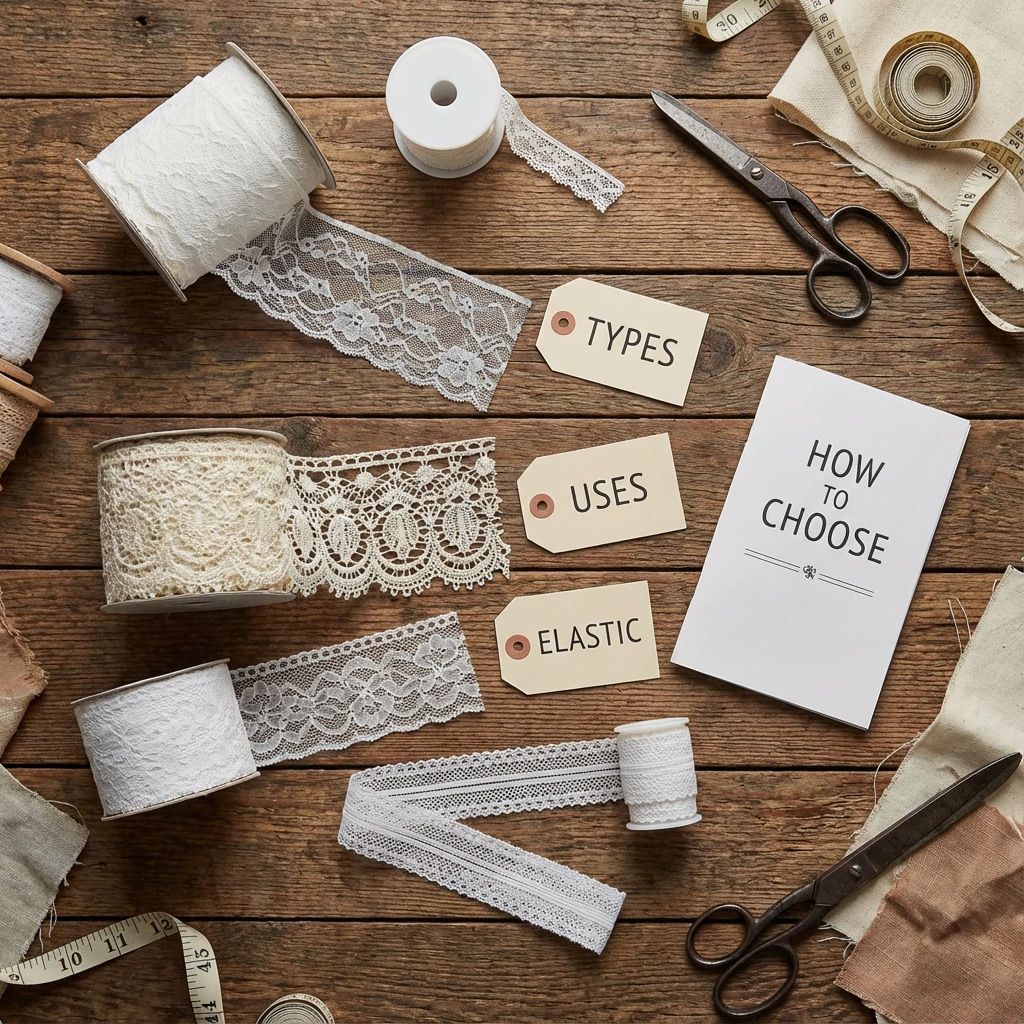
Lace ribbon adds instant elegance to almost any project. Whether you’re wrapping a gift, decorating a wedding venue, or adding finishing touches to a garment, the right lace ribbon can elevate your work from ordinary to memorable.
But with so many varieties available—different widths, materials, and styles—choosing the right lace ribbon can feel overwhelming. This guide explains what lace ribbon is, the main types available, where it’s commonly used, and how to select the perfect option for your specific project.
What Is Lace Ribbon?
Lace ribbon is a narrow decorative trim featuring lace patterns, designed to be used similarly to regular ribbon but with the delicate, openwork aesthetic of lace. It typically comes in rolls and ranges from 1cm to 10cm in width.
The term “lace ribbon” describes the format—a narrow, flexible strip—rather than a specific construction method. Lace ribbon can be made using various techniques: some feature true lace construction with interlocking threads, while others use embroidered or printed lace patterns on a base material.
Lace Ribbon vs Lace Trim vs Regular Ribbon
These terms are sometimes used interchangeably, but there are distinctions:
| Type | Description | Best For |
|---|---|---|
| Lace Ribbon | Narrow lace strip, often with finished edges on both sides | Gift wrapping, bows, crafts, hair accessories |
| Lace Trim | Decorative lace edge with one finished side, one raw edge for attachment | Sewing onto garments, permanent applications |
| Regular Ribbon | Solid fabric strip (satin, grosgrain, etc.) without lace pattern | General-purpose tying, bows |
The key difference: lace ribbon is designed to be used as-is, while lace trim is meant to be sewn onto something else. Lace ribbon typically has finished edges on both sides, making it suitable for applications where both edges will be visible.
Types of Lace Ribbon
Lace ribbon comes in numerous varieties. Understanding the main categories helps you find what works for your project.
By Material
Cotton lace ribbon offers a natural, matte appearance with a soft hand feel. It suits vintage aesthetics, rustic themes, and projects where a handcrafted look matters. Cotton is breathable and accepts dye well but may wrinkle and shrink if washed.
Polyester lace ribbon provides durability and consistent appearance. It resists wrinkling, maintains its shape, and handles humidity well. Polyester works for applications requiring longevity or outdoor exposure. The trade-off is a slightly more synthetic sheen.
Nylon lace ribbon is lightweight and smooth with a subtle luster. It works well for delicate applications and holds up to handling. Nylon is common in narrower widths used for crafts and accessories.
Blended materials combine properties—cotton-poly blends offer natural appearance with improved durability. Check fiber content if specific properties matter for your application.
By Style
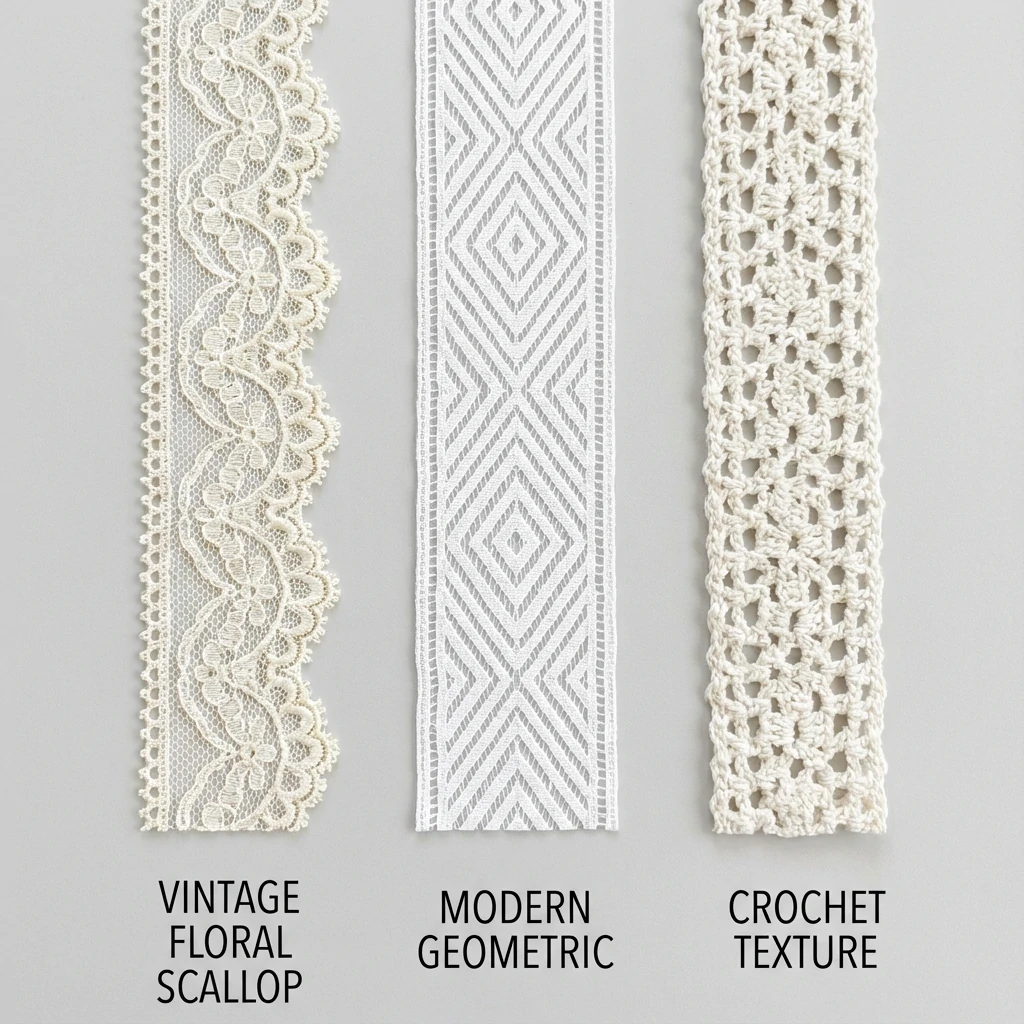
Vintage-style lace ribbon features traditional patterns reminiscent of antique lace. Floral motifs, scalloped edges, and cream or ivory colors define this category. Popular for weddings, shabby chic decor, and heritage crafts.
Modern lace ribbon uses cleaner lines, geometric patterns, or contemporary interpretations of classic designs. Often available in fashion colors beyond traditional white and ivory.
Crochet-look lace ribbon mimics the appearance of hand-crocheted lace. The raised texture and distinctive pattern suit bohemian and artisan aesthetics.
By Edge Style
Scalloped edge lace ribbon features decorative curved edges on one or both sides. The scallops become a design element themselves.
Straight edge lace ribbon has clean, linear borders. This works better when you want the lace pattern—not the edge—to be the focus.
Double-edge lace ribbon has identical finished edges on both sides, making it versatile for applications where either side might show.
Popular Uses for Lace Ribbon
Lace ribbon appears across diverse applications, from fashion to home décor to special events.
Clothing and Fashion Accessories
Garment embellishment uses lace ribbon at necklines, cuffs, and hems. Unlike lace trim that’s sewn flat, lace ribbon can be gathered, pleated, or formed into bows as decorative accents.
Hair accessories incorporate lace ribbon into headbands, ponytail wraps, and decorative clips. The flexibility and finished edges make it easy to work with.
Jewelry making uses narrow lace ribbon as choker bases, bracelet components, or decorative elements combined with beads and findings.
Gift Wrapping and Packaging
Gift presentation is one of the most popular uses for lace ribbon. A simple bow of white lace ribbon transforms plain wrapping into something special. The vintage aesthetic particularly suits wedding gifts, baby showers, and romantic occasions.
Product packaging uses lace ribbon to convey handcrafted quality. Small businesses selling handmade goods often use lace ribbon to reinforce their artisan brand identity.

Weddings and Special Events
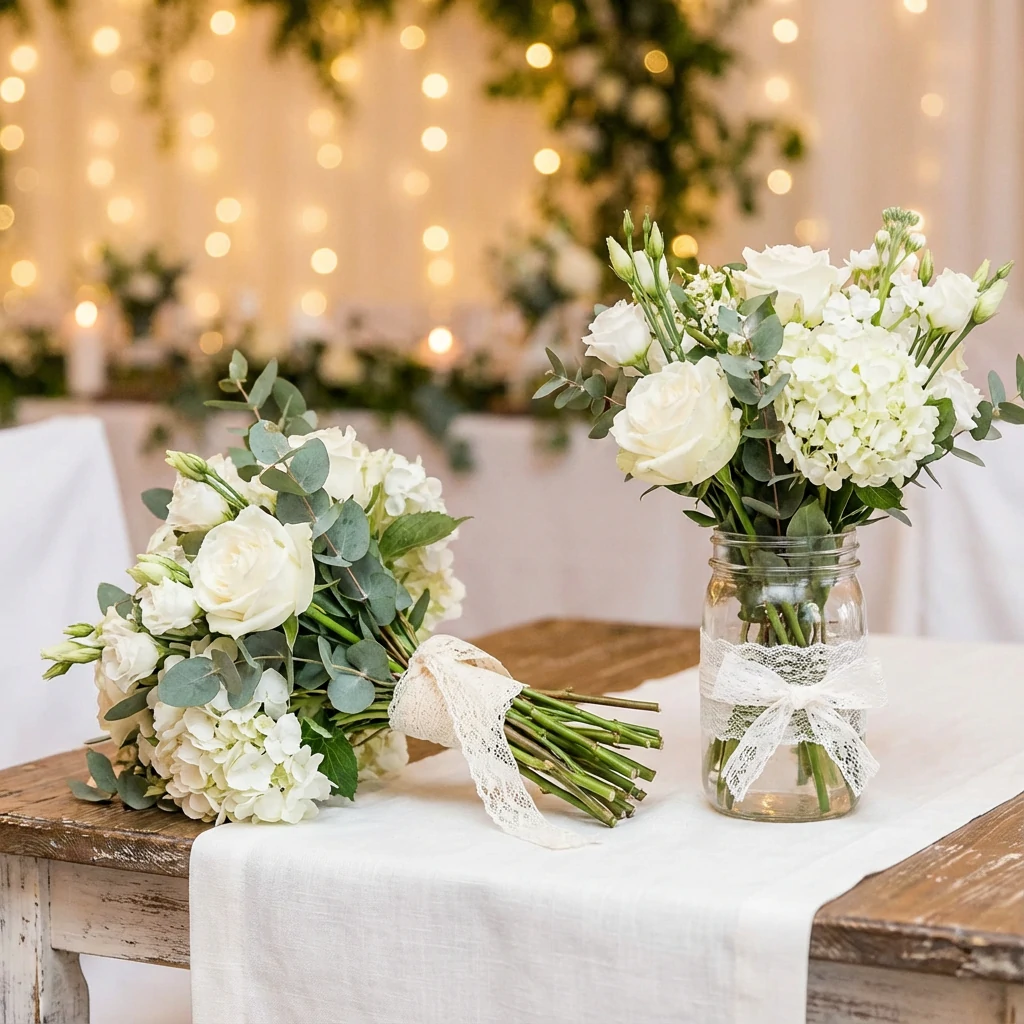
Wedding décor relies heavily on lace ribbon. Applications include bouquet wraps and stems, invitation embellishment, favor decoration, chair sashes and table runners, cake table accents, and mason jar decoration.
The romantic, traditional associations of lace make it a natural choice for weddings. Ivory and white lace ribbon coordinate with most wedding color schemes.
Baby showers and christenings use lace ribbon similarly—the soft, delicate aesthetic suits celebrations of new life.
Crafts and DIY Projects
Scrapbooking and card making use lace ribbon as decorative borders, photo mounts, and dimensional accents. The texture adds interest that flat paper elements can’t provide.
Home décor crafts incorporate lace ribbon into wreaths, candle decoration, picture frames, and seasonal displays. The material adds softness to craft projects.
Sewing projects use lace ribbon for applications where you want the ribbon format rather than traditional trim—drawstring casing decoration, bag handles, or removable embellishments.
Home Textiles
Pillow and cushion decoration uses lace ribbon as applied borders or tie closures. Curtain tiebacks made from wide lace ribbon add vintage charm. Table setting accents—napkin rings, place card holders—use lace ribbon for special occasions.
How to Choose the Right Lace Ribbon
Selecting lace ribbon involves matching the ribbon characteristics to your specific project requirements.
By Width
Narrow lace ribbon (1-2cm) suits delicate applications—card making, small bows, jewelry, hair accessories. The scale works for detailed work where wider ribbon would overwhelm.
Medium lace ribbon (2-5cm) handles most general applications—gift wrapping, garment accents, craft projects. This versatile range offers enough presence without dominating.
Wide lace ribbon (5-10cm) makes statements—table runners, chair sashes, major decorative elements. Use wider ribbons when the lace itself should be a focal point.
Match ribbon width to project scale. A 10cm ribbon on a small gift box looks excessive. A 1cm ribbon as a table runner disappears.
By Material
For applications involving moisture or outdoor exposure, choose polyester or nylon. These synthetic materials resist humidity and weather better than cotton.
For projects emphasizing natural or handcrafted aesthetics, cotton lace ribbon delivers authenticity. The slight irregularities of natural fiber add character.
For everyday handling and durability, polyester or poly-blends offer practical performance without sacrificing appearance.
By Color
White and off-white/ivory remain the most popular and widely available colors. When matching to other materials, pay attention to undertones—bright white versus cream versus ivory can clash noticeably.
Black lace ribbon offers dramatic contrast for gothic aesthetics, Halloween projects, or modern black-and-white color schemes.
Colored lace ribbon exists but selection is more limited. For specific colors, you may need to dye white cotton lace ribbon yourself or work with specialty suppliers.
By Style
Match ribbon style to overall project aesthetic. Vintage-style lace ribbon suits traditional, romantic, or shabby chic projects. Modern lace patterns work for contemporary applications. Crochet-look ribbon complements bohemian and artisan styles.
Consider the other materials in your project. Lace ribbon should complement, not compete with, other decorative elements.
Lace Ribbon Care and Handling Tips
Proper handling ensures your lace ribbon looks its best in finished projects.
Storage
Store lace ribbon on original spools or cardboard rolls to prevent creasing. Keep in a cool, dry location away from direct sunlight, which can yellow white lace over time. Avoid storing in plastic bags where humidity can accumulate.
Cutting
Use sharp scissors for clean cuts. Dull blades compress and distort the lace pattern at cut ends. For synthetic lace ribbon, you can heat-seal cut ends with a lighter or heat tool to prevent fraying—but test on a scrap first and work carefully to avoid burning or melting.
For cotton lace ribbon, consider applying a small amount of fray-check or clear fabric glue to cut ends if they’ll be visible.
Pressing
If lace ribbon becomes wrinkled, press with low heat and steam. Place a pressing cloth between the iron and delicate lace. For synthetic materials, use the lowest heat setting to avoid melting. Cotton tolerates moderate heat.
Cleaning
Most lace ribbon isn’t designed for washing. For finished projects that need cleaning, spot-clean gently rather than submerging. If washing is necessary, use cool water and mild detergent, and air dry flat.
FAQs
What is the difference between lace ribbon and lace trim?
The main difference is intended use. Lace ribbon has finished edges on both sides and is designed to be used as-is—tied into bows, wrapped around objects, or used where both edges will be visible. Lace trim typically has one decorative edge and one raw edge meant to be sewn onto fabric. Ribbon is a finished product; trim is a component.
Can lace ribbon be used outdoors?
Polyester and nylon lace ribbon handle outdoor conditions reasonably well for temporary applications like wedding décor. Cotton lace ribbon is more vulnerable to moisture and should be protected or used only for brief outdoor exposure. For permanent outdoor use, none are ideal—look for synthetic outdoor-rated trims instead.
How do I prevent lace ribbon from fraying?
For synthetic lace ribbon, carefully heat-seal cut ends with a lighter flame held near (not touching) the edge. For cotton lace ribbon, apply fray-check liquid or a thin line of clear fabric glue. Some crafters fold cut ends under and secure with glue or stitching.
What width lace ribbon should I use for gift wrapping?