
If you’ve ever compared fabric labels from different countries, you’ve probably noticed something confusing. An American garment might list “5% spandex,” while a European one says “5% elastane,” and a premium brand proudly advertises “made with Lycra.” Are these three different materials? Should you prefer one over another? This question comes up constantly in the textile industry, and the answer is simpler than you might expect.
The Short Answer: They’re the Same Thing
Here’s the truth that clears up years of confusion: spandex, elastane, and Lycra are all the exact same fiber. They share identical chemical composition, identical physical properties, and identical performance characteristics. The only difference between them is geography and branding.
| Term | Region | Origin |
|---|---|---|
| Spandex | North America | Anagram of “expands” |
| Elastane | Europe & Asia | Derived from “elastic” |
| Lycra | Worldwide (brand) | DuPont trademark (now Invista) |
Think of it like the difference between “sneakers,” “trainers,” and “Nike.” You’re describing the same type of product, just using different words depending on where you are or which brand you’re buying. So when you see “5% spandex” on an American label or “5% elastane” on a European one, rest assured you’re getting the exact same stretch fiber with the exact same properties.
Why Do They Have Different Names?
The story behind these three names reveals fascinating history about how global industries develop terminology, and why regional differences persist even in our interconnected world.
The word spandex has a surprisingly playful origin. When American chemists at DuPont invented this revolutionary fiber in 1958, they needed a name that would capture its essential characteristic. Someone clever realized that rearranging the letters of “expands” produced “spandex,” and this anagram stuck. The name spread throughout the American textile industry and became the standard term across North America.
European textile authorities took a more straightforward approach. They derived “elastane” directly from “elastic,” creating a name that immediately communicates the fiber’s defining property. This term became embedded in EU textile labeling regulations and spread throughout Europe, Asia, and most other markets.
The Lycra story is one of branding genius. When DuPont commercialized their invention, they trademarked it under this distinctive name and invested heavily in marketing. Like Kleenex for tissues or Band-Aid for adhesive bandages, Lycra became so synonymous with stretch fiber that people began using it as a generic term. Today, Invista owns the Lycra brand and licenses it to manufacturers who meet their quality standards.
What is Spandex/Elastane Made Of?
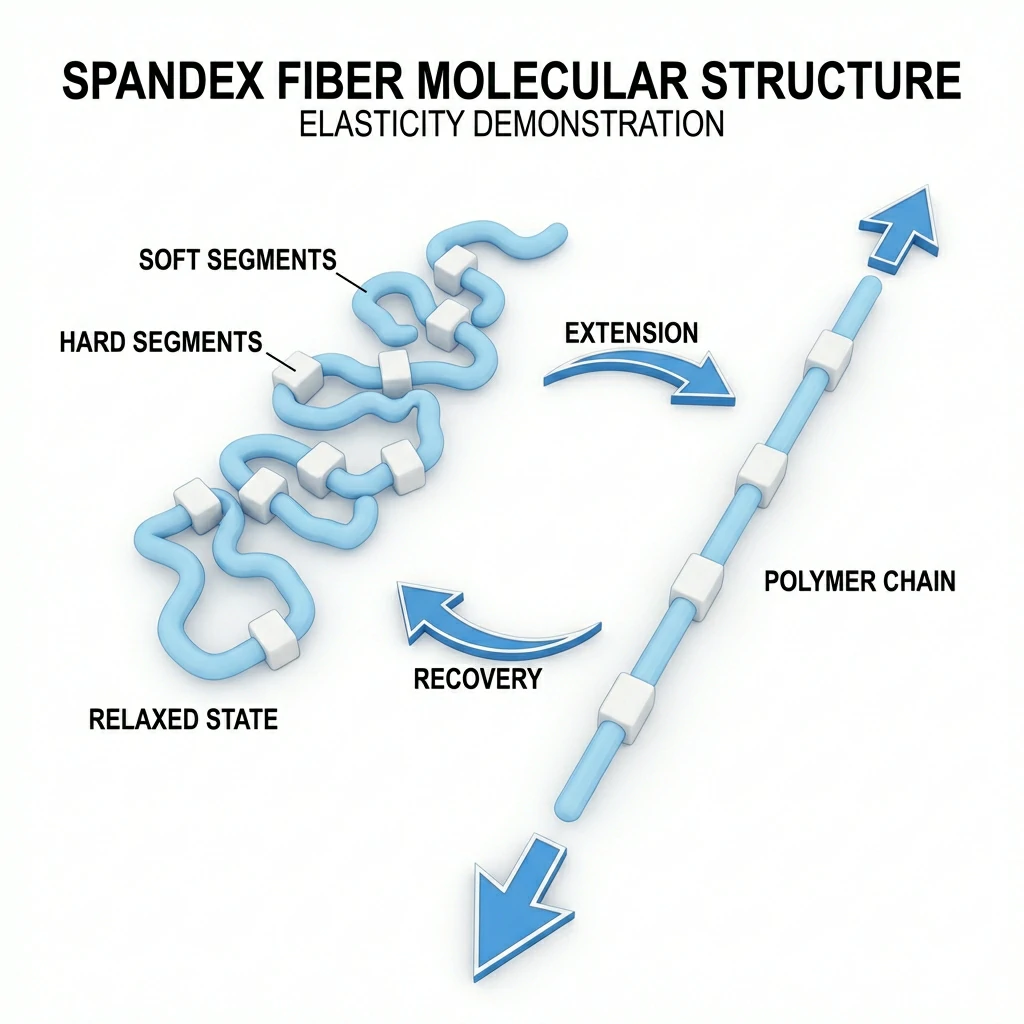
Spandex is a synthetic polymer made primarily from polyurethane. To be classified as spandex or elastane under textile regulations, a fiber must contain at least 85% segmented polyurethane by weight.
The molecular structure is what makes this material truly special. It features two distinct types of segments working together: hard segments that provide strength and structural integrity, and soft segments that enable the incredible stretch. This dual-segment architecture is the engineering secret behind spandex’s unique performance.
The manufacturing process transforms liquid chemicals into the stretchy fibers we rely on daily:
Chemical precursors react to form a liquid polymer solution
The solution is forced through spinnerets (plates with thousands of tiny holes)
Filaments solidify through dry spinning or wet spinning
Multiple filaments are bundled into yarn
The result is a fiber that can stretch five to eight times its original length and snap back to shape without losing elasticity. This performance is extraordinary when you consider that even the stretchiest natural fibers, like wool, can only stretch about 30% before permanent deformation.
Key Properties of Spandex/Elastane
Several remarkable properties make spandex indispensable in modern textiles, explaining why it appears in everything from athletic wear to medical garments.
Exceptional Elasticity. Spandex can stretch up to 500-800% of its original length, and more importantly, it returns to its original shape afterward. This “elastic memory” means garments maintain their fit and appearance through hundreds of wash cycles and years of wear.
Lightweight Comfort. Despite its remarkable strength, spandex is surprisingly light. Adding just 2-5% to any fabric transforms something rigid into something comfortable without adding noticeable weight.
Durability Under Stress. Spandex resists degradation from constant stretching cycles, body oils, perspiration, and abrasion. This resilience explains why quality activewear maintains its performance far longer than expected.
Perfect Blending Partner. Spandex rarely appears alone. It combines seamlessly with:
Cotton → stretch denim
Nylon → swimwear
Polyester → athletic apparel
Lace fibers → stretch lace
Even a small 2% spandex content dramatically improves how a fabric moves, fits, and feels against the body.
Common Applications
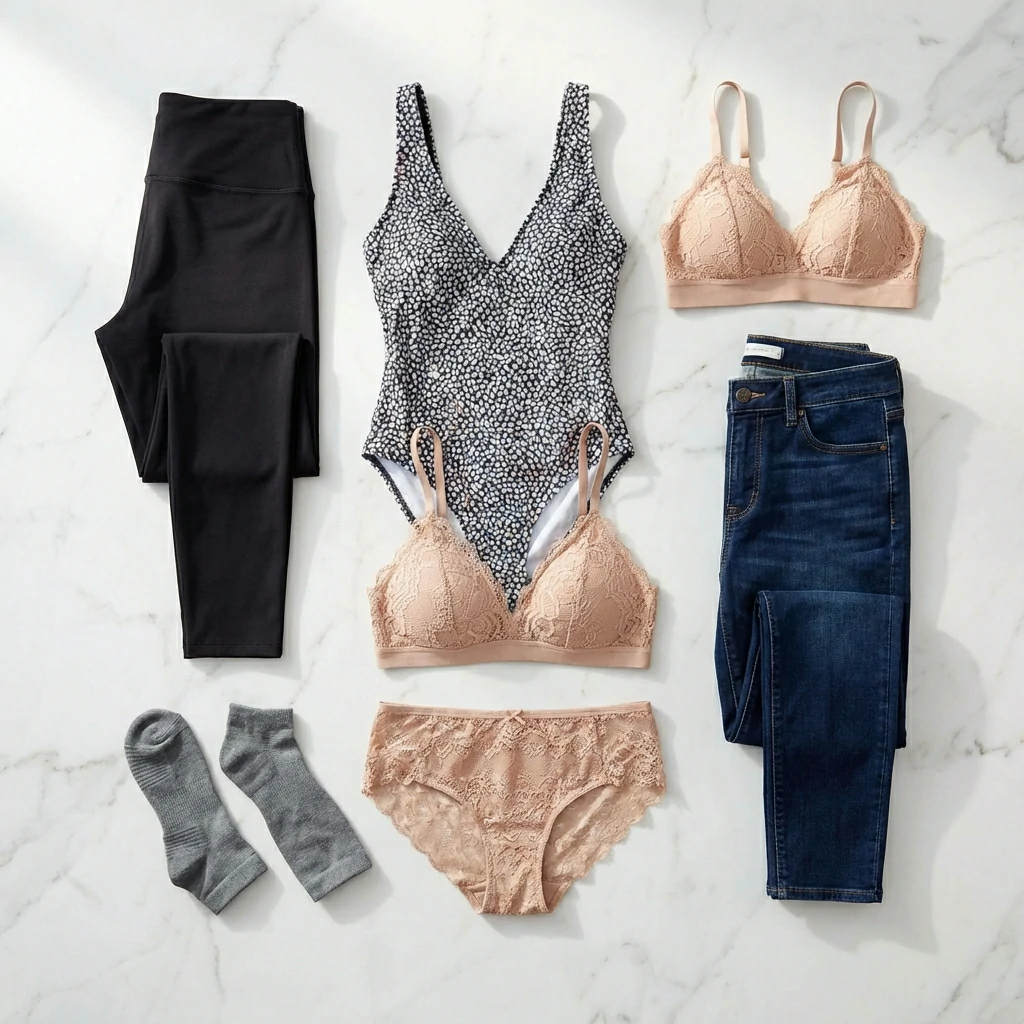
The versatility of spandex has made it ubiquitous across virtually every category of modern clothing and beyond.
Athletic and Performance Wear represents the natural home for this fiber. Yoga pants, compression gear, cycling shorts, and virtually every piece of modern sportswear relies on elastane for freedom of movement, muscle support, and shape retention during intense activity.
Swimwear presents unique challenges that spandex handles exceptionally well. Beyond stretch and recovery, swimsuits must resist chlorine, salt water, and UV exposure. Modern swimsuits typically contain 15-25% elastane, ensuring they hold their shape across multiple seasons.
Intimate Apparel was revolutionized by spandex technology. Bras, underwear, and shapewear all depend on elastane for comfortable fit, all-day support, and invisible smoothing. Before stretch fibers, achieving these goals required rigid construction that sacrificed comfort.
Stretch Lace deserves special attention as an application where spandex transformed a traditional material into something entirely new. By combining delicate lace patterns with elastane content, manufacturers created lace that moves with the body instead of restricting it. This innovation revolutionized lingerie and eveningwear design, offering:
Better fit across size ranges
Improved comfort for extended wear
Reduced need for rigid underwires and boning
Simplified pattern-making for manufacturers
Stretch Denim emerged when someone thought to add just 1-3% spandex to traditional denim. Remember when jeans were stiff and required weeks of breaking in? That era ended with stretch denim, which offers the classic look with modern comfort.
Medical Applications round out the picture. Compression stockings, post-surgical garments, and athletic recovery wear all rely on precisely controlled elastane content to deliver therapeutic compression levels.
How to Read Fabric Labels
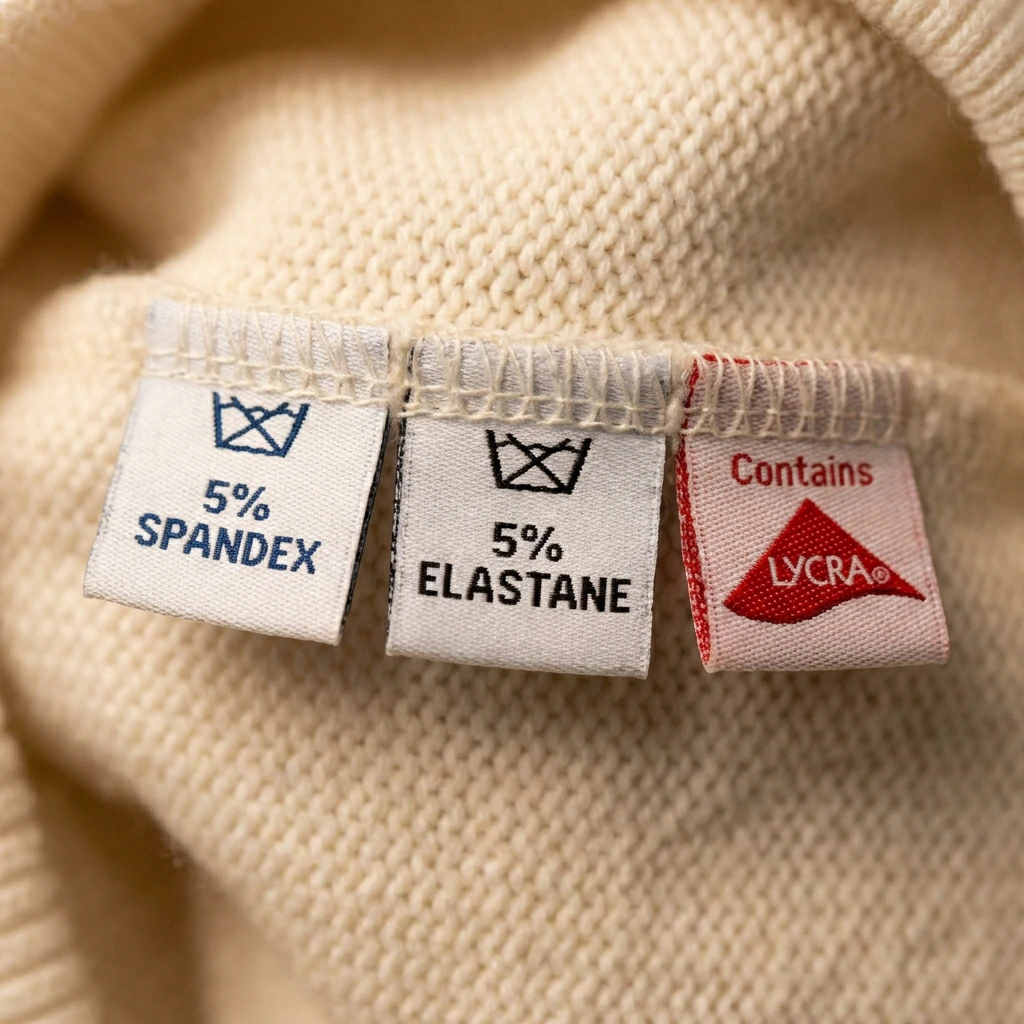
Understanding how to interpret fabric labels helps you make informed decisions whether you’re a consumer shopping for quality or a business sourcing materials.
Regional terminology is straightforward once you know the pattern. American labels list “Spandex,” European labels use “Elastane,” and premium products might advertise “Contains Lycra®” with the trademark symbol. All three mean exactly the same thing.
The percentage tells you about intended use and stretch level:
| Spandex % | Stretch Level | Typical Applications |
|---|---|---|
| 2-3% | Light | Stretch denim, dress shirts |
| 5-8% | Moderate | Casual wear, blouses |
| 10-15% | High | Activewear, leggings |
| 15-25% | Maximum | Swimwear, shapewear |
Quality indicators go beyond percentage. Recognized brand names like Lycra, Creora, or Dorlastan suggest investment in quality-certified fibers. Specific blend percentages are more trustworthy than vague terms like “stretch fabric” or “comfort stretch,” which may hide minimal elastane content.
Conclusion
The mystery of spandex versus elastane versus Lycra dissolves once you understand these are simply three names for one remarkable fiber. Whether you’re shopping in New York or Paris, buying store brands or premium labels, the stretch in your clothing comes from the same polyurethane technology invented at DuPont in 1958.
What actually matters isn’t which name appears on the label but rather the percentage of stretch fiber, the quality of the blend, and how well the fabric serves its intended purpose. For B2B buyers sourcing stretch fabrics, focus on elastane content appropriate for your end use, supplier quality certifications, and consistent performance across production runs.