
Lace comes in dozens of varieties, each with distinct patterns, textures, and construction methods that make them easy to identify once you know what to look for. Whether you’re shopping for a wedding dress or identifying vintage textiles, recognizing these 17 main types will help you choose the perfect lace for any project.
Need a specific Lace Trim solution?
Inquire about our 2026 Bridal Catalog & Custom Sampling.
Get a Custom Quote for Lace ➔
The quickest way to identify any lace is to examine three things: the pattern design, how it feels between your fingers, and how the threads connect to create the fabric.
1. Chantilly Lace
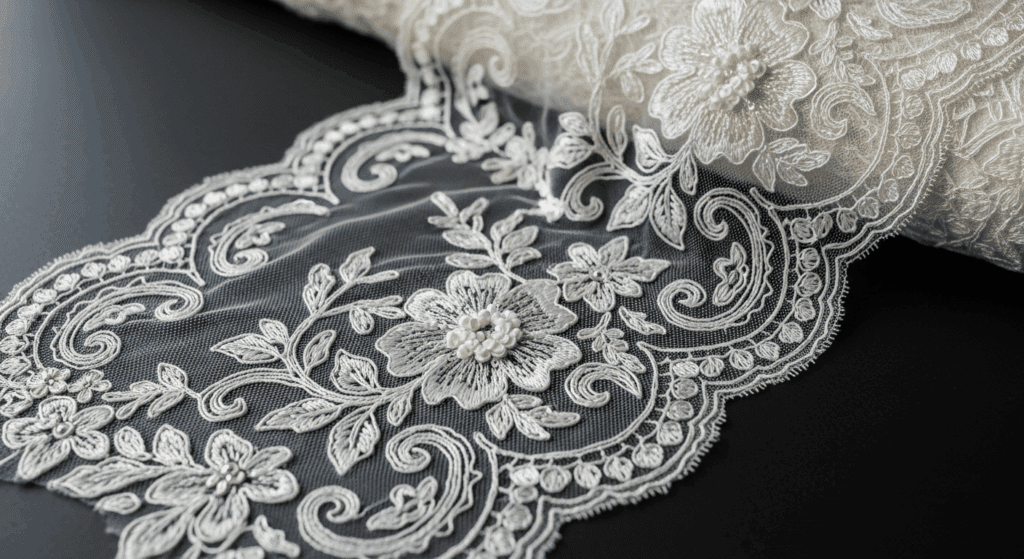
Chantilly lace features delicate floral patterns outlined with thick silk threads on an extremely fine mesh background. You’ll recognize it by its signature black silk construction and the way light passes through the sheer areas between the motifs.
The flowers and scrollwork appear to float on the mesh. When you run your fingers across it, you’ll feel the raised outline threads that create a subtle 3D effect.
This French lace originated in the 17th century and remains the go-to choice for evening gowns and bridal veils.
2. Guipure Lace
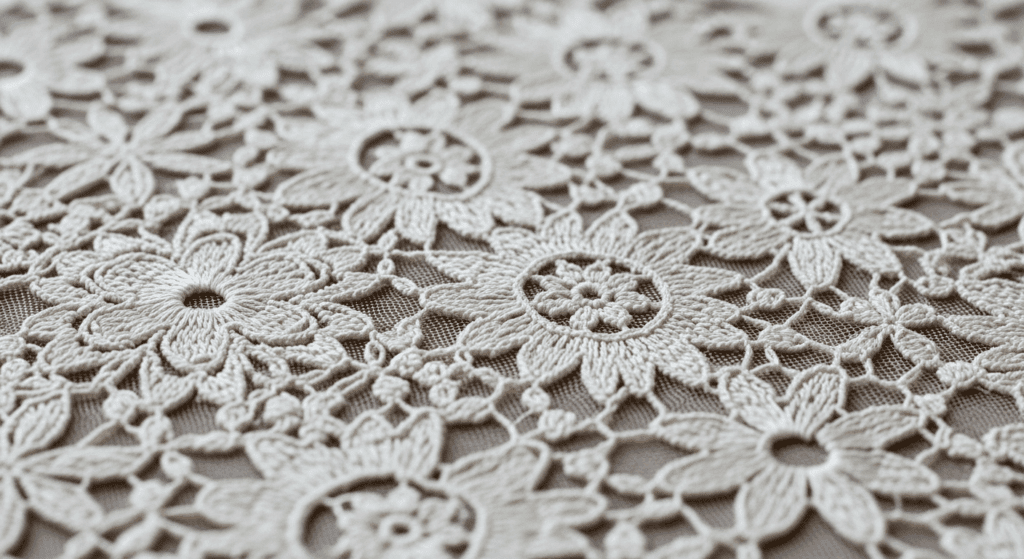
Guipure lace connects bold motifs with twisted threads or bars instead of using any mesh background at all. The open spaces between patterns make it instantly recognizable—you can literally see through the gaps.
The patterns feel thick and substantial, almost like embroidery. Each motif stands alone, connected only by decorative bars that create geometric or floral designs.
You’ll often find this lace on cocktail dresses and home décor because it’s sturdy enough to maintain its shape without backing fabric.
3. Alençon Lace
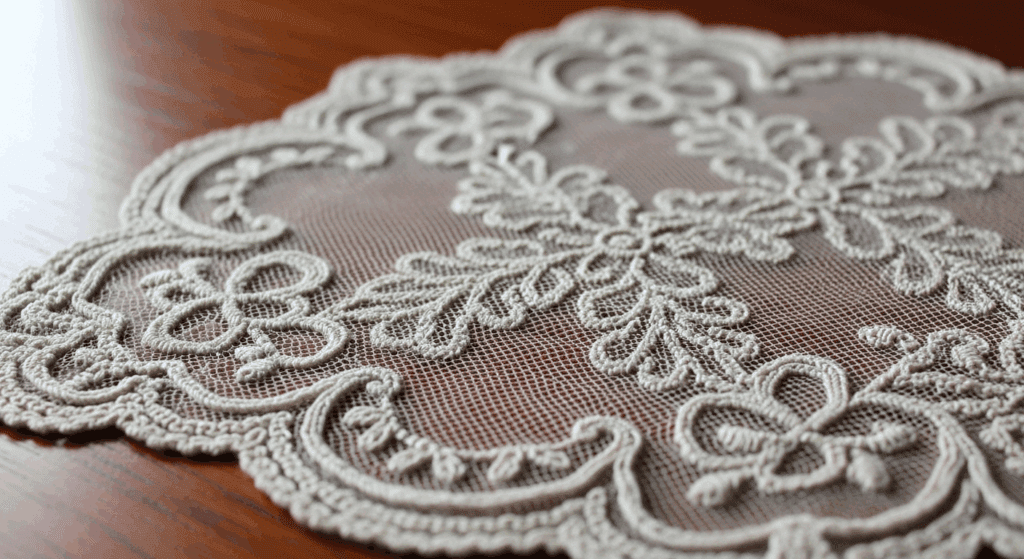
Alençon lace stands out with its distinctive cord outlining that creates a raised, beaded appearance around each floral motif. The fine net background supports intricate patterns that often include roses, leaves, and swags.
Hold it up to the light and you’ll see the characteristic “cordonnet”—a heavier thread that outlines every design element. This creates shadows and dimension that make the patterns pop.
French artisans have been making this “Queen of Laces” since the 16th century, and it’s still the most expensive lace you can buy.
4. Bobbin Lace
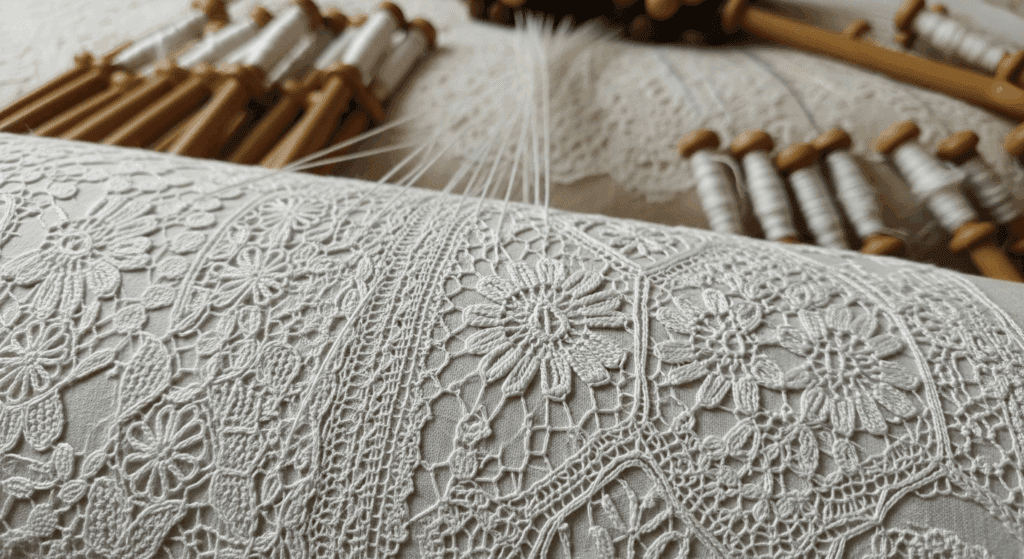
Bobbin lace reveals its handmade origins through slightly irregular patterns created by twisting and crossing threads wound on wooden bobbins. You can spot it by examining the thread paths—they weave in and out like a complex braid.
The geometric patterns often form stars, diamonds, or spider web designs. Unlike machine-made lace, you’ll notice tiny variations that prove human hands created each piece.
Making bobbin lace requires dozens of bobbins dancing across a pillow, with each thread precisely placed according to patterns marked with pins.
5. Needle Lace
Needle lace looks like it’s been drawn with thread, featuring intricate designs created entirely with a needle and single thread. The buttonhole stitches build up to form flowers, leaves, and scrollwork that seem to float in space.
Check the back—you’ll see the same pattern as the front, just in reverse. This distinguishes it from embroidered lace, which has a messier backing.
Each piece starts with a paper pattern and temporary stitches, then artisans fill in the design with thousands of tiny buttonhole stitches.
6. Chemical Lace
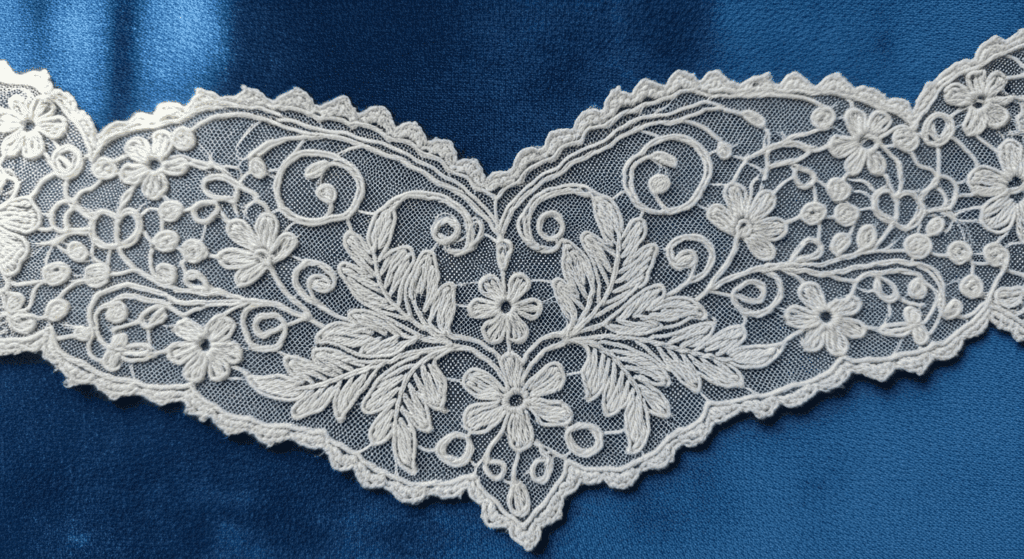
Chemical lace gets its airy, delicate appearance from having its fabric base dissolved away with chemicals, leaving only the embroidered design. The result looks like floating embroidery with no visible background fabric.
You can identify it by the clean, sharp edges where the fabric was removed. The embroidered portions feel dense and substantial compared to the completely open spaces around them.
Manufacturers often use this technique for creating lace collars, appliqués, and trim that can be attached to other garments.
7. Raschel Lace
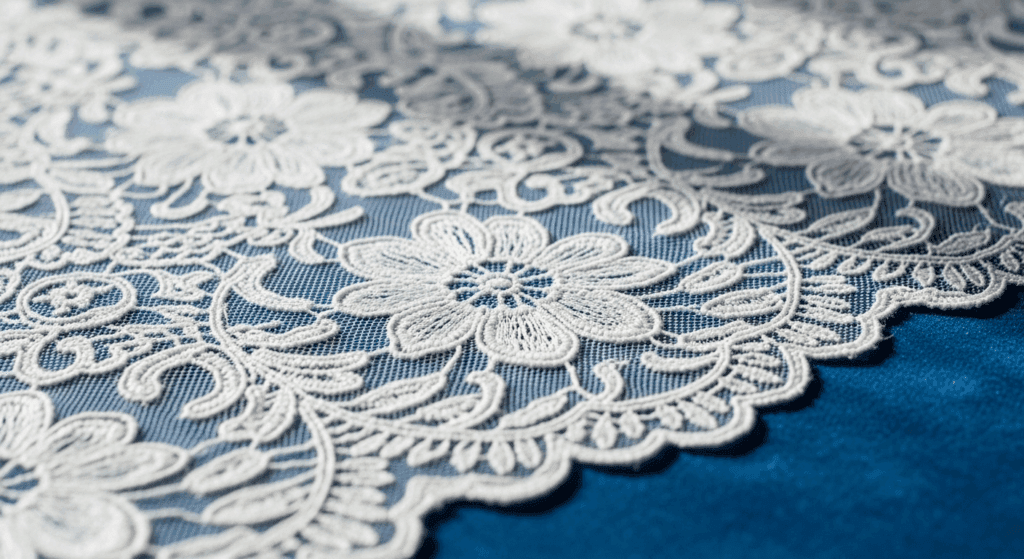
Raschel lace has a distinctive knitted appearance with patterns that look slightly fuzzy or textured rather than crisp. The open-work design stretches slightly when pulled, unlike woven laces that maintain their shape.
Run your hand across it and you’ll feel the characteristic rough texture. The patterns often include geometric designs or simple florals that repeat in regular intervals.
This machine-made lace costs less than other types, making it popular for everyday lingerie and casual clothing trim.
8. Embroidered Lace
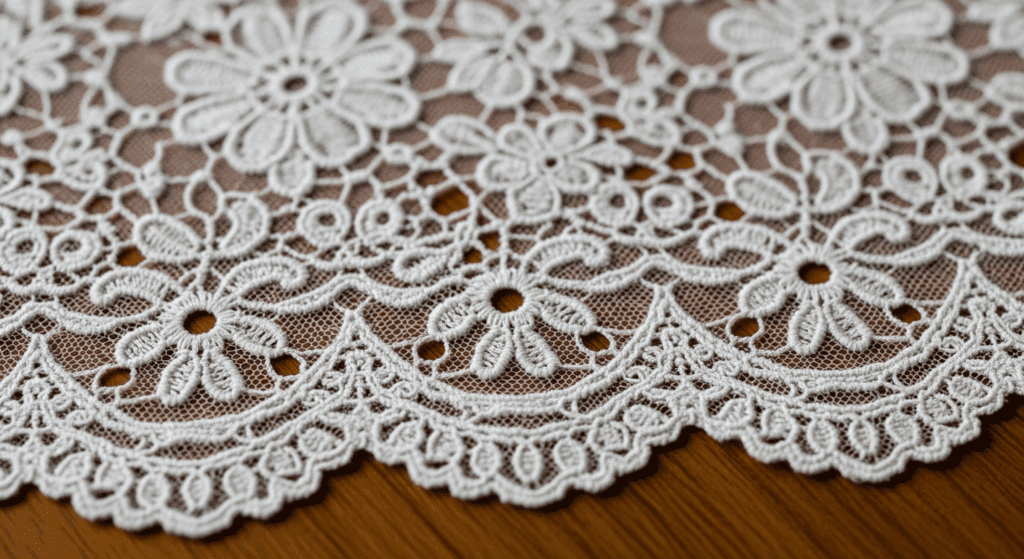
Embroidered lace features designs stitched onto a sheer fabric base, creating raised patterns you can feel with your fingertips. The embroidery threads sit on top of the mesh or organza background, giving it obvious dimension.
Turn it over and you’ll see the back looks different from the front—usually with visible thread ends and a less polished appearance. The base fabric remains intact throughout, unlike chemical lace.
Modern versions often use polyester threads on nylon mesh, though traditional ones feature silk or cotton embroidery on tulle.
9. Stretch Lace
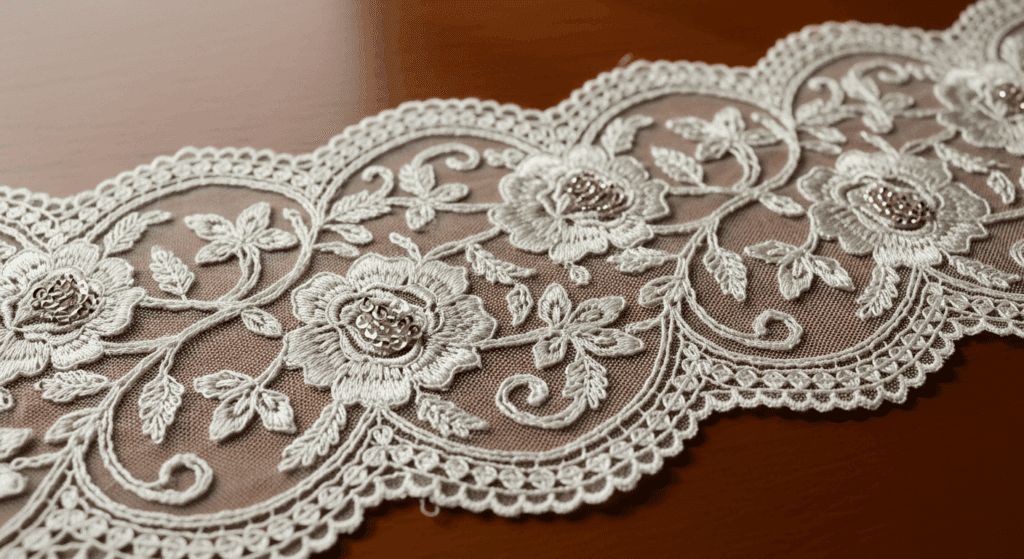
Stretch lace contains elastic fibers that let it stretch in at least one direction, snapping back to its original shape when released. You’ll know it immediately by pulling gently—it moves with your hands then bounces back.
The patterns maintain their proportion even when stretched. This elasticity makes it perfect for form-fitting garments that need to move with your body.
Look for it in lingerie, dance costumes, and athletic wear where flexibility matters as much as decoration.
10. Corded Lace
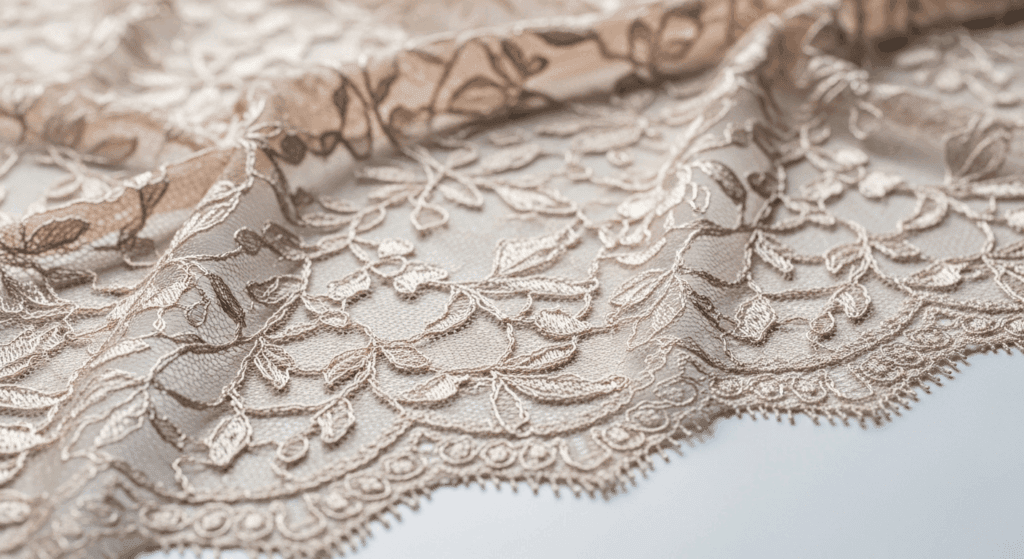
Corded lace features thick cords that outline and emphasize the main design elements, creating bold patterns with exceptional depth. These cords feel like tiny ropes when you touch them, standing proud of the surface.
The heavy outlining makes patterns visible from a distance. Wedding dress designers love it because the cording catches light beautifully in photographs.
You’ll often see it combined with beading or sequins that follow the cord lines for extra glamour.
11. Venetian Lace
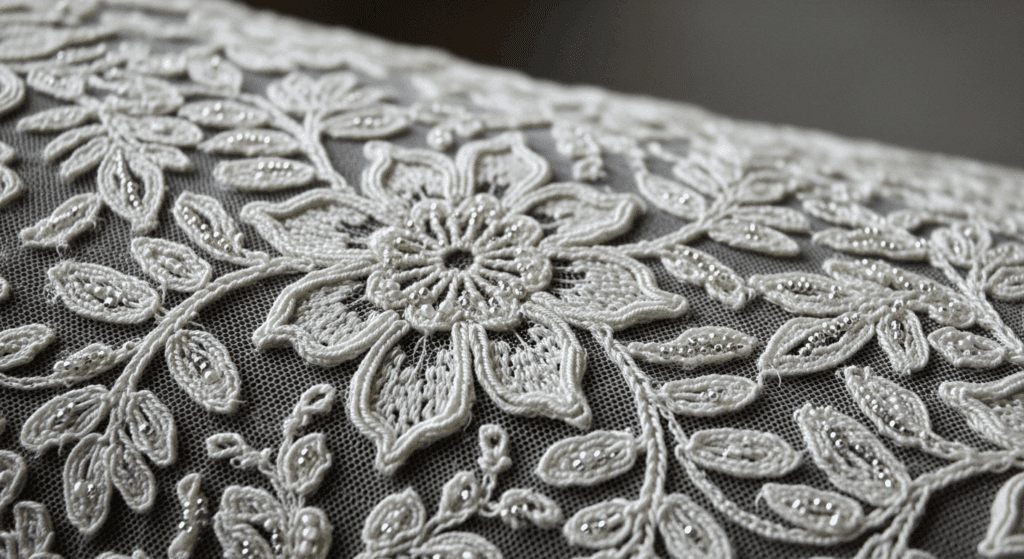
Venetian lace displays dense, raised floral designs connected by irregular mesh or bars, creating a rich, textured surface. The flowers and leaves feel almost sculptural, rising dramatically from the background.
Each motif uses multiple layers of thread to build height. The connecting bars form organic patterns rather than geometric grids, giving it a more natural appearance.
This Italian lace traditionally appears in ivory or ecru colors, perfect for vintage-inspired wedding gowns and formal tablecloths.
12. Tulle Lace
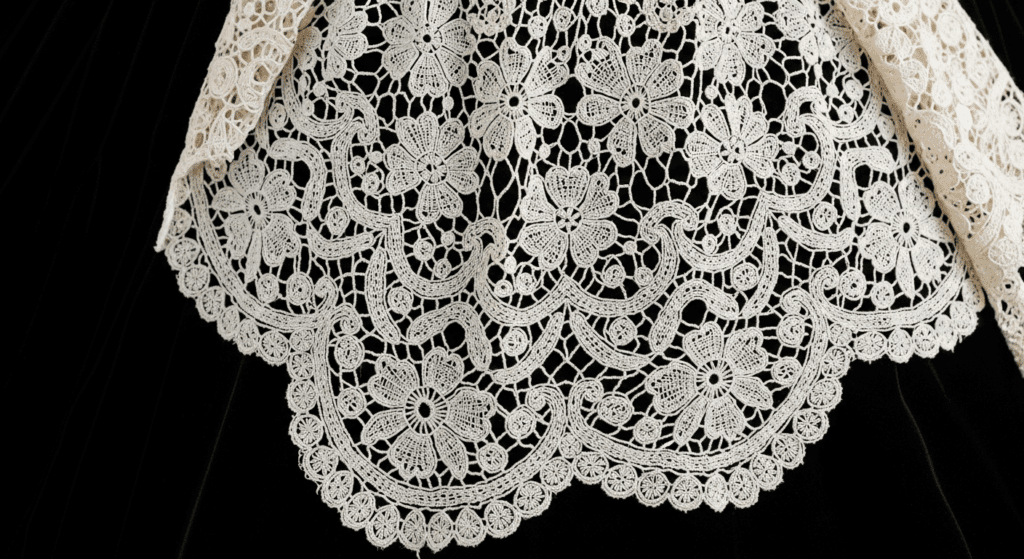
Tulle lace consists of fine hexagonal mesh that creates a soft, floaty fabric perfect for veils and ballet tutus. The uniform holes form a honeycomb pattern that you can see clearly when held to light.
It feels incredibly light and airy. Multiple layers create volume without weight, which is why it’s the foundation for most wedding veils.
Plain tulle becomes lace when manufacturers add embroidered or appliquéd designs to the mesh surface.
13. Schiffli Lace
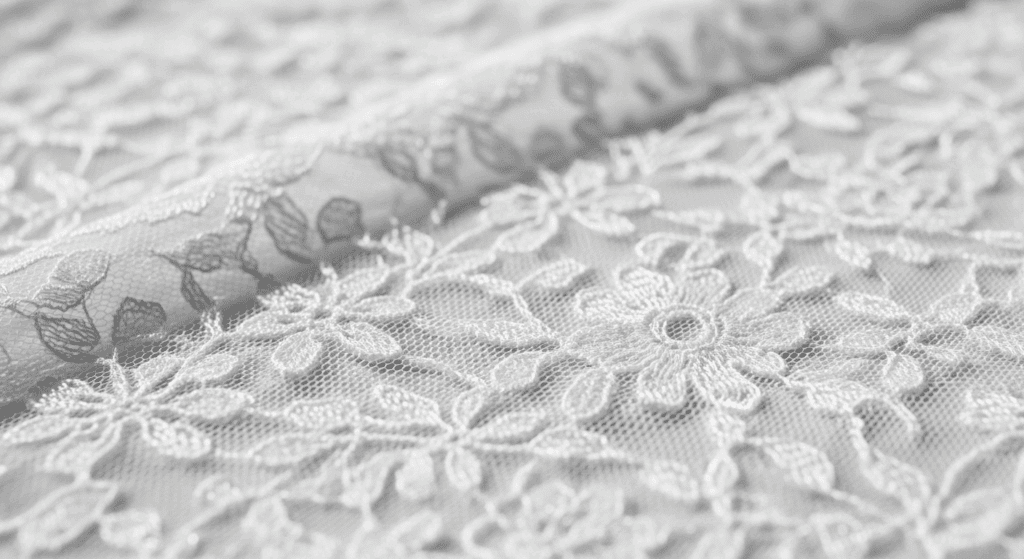
Schiffli lace shows continuous embroidered patterns created by specialized machines that can stitch complex designs quickly and uniformly. The stitching looks perfectly regular, with each repeat exactly matching the previous one.
You can identify it by the precise, mechanical perfection of the embroidery. No human hand could achieve such consistent stitching across yards of fabric.
The name comes from the Swiss machines that revolutionized lace production in the 1860s, making decorative lace affordable for everyone.
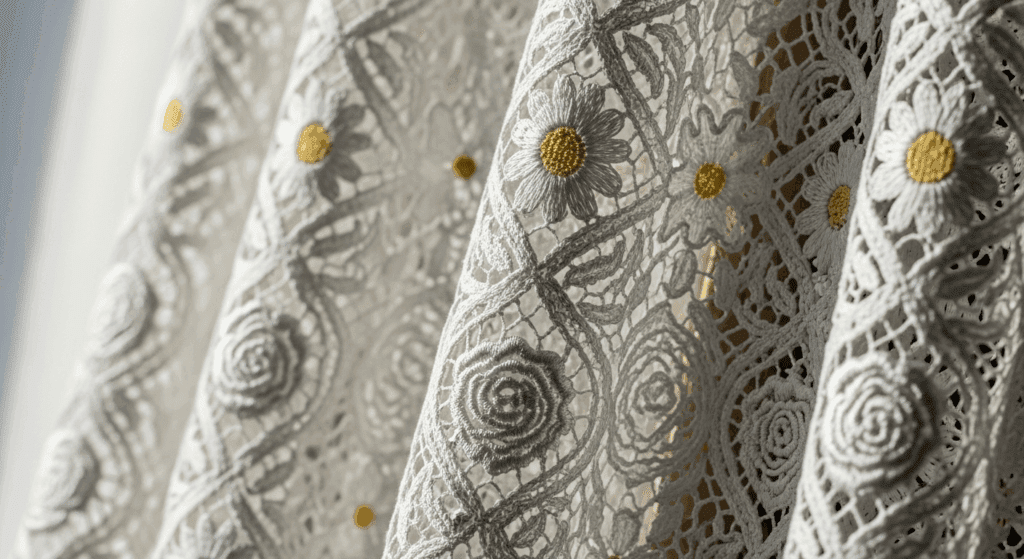
14. Cluny Lace
Cluny lace features bold geometric patterns with paddle-shaped motifs that look like wheat sheaves or fans. The thick cotton threads create a sturdy, almost rope-like texture you can feel immediately.
The patterns repeat in regular intervals with straight edges and angular designs. It’s heavier than most laces, making it ideal for home furnishings rather than clothing.
You’ll find it on Victorian-style curtains, doilies, and table runners where durability matters more than delicacy.
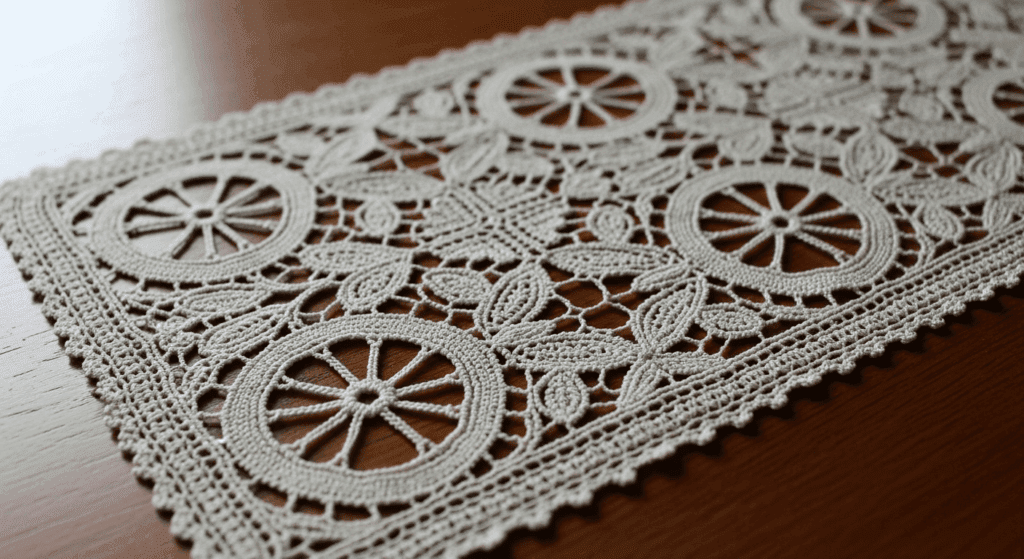
15. Crocheted Lace
Crocheted lace shows the characteristic loops and chains created with a single hook and thread, forming patterns that look handmade even when machine-produced. Each stitch interlocks with the next, creating a flexible but stable fabric.
You can spot it by looking for the telltale chain stitches that form the foundation. The patterns often include shells, flowers, and geometric shapes built from basic crochet stitches.
Irish crochet lace represents the finest version, with three-dimensional roses and shamrocks that seem to bloom from the surface.
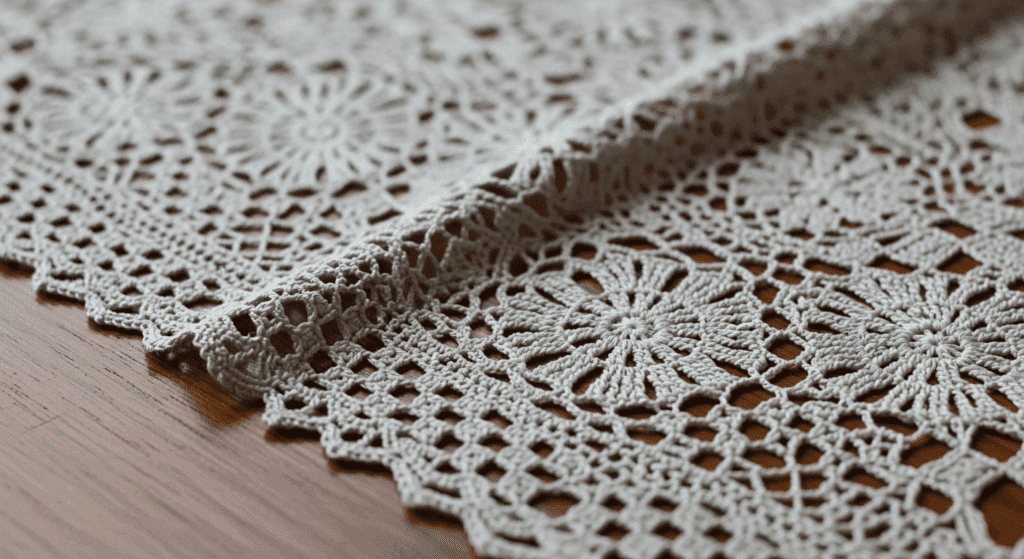
16. Tatting Lace
Tatting lace consists of rings and chains formed by knotting thread with a shuttle or needle, creating delicate patterns that look like tiny flowers strung together. The knots form firm circles that won’t unravel even when cut.
Each ring connects to the next through precise joining techniques. The finished lace feels firm and structured despite its delicate appearance.
This portable craft produces lace perfect for edging handkerchiefs, pillowcases, and baby clothes where a delicate touch matters.
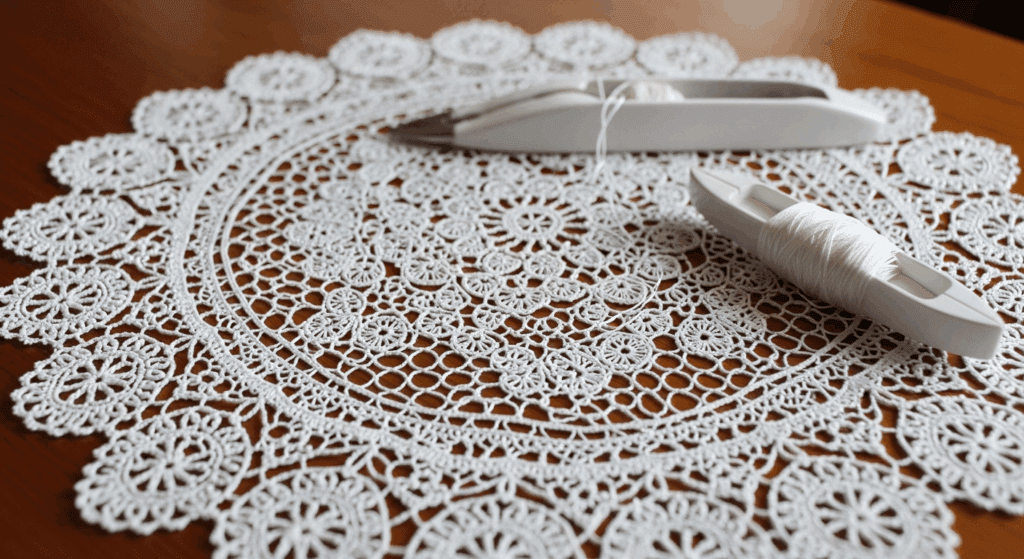
17. Eyelet Lace
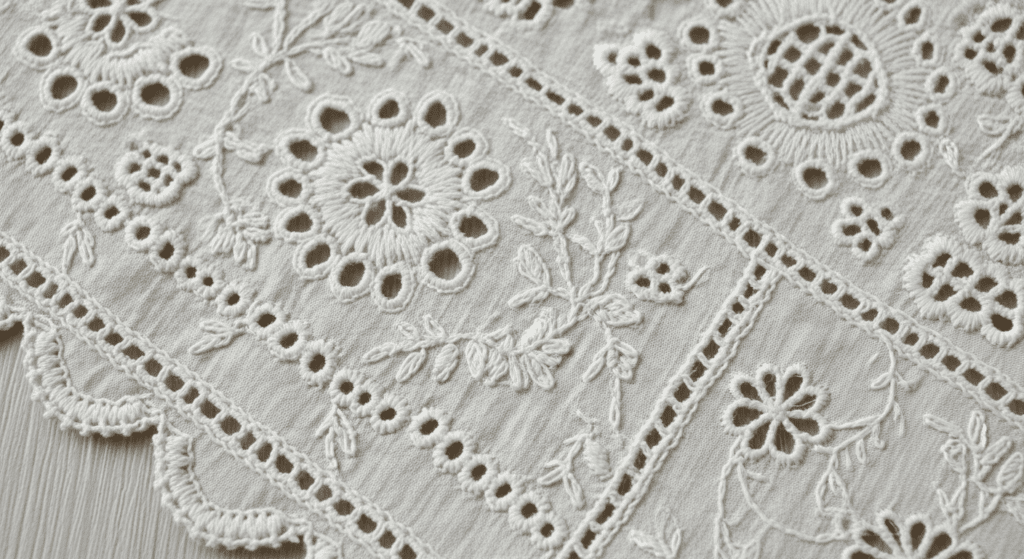
Eyelet lace features holes punched through fabric and reinforced with embroidery stitching, creating patterns of circles surrounded by decorative threadwork. The fabric between the holes remains intact and substantial.
You’ll recognize it by the uniform size of the holes and the neat buttonhole stitching that prevents fraying. The patterns often form flowers, leaves, or abstract designs.
This lace appears most often on summer clothing and children’s dresses because it’s washable, durable, and maintains its shape through regular wear.
FAQs
What’s the easiest way to tell if lace is handmade or machine-made?
Handmade lace contains tiny irregularities in the pattern and stitching that machines can’t replicate. Look closely at repeated motifs—if each one is slightly different, it’s handmade. Machine lace shows perfect uniformity across the entire piece.
Which type of lace is best for wedding dresses?
Alençon and Chantilly laces remain the top choices for wedding gowns because of their elegant patterns and formal appearance. Alençon offers more structure and dimension, while Chantilly provides delicate, romantic details perfect for overlays and sleeves.
Which lace types work best for beginners learning to sew?
Cotton Cluny lace and eyelet lace offer the best starting points because they’re stable, don’t stretch unexpectedly, and have enough body to feed through a sewing machine easily. Avoid stretch laces and delicate Chantilly until you’ve mastered basic techniques.
How do I clean and store delicate lace fabric?
Hand wash delicate lace in cool water with gentle detergent, then lay flat on a towel to dry away from direct sunlight. Store lace wrapped in acid-free tissue paper or muslin, avoiding plastic bags that can trap moisture and cause yellowing.
✨ Source Premium Lace Trim at Factory-Direct Prices
Looking to add the perfect finishing touch to your bridal or fashion collections? From delicate Chantilly lace to high-end Custom Lace Trim, Yituo Lace provides the exquisite details your designs deserve.
- ✓ Wholesale Lace Trim | Access bulk inventory of beaded, corded, and embroidered lace styles.
- ✓ Custom Lace Trim Design | Tailor-made patterns and widths to match your specific vision.
- ✓ B2B Manufacturing | Reliable, high-volume production with global shipping for bridal brands.
Need a specific Lace Trim solution?
Inquire about our 2026 Bridal Catalog & Custom Sampling.
Get a Custom Quote for Lace ➔