
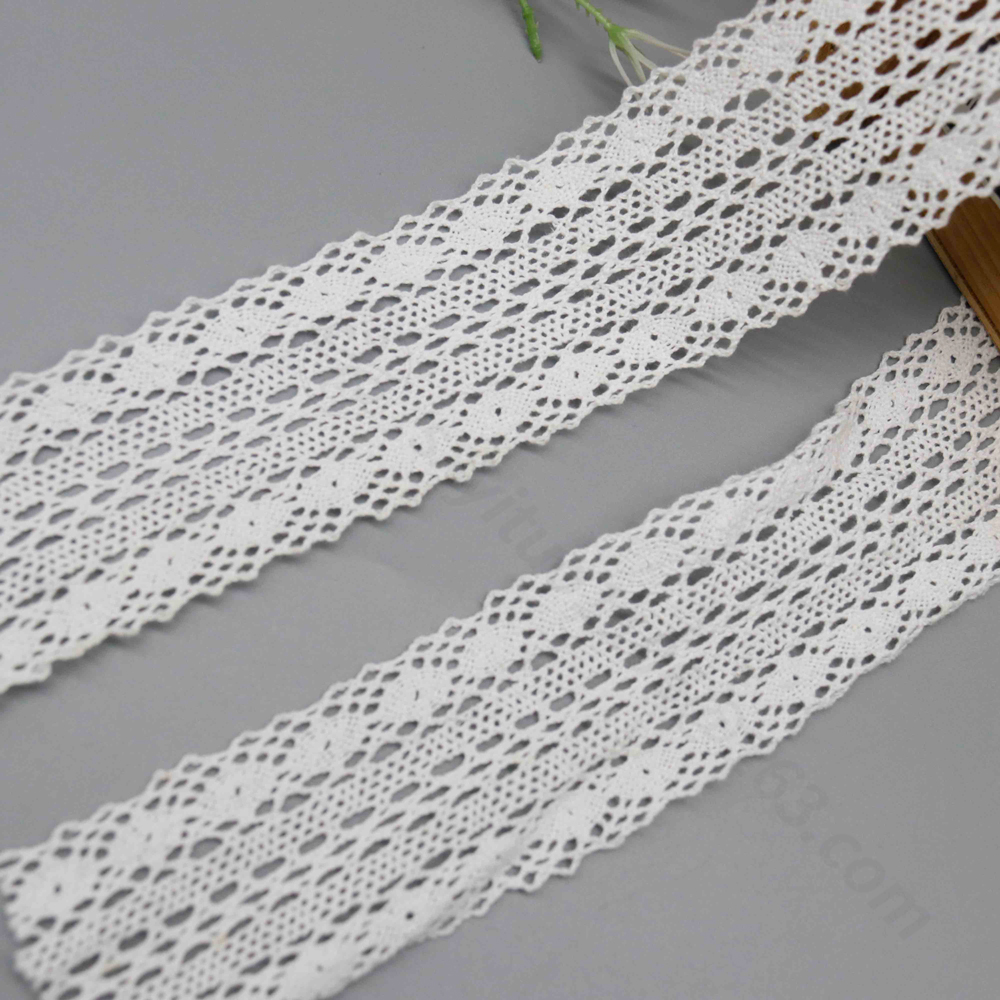
Why Does Cotton Lace Shrink?
Cotton fibers absorb water. When they do, they swell up and release tension that built up during manufacturing. The result: the fabric gets smaller.

Three things make it worse:
Hot water: Heat speeds up the process. Cold wash = less shrinkage.
Tumble drying: The heat and tumbling action compound the effect. Air dry when possible.
First wash: Most shrinkage happens the first time. After 2-3 washes, cotton stabilizes.
Lace shrinks more visibly than regular woven cotton because of its open, airy structure. There’s less “stuff” holding the fibers in place.
How Much Shrinkage Is Normal?
| Cotton Lace Type | Expected Shrinkage |
|---|---|
| Untreated (raw) | 4-10% |
| Pre-shrunk | 2-4% |
| Blended (cotton + nylon) | 1-3% |
Rule of thumb: If someone tells you cotton lace won’t shrink at all, they’re either lying or confused. Even pre-shrunk lace has some residual shrinkage. The difference is predictability.
How to Prevent Shrinkage

Before You Buy
Ask if it’s pre-shrunk: Suppliers who pre-treat their lace will tell you. If they can’t answer, assume it hasn’t been treated.
Consider blended lace: Cotton mixed with nylon or polyester shrinks less. You still get the soft feel of cotton where it touches skin, but the synthetic base keeps dimensions stable.
Request a sample: Wash it yourself before ordering in bulk. One wash cycle tells you more than any spec sheet.
Before You Sew
Pre-wash the lace: Wash and dry it the same way your customer will. Get the shrinkage out before it becomes someone else’s problem.
Steam it flat: If you can’t wash it, steam relaxes the fibers and reduces some tension.
Let it rest: Lay the lace flat for 24 hours before cutting. It’ll absorb moisture from the air and settle.
For Your Customers
Include care instructions:
Wash cold
Air dry or tumble low
Expect 2-3% shrinkage on first wash
Setting realistic expectations prevents complaints.
Quick Shrinkage Test
Want to check shrinkage yourself? Here’s how:
Cut a 30cm x 30cm sample
Mark the edges with a pen or thread
Wash and dry using normal settings
Measure again
Calculate: (Original size – New size) ÷ Original size × 100 = Shrinkage %
Example: 30cm becomes 28.5cm → (30 – 28.5) ÷ 30 × 100 = 5% shrinkage
FAQs
Does pre-shrunk cotton lace still shrink?
Yes, but much less. Expect 2-4% instead of 8-10%. Most of the shrinkage already happened during manufacturing.
Can I stop cotton lace from shrinking completely?
Not really. Cotton fibers naturally swell when wet. You can minimize it with cold water and air drying, but some movement is unavoidable.
Is blended lace better than 100% cotton?
For shrinkage control, yes. Cotton-nylon blends shrink less because nylon doesn’t absorb water. Trade-off: slightly different feel, though cotton embroidery on nylon mesh still feels soft against skin.
Should I pre-wash lace before sewing?
Yes, especially for fitted garments. Get the shrinkage out before your customer does.
Bottom Line
Cotton lace shrinks. That’s normal. The key is knowing how much and planning for it.
Untreated cotton lace: 4-10% shrinkage
Pre-shrunk cotton lace: 2-4% shrinkage
Blended lace: 1-3% shrinkage
Pre-wash before sewing. Wash cold and air dry. Set customer expectations. Do these three things, and shrinkage stops being a problem.