
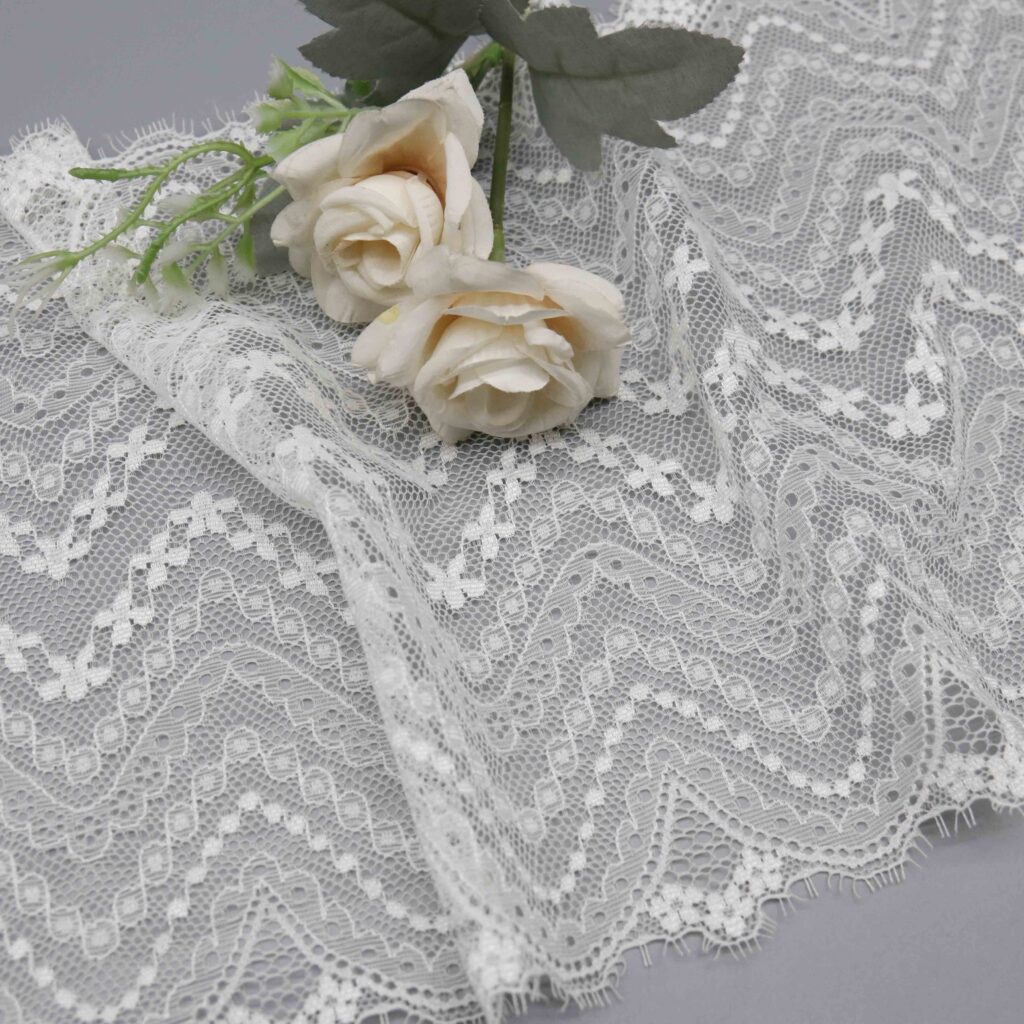
Lace used to stay hidden. Under a blouse, inside a slip, tucked away where only the wearer knew it existed. That’s changing fast.
The “lingerie as outerwear” trend has moved stretch lace trim from the undergarment drawer to the runway—and into everyday street style. Zalando reported a 140% increase in lace lingerie searches in 2025, while Net-a-Porter saw lace bodysuit searches jump 461%. Designers are no longer asking if lace should be visible, but how much.
Stretch lace trim sits at the center of this shift. Its combination of flexibility, comfort, and decorative appeal makes it work across categories that rigid lace simply can’t handle. This guide covers where stretch lace trim fits in modern fashion design—from its traditional home in intimates to its expanding role in outerwear, eveningwear, and beyond.
Why Stretch Lace Trim Is Having a Moment
The “Lingerie as Outerwear” Movement
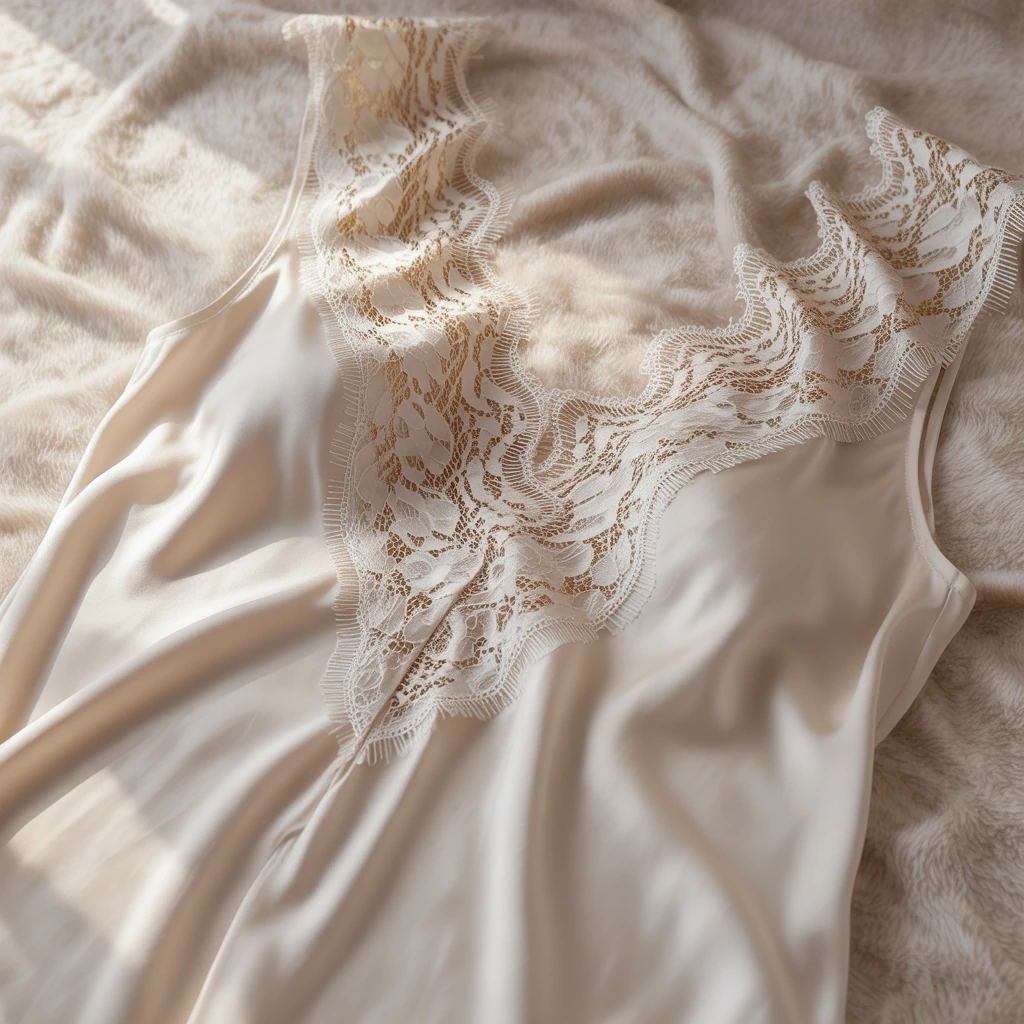
The boundary between underwear and outerwear has blurred. Lace camisoles layer under blazers. Bralettes show through sheer tops. Slip dresses work as standalone pieces rather than foundation layers.
This shift creates demand for lace that performs double duty—pretty enough to be seen, comfortable enough to wear all day. Stretch lace trim delivers both. The elastic construction moves with the body instead of fighting it, which matters when lace goes from hidden support piece to visible statement.
What Makes Stretch Lace Different
Regular lace is rigid. It holds its shape but doesn’t give. That works for overlays and appliqués where the lace sits on top of fabric. It doesn’t work where the trim needs to flex—necklines, hems, waistbands, anywhere the garment moves with the wearer.
Stretch lace trim incorporates elastic fibers (usually spandex or elastane) into the construction. The result:
Flexibility: Stretches 20-50% without distorting the pattern
Recovery: Snaps back to original shape after stretching
Comfort: Moves with the body instead of restricting movement
Fit: Conforms to curves without bunching or gapping
This makes stretch lace trim suitable for applications where rigid lace fails.
Where to Use Stretch Lace Trim
Lingerie & Intimates
The original application—and still the largest market. Stretch lace trim appears on:
Bra edges: Cup tops, center gore, band finishing. The stretch allows comfortable fit without digging in.
Underwear: Waistbands and leg openings. Elastic lace bands have largely replaced standard elastic in mid-range and premium lines.
Bodysuits: Full-lace bodysuits or lace panel accents. The stretch is essential—bodysuits require movement in every direction.
Shapewear: Decorative edges that soften the look while maintaining function. Lace adds femininity to what’s essentially compression wear.
Ready-to-Wear Tops & Dresses
This is where the growth is happening. Stretch lace trim works on visible garments because it handles movement and layering better than rigid lace.
Necklines and hems: Wide stretch lace trim (4-6 cm) frames necklines on camisoles, tank tops, and t-shirts. The scalloped edge creates a finished look without additional hemming.
Sleeve cuffs: Narrow stretch lace adds detail to basic long-sleeve tops. The elastic allows easy on/off without distorting the trim.
Dress overlays: Stretch lace panels inserted into bodycon dresses or layered over slip dress silhouettes. The stretch prevents the awkward pulling that happens with rigid lace over fitted garments.
Layering pieces: Lace-trimmed camisoles designed to peek out from under jackets and cardigans. These now sell as outerwear, not underwear.
Eveningwear & Bridal
Stretch lace trim elevates formal wear with comfort that rigid lace can’t match.
Gown accents: Trim along necklines, back details, and train edges. Brides and event-goers move, sit, dance—stretch lace moves with them.
Bodice details: Stretch lace panels in fitted bodices allow breathing room while maintaining the structured silhouette.
Sleeve finishing: Full-length lace sleeves or cuffs that require arm movement without pattern distortion.
Activewear & Loungewear
The comfort trend has brought stretch lace into unexpected categories.
Sports bra trim: Decorative edges that add visual interest to functional pieces. The stretch handles athletic movement.
Loungewear sets: Lace-trimmed shorts, robes, and sleep sets. Comfort is the priority; stretch lace delivers.
Yoga and athleisure: Lace details on leggings, bra tops, and layering pieces. The crossover between gym and street makes decorative trim relevant.
Choosing the Right Stretch Lace Trim
Width Selection
| Application | Recommended Width | Notes |
|---|---|---|
| Bra cup edges | 1-2 cm | Narrow to avoid bulk |
| Underwear waistband | 2-4 cm | Visible but functional |
| Camisole neckline | 4-6 cm | Statement width |
| Dress overlay panels | 10+ cm | When lace is the design focus |
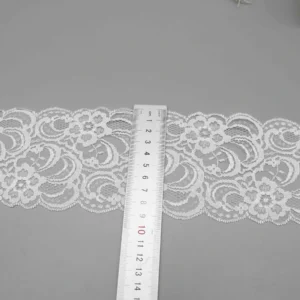
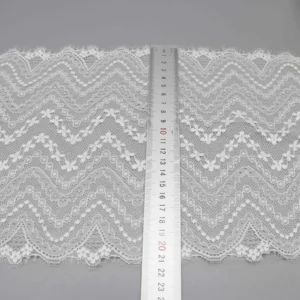
Wider doesn’t always mean better. Match width to the garment’s scale and the lace’s visual impact.
Edge Style
Scalloped edges: The industry standard for visible applications. Creates a feminine, finished look. Works on necklines, hems, and any exposed edge.
Straight edges: Better for hidden applications or when the lace will be sewn under another layer. Less decorative but more versatile for construction.
Material Blends
The base fiber affects stretch, feel, and care:
Nylon + Spandex: Most common blend. Durable, smooth, excellent stretch recovery. Standard for lingerie and activewear.
Cotton + Spandex: Softer hand-feel, more breathable. Works for loungewear and pieces where skin contact comfort matters. Slightly less stretch recovery than nylon.
Nylon mesh + Cotton embroidery: Combines synthetic durability with natural fiber comfort. The nylon provides structure; the cotton embroidery delivers soft skin contact.
Design Tips and Common Mistakes
Match Lace Stretch to Garment Stretch
This is where designers trip up. Stretch lace trim attached to non-stretch fabric will pucker. The lace tries to contract; the fabric holds it flat. The result looks wavy and unprofessional.
The fix: Either use stretch lace with stretch fabrics, or apply the lace with slight tension to account for its natural recovery. Test before production.
Color and Pattern Considerations
Nude tones: Essential for invisible wear. Stock multiple nude shades—”nude” isn’t one color.
Black: Always in demand. Works across categories from lingerie to eveningwear.
White/Ivory: Bridal staple. Seasonal spikes around wedding season.
Pattern scale: Match lace pattern scale to garment size. Delicate patterns disappear on large garments; bold patterns overwhelm small pieces.
Care Instructions for End Products
Include appropriate care guidance:
Cold wash recommended: Heat causes elastic fiber degradation over time
Lay flat or line dry: Tumble drying stresses elastic components
No chlorine bleach: Damages both fibers and elastic
Low iron if needed: Avoid direct heat on lace portions
FAQs
What’s the difference between stretch lace and regular lace?
Stretch lace contains elastic fibers (spandex/elastane) that allow it to flex and recover. Regular lace is rigid. Stretch lace works for fitted applications; rigid lace works for overlays and appliqués.
Can stretch lace trim be used on non-stretch garments?
Yes, but with care. Apply with slight tension to prevent puckering. Test on samples before production. The lace’s natural recovery will try to pull against fixed fabric.
What width of stretch lace trim works best for lingerie?
Bra edges: 1-2 cm. Waistbands: 2-4 cm. Bodysuits: varies by design. Narrower widths minimize bulk in functional pieces; wider widths create visual impact.
How do I match stretch lace color to skin tones?
Stock multiple nude shades. Test samples against actual skin rather than photos. Consider your target market’s demographic when selecting nude range.
Does stretch lace trim hold up to repeated washing?
Quality stretch lace maintains elasticity through dozens of wash cycles when cared for properly. Cold wash and air dry extend lifespan. Budget lace loses stretch faster.
The Bottom Line
Stretch lace trim has moved beyond lingerie. The same properties that make it work for intimates—flexibility, comfort, decorative appeal—now drive demand in outerwear, eveningwear, and athleisure.
The trend shows no signs of slowing. As the line between underwear and outerwear continues to blur, stretch lace trim becomes more relevant across categories. Designers and buyers who understand its applications can tap into growing demand from consumers who want lace they can actually wear—and be seen in.