Anyone sourcing lace for a new collection runs into the same fork in the road: the lace that looks the most luxurious on a sample card is rarely the one that feels best against the skin, and the softest, most natural option doesn't always hold the crisp motif a design calls for. That tension usually comes down to two very different families of trim — chemical lace trim and cotton lace trim. One is built for sharp, sculptural beauty; the other is built for soft, breathable comfort, and confusing the two leads to returns, comfort complaints, and reworked production runs.
The short answer: choose chemical lace trim when you need a bold, three-dimensional motif and high pattern definition, and choose cotton lace trim when softness, breathability, and natural fiber appeal matter most. This guide breaks down what each trim actually is, the very different ways they are manufactured, how they compare across the factors that affect real garments, and how to match each one to the right product.
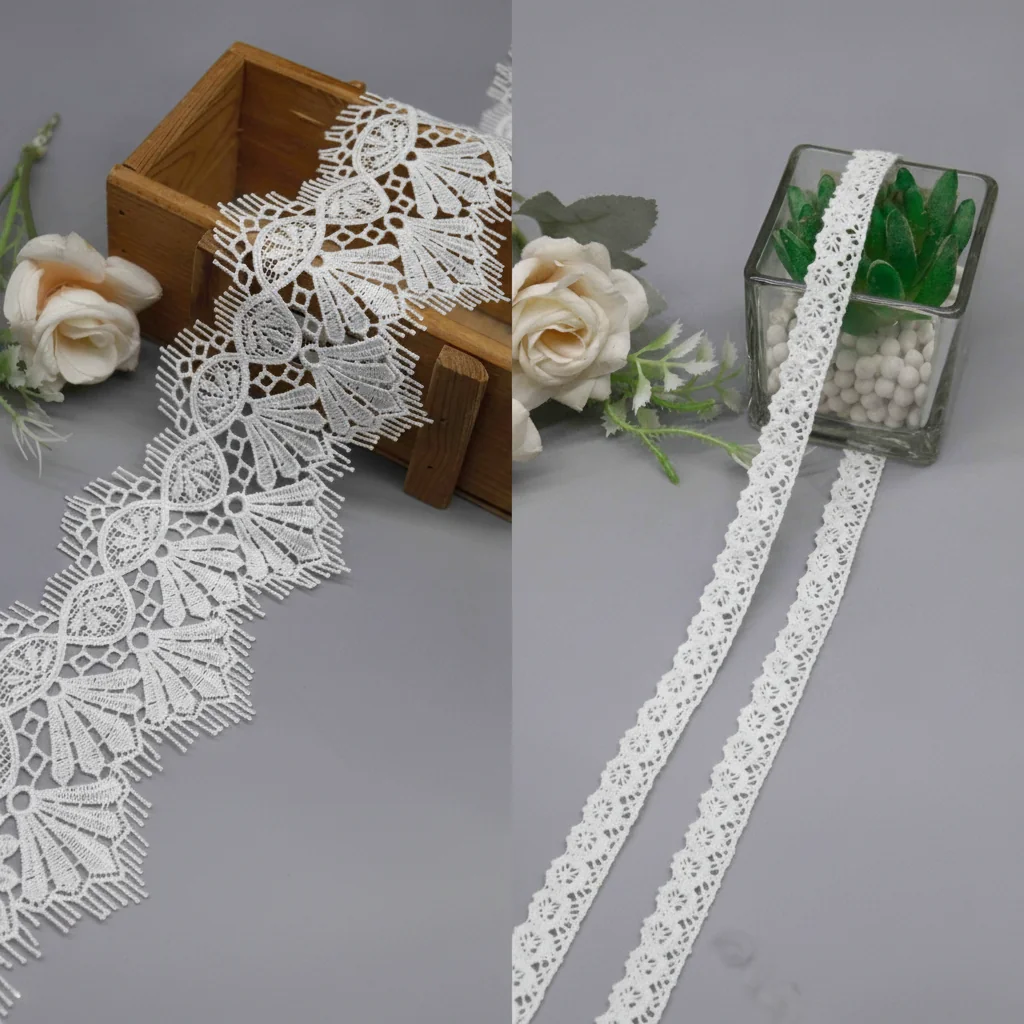
What Is Chemical Lace Trim?
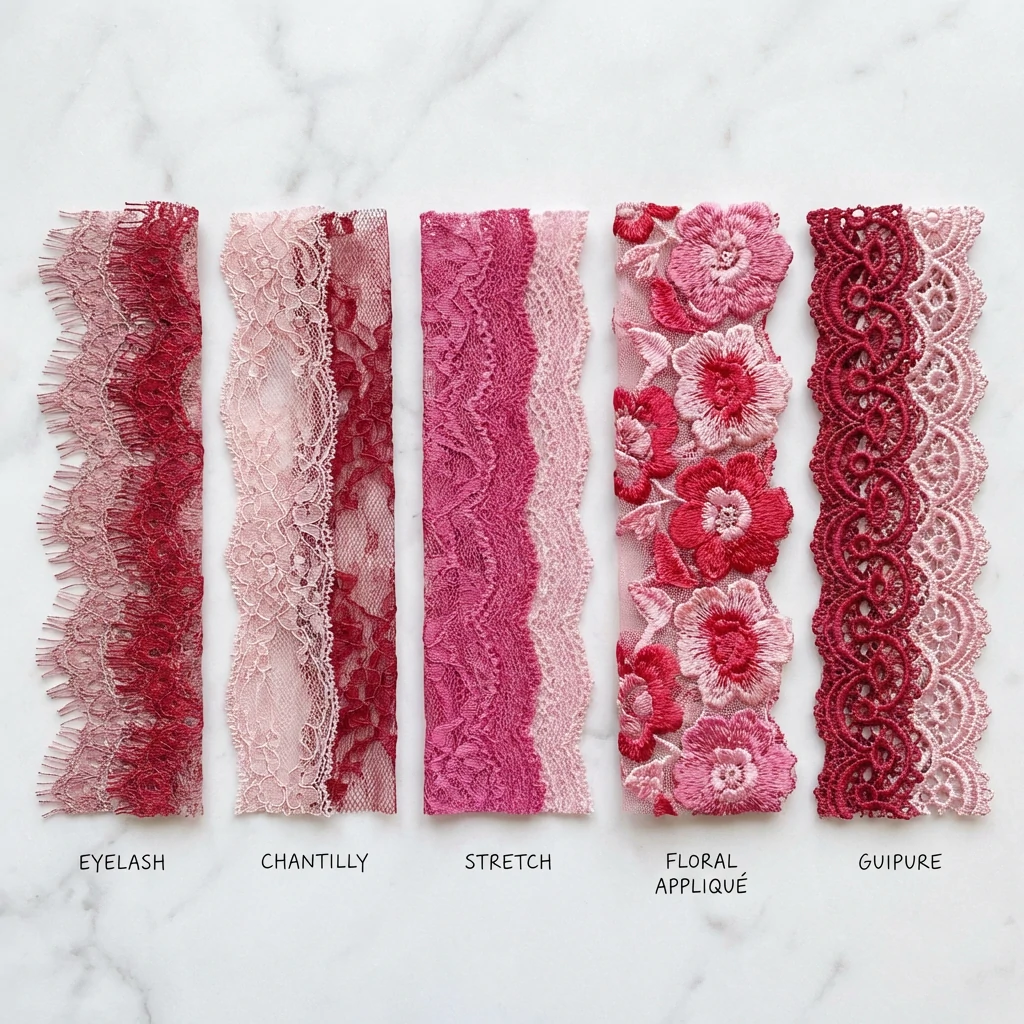
Chemical lace trim — often sold under the name guipure lace or "water-soluble lace" — is a lace defined by its manufacturing method rather than its fiber. The decorative motif is densely embroidered onto a backing fabric, and that backing is then chemically dissolved away, leaving only the interlocked embroidery threads standing on their own. Because there is no net ground holding the pattern together, the design relies entirely on the threads connecting to one another, which produces the bold, raised, sculptural look the style is known for.
The threads themselves are usually polyester or rayon (viscose). This gives chemical lace its characteristic light-catching sheen, excellent pattern retention, and a firm, structured hand. It is the lace you picture on a bridal bodice or a statement collar — heavier, glossier, and far more three-dimensional than flat woven lace.
What Is Cotton Lace Trim?
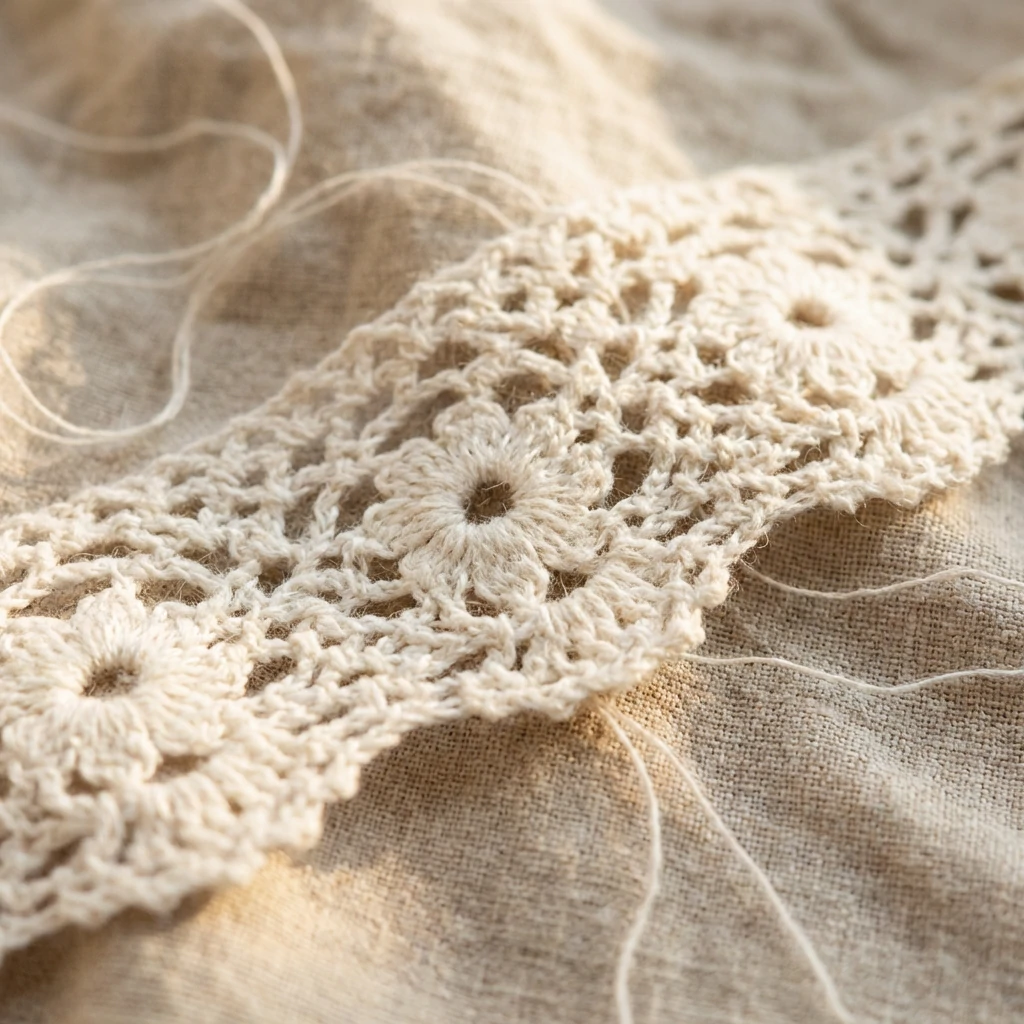
Cotton lace trim is exactly what the name suggests: lace built from natural cotton yarns. Rather than being defined by a dissolving process, it is defined by its fiber. Cotton lace can be produced through several traditional methods — crochet, torchon, or embroidery on a cotton ground — but in every case the result shares the qualities of the fiber itself: a soft matte finish, a gentle hand, and the breathability that makes natural materials comfortable against bare skin.
Because cotton is a natural, absorbent, and biodegradable fiber, cotton lace trim reads as understated and organic rather than glossy. It is the lace you associate with heirloom christening gowns, baby clothing, breathable summer apparel, and home textiles — pieces where comfort and a natural look outrank high-shine drama.
How Each Lace Trim Is Made
The single biggest difference between these two trims is not how they look on the shelf — it is how they are born, and that process explains every difference that follows.
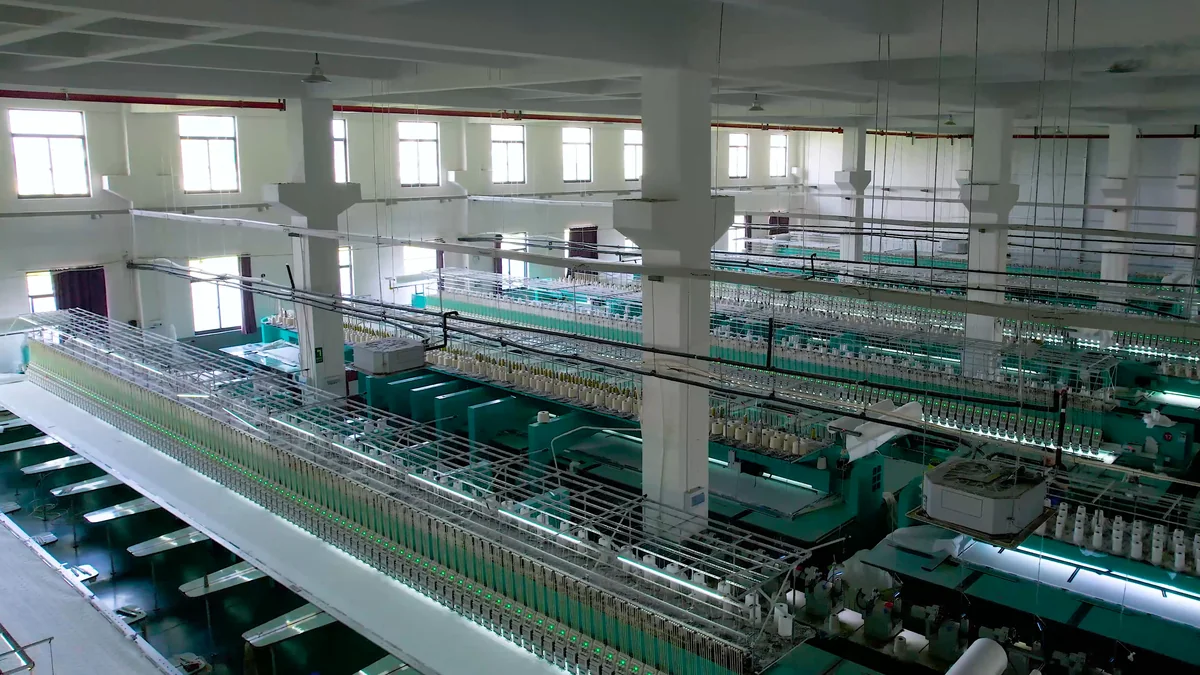
Chemical lace starts with a water-soluble or chemically dissolvable base fabric. A schiffli or multi-head embroidery machine stitches the entire lace motif densely onto that base. The fabric is then submerged in hot water or a chemical bath that dissolves the backing completely, leaving the embroidered threads as a free-standing lace. This is why the motifs sit up off the surface and feel substantial: the thread is the structure. It also means almost any intricate, dimensional pattern can be engineered, which is why chemical lace dominates ornate, couture-style work.
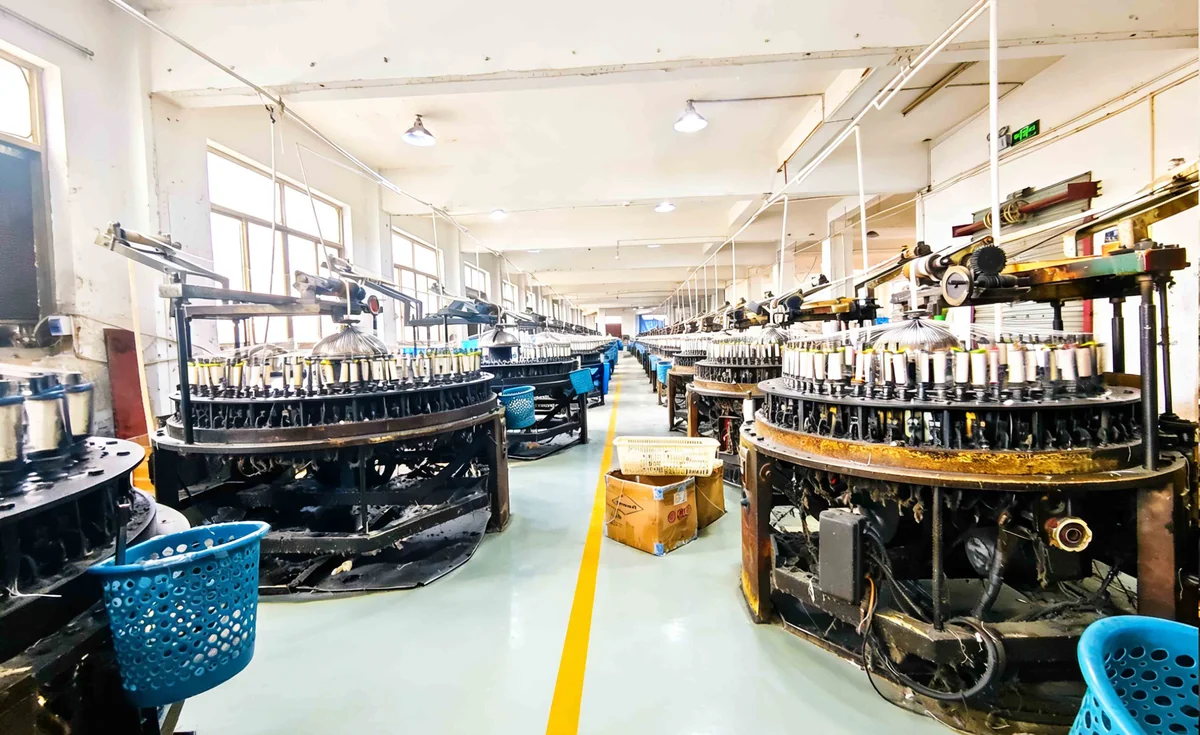
Cotton lace, by contrast, is constructed directly from cotton yarn with no dissolving step. Crochet and torchon laces are built by interlooping or twisting the cotton threads into an openwork pattern; embroidered cotton lace stitches a design onto a cotton ground that stays in place. The pattern and the fabric are one continuous natural-fiber structure from start to finish. Nothing is burned out or dissolved, so the trim keeps the soft, flexible, breathable character of the raw cotton.
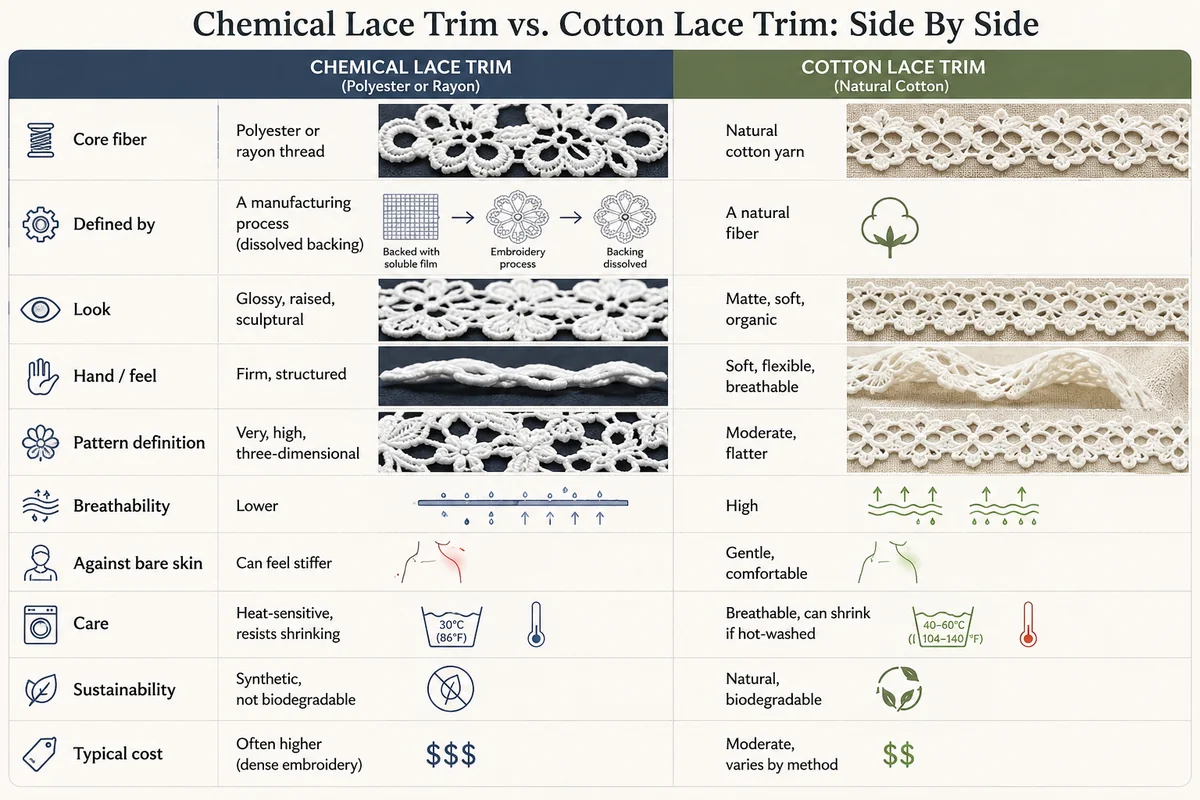
Chemical Lace Trim vs. Cotton Lace Trim: Side by Side
| Property | Chemical Lace Trim | Cotton Lace Trim |
|---|---|---|
| Core fiber | Polyester or rayon thread | Natural cotton yarn |
| Defined by | A manufacturing process (dissolved backing) | A natural fiber |
| Look | Glossy, raised, sculptural | Matte, soft, organic |
| Hand / feel | Firm, structured | Soft, flexible, breathable |
| Pattern definition | Very high, three-dimensional | Moderate, flatter |
| Breathability | Lower | High |
| Against bare skin | Can feel stiffer | Gentle, comfortable |
| Care | Heat-sensitive, resists shrinking | Breathable, can shrink if hot-washed |
| Sustainability | Synthetic, not biodegradable | Natural, biodegradable |
| Typical cost | Often higher (dense embroidery) | Moderate, varies by method |
A Closer Look at the Key Differences
Look and Feel
Chemical lace trim wins on drama. The dissolved-backing process leaves dense, raised motifs with a noticeable sheen, so the pattern reads as bold and dimensional even from a distance — ideal when the lace is meant to be the focal point. Cotton lace trim takes the opposite approach: a matte surface, softer outlines, and a quieter, more natural texture that flatters relaxed and casual designs. Run both between your fingers and the difference is immediate — chemical lace feels firm and substantial, cotton lace feels supple and warm.
Strength and Durability
Both are durable, but in different ways. Chemical lace's synthetic threads resist stretching, hold their shape well, and won't shrink, which is why ornate motifs survive repeated wear without distorting. Cotton lace is plenty strong for everyday use, but as a natural fiber it is more prone to shrinkage and gradual softening over many washes. For a structured garment that must keep a crisp motif, chemical lace holds the line; for a piece meant to soften and relax with age, cotton's behavior is a feature, not a flaw.
Comfort and Breathability
This is where cotton lace clearly leads. Natural cotton breathes and absorbs moisture, so cotton lace trim sits comfortably against bare skin — the reason it is the default for baby clothes, sleepwear, and warm-weather apparel. Chemical lace, being a denser synthetic, breathes less and can feel stiffer directly on skin, which is why it is often used as an outer decorative layer or backed with a lining rather than placed against the body.
Care and Maintenance
Care follows the fiber. Cotton lace should be washed cool and air-dried; hot water and high-heat drying invite shrinkage and can dull the natural fibers. Chemical lace resists shrinking and holds its shape but is heat-sensitive in a different way — high iron temperatures can scorch or melt synthetic threads, so low heat and gentle handling are essential. Neither is difficult to care for once you respect what it is made of.
Cost and Sustainability
Cotton lace trim appeals to brands marketing natural, organic, or sustainable credentials, because cotton is renewable and biodegradable. Chemical lace, made from petroleum-based synthetics, doesn't carry that story but often justifies a higher price through the dense, labor- and thread-intensive embroidery its look requires. The right choice depends on whether your buyer is paying for an eco-natural promise or for ornate, high-definition luxury.
Which Lace Trim Should You Choose?
The decision is never "which lace is better" in the abstract — it is which fiber and finish match what the garment has to do.
Choose chemical lace trim when the lace is the statement. Bridal bodices, evening wear, structured collars and cuffs, and any design built around a bold, raised, glossy motif are its natural home. Its pattern definition and shape retention let an ornate design stay sharp through wear.
Choose cotton lace trim when comfort and a natural look come first. Baby and children's clothing, lingerie and sleepwear worn against the skin, breathable summer apparel, heirloom pieces, and home textiles all benefit from cotton's softness, breathability, and understated matte finish.
For sourcing teams, the practical move is to keep both in the range and match them to product lines rather than forcing one trim to do every job. A reliable lace trim supplier should be able to walk you through fiber content, motif construction, and care behavior before you commit to a production run — that conversation prevents most comfort and shrinkage surprises down the line.
FAQs
What is the main difference between chemical lace and cotton lace? The core difference is what defines each one. Chemical lace is defined by its process — a synthetic motif embroidered onto a backing that is then dissolved away, leaving a glossy, raised pattern. Cotton lace is defined by its fiber — natural cotton yarn worked into a soft, matte, breathable trim. That single difference drives how each one looks, feels, and wears.
Is chemical lace trim made of cotton? Usually not. Chemical lace threads are typically polyester or rayon (viscose), which is what gives the trim its sheen and structured hand. Cotton lace, by contrast, is made from natural cotton yarn.
Which lace trim is more comfortable against the skin? Cotton lace trim. Because cotton is a breathable, absorbent natural fiber, it sits more comfortably against bare skin, which is why it's preferred for baby clothes, sleepwear, and summer apparel. Chemical lace can feel stiffer and is often used as a decorative outer layer instead.
Does cotton lace trim shrink? It can. As a natural fiber, cotton lace is more prone to shrinkage if washed in hot water or dried on high heat. Washing cool and air-drying keeps both the size and the soft natural finish intact. Chemical lace resists shrinking but should be kept away from high iron temperatures.
Is chemical lace the same as guipure lace? Yes — guipure lace is the most common form of chemical lace. The bold, raised motifs with no net ground between them are the signature result of the dissolved-backing process.
Which is better for a wedding dress, chemical lace or cotton lace?


 WhatsApp Us