1. Defining the Lace Trim Top in Modern B2B Procurement
In the commercial fashion landscape, a lace trim top represents the perfect synergy of structured base fabrics and delicate decorative borders. Unlike full-lace garments, these tops utilize lace primarily as an accentuation element—typically applied along the neckline, hemline, cuffs, or panels. For global apparel brands and professional buyers, sourcing high-quality components from a reliable lace trim supplier is critical to ensuring product longevity, aesthetic consistency, and structural integrity during high-volume production.
From basic camisoles to high-end evening blouses, the integration of lace trims elevates the perceived market value of the apparel. However, executing this at scale requires a deep understanding of textile compatibility, tensile strength, and shrinkage rates. B2B buyers must analyze how the mechanical properties of the trim align with the primary body fabric to avoid puckering, distortion, or premature fraying after retail washes.
2. Technical Specifications & Material Comparison
Selecting the correct lace category dictates both the manufacturing feasibility and the ultimate price point of the garment collection. Below is a comprehensive technical breakdown designed for textile engineers and procurement managers looking to source wholesale lace trim for volume production.
| Lace Type | Composition | Width Range | Best Application | Durability Rating |
|---|---|---|---|---|
| Chantilly Lace | Nylon / Silk Blend | 1.5cm - 12cm | Bridal lace trim tops & luxury lingerie | Moderate |
| Guipure / Chemical | 100% Polyester / Rayon | 2.0cm - 25cm | Heavyweight winter/autumn blouses | Excellent |
| Raschel Lace | Polyester / Spandex | 0.5cm - 30cm | Mass-market fast-fashion casual tops | High |
| Cotton Crochet | 100% Organic Cotton | 1.0cm - 15cm | Boho-chic & sustainable summer tops | Very Good |
3. B2B Quality Inspection Standards for Lace Integration
To prevent costly product recalls and factory rework, QA inspectors must implement rigorous testing protocols when manufacturing a lace trim top. At Yituo Lace, we recommend auditing your apparel supply chain against the following structural metrics:
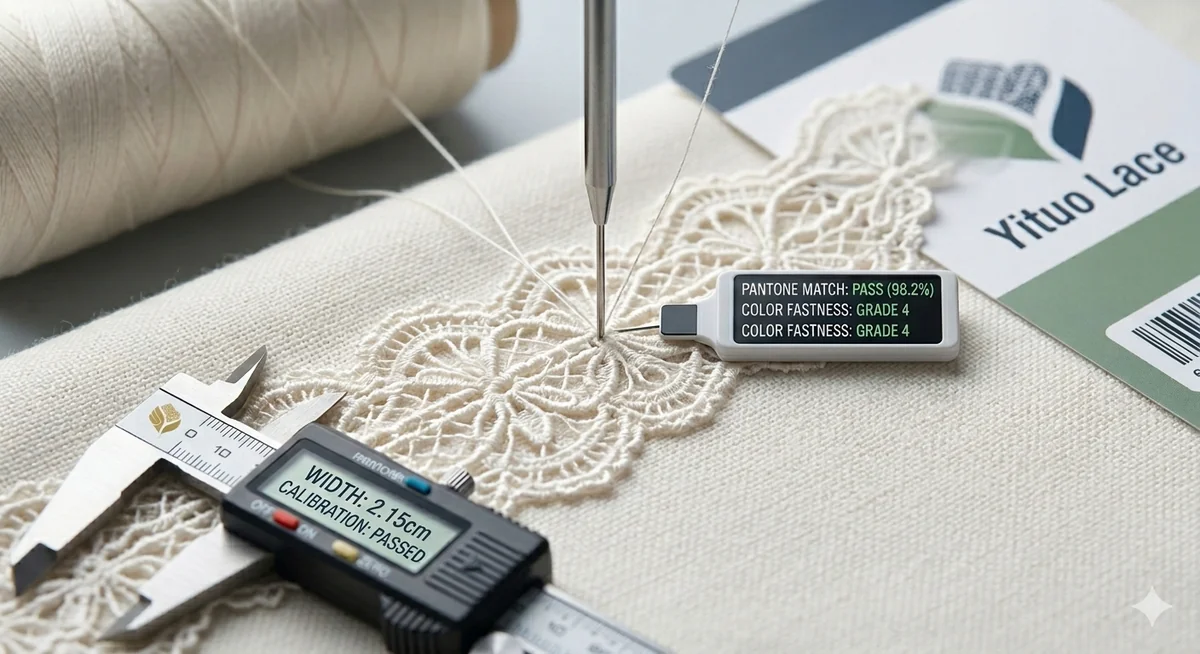
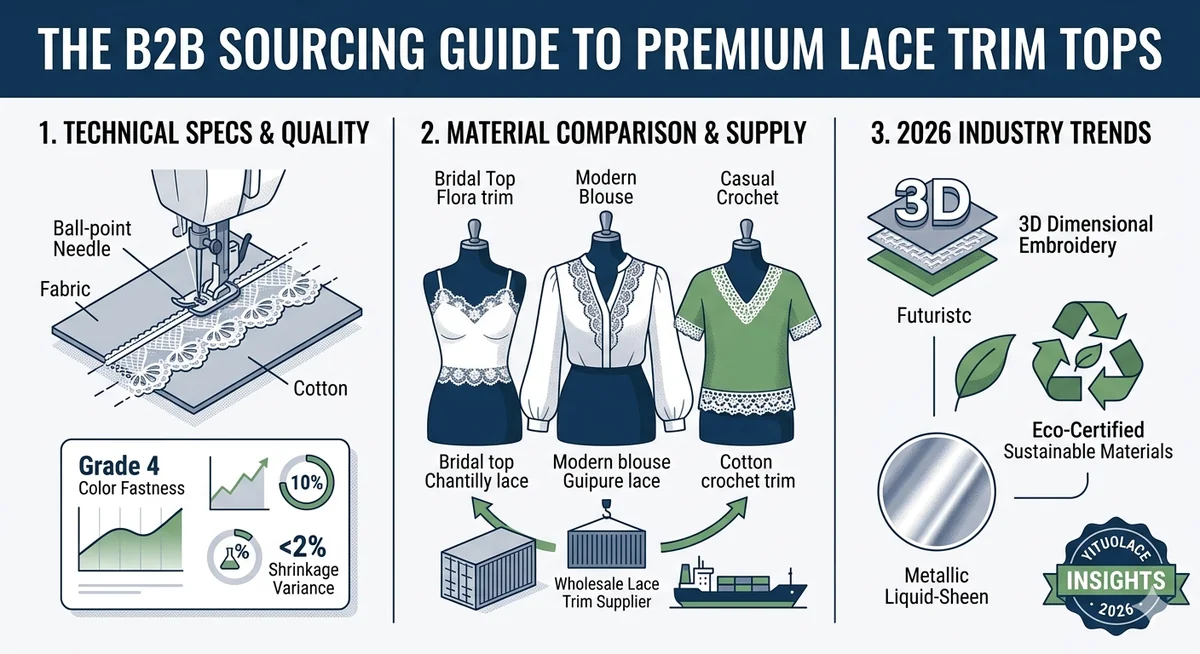
- Tensile Strength & Edge Seaming: The boundary where the lace meets the primary fabric is a major stress point. Ensure a minimum of 4 stitches per centimeter using specialized ball-point needles to prevent yarn fracturing.
- Shrinkage Variance: Lace trims often shrink at a different rate than woven or knit cotton/polyester bodies. Pre-shrinking tests must confirm less than 2% dimensional variance under standard industrial washing (ISO 6330).
- Color Fastness (Rubbing & Washing): Lace used on light-colored tops must score a minimum of Grade 4 on the Grayscale for color staining (AATCC 61/107) to mitigate bleeding risks during consumer use.
- Symmetry Alignment: For mirrored neckline inserts, repeat patterns must be cut with precision geometric alignment. Partnering with a manufacturer capable of providing certified custom lace trim ensures pattern continuity across all size grading from XS to XXL.
4. 2026 Industry Trends: Innovation in Lace Apparel
The year 2026 brings definitive shifts in consumer preferences, demanding technological advancements from lace manufacturers. Incorporating these trends into your upcoming mood boards will secure competitive retail positioning:
- 3D Dimensional Embroidery: Multi-layered motifs that pop off the surface of the top are replacing flat, traditional surfaces. This adds rich texture and high tactile value to premium casual and evening wear.
- Eco-Certified Sustainable Materials: Post-consumer recycled nylon and GOTS-certified organic cotton are no longer optional. Brands are requesting completely traceable green supply chains for all garment components.
- Metallic & Liquid-Sheen Finishes: Infusing subtle lurex threads or applying specialized foil stamps onto the lace border provides a modern, metallic tech-wear aesthetic popular among Gen-Z and millennial demographics.
5. Commercial Maintenance & Care Guidelines
Educating your end-consumers on care instructions preserves the longevity of the lace trim top and reduces post-purchase product complaints. Retail wash-care labels should clearly state:
- Washing Method: Machine wash inside out in a protective mesh laundry bag on a delicate cycle, or hand wash with cold water.
- Detergent Selection: Avoid heavy enzymes or chlorine-based bleaching agents that break down fine elastane or nylon structural grids.
- Drying & Ironing Protocols: Tumble drying should be strictly restricted. Air drying flat prevents gravity from stretching out the intricate webbed designs. Iron on low heat settings utilizing a pressing cloth to avoid synthetic melting.
6. Frequently Asked Questions (FAQ)
Q1: How do we avoid raw edge fraying when stitching lace trim onto lightweight tops?
A: We highly recommend utilizing an overlock stitch or a French seam finish at the factory level. Selecting premium-grade trims with a reinforced salvage edge from a dedicated supplier minimizes yarn slippage during cutting and sewing.
Q2: Can we request custom pantone color matching for bulk orders of lace trims?
A: Yes, professional manufacturers offer lab-dip sampling matching your specific Pantone TCX/TPX references or physical fabric swatches. Ensuring high color-matching accuracy prevents contrast issues on monochromatic tops.
Q3: What is the typical MOQ for custom lace trim production runs?
A: For fully customized designs involving unique patterns or widths, the standard MOQ typically ranges from 1,000 to 3,000 meters depending on the machine setup, while standard in-stock trims offer much lower thresholds.




 WhatsApp Us