Quick Navigation
- 1. Defining the High-Value Lace Trim Dress in Modern B2B Manufacturing
- 2. Technical Parameters Comparison of Commercial Lace Trims
- 3. Professional Quality Inspection Standards for B2B Sourcing
- 4. 2026 Industry Trends: Sourcing Future-Proof Designs
- 5. Maintenance and Care Guidelines for Bulk Storage
- 6. Frequently Asked Questions (FAQ)
1. Defining the High-Value Lace Trim Dress in Modern B2B Manufacturing
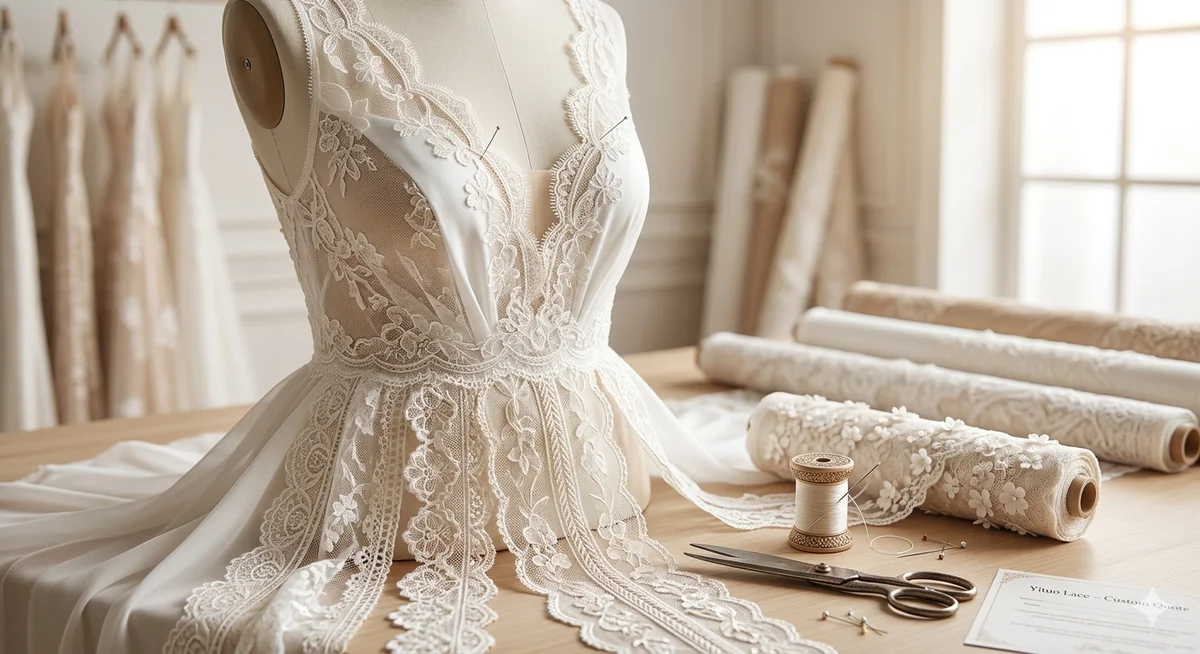
In the global fashion supply chain, creating a commercial-grade lace trim dress requires a delicate balance of aesthetic appeal and structural durability. For fashion brands and manufacturing houses looking to scale production, sourcing the right components from a reputable lace trim supplier is paramount to mitigating production defects and reducing garment return rates.
A high-quality lace accent serves more than just an ornamental purpose; it defines the garment’s neckline, hem, sleeves, or bodice seams. Whether you are manufacturing premium ready-to-wear pieces or high-end evening wear, choosing high-performance wholesale lace trim ensures that the delicate overlays do not fray, shrink, or distort during industrial washing and post-processing treatments.
2. Technical Parameters Comparison of Commercial Lace Trims
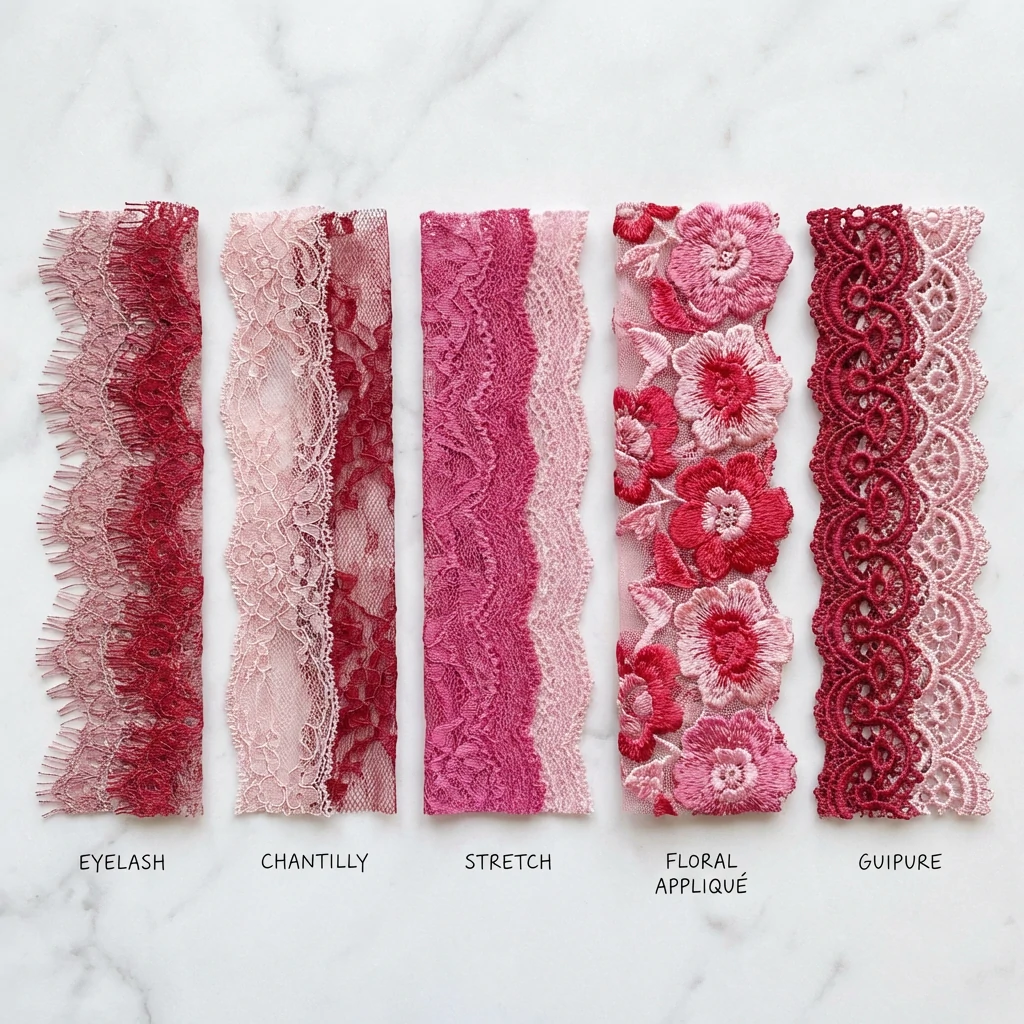
Different dress designs demand specific lace structures. The table below details the core technical parameters of the major lace categories widely utilized in large-scale dress manufacturing:
| Lace Type | Composition | Weight (GSM) | Tensile Strength | Best Application |
|---|---|---|---|---|
| Chantilly Lace | Nylon / Rayon | 30 - 50 | Moderate | bridal lace trim, Overlays |
| Guipure (Chemical) | 100% Polyester / Cotton | 120 - 250 | High | Heavy Dress Hems, Bodices |
| Embroidery Lace | Polyester on Mesh base | 80 - 180 | High | Evening Gowns, custom lace trim |
| Schiffli Lace | 100% Cotton | 90 - 160 | High | Casual & Summer Dresses |
3. Professional Quality Inspection Standards for B2B Sourcing
To secure zero-defect manufacturing for bulk orders of lace trim dress lines, procurement managers must evaluate lace batches against stringent industrial metrics. Quality failures in trim sourcing translate directly into factories halting assembly lines.
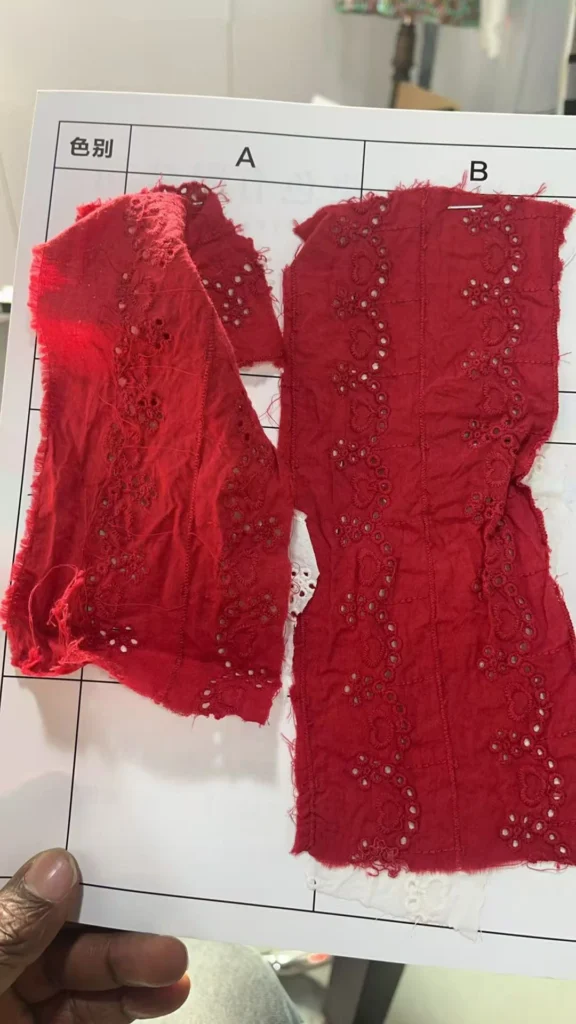
- Color Fastness (ISO 105-C06): Bulk trims must achieve a rating of Grade 4 or above against bleeding when subjected to standard commercial laundering, safeguarding contrasting white trims on dark base fabrics.
- Dimensional Stability: Shrinkage thresholds must be rigorously maintained under 2% during thermal pressing and steam ironing phases during final dress finishing.
- Edge Pattern Symmetry: The repeat length of scalloped margins must be perfectly uniform to guarantee symmetric stitching alignment along seams and hemlines.
- Yarn Breakage Tolerance: Maximum permissible defect rate should not exceed 1 micro-break per 50 meters of continuous ribbon.
4. 2026 Industry Trends: Sourcing Future-Proof Designs
The global apparel arena demands continuous innovation. In 2026, the market value of a lace trim dress collection is heavily driven by distinct texturing and progressive production technologies:
- Tactile 3D Embroidery: Traditional flat trims are being bypassed for multilayered, multi-dimensional 3D lace structures that provide a sculptural effect on runway-inspired dresses.
- Eco-Certified & Sustainable Materials: Brands are heavily prioritizing GRS (Global Recycled Standard) certified recycled polyesters and organic cotton fibers to align with global ESG regulations.
- Metallic & High-Contrast Metallurgical Infusions: Modern evening wear integrates fine metallic lurex threads into lace patterns, creating subtle reflective accents optimized for both digital and physical retail displays.
5. Maintenance and Care Guidelines for Bulk Storage
Before trims are integrated into dress assemblies, correct raw material management is critical. High-humidity warehouse storage can lead to yellowing or degradation of fine yarns.
Always store bulk lace rolls horizontally wrapped in acid-free paper liners. Keep warehouse environments at stable temperatures between 18°C–22°C with a relative humidity capped at 50%. For finalized apparel items, care instructions should strongly specify low-temperature delicate wash cycles or dry cleaning, preventing mechanical friction from snagging the intricate mesh grid of the lace designs.
Frequently Asked Questions (FAQ) for B2B Sourcing
Q1: How can we prevent color bleeding between dark fabrics and white lace trims?
Ensure your supplier provides colorfastness certification under industrial standards. We strongly recommend specifying custom color fixation treatments on the lace trim batches during the pre-dyeing stage to achieve high performance with high-contrast dress materials.
Q2: What is your standard lead time for bespoke lace patterns?
For any bespoke developments, counter-sample drafting and strike-off approvals generally require 5 to 7 working days. Once confirmed by your quality control department, bulk production loops typically span 15 to 25 days depending on the volume and stitch density.
Q3: Can your factory handle low Minimum Order Quantity (MOQ) requests for startup lines?
While our industrial setups are optimized for large-scale, high-efficiency output, we offer flexible developmental minimums for curated capsule collections. Contact our technical team with your detailed specification sheets to explore streamlined production workflows.


 WhatsApp Us