
Introduction
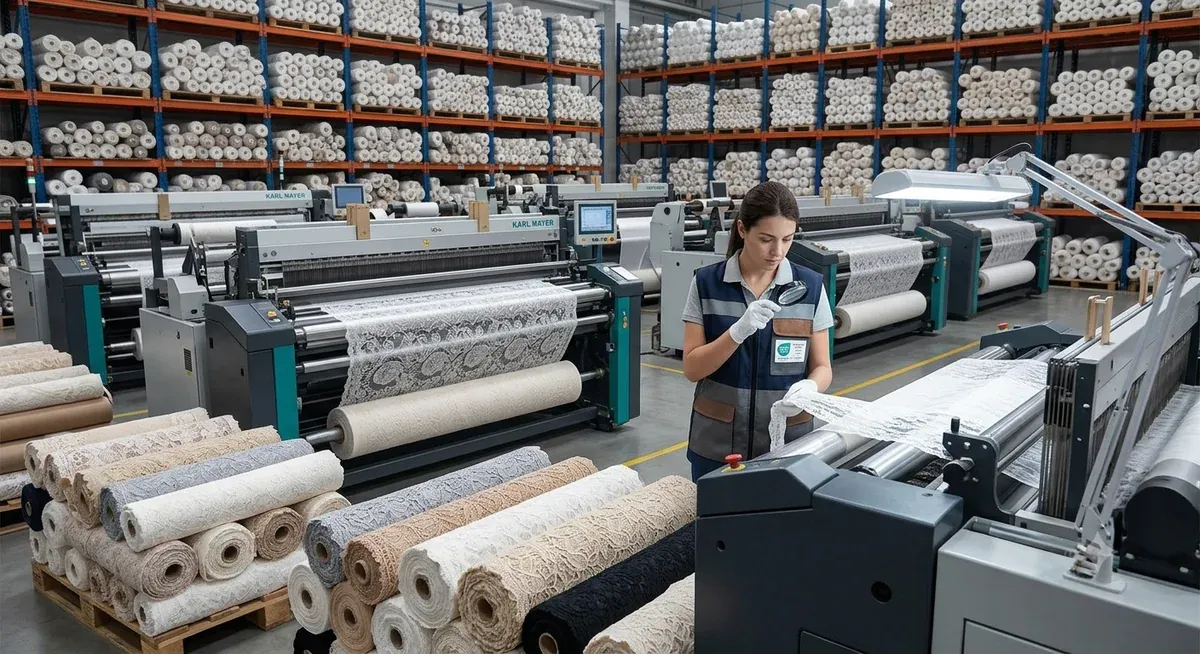
The global lace market is booming, and finding the right lace fabric manufacturer and wholesale lace fabric supplier is the most critical decision for your textile business, fashion brand, or bridal line. Whether you are scaling a production line or launching a boutique fashion collection, your choice of supply chain partners directly impacts your product quality, profit margins, and delivery timelines.
This comprehensive, 3,500-word industry guide explores everything you need to know about navigating the global lace supply chain. You will learn the core differences between manufacturers and wholesale suppliers, how to evaluate production capabilities, how to negotiate pricing, and how to stay ahead of international textile trends.
1. Industry Definitions: Lace Fabric Manufacturer vs. Wholesale Lace Fabric Supplier
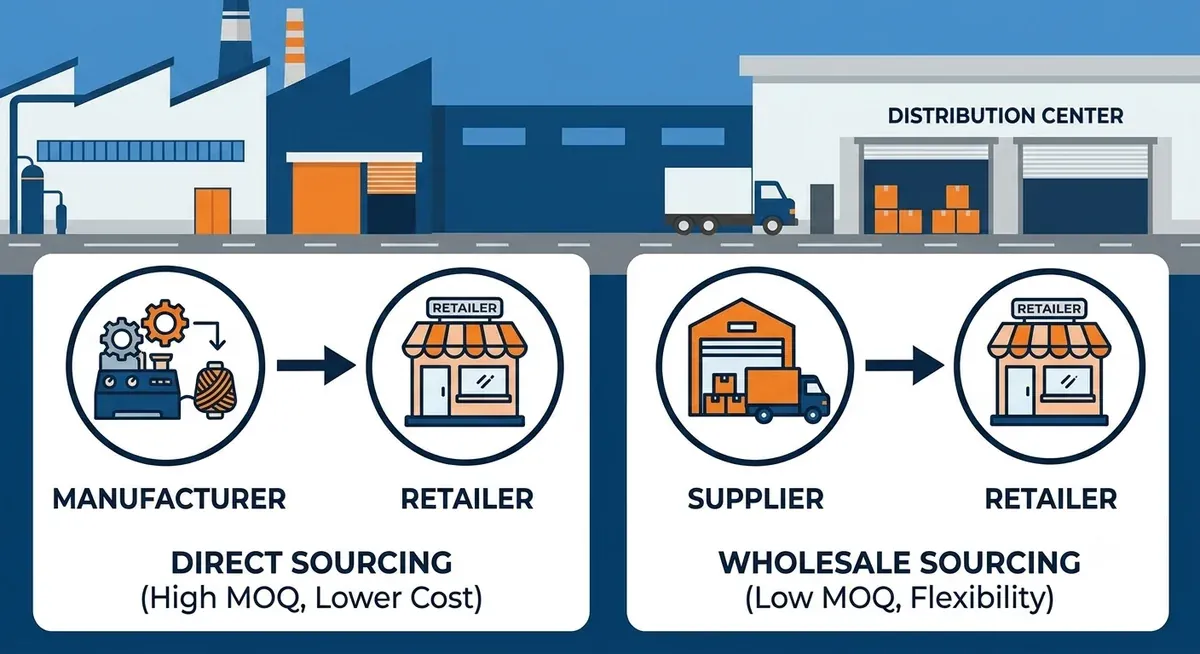
Understanding the textile supply chain structure is essential before reaching out to potential partners. While the terms are often used interchangeably in casual trade discussions, a lace fabric manufacturer and a wholesale lace fabric supplier serve entirely different functions in the market.
+-----------------------------------+ +-----------------------------------+
| Lace Fabric Manufacturer | ----> | Wholesale Lace Fabric Supplier |
| - Custom R&D & Raw Production | | - Low MOQs & Ready-to-Ship Stock |
| - Massive MOQs (1,000+ yards) | | - Local Warehousing & Bundling |
+-----------------------------------+ +-----------------------------------+
\ /
v v
+-------------------------------+
| Fashion Brands / Retailers |
+-------------------------------+
What is a Lace Fabric Manufacturer?
A manufacturer owns the physical factory, the industrial machinery (such as Karl Mayer Raschel or Textronic warp knitting machines), and directly controls the production line.
- Core Function: Transforming raw yarns (polyester, nylon, cotton, silk) into finished lace netting, trims, and fabrics.
- Best For: High-volume fashion brands, enterprise garment factories, and businesses requiring custom, proprietary lace patterns.
- Key Characteristic: High Minimum Order Quantities (MOQs) but the lowest possible per-yard pricing.
What is a Wholesale Lace Fabric Supplier?
A wholesale supplier acts as a distributor, aggregator, or B2B merchant. They buy massive quantities of lace directly from multiple manufacturers, warehouse the inventory, and break it down into smaller, manageable quantities for commercial buyers.
- Core Function: Inventory management, logistical distribution, and localized customer service.
- Best For: Emerging fashion designers, boutique bridal shops, mid-sized apparel brands, and independent textile retailers.
- Key Characteristic: Lower, flexible MOQs, fast ready-to-ship inventory, and a wide variety of different lace styles available under one roof.
2. Key Types of Lace Fabric and Their Commercial Applications
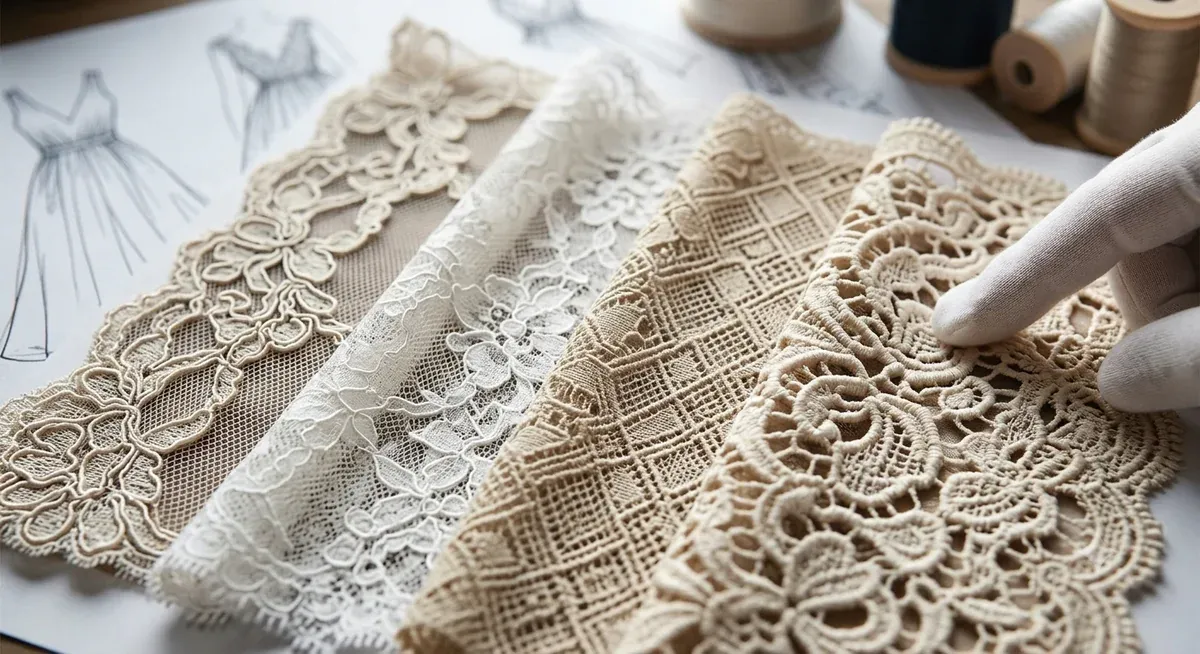
To communicate effectively with your supplier or manufacturer, you must speak the technical language of lace. Different manufacturing processes yield distinct visual textures, weights, and price points.
Alençon Lace (Needlepoint Lace)
Originating from France, classic Alençon lace is characterized by a distinct corded outline surrounding the floral patterns on a fine mesh background.
- Commercial Use: Premium bridal gowns, high-end evening wear, and couture overlays.
- Manufacturing Notes: True Alençon uses hand-guided cording, making it highly premium. Modern mass manufacturers use computerized embroidery machines to simulate this look efficiently.
Chantilly Lace
Chantilly lace is world-renowned for its fine ground, delicate floral details, and abundant, soft scalloped edges. It is incredibly lightweight and soft to the touch.
- Commercial Use: Bridal veils, romantic lingerie, delicate sleeves, and overlay dresses.
- Manufacturing Notes: Traditionally made with silk or nylon yarns on a bobbin-lace machine. High-quality wholesale suppliers offer nylon-blend Chantilly lace for the perfect balance of softness and tensile strength.
Raschel Lace
Raschel lace represents the workhorse of the modern commercial textile industry. It is produced on high-speed warp knitting machines.
- Commercial Use: Fast-fashion apparel, mainstream intimates, sheer curtains, and mass-market table linens.
- Manufacturing Notes: Highly cost-effective. A mass lace fabric manufacturer relies heavily on Raschel machines to produce thousands of yards per day in complex geometric or floral designs at highly competitive rates.
Guipure Lace (Venetian / Chemical Lace)
Guipure lace features thick, interconnected embroidered elements without any mesh or net backing. The patterns are held together by braids or twists.
- Commercial Use: Bohemian summer dresses, structured autumn/winter blouses, statement collars, and luxury home textiles.
- Manufacturing Notes: Created by embroidering patterns onto a water-soluble or chemically degradable base fabric, which is subsequently dissolved away during post-processing to leave only the beautiful, free-standing lace structure.
Lace Type | Production Method | Common Materials | Best Commercial Application | Price Bracket |
|---|---|---|---|---|
Alençon | Embroidered / Corded | Nylon, Rayon, Cotton | Luxury Bridal, Couture | Premium / Luxury |
Chantilly | Warp-knit / Fine Mesh | Nylon, Silk, Polyester | Lingerie, Veils, Overlays | Mid to High |
Raschel | High-speed Warp-knit | Polyester, Nylon, Spandex | Mass Apparel, Fast Fashion | Budget / Economy |
Guipure | Chemical Dissolving | Cotton, Polyester, Rayon | Structured Apparel, Trims | Mid to Premium |
3. How to Evaluate a Professional Lace Fabric Manufacturer
Sourcing directly from a factory requires rigorous vetting. A mistake at the manufacturing level can ruin an entire seasonal production run. When auditing a factory, focus heavily on the following operational criteria:
Machinery Infrastructure and Technological Capabilities
The quality of lace depends entirely on the machinery used. Inquire about the factory's machine fleet:
- Ask if they utilize genuine German Karl Mayer machines, which are the gold standard for precision warp knitting.
- Verify if they have Textronic or Jacquard capabilities for intricate, high-definition lace patterns.
- Ensure they feature in-house CAD design teams capable of digitizing physical lace swatches into machine-readable vector files.
Quality Control (QC) Protocols and Certifications
Defects in lace—such as broken threads, uneven dye lots, or tension distortion—can cause massive fabric wastage during garment cutting.
- Testing Standards: Ensure the factory tests for colorfastness to light, shrinkage rates under washing, and seam slippage.
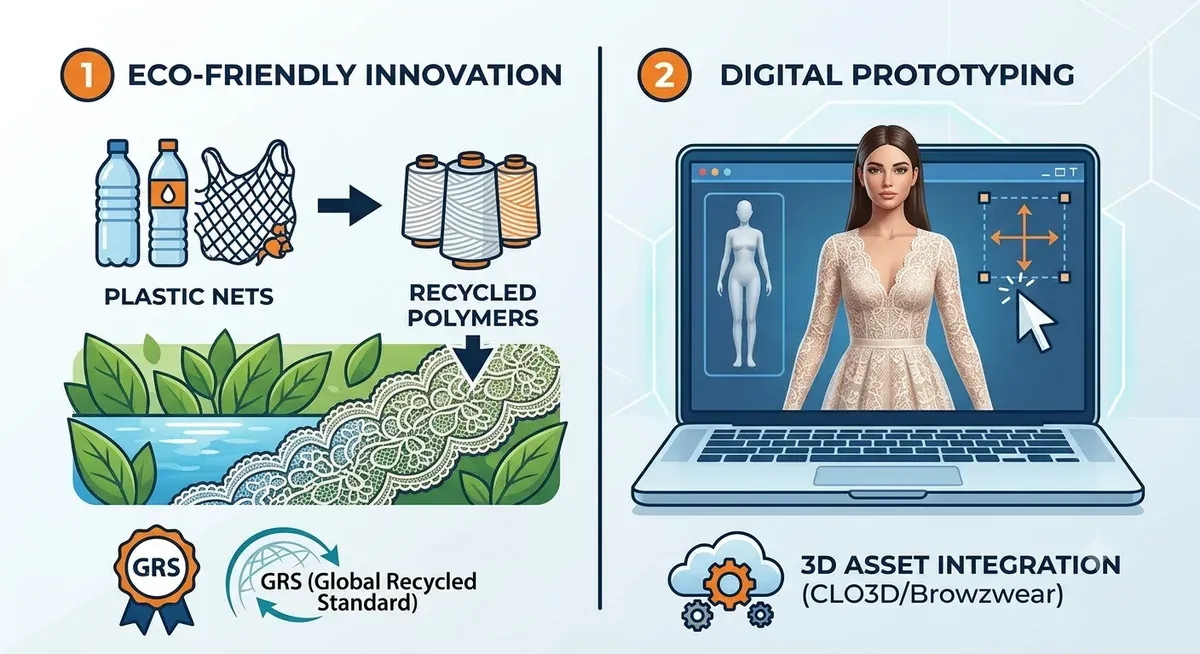
- Certifications: Look for manufacturers certified under OEKO-TEX Standard 100 (ensuring the fabric is free from harmful chemicals) and the Global Recycled Standard (GRS) if you are sourcing eco-friendly recycled polyester/nylon lace.
Minimum Order Quantities (MOQs) vs. Laboratory Dips
Factories operate on industrial scale.
- A typical factory MOQ ranges from 1,000 to 3,000 yards per design or colorway.
- Before bulk production, a reliable manufacturer will provide lab dips (small dyed fabric samples) to confirm color accuracy under standardized D65 lighting conditions.
4. How to Find and Choose a Wholesale Lace Fabric Supplier
If your business cannot meet the high MOQs of direct manufacturing, partnering with a dependable wholesale supplier is your ideal strategic path. Here is how to evaluate global wholesalers:
Inventory Depth and Supply Stability
A great wholesaler must act as your extended warehouse.
- Stock Continuity: Ensure the supplier carries "never-out-of-stock" programs for classic bridal whites, ivory, and onyx black lace. If you launch a successful garment line, you need to know you can reorder the exact same lace fabric pattern next month without delay.
- Catalog Diversity: A premium wholesaler should offer a comprehensive mix of all lace varieties, including stretch lace trims, wide eyelash lace, and heavy guipure motifs.
Physical Sampling Programs and Swatch Cards
Never buy lace wholesale based solely on digital product photographs. The hand-feel, drape, and exact opacity can only be judged in person.
- Look for suppliers that offer comprehensive swatch books or sample yardage programs.
- Expect to pay a nominal fee for full-width sample yardage, but verify if the supplier credits this sample cost back to your account upon placing your first bulk commercial order.
Shipping Logistics, Customs Clearance, and Warehousing
Lace is delicate and can be damaged by moisture, sharp container edges, or rough handling during international transit.
- Ensure the supplier uses heavy-duty, moisture-proof poly bag packaging wrapped in rigid outer corrugated boxes.
- Check if they offer convenient DDP (Delivered Duty Paid) shipping options, where the supplier handles all customs paperwork, import duties, and local freight trucking directly to your warehouse doorstep.
5. Global Sourcing Hubs for Lace Fabric
The global lace supply chain is concentrated within specific geographic regions. Knowing where to source allows you to align your purchasing goals with regional strengths:
1. Mainland China (Guangdong & Fujian Provinces)
- Key Hubs: Changle (Fujian) is known as the "Lace Capital of China," while Guangzhou (Guangdong) hosts massive textile markets like the Zhongda Fabric Market.
- Pros: Unbeatable manufacturing scale, ultra-competitive pricing, advanced machinery, and incredibly fast turnaround times.
- Best For: High-volume commercial apparel, fast fashion, budget bridal wear, and synthetic stretch lace.
2. France (Calais and Caudry)
- Key Hubs: The Nord-Pas-de-Calais region.
- Pros: The birthplace of luxury Leavers lace. Renowned for incomparable heritage, artistry, and prestige.
- Best For: Haute couture, ultra-premium luxury fashion houses, and celebrity bridal wear.
3. Turkey (Istanbul and Bursa)
- Key Hubs: Industrial zones around Istanbul.
- Pros: High-quality cotton lace, superb embroidery craftsmanship, and geographically advantageous shipping times into the European Union and Middle Eastern markets.
- Best For: Mid-to-high-end contemporary fashion and premium home textiles.
6. Step-by-Step Guide to Sourcing Lace Fabric Safely
To avoid common pitfalls like off-shade color runs, delays, or structural material weaknesses, follow this systematic sourcing framework:
[Step 1: Request Sample Swatch] ---> [Step 2: Issue Detailed Tech Pack]
|
v
[Step 4: Conduct Pre-Shipment QC] <-- [Step 3: Approve Lab Dips (D65)]
|
v
[Step 5: DDP Logistics & Inspection]
Step 1: Request Sample Swatches and Fabric Data Sheets
Initiate contact by requesting physical swatches. Ask for the technical specification sheets detailing the exact fabric weight (GSM), usable fabric width, and detailed fiber composition breakdown (e.g., 85% Nylon, 15% Spandex).
Step 2: Issue a Clear Technical Specification Pack
When ordering, provide your supplier with an explicit tech pack that details:
- The precise Pantone Color Code (TCX/TPX series).
- Acceptable dimensional stability limits (allowable shrinkage percentages).
- Intended end-use case (e.g., childrenswear apparel, requiring strict chemical compliance).
Step 3: Approve Lab Dips and Pre-Production Samples
Never allow a factory to start bulk rolling until you have signed off on a physical pre-production sample (PPS). Review the sample under daylight, incandescent, and fluorescent store lighting to check for metamerism (where colors match under one light source but mismatch under another).
Step 4: Arrange Third-Party Pre-Shipment Quality Inspections
Before your order leaves the factory or wholesale warehouse, hire an independent third-party inspection agency (such as SGS or QIMA). They will perform random batch testing using the standard 4-Point Inspection System to identify and log any knit defects per 100 square yards.
7. B2B Negotiation Strategy: Getting the Best Price per Yard
Negotiating with textile professionals requires a data-driven approach. Use these proven commercial tactics to optimize your purchasing power without sacrificing product quality:
- Leverage Forecasted Annual Purchasing Volumes: Even if your immediate first order is small, share your projected production calendar for the next 12 to 24 months. Manufacturers are far more likely to grant tier-one pricing if they see a path to a long-term, high-volume relationship.
- Optimize Roll Widths and Pattern Nesting: Work closely with your apparel pattern makers to optimize fabric consumption. Select a lace fabric width (e.g., 54-inch vs. 60-inch usable width) that matches your clothing markers perfectly. Minimizing cutting room waste allows you to buy less overall yardage.
- Negotiate Flexible Payment Terms: Standard initial terms are 30% deposit before production and 70% balance paid before shipping. As you build a solid transactional history over 12 months, negotiate toward favorable open-account terms like Net 30 or Net 60 days to maximize your business cash flow.
8. Future Trends: Sustainability and Tech Innovation in Lace Production
The lace industry is evolving rapidly to meet modern consumer demands. Aligning your sourcing strategy with these macro trends will future-proof your brand:
Recycled Eco-Lace
Consumer demand for sustainable fashion is at an all-time high. Leading lace fabric manufacturers are heavily investing in turning post-consumer plastic bottles and recycled ocean fishing nets into premium recycled nylon and polyester yarns. These eco-friendly laces match the exact softness and durability of virgin polymers while offering an incredible marketing story for your brand.
Digital 3D Lace Prototyping
Advanced fashion brands are bypassing physical fabric sampling altogether in the initial design phases. Top-tier suppliers now provide high-fidelity 3D digital textile files (.U3M or .FAB formats). You can drop these digital lace assets directly into 3D apparel design programs like CLO3D or Browzwear, allowing you to visualize drape, fit, and pattern scaling instantly on digital avatars. This slashes design iteration timelines from weeks to minutes and eliminates physical sample transit waste.
Summary Checklist for Sourcing Success
Finding the ideal production partner is an iterative process. Keep this quick-reference checklist handy as you vet your options:
- Verified whether a direct factory or a wholesale distributor best suits your current order volume.
- Confirmed the machinery origin (e.g., Karl Mayer) and structural lace type (Raschel, Guipure, Chantilly).
- Requested physical swatch cards and verified fabric composition, width, and GSM weight.
- Checked for critical industry compliance certificates (OEKO-TEX Standard 100, GRS).
- Approved lab dips and pre-production samples under standardized D65 lighting boxes.
- Secured clear, professional freight logistics terms (FOB, CIF, or DDP).
Direct Sourcing & Industry Consultation
Finding the right balance between premium material quality and competitive pricing requires deep supply chain expertise. If you need assistance sourcing high-performance stretch lace, luxury bridal overlays, or eco-friendly recycled lace materials, let us know your specific production requirements.
To help us connect you with the most qualified lace fabric manufacturer or wholesale lace fabric supplier in our global network, please share a few details about your project:
- The exact style of lace you are looking for (e.g., stretch Raschel, heavy cotton Guipure, delicate eyelash Chantilly)
- Your estimated target volume per design or order (e.g., sample yardage, 500 yards, or 5,000+ yard factory runs)
- Your required delivery timeline and destination market
We can provide custom swatch recommendations, technical specification sheets, and factory tier matching to streamline your textile supply chain.
Discuss a real requirement
Turn the reading into a practical next step.
Send a short note, product reference, photograph, swatch or tech pack. Technical feasibility, sampling, documentation and production terms are confirmed after review.
Start an inquiry