
Introduction
Table of Contents
Overview
Pinterest included a lace-focused theme, Laced Up, in its 2026 forecast released on 9 December 2025. Its official announcement presents a forecast of consumer interests, not a report of U.S. textile orders. For lace buyers, the useful question is how a design idea can become a workable product brief.
Start with your own collection, customer and sales channel. A lace detail may suit a neckline, hem or accessory, but the chosen trim still needs to work with the base material, construction and intended care. Use a trend reference to focus sample development, then make purchasing decisions from the approved product and your own demand plan.
What Pinterest’s Forecast Measures
The 2026 report lists normalized search increases of 55% for “lace belt”, 150% for “lace bandana” and 105% for “lace doily”. The data covers English-language searches globally, comparing September 2024–August 2025 with September 2023–August 2024.
These figures describe different search terms on one platform. They do not establish U.S. lace-trim sales, wholesale order growth or a market-size forecast. Treat them as ideas for a sample shortlist, alongside customer feedback and the performance of your own products.
Turning Inspiration into a Sourcing Brief
Show the supplier where the lace will sit on the finished product. A mood-board image alone does not define usable width, motif repeat, edge shape or the amount of stretch required. Include a drawing or marked photograph and identify which details must match the reference.
- Define the product: end use, base fabric, fiber content, lace construction, finished width and color reference.
- Define the sample: required length, placement, attachment method and the appearance you will approve on the assembled item.
- Define the order: quantity by color, packaging, inspection requirements and the date when finished goods are needed.
Compare quotations against the same specification. Separate sample development from bulk production, and ask which approvals are needed before production time begins. A fashionable motif does not remove the need to check sewing behavior, shade consistency or repeatability.
Applications Beyond Apparel
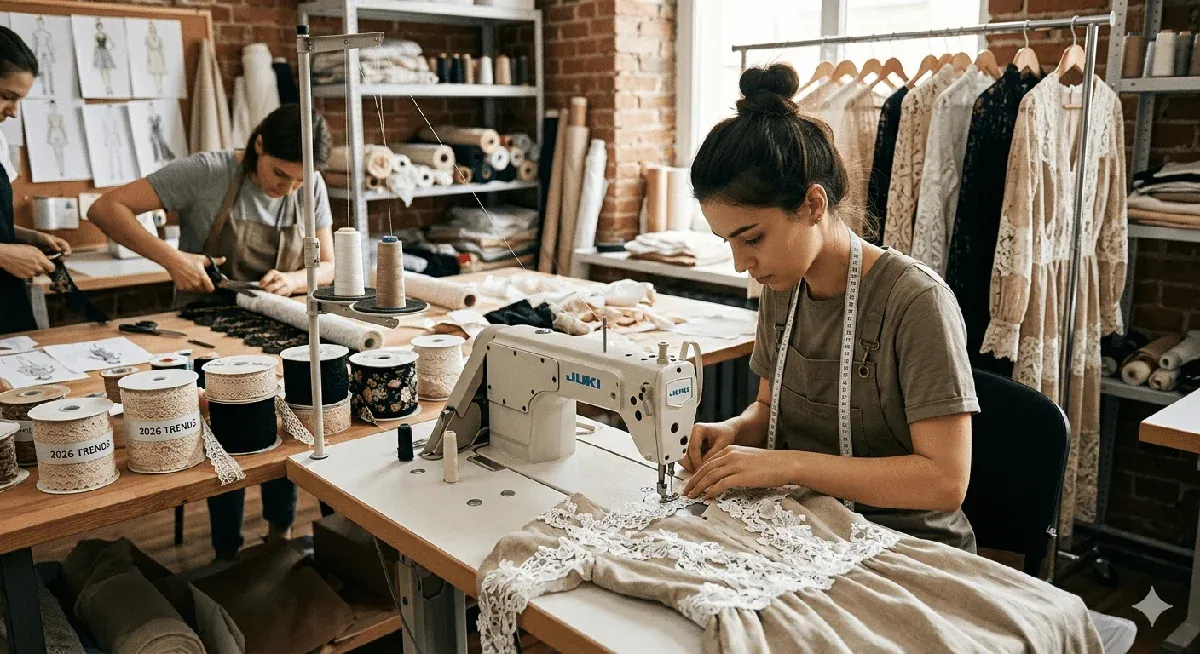
Lace trim is used in garments, accessories, and home textiles to add decorative and textured details.
For a top or skirt, assess how the trim moves with the base fabric and where it touches the wearer. For bedding or decorative textiles, check how the edge hangs, joins and looks after the intended cleaning process. Similar-looking lace can require different specifications in these applications.
When developing several products around one motif, keep an approved sample for each assembly. Changing the base fabric, trim width or seam can change the finished result, even when the decorative pattern remains the same.
FAQ
Does the forecast prove that lace orders are rising?
No. The published figures measure Pinterest search activity. Use your own sales information, customer commitments and sourcing plan to decide order quantities.
How does embroidered lace differ from lace trim?
Embroidered describes a way of making the decorative structure; trim describes a narrow decorative component. A lace trim may be embroidered, but the terms are not interchangeable. Specify construction and fiber content separately.
What should a buyer request first?
Request a sample against a clear end-use brief, then assess it on the intended base material. Agree the finished specification before comparing bulk quotations.
Sources
Pinterest Newsroom — 2026 forecast announcement, 9 December 2025
Pinterest Predicts 2026 report — Laced Up and search-data methodology, PDF page 15
Discuss a real requirement
Turn the reading into a practical next step.
Send a short note, product reference, photograph, swatch or tech pack. Technical feasibility, sampling, documentation and production terms are confirmed after review.
Start an inquiry