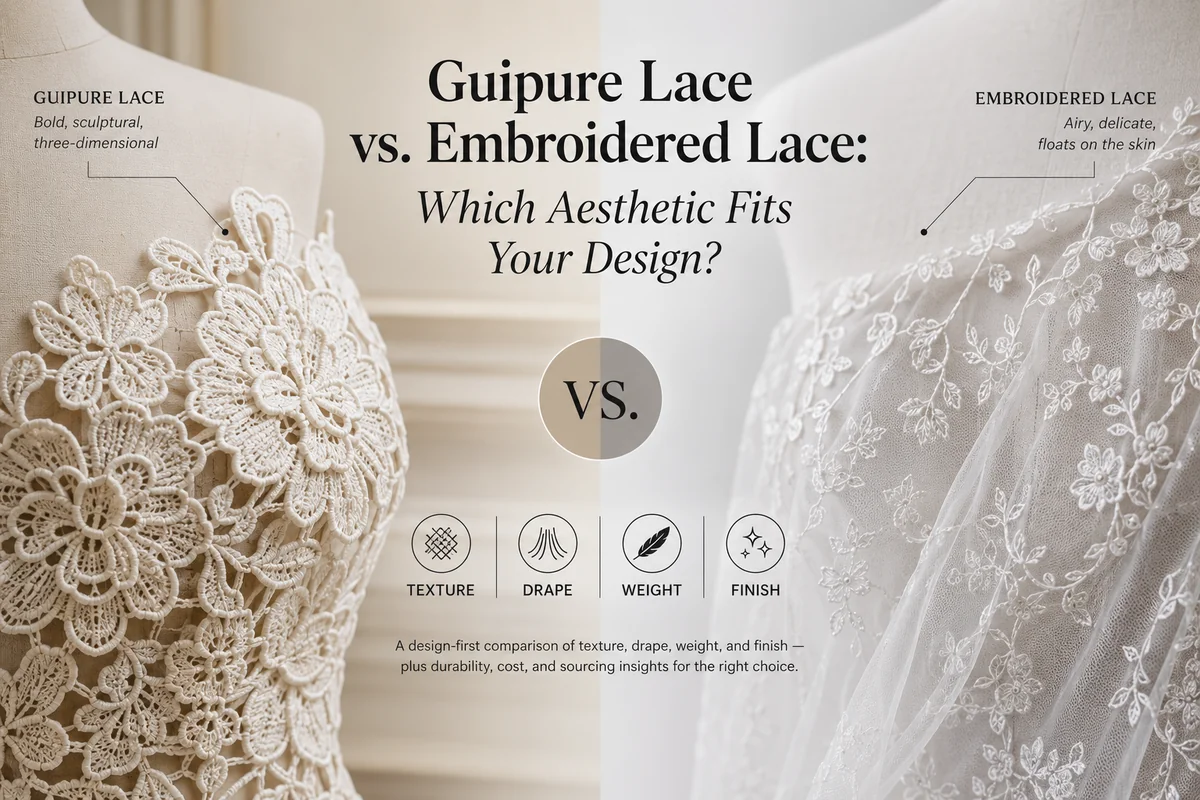
Guipure lace and embroidered lace are two entirely different visual languages: one is bold, sculptural, and three-dimensional; the other is airy, delicate, and floats against the skin. Before durability or price ever enters the conversation, the real question is which look your garment is meant to carry.
This guide compares the two on the terms that actually shape a design — texture, drape, weight, and finish — and then covers the practical differences in durability, cost, and sourcing, so designers and procurement teams can match the right lace to the right piece.
What Is Guipure Lace?
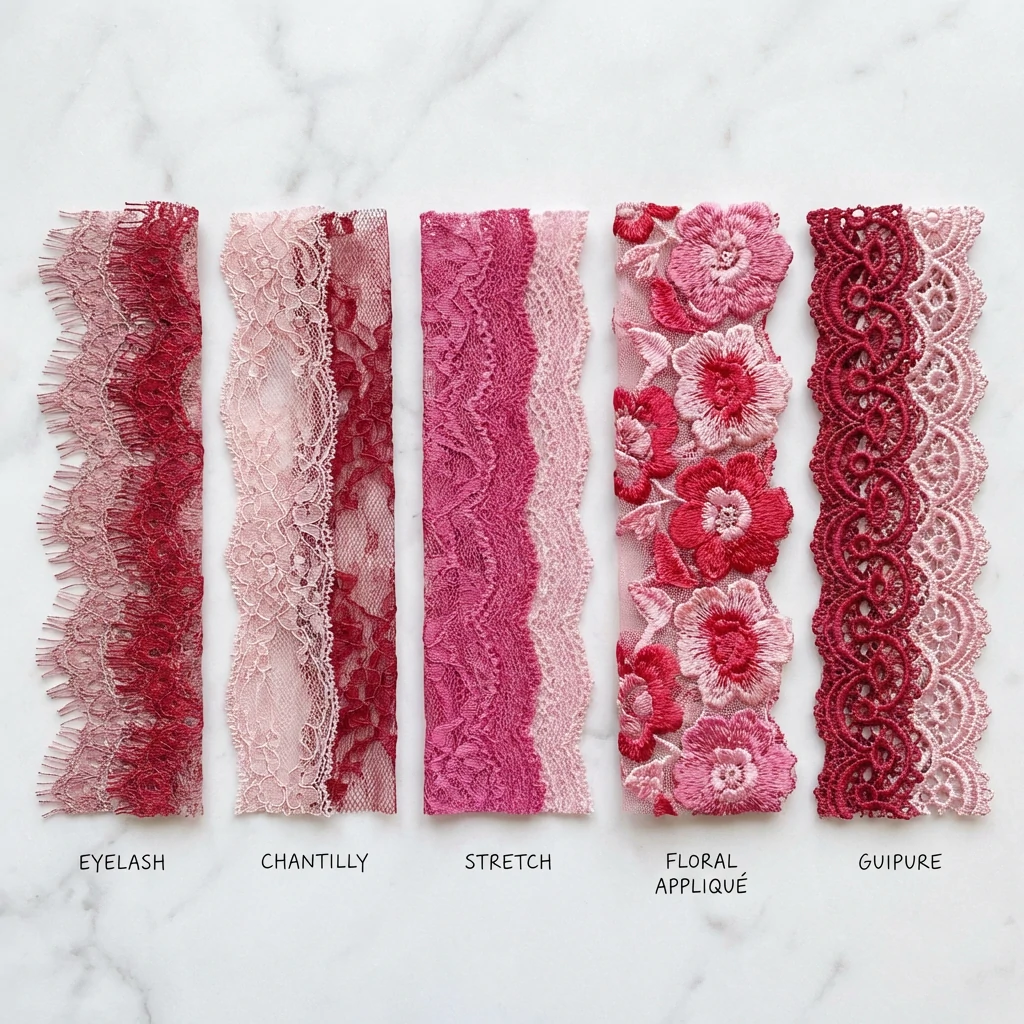
Guipure lace, also known as Venetian lace, is defined by what it lacks: there is no mesh or tulle background holding it together. Instead, the individual motifs are joined directly to one another by connecting bars or plaits. The result is an open, cut-out pattern with a bold, raised, three-dimensional surface that reads as substantial and architectural.
Historically, Guipure emerged in Europe and rose to prominence during the Renaissance, when dense, sculptural lacework signaled status and craftsmanship. That heritage still defines its role today. Because the lace has real body and structure, it holds a shape rather than collapsing into it, which is why it gravitates toward statement pieces — structured bridal bodices, evening wear, and luxury accessories where the lace is meant to be seen as a feature, not a whisper.
Key characteristics of Guipure lace:
-
No mesh or tulle base — motifs are linked by bars or plaits
-
Heavier, denser hand than most other laces
-
Durable and well-suited to structured, tailored designs
-
Typically made from cotton, polyester, or silk threads
The trade-off is flexibility. That same density that makes Guipure so striking also makes it stiffer and less forgiving, so it demands more careful handling and precise construction during garment assembly.
What Is Embroidered Lace?
Embroidered lace works the opposite way. Here, the decorative design is stitched onto a sheer tulle or mesh base, and that base is what gives the fabric its character. The embroidery itself can range from simple threadwork to elaborate surfaces layered with beads, sequins, or metallic accents, which makes the design vocabulary almost limitless — from quiet minimalism to heavy embellishment.
The technique descends from traditional hand-stitching passed down over generations, later scaled by machine embroidery. What stays constant is the feel: lightweight, flexible, and delicate. Because the motifs sit on a soft, sheer ground, embroidered lace drapes and flows in a way Guipure cannot, which is exactly why it dominates ethereal, romantic garments — flowing veils, soft overlays, and pieces meant to move with the body.
Key characteristics of embroidered lace:
-
Lightweight and flexible, thanks to the tulle or mesh ground
-
Enormous design range, from minimalist to heavily embellished
-
Ideal for flowing, soft, draped garments
-
Available in both hand-embroidered and machine-embroidered versions
The trade-off here is fragility. The delicate base and applied surface details are less robust than Guipure's dense structure, so embroidered lace rewards gentle handling and careful maintenance to keep its detail intact.
Guipure Lace vs. Embroidered Lace: The Aesthetic and Practical Comparison
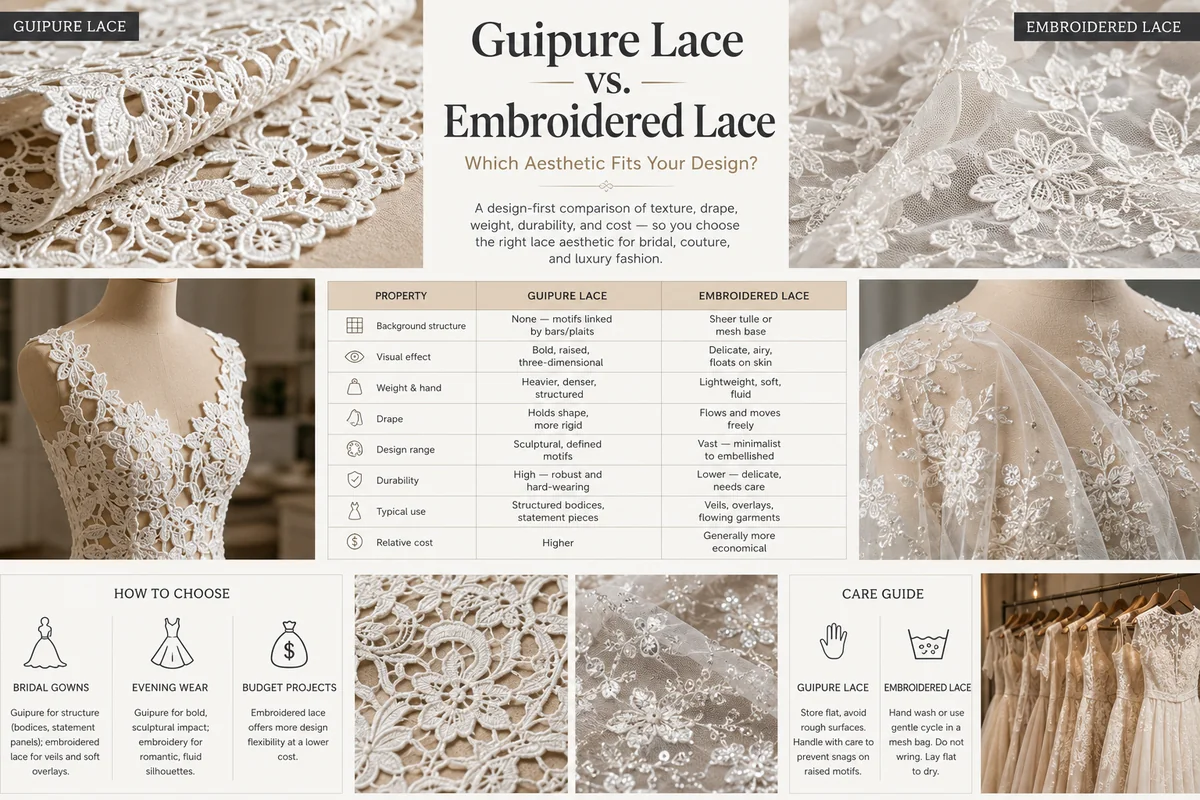
Seen side by side, the difference is immediate — one fabric stands up and sculpts, the other falls and floats. The table below captures how that core distinction plays out across the properties that matter when you specify a fabric.
| Property | Guipure Lace | Embroidered Lace |
| Background structure | None — motifs linked by bars/plaits | Sheer tulle or mesh base |
| Visual effect | Bold, raised, three-dimensional | Delicate, airy, floats on skin |
| Weight & hand | Heavier, denser, structured | Lightweight, soft, fluid |
| Drape | Holds shape, more rigid | Flows and moves freely |
| Design range | Sculptural, defined motifs | Vast — minimalist to embellished |
| Durability | High — robust and hard-wearing | Lower — delicate, needs care |
| Typical use | Structured bodices, statement pieces | Veils, overlays, flowing garments |
| Relative cost | Higher | Generally more economical |
Pros and Cons at a Glance
Guipure lace. Its strengths are durability, a bold and unmistakable appearance, and its suitability for structured designs that need the fabric to hold form. The costs are reduced flexibility and a higher price point.
Embroidered lace. Its strengths are a lightweight feel, exceptional design versatility, and a delicacy that suits soft, romantic garments. The costs are lower durability and a greater need for careful maintenance.
How to Choose Between Them
The right choice always comes back to what the garment has to do aesthetically. Match the lace to the intent:
-
For bridal gowns: Guipure is ideal where you need structure — a defined bodice or a statement panel. Embroidered lace excels for flowing veils and soft, delicate overlays that need to move.
-
For evening wear: Reach for Guipure when you want a bold, sculptural focal point. Choose embroidered lace for a softer, more romantic, and fluid silhouette.
-
For budget-conscious projects: Embroidered lace generally offers more design flexibility at a lower cost, making it the practical choice when the volume of fabric is high or the margin is tight.
For sourcing teams, this decision also shapes the supplier conversation. Guipure's structured construction and embroidered lace's layered surface work call for different production strengths, so it pays to work with a lace fabric manufacturer experienced in both. At Yi Tuo, we produce Guipure and embroidered lace across cotton, polyester, and silk-blend bases, which lets designers prototype the same motif in both constructions and see the aesthetic and cost trade-offs before committing to bulk.
Modern Applications and Care
Both laces have found a firm place in contemporary fashion beyond the bridal aisle — Guipure in structured jackets, collars, and statement dresses; embroidered lace in lingerie, blouses, and layered eveningwear. Their care needs mirror their construction. Guipure's density lets it tolerate handling reasonably well, though its raised motifs can snag, so store it flat and avoid rough surfaces. Embroidered lace is more delicate: hand-wash or use a gentle cycle in a mesh bag, skip the wringing, and lay flat to dry so the tulle base and any beadwork or sequins keep their shape.
Summarize
Guipure lace and embroidered lace are both exceptional, but they answer different aesthetic briefs. Guipure is the choice when you want structure, boldness, and a three-dimensional statement; embroidered lace is the choice when you want lightness, movement, and romantic delicacy. Weigh that visual intent first, then layer in durability, budget, and maintenance — and the right fabric for your vision becomes clear.
FAQs
What is the main difference between Guipure lace and embroidered lace? Structure. Guipure lace has no background — its motifs are joined directly by bars or plaits, giving a bold, raised, three-dimensional look. Embroidered lace is stitched onto a sheer tulle or mesh base, giving a lighter, more delicate, flowing effect.
Which lace is more durable? Guipure lace. Its dense, connected construction makes it more robust and better suited to structured garments. Embroidered lace is more delicate because its design sits on a fine mesh base, so it needs gentler handling.
Is Guipure lace more expensive than embroidered lace? Generally, yes. Guipure's dense construction and heavier use of thread typically make it more costly, while embroidered lace tends to be more economical and offers a wider range of designs at various price points.
Which lace is better for a wedding dress? It depends on the effect you want. Guipure suits structured bodices and statement panels; embroidered lace is ideal for flowing veils and soft overlays. Many gowns use both — Guipure for structure, embroidered lace for movement.
Can I source both Guipure and embroidered lace from one supplier?


 WhatsApp Us