
Introduction
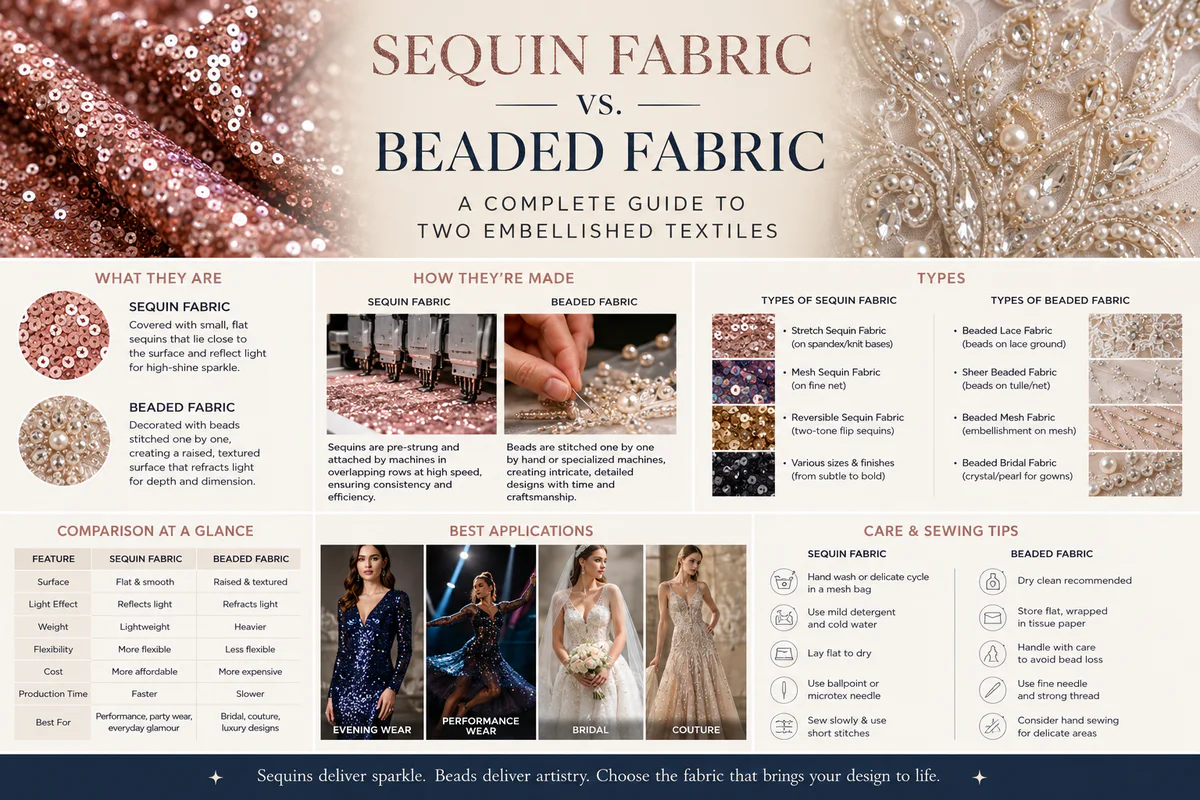
Sequin fabric and beaded fabric are two of the most popular embellished textiles in fashion, but they are designed for different purposes. Sequin fabric delivers lightweight, all-over sparkle for eveningwear and performance apparel, while beaded fabric creates luxurious texture for bridal and couture. This guide compares their construction, appearance, cost, sewing, care, and best applications so you can choose the right material with confidence.
2026 trend: Embellished textiles are one of the year's strongest fashion directions. Sequins, pearl embellishments, crystal beading, and mixed-media embroidery are appearing across bridal collections, runway fashion, occasion wear, and premium ready-to-wear. Understanding the differences between sequin and beaded fabrics helps designers and buyers source materials that match both current trends and production requirements.
What Sequin Fabric and Beaded Fabric Actually Are
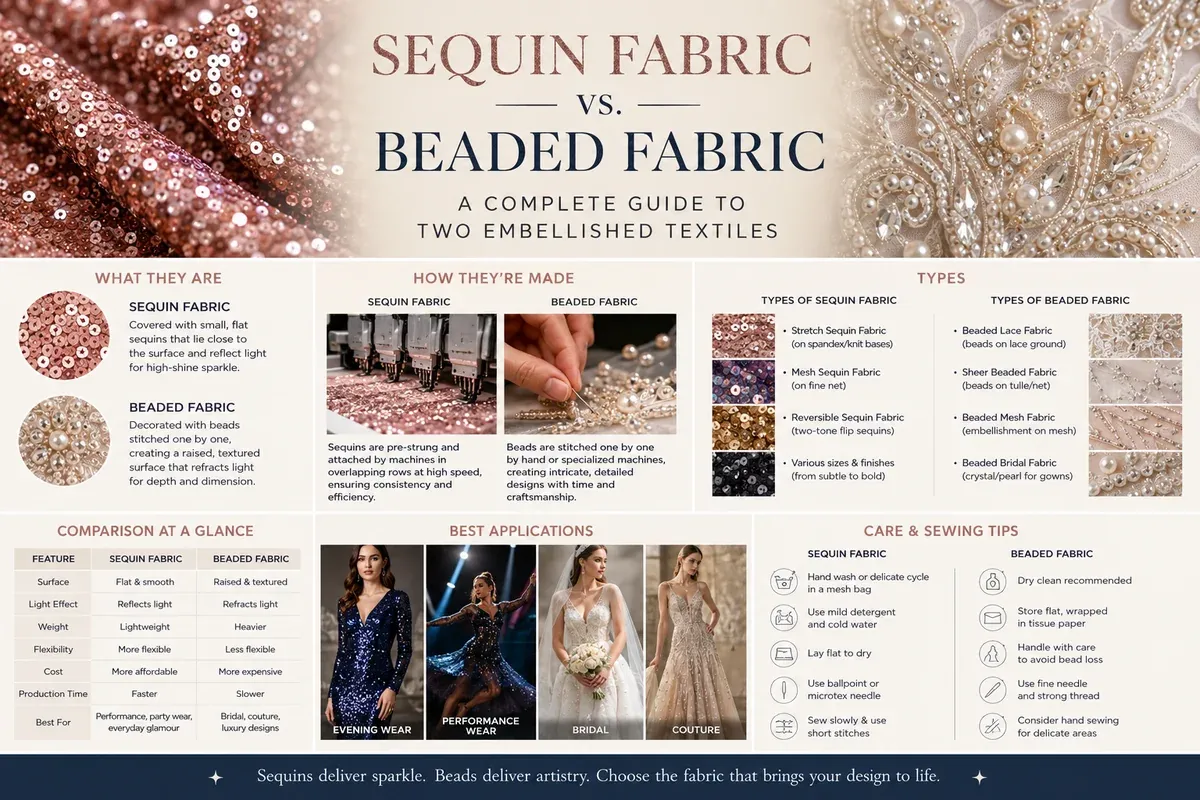
Sequin fabric — also listed as sequined fabric or fabric with sequins — is a base textile whose surface is covered in small, flat, shiny discs called sequins. Those discs sit close together and reflect light directly back, which is what produces the material's signature high-shine, almost liquid glimmer. The sequin material itself is usually a thin PVC or polyester film, so the discs stay light and uniform, and the base can be anything from a firm woven to a soft knit.
Beaded fabric is a base cloth onto which individual beads — glass, crystal, plastic, or metal — are stitched to form a raised, textured surface. Because each bead is a solid three-dimensional object, beaded fabric material does not simply reflect light; it scatters it, throwing small highlights and shadows that give the surface visible depth. This is the quality that makes beadwork read as intricate and hand-crafted rather than merely shiny.
The distinction in one line: sequins lie flat and reflect, beads stand up and refract. Everything else — weight, drape, price, durability — flows from that.
How Each Fabric Is Manufactured
Manufacturing is where the two part ways most sharply, and it explains why one is affordable by the bolt while the other is priced closer to jewelry.
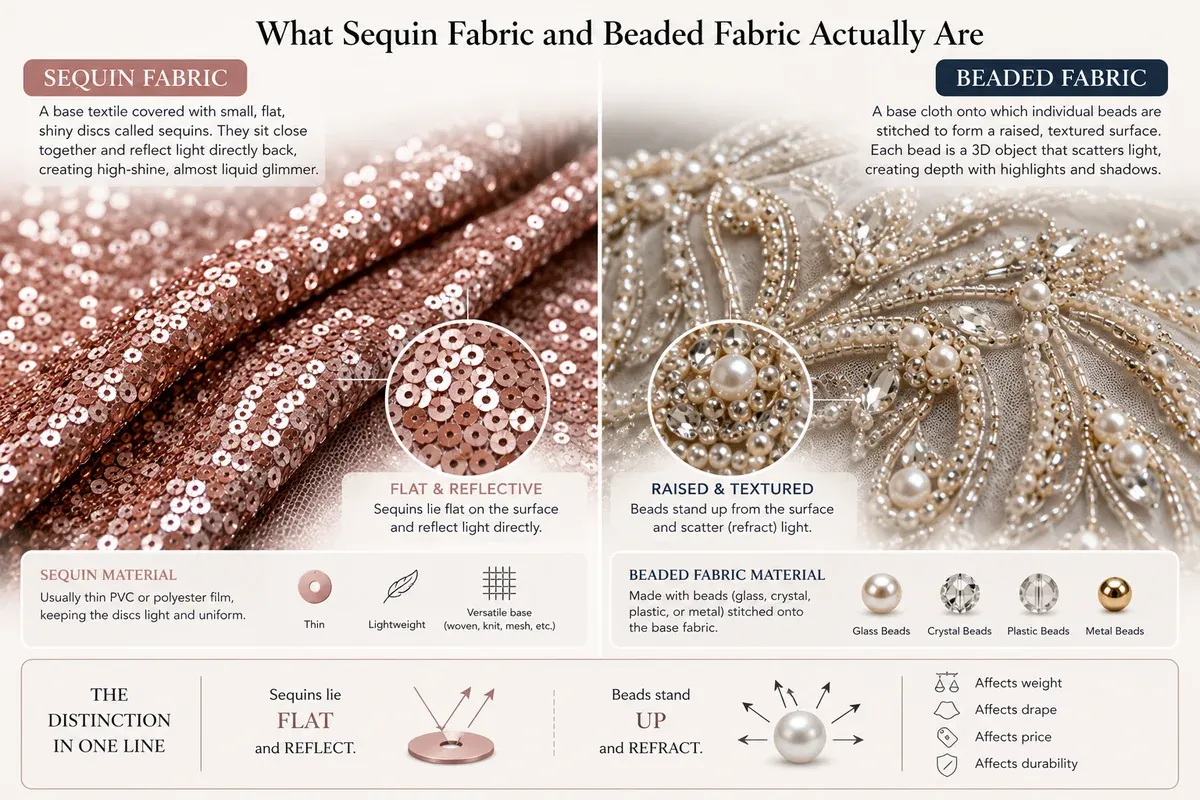
Sequin fabric is made for volume. In most mills the sequins arrive pre-strung on a continuous thread, and a specialized machine lays and locks those strands onto the ground fabric in overlapping rows, working across wide widths at speed. Because the process is mechanized and repeatable, the coverage is even from selvage to selvage and the yardage is consistent — a real advantage when you order sequin fabric by the yard for a production run and need every panel to match.
Beaded fabric is made for detail, and that changes everything about the timeline and cost. Beads are applied one at a time, either by skilled hand-embroiderers or on dedicated beading machines that place and secure each bead against the cloth. Many high-end beaded fabrics are still worked by hand on frames, following a drawn pattern, which is slow, exacting, and labor-heavy. That human effort is precisely what you pay for: the dimensional pattern is built bead by bead rather than rolled out by the meter, so no two lengths are ever quite identical.
The practical takeaway for sourcing is simple. If a design needs large areas of shine on schedule and on budget, the machine-driven nature of sequin fabric is your friend. If a design needs a bespoke, textured surface where placement matters, the hand-applied nature of beaded fabric is what delivers it — and what sets the lead time and price.
The Main Types You'll Be Offered
Neither material is a single product. Knowing the common variants lets you specify precisely instead of just asking for "sequins" or "beading."
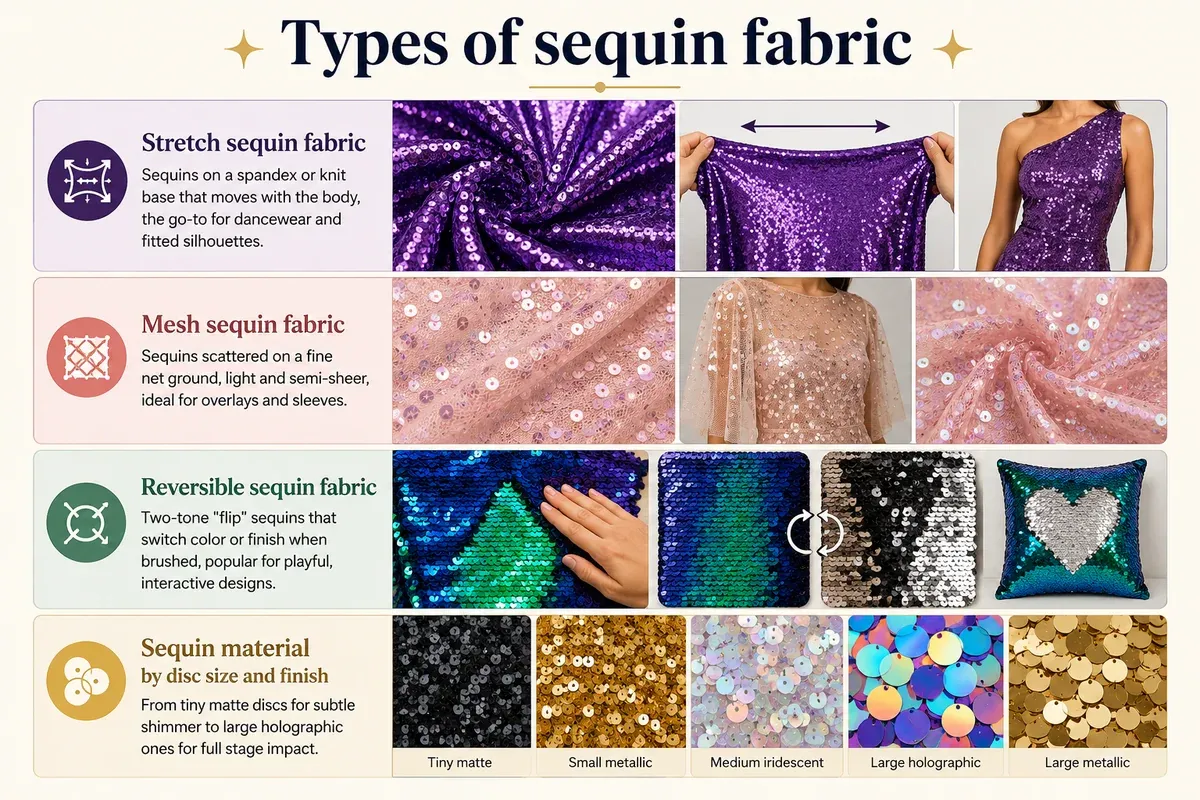
Types of sequin fabric:
- Stretch sequin fabric — sequins on a spandex or knit base that moves with the body, the go-to for dancewear and fitted silhouettes.
- Mesh sequin fabric — sequins scattered on a fine net ground, light and semi-sheer, ideal for overlays and sleeves.
- Reversible sequin fabric — two-tone "flip" sequins that switch color or finish when brushed, popular for playful, interactive designs.
- Sequin material by disc size and finish — from tiny matte discs for subtle shimmer to large holographic ones for full stage impact.
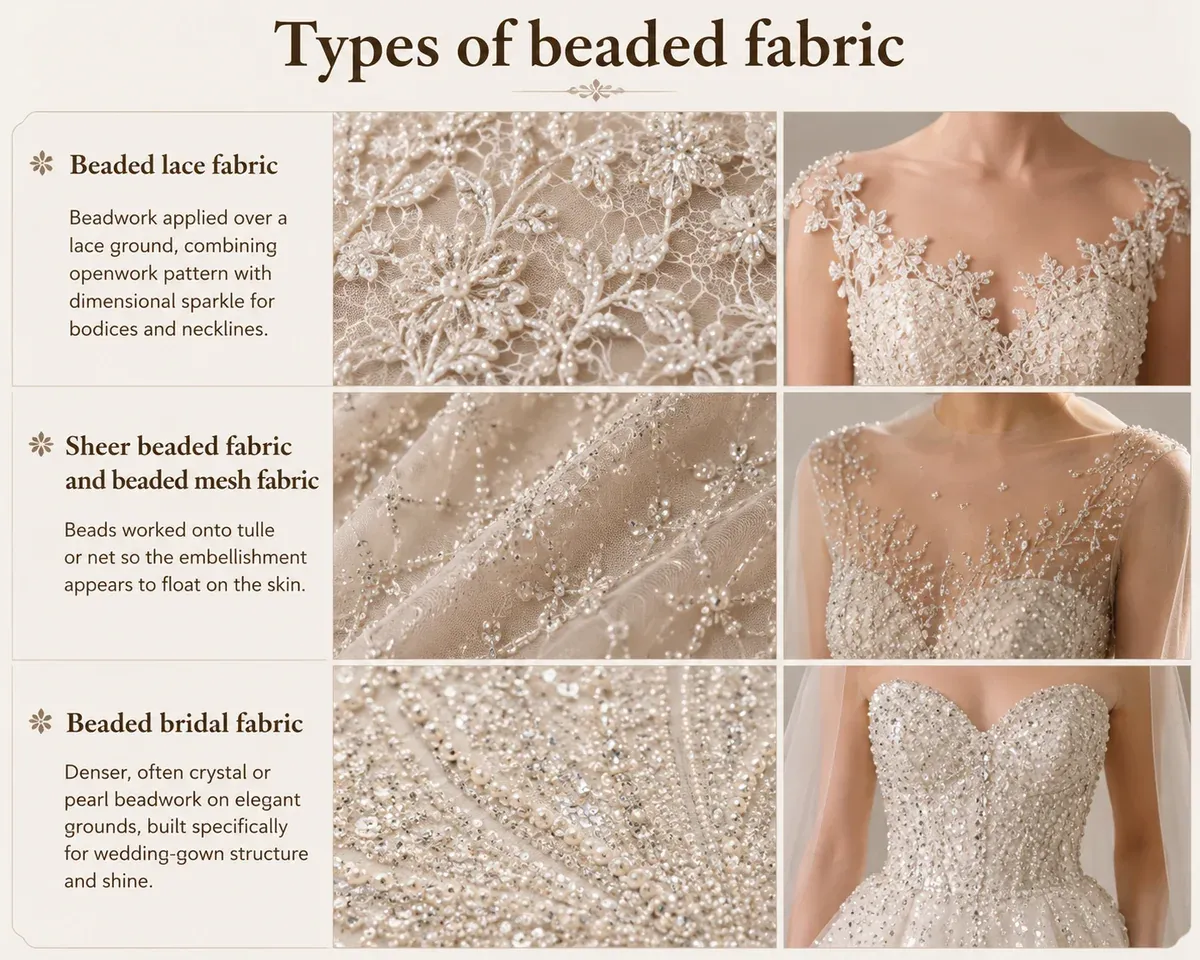
Types of beaded fabric:
- Beaded lace fabric — beadwork applied over a lace ground, combining openwork pattern with dimensional sparkle for bodices and necklines.
- Sheer beaded fabric and beaded mesh fabric — beads worked onto tulle or net so the embellishment appears to float on the skin.
- Beaded bridal fabric — denser, often crystal or pearl beadwork on elegant grounds, built specifically for wedding-gown structure and shine.
Because both come in fitted, sheer, and structured versions, the base fabric matters as much as the embellishment. A stretch sequin knit and a rigid beaded brocade will behave nothing alike even if the sparkle looks similar on a swatch card.
The History and Journey of Sequins and Beads
Both techniques are far older than modern fashion, and that heritage is part of why they still signal value.
Global Origins
Beadwork is one of humanity's oldest forms of adornment. Long before woven sequins existed, people were piercing and stitching shells, seeds, bone, and later glass beads onto garments and accessories across nearly every culture on earth. Sequins have an equally storied past: gold discs sewn onto clothing have been found in ancient tombs, and the word "sequin" itself descends from the Venetian zecchino, a gold coin — early sequins were literally small metal discs that signaled wealth. In both cases, the original point was the same: catching light was a way to display status.
Regional Craft and Modern Manufacturing
Distinct regional traditions refined each technique. The intricate hand-beading and metallic embroidery of South Asia — think dense, dimensional surface work — set a global standard for bead artistry, while European ateliers, especially the French haute couture embroidery houses, turned beading and sequin work into a fine art tied to luxury fashion. For most of history this meant painstaking handwork available only to the wealthy.
What changed is manufacturing. Today, specialized textile producers combine that inherited craft with modern machinery to make both fabrics available at commercial scale and consistent quality. A capable embellished-fabric manufacturer bridges the two worlds: heritage technique for the beadwork that still demands a human hand, and efficient machine production for sequin yardage. At Yi Tuo, for instance, we produce both sequin and beaded fabrics across stretch, mesh, lace, and sheer grounds, which lets designers prototype the same motif in flat sequins and dimensional beadwork and compare look, weight, and cost before committing to bulk — a practical way to bring couture-level options into a real production budget.
2026 Fashion Trend: Why Sequin and Beaded Fabrics Are Everywhere
Fashion in 2026 continues to embrace maximalism after several seasons of minimalist aesthetics. Designers are incorporating sequins, pearl embroidery, crystal beading, metallic embellishments, and textured surfaces into evening gowns, bridal collections, luxury ready-to-wear, and even elevated casual pieces. Rather than being reserved only for special occasions, embellished fabrics are increasingly used as statement panels, sleeves, collars, and trims.
For manufacturers and sourcing teams, this trend also means greater demand for lighter stretch sequin fabrics, refined beaded lace, and mixed embellishment constructions that balance visual impact with production efficiency. Choosing between sequins and beadwork is therefore not simply a styling decision—it directly affects garment weight, labor cost, lead time, and wearer comfort.
Modern Applications, Care, and Sewing
In today's market the two fabrics have settled into complementary roles, and each has its own handling rules.
Where each is used. Sequin fabric dominates party and cocktail dresses, dancewear, costumes, festival looks, stage and performance pieces, and increasingly home décor and accessories — anywhere bold, affordable sparkle and easy movement win. Beaded fabric stays anchored in bridal gowns, red-carpet and couture eveningwear, and statement panels or trims where the embellishment is meant to be admired up close. The choice usually comes down to weight and intent: sequin fabric is lighter and more fluid, beaded fabric is heavier and more structured.
How to care for both. Treat them gently. Hand-wash in cool water or dry-clean, never wring or tumble dry, and lay flat to dry. Heat is the main hazard — a hot iron can melt plastic sequins and craze glass beads — so press on the reverse, on low heat, through a pressing cloth. Store beaded fabric flat so the weight of the beads does not distort the ground over time.
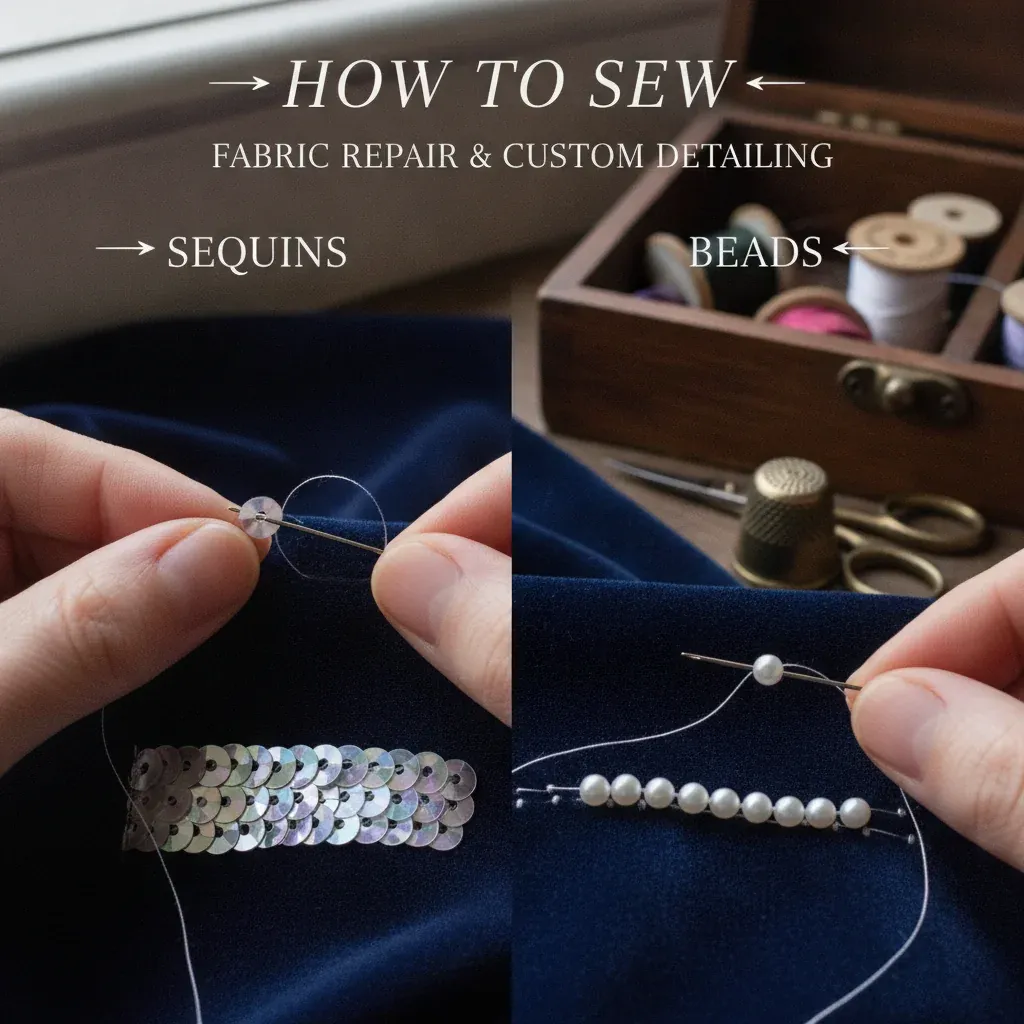
How to sew each. These are among the most-searched questions for good reason, since both often need repair or custom detailing:
- How to sew sequins to fabric: bring a fine needle up through the sequin's center hole, then either take a small stitch over one edge and back down, or top the sequin with a tiny bead so the thread passes through both. For coverage, overlap sequins in rows like fish scales so each hides the stitch before it.
- How to sew beads onto fabric: stitch beads individually — needle up, through the bead, back down snug against the cloth so the bead stands upright. For rows, use a backstitch and anchor every few beads so one broken thread cannot release the whole line. A thin beading needle and waxed thread make the work easier and stronger.
FAQs
What is the difference between sequin fabric and beaded fabric?
Sequin fabric is covered in flat, reflective discs that lie against the surface and bounce light back for a bright, mirror-like shine. Beaded fabric is stitched with three-dimensional beads that stand up from the cloth and scatter light, creating texture and depth. Sequins reflect; beads refract — and that drives the differences in weight, drape, and price.
Is beaded fabric heavier than sequin fabric?
Yes. Beads are solid and are often densely applied, so beaded fabric is heavier and stiffer, giving it more structure. Sequins are thin and light, so sequin fabric stays more fluid and drapes easily — which is why stretch sequin fabric suits close-fitting dancewear.
Why does beaded fabric cost more?
Most of its value is labor. Beads are applied one at a time, frequently by hand, following a pattern — slow and skill-intensive work. Sequin fabric is mostly machine-applied in continuous rows, covering wide yardage quickly, so it costs considerably less per yard.
How do you sew sequins to fabric? Bring a fine needle up through the sequin's center hole, then secure it with a small stitch over the edge, or anchor it with a tiny bead on top so the thread passes through both. For full coverage, overlap sequins in rows like fish scales so each one hides the stitching of the last.
How do you sew beads onto fabric?
Stitch each bead individually: needle up, through the bead, and back down tight against the fabric so the bead sits upright. For lines of beading, use a backstitch and knot off every few beads so a single broken thread can't release the whole row. A thin beading needle and waxed thread help.
Which is better for a wedding dress, sequin or beaded fabric?
Beaded fabric is the more common bridal choice because its dimensional, hand-worked texture reads as couture — beaded bridal fabric and beaded lace fabric are wedding-gown staples. Sequin fabric suits modern, high-glamour, or reception gowns where bold, all-over shine is the goal.
Can I buy both by the yard from one supplier?
Yes. An experienced embellished-fabric manufacturer produces both across several grounds — stretch, mesh, lace, and sheer — so you can order sequin fabric by the yard and beaded fabric by the yard together, compare the same design in each, and keep sourcing in one place.
Discuss a real requirement
Turn the reading into a practical next step.
Send a short note, product reference, photograph, swatch or tech pack. Technical feasibility, sampling, documentation and production terms are confirmed after review.
Start an inquiry