
Introduction
Quick Navigation
1. Defining African Embroidered Lace in B2B Context
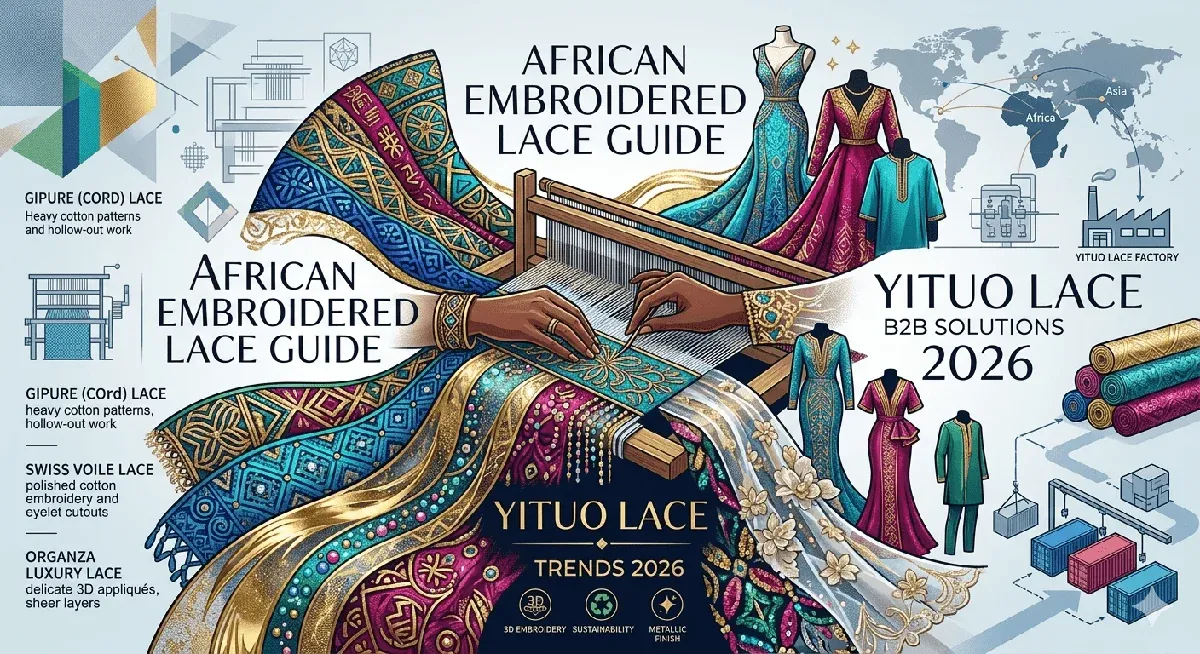
African embroidered lace is not merely a textile product; it is a premium, high-value cultural commodity deeply rooted in West African luxury fashion, ceremonial wear, and high-end celebrations (Aso Ebi). In the global B2B supply chain, sourcing these intricate materials requires a reliable, professional lace trim supplier capable of balancing traditional aesthetics with scalable manufacturing precision. For global fabric distributors and bridal wear brands, understanding the technical definitions of different substrates—ranging from pure cotton cord to heavy organza bases—is paramount to matching regional market preferences and strict tariff/import compliance.
2. Key Styles & Technical Specification Comparison
For bulk procurement buyers, African lace styles are categorized by their embroidery techniques, structural density, and embellishment tiers. Whether you are dealing in wholesale lace trim roll formats or full-width 5-yard pieces, recognizing technical specifications ensures accurate margin calculations.
Lace Style Type | Base Material & GSM | Embroidery Thread Type | Common Embellishments | B2B Application |
|---|---|---|---|---|
Gipure / Cord Lace | Water-soluble Vinylon (320-400 GSM) | 100% Cotton or Rayon Yarn | Minimal beads, heavy hollow-out | Traditional Aso Ebi, Caftans |
Voile Lace (Swiss) | 100% Premium Cotton (110-140 GSM) | Polished Combed Cotton | Eyelet cutouts, subtle crystals | Unisex festive wear, luxury agbada |
Net / Tulle Lace | Polyester Hexagonal Mesh (180-260 GSM) | Metallic Lurex / Multi-color Poly | Heavy hand-stitched beads & sequins | High-end fashion, luxury bridal lace trim |
Organza Luxury Lace | Nylon/Polyester Organza (150-220 GSM) | High-shine Filament Yarn | 3D Appliqués, laser-cut borders | Evening gowns, couture overlays |
3. 2026 Innovation & Design Trends
The year 2026 marks a transformative pivot in the production of African embroidery. Buyers must transition away from stagnant designs to capture emerging upscale market shares. The market is aggressively favoring three distinct manufacturing techniques:
- Hyper-Dimensional 3D Embroidery: Moving beyond flat satin stitching, multi-layered multi-head machines now weave multi-tiered organza petals and multi-colored foam-underlay embroidery directly onto the mesh base. This creates unprecedented structural depth essential for glamorous gele pairings.
- Sustainable & Recycled Materials: ESG mandates are shaping textile purchasing. Leading manufacturers are introducing Global Recycled Standard (GRS) certified polyester tulles and organic cotton bases, matching the ethical consciousness of modern African diaspora fashion houses.
- Futuristic Metallic & Liquid-Gold Aesthetics: Classic gold lurex is replaced by ultra-fine, smooth metallic foils and high-durability coated threads that simulate a liquid-metal finish without giving the fabric a scratchy, stiff texture.
To successfully implement these cutting-edge elements into proprietary fashion collections, partnering with a supplier that offers professional custom lace trim capabilities is the ultimate strategic shortcut for fashion brands.
4. Professional Quality Inspection Standards (B2B Inspection Guide)
To avoid costly bulk rejections and customer disputes, QA managers should adhere strictly to the following 4-Point System customized for African embroidered textiles:
A. Tension and Thread Continuity
Check for loose thread loops and broken embroidery connections, including where metallic threads are used. Agree the tensile test method, sample conditioning and acceptance criterion for the intended application. If the specification requires a 15-pound pull test, test the Guipure connections against that requirement; it is not a universal threshold for every lace product.
B. Color Fastness & Chemical Residues
African lace demands ultra-saturated colors (e.g., royal blues, deep magentas). Ensure the batch scores a minimum of Grade 4 on the ISO 105-C06 wash fastness metric. Additionally, water-soluble bases must be thoroughly rinsed to guarantee zero starchy residues or localized chemical odors.
C. Sequin & Bead Attachment Integrity
For heavily embellished tulle laces, inspect the locking knot sequences on the reverse side. Poorly calibrated lockstitches allow an entire row of beads to unravel if a single thread is nicked during garment cutting.
Before placing container-level commitments, buyers should request a batch of samples to assess material density and color under the agreed local lighting conditions.
5. B2B Care & Maintenance Advice
Proper storage and maintenance preserve stock value for distributors and boutique owners alike. Implement these guidelines to prevent commercial losses:
- Climate-Controlled Storage: Humidity triggers oxidation on metallic lurex threads, turning pristine silver or gold patterns into dull, oxidized bronze. Maintain warehouse humidity strictly below 50%.
- Interleaving Acid-Free Paper: For heavily beaded or 3D appliquéd laces, always interleave rolls with acid-free tissue paper. This prevents the delicate embellishments of one layer from snagging the backing mesh of the adjacent layer during transit vibrations.
- Avoid Compressed Stacking: High-density stacking crushes 3D foam elements and multi-layered organza trims. Store rolls vertically or on suspended cantilever racks.
6. Frequently Asked Questions (FAQs)
Q1: How do you guarantee consistent coloring between different wholesale dye batches?
We utilize digitized Datacolor spectrophotometer matching systems. Every production run is cross-matched with approved master samples under standardized D65 light sources to guarantee a delta-E color variance of less than 1.0.
Q2: Can your factory handle custom geometric embroidery patterns specific to African regional demands?
Yes, absolutely. Our high-precision CAD embroidery designers specialize in transforming local West African motifs into production-ready vector files for large-scale multi-head machines within 48 hours.
Q3: What is the typical MOQ for custom African-style lace trims and full-width fabrics?
For standard catalog variations, the MOQ starts at 500 yards per color. For completely bespoke design fabric architecture or specialized width configurations, the minimum threshold usually ranges around 1200 yards depending on structural complexity.
Discuss a real requirement
Turn the reading into a practical next step.
Send a short note, product reference, photograph, swatch or tech pack. Technical feasibility, sampling, documentation and production terms are confirmed after review.
Start an inquiry