
Introduction
Table of Contents
Define the End Use
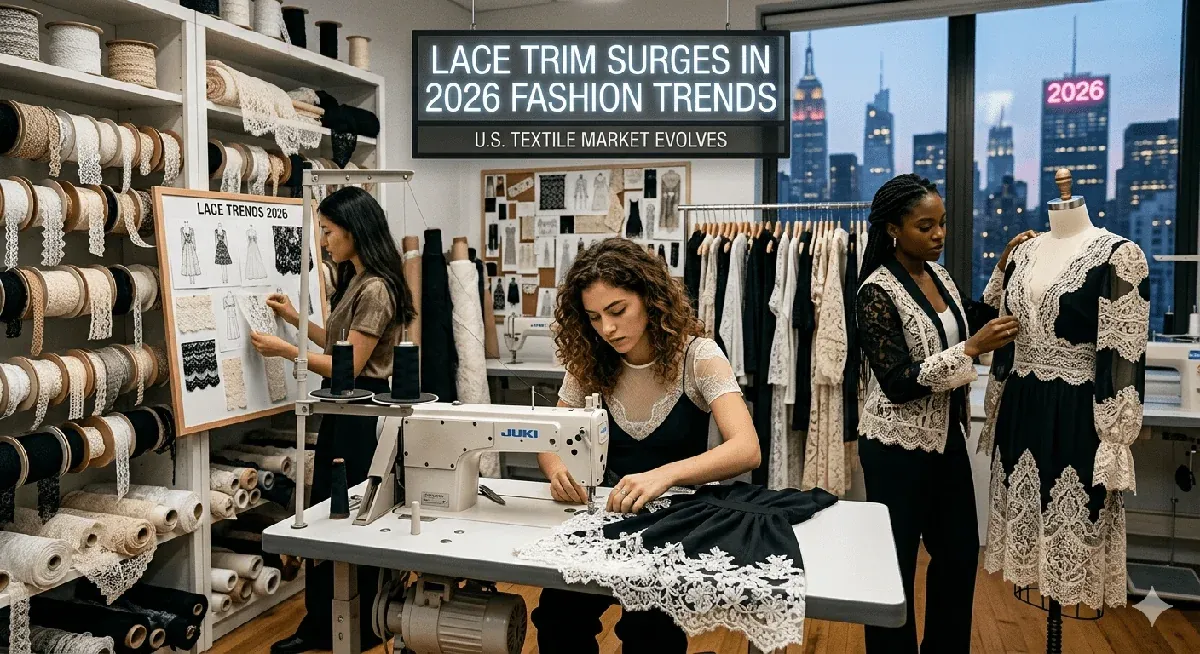
Lace trim is used to decorate garments, accessories, and home textiles, adding texture and visual detail.
Begin sourcing with the finished item, not only a photograph of the pattern. A camisole edge, dress panel, curtain border and pillowcase opening have different construction and care needs. Identify where the lace will sit, what it will be attached to and which parts of the detail must remain visible.
For a range that uses one design across several products, prepare separate specifications for each application. Matching the motif does not mean that width, stretch, attachment or finishing should be identical. Keep these decisions clear before requesting samples.
Specify Material and Construction
Record fiber content separately from how the lace is made. Cotton, polyester or polyamide describes material; embroidered, knitted or crocheted describes construction. A trim is a decorative component, while a wider lace fabric may form a panel or the main body of an item.
Ask for the finished width, motif repeat, edge shape, color reference and required hand feel. State whether the application needs stretch, a stable edge or a particular degree of coverage. If a supplier proposes an alternative, compare its actual specification and sample rather than relying on a similar style name.
Prepare Comparable Quotations
Give each supplier the same brief and quantity breakdown. The purpose is to compare equivalent products and services, including the work required to reproduce the approved detail.
- Product specification: construction, fiber content, usable width, pattern reference, color and finish.
- Sample requirements: length, base material, placement drawing, attachment method and approval responsibilities.
- Commercial requirements: quantity by color, packaging, development charges, production timing and delivery destination.
Clarify when the production lead time starts and which approvals it depends on. Identify the sample and specification version referenced by the quotation. If an order changes after approval, confirm the effect on price, timing and the sample before proceeding.
Check the Finished Application
Apparel and Accessories
Assess the assembled sample for comfort, movement, seam appearance and the way the edge lies. Check joins, motif placement and contact with other garment components. An attractive loose swatch is a starting point; the attachment and base fabric also determine the finished result.
Home Textiles
For curtains, inspect the hanging edge and repeated joins at the intended length. For bedding and washable decorative covers, assess the trim together with the base fabric through the planned care process. Set any additional performance requirements according to the end use and destination.
Where domestic laundering is relevant, ISO 6330:2021 provides washing and drying procedures for textile testing. Agree the selected procedure and acceptance criteria, then record the sample’s condition before and after testing. Do not assume that the same care process or limits suit every trim.
FAQ
Can the same lace trim be used for clothing and home textiles?
Sometimes, but suitability should be checked for each assembled product. Compare movement, attachment, appearance and care needs before sharing one specification across different uses.
Is embroidery fabric the same as lace trim?
No. Embroidery describes decorative stitching, while trim describes a component used to finish or decorate an item. Some lace trims are embroidered; others use different constructions. Ask for both the construction and material specification.
What makes a repeat order easier to manage?
Keep the approved sample, specification version, color reference and inspection requirements together. State whether the repeat must match an earlier delivery and confirm any proposed material or process changes before production.
Sources
ISO 6330:2021 — Domestic washing and drying procedures for textile testing
Discuss a real requirement
Turn the reading into a practical next step.
Send a short note, product reference, photograph, swatch or tech pack. Technical feasibility, sampling, documentation and production terms are confirmed after review.
Start an inquiry