
Introduction
First, a little video to enjoy. A fluffy cat, a pink crochet hat and a collar of green, lilac and pink scallops: there is quite a lot going on in sixteen seconds. The hat gives the scene a storybook quality, and the cat keeps turning its head as if something just outside the frame is far more interesting.
On a second look, the colours and edges begin to stand out. Each row of scallops is easy to see against the next. The pink hat and the collar belong together without being exactly the same colour. These are small details, but they give the outfit much of its character.
That is where lace comes into the picture. The crochet in the clip has a visible looped texture and rounded edges. A fine floral lace could bring a different look: more open space between the threads, with the fabric underneath becoming part of the pattern. It is an interesting change to imagine on something as small as a pet garment.
A little lace can change a plain garment
Picture a plain sage bandana with a narrow cream scallop around its outer edge. The green fabric still does most of the work; the lace simply draws a softer outline. On a peach dog dress, the same kind of edge could run along a short hem. A navy waistcoat suggests another possibility: one small pink floral applique on the back, with plenty of plain fabric around it.
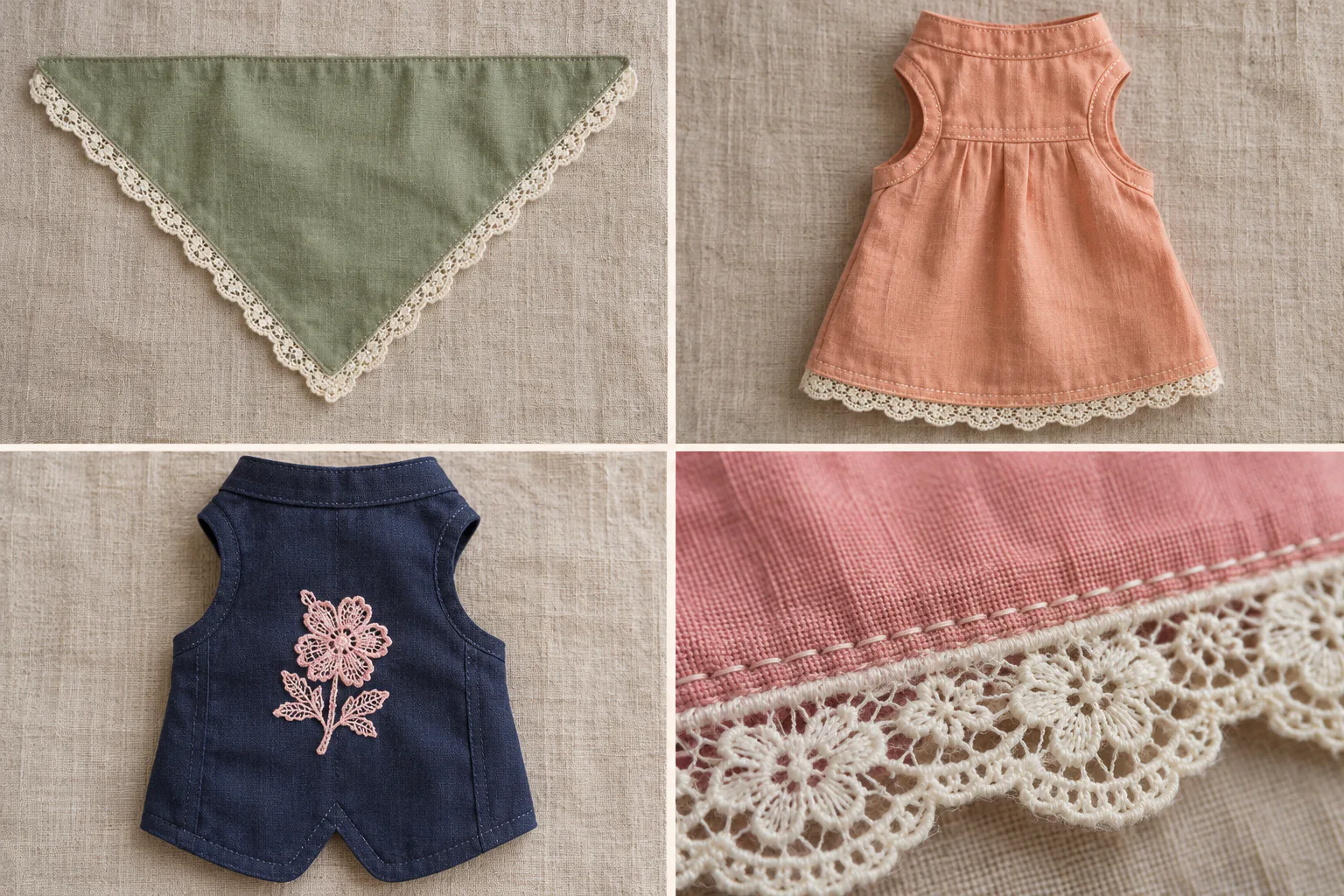
The scale is part of the fun. A flower that looks modest on an adult sleeve may fill most of a tiny back panel. That makes one well-placed motif surprisingly noticeable; it is worth picturing the whole little garment before adding a second one.
Cats bring their own colour palette
The same cream lace can look quite different beside different coats. With a cream longhaired cat, a little sage fabric separates the lace from the fur; on a grey cat, dusty pink makes a quiet contrast. The ginger cat takes the idea in another direction: blue stripes, orange fur and a thin pale edge make a rather cheerful combination.
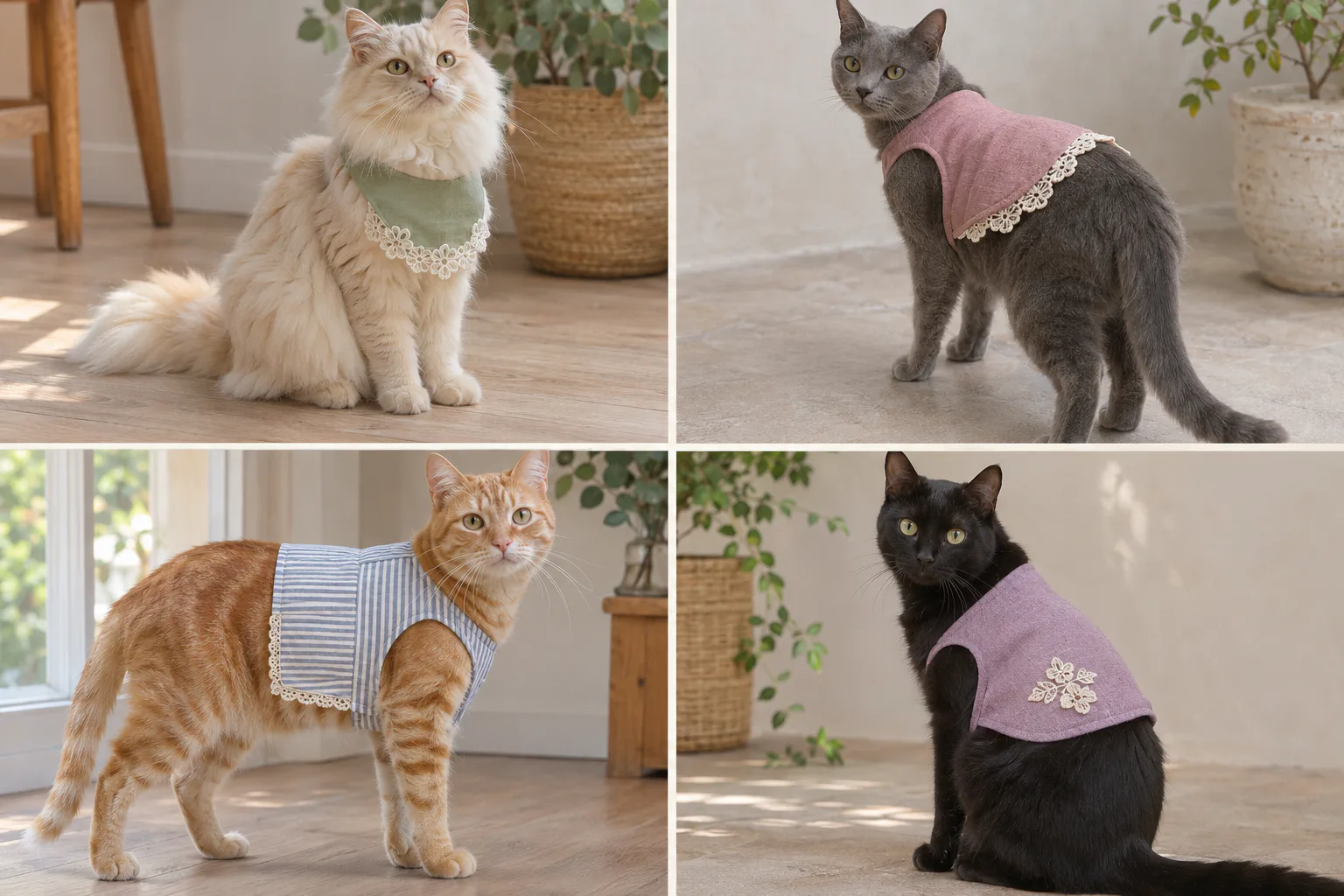
The black cat is a good place to leave more of the fabric plain. One pale flower on lavender stands out clearly, with the black fur framing the whole shape. There is a small change of mood in every panel, even though none needs a complicated pattern.
Dogs give the lace a different outline
A short skirt hem gives the terrier a little sweep of scallops. The checked bandana on the larger dog makes a much simpler triangle. Both use a pale lace edge, but the shape of the cloth changes the effect. It is easy to picture the first in a garden photograph and the second in a relaxed family portrait.
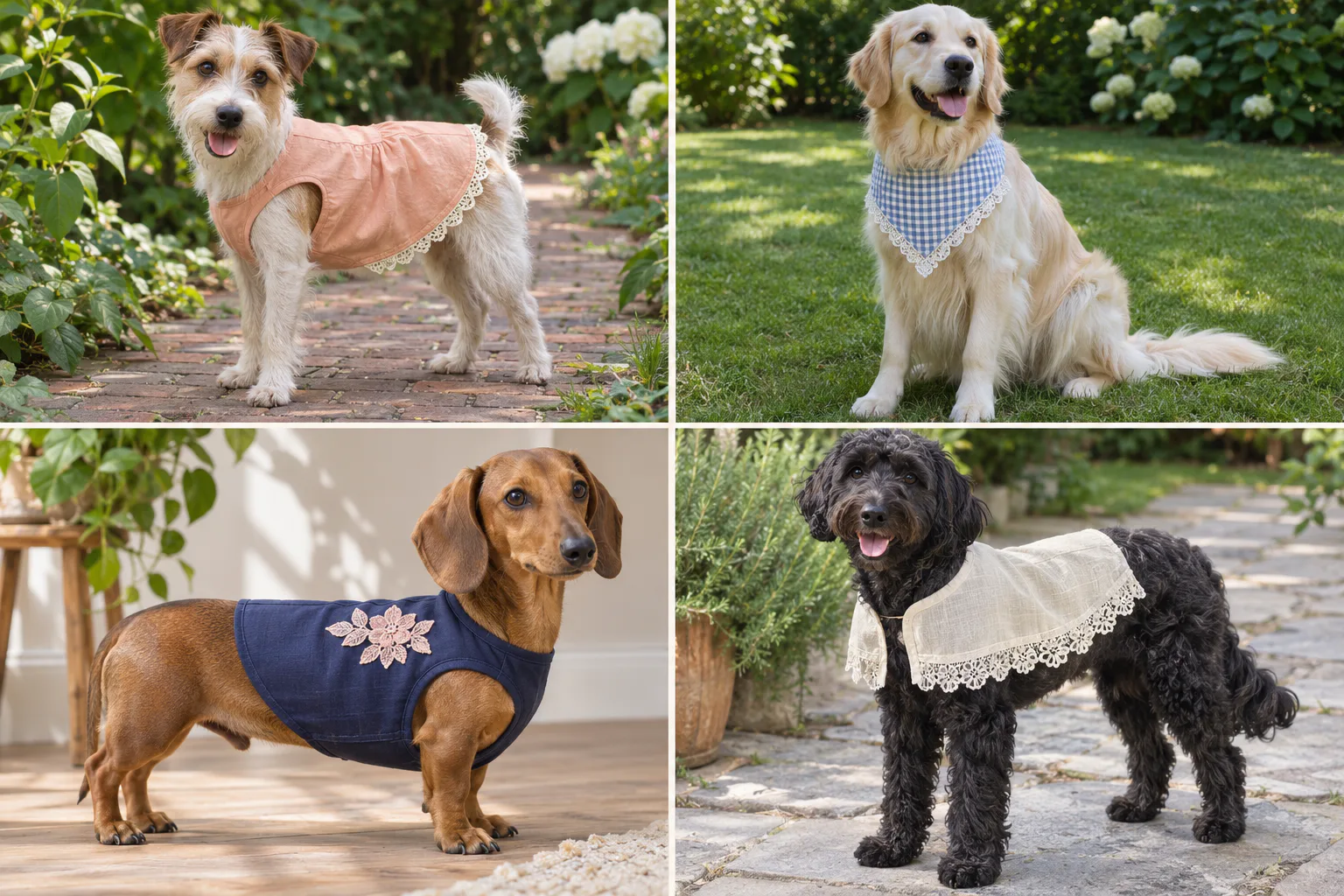
The navy waistcoat and cream cape show two other possibilities. On the dachshund, a single pink flower sits within a long strip of plain blue fabric. Against the black curly coat, the cape lets a larger stretch of openwork show. One draws the eye to a small motif; the other makes the edge itself the main detail.
Pigs add an unexpected turn
Pigs are the unexpected part of this little collection. Their rounded bodies and short necks give the clothes a very different outline. Moss green beside pink skin looks earthy and gentle; blue-and-white checks with a white scalloped edge bring a more playful, picnic-like mood. The pigs still look unmistakably like pigs, which is much of the charm.
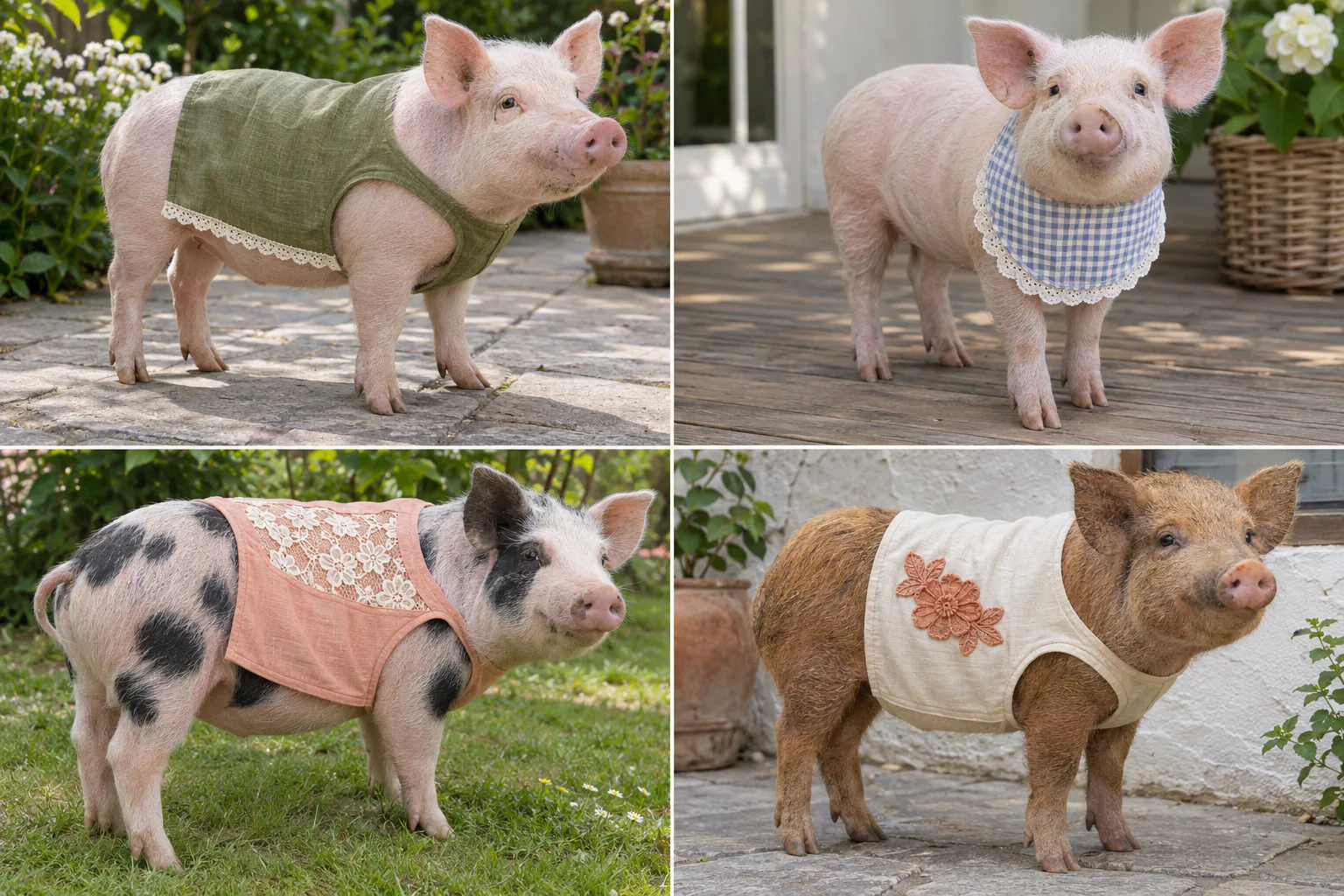
The spotted pig already has a strong pattern of its own. A plain peach area gives the white floral inset somewhere to stand out. On the brown pig, cream and terracotta keep the colours close to its coat. These are colour and silhouette studies, not finished garments that have been tried on the animals.
Now the pink crochet hat has a few companions in the imagination: a black cat with a tiny pale flower, a dachshund with a blue waistcoat, and a round little pig in green. I will probably still look at the cat first when I replay the original clip. But the next lace sample may bring one of these other characters to mind.
Discuss a real requirement
Turn the reading into a practical next step.
Send a short note, product reference, photograph, swatch or tech pack. Technical feasibility, sampling, documentation and production terms are confirmed after review.
Start an inquiry