
Introduction
A lace sample can look right while the delivery differs in width, color or the small connections that hold a pattern together. Quality checks work best when the reference stays with the order: compare the goods with the approved sample, describe the difference precisely, and keep the release decision tied to the rolls being packed.
Start with a reference both sides can use
Give the approved sample an ID and keep its agreed material, width, color and finish with it. Record which features have been accepted. If the color is approved but the width needs adjustment, say so explicitly; a general “sample approved” message can otherwise authorize more than the buyer intended.
Agree the width measurement points, material condition and acceptance range before checking the delivery. For lace sewn onto a garment, retain the accepted attachment sample too. The loose strip shows the material and pattern; the sewn piece shows the agreed edge and seam arrangement.
Buyer and supplier should be able to identify the same reference. Label retained pieces consistently, protect the reference from routine handling and use a separately identified piece for cutting or assembly trials. When a revised sample replaces an earlier one, record which version production and inspection must follow.
Compare the same connection in the same position
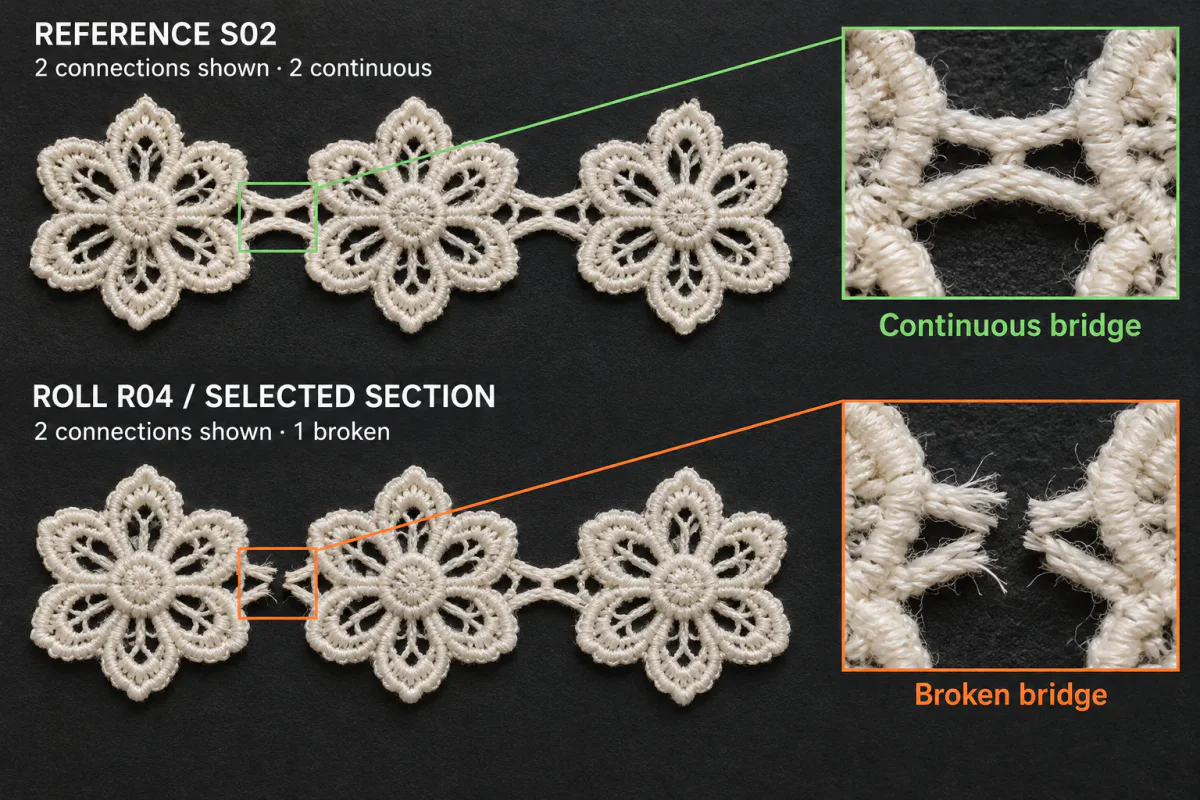
For example, compare reference S02 with a selected section from roll R04. Each strip below shows three flowers and two connecting positions. Start with the connection between the first and second flowers: S02 is continuous, while R04 has separated thread ends. Follow the colored outline to the close-up on the right, then look back at the surrounding flowers to distinguish the break from an intended opening in the pattern.
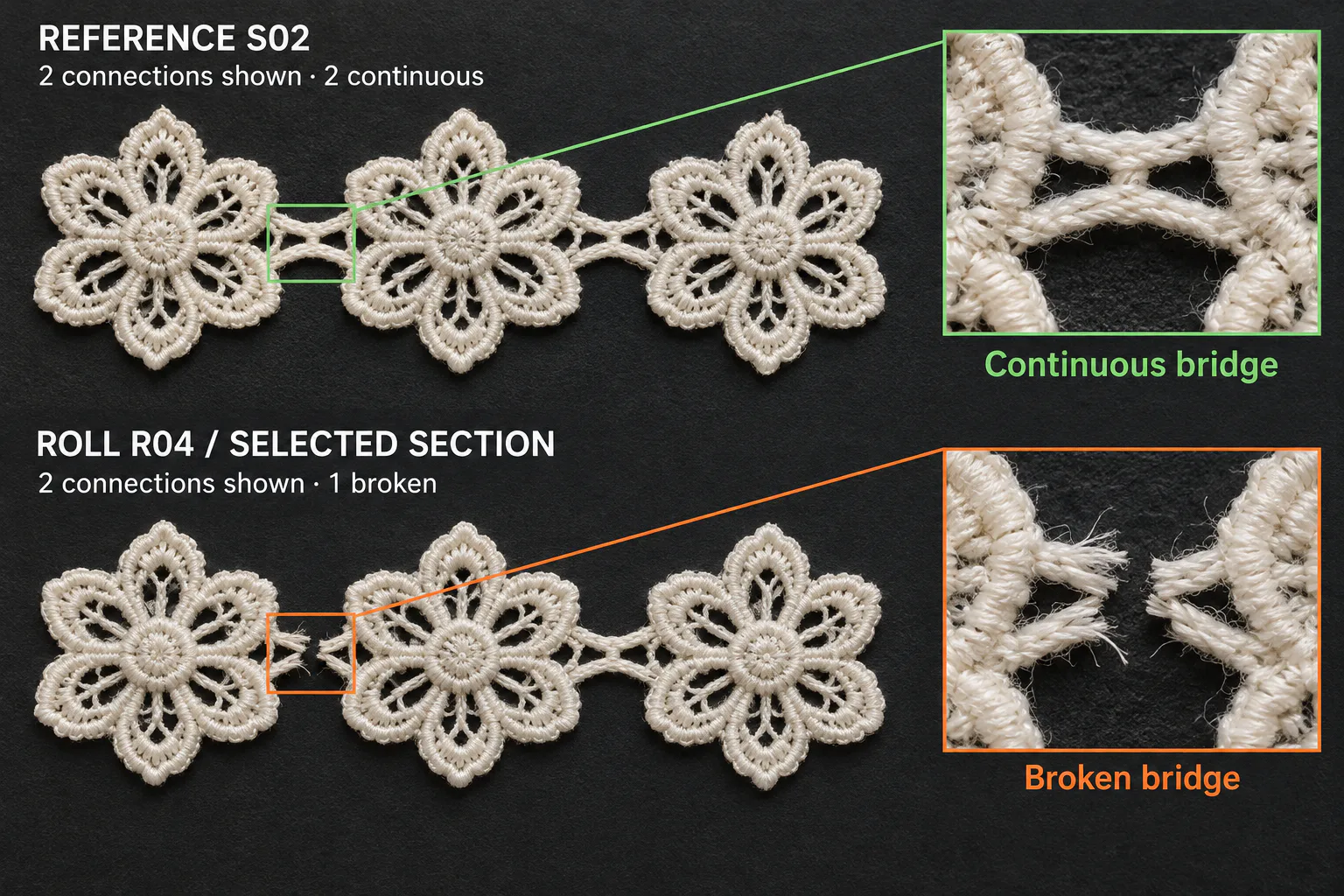
S02 has two continuous connecting positions; the displayed R04 section has one broken and one continuous position. The count describes this section, not a defect rate for the roll.
A useful entry is: “R04, selected section: first of two connecting positions has separated thread ends; compare with S02.” Add the section’s location on the roll, using a marked starting point and measured distance so another inspector can find it. Keep both the surrounding repeat and the close detail. This records the visible difference; the material and its processing and handling records are needed to investigate how it happened.
The next action is to establish the extent of the problem. Inspect the additional lengths or rolls required by the agreed plan and record that coverage. Checking two connecting positions, checking several measured sections and checking a complete roll are different activities. Do not convert the one break pictured here into a percentage for unexamined material, or release a roll because the next flower looks normal.
Keep the affected roll identifiable and separate while it is assessed. Retain its label, relevant packaging and reference pieces. Agree the review before cutting out the section or applying a treatment that could change it. Further sorting, rework, replacement or a buyer-approved exception should each name the goods involved and the checks required afterward.
Pack only the rolls covered by the release
A separate packing example shows the final handover. Suppose R01, R02, R03, R05 and R06 have completed the agreed checks and are released, while R04 remains on hold. Keep every roll individually bagged and labeled. Put the five released rolls in the shipping carton and R04 in a separate cardboard carton marked “HOLD / 待复检” on the clean inspection counter. Read the five IDs on the packing list against the five bags before closing the shipping carton.
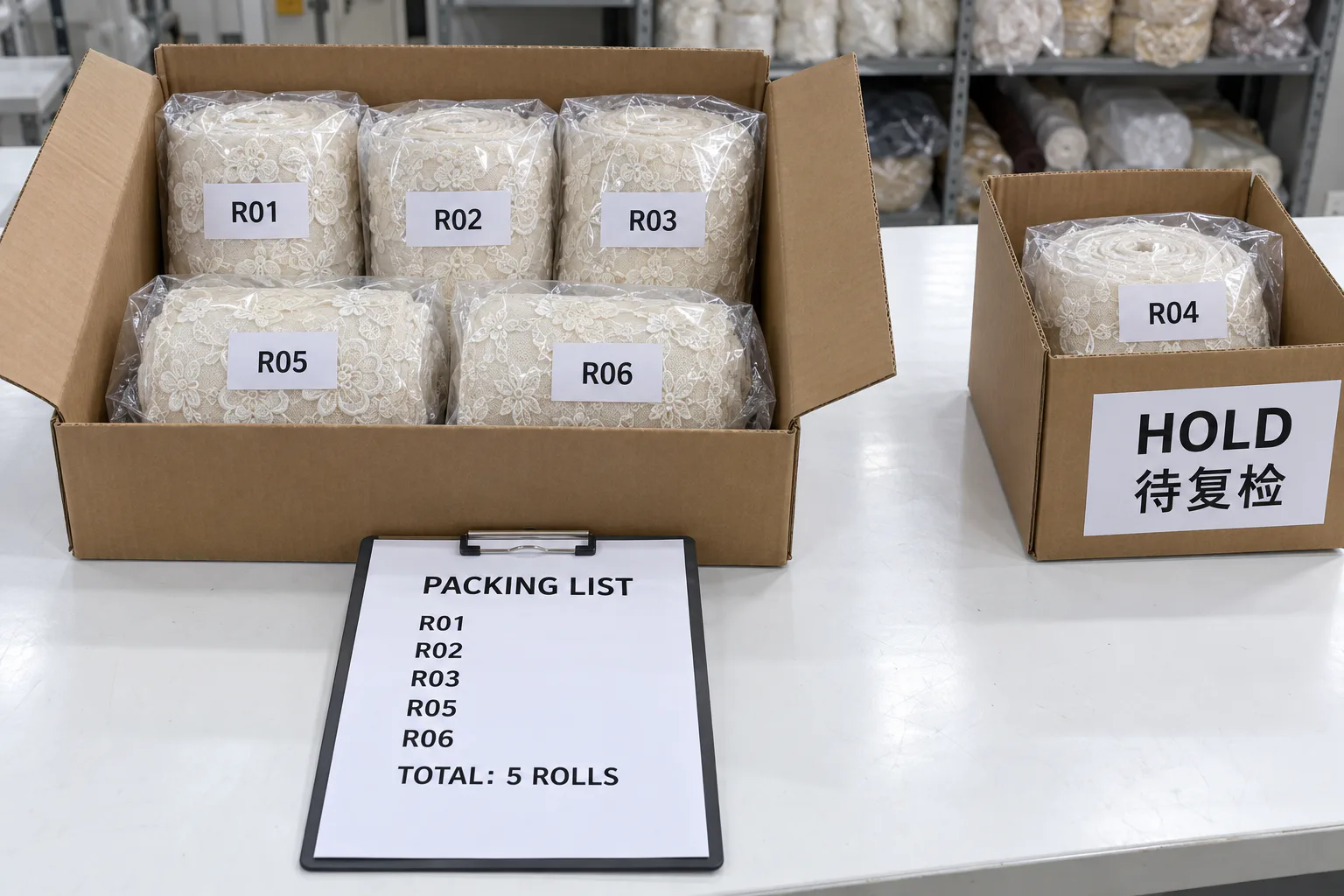
The list and shipping carton both contain R01, R02, R03, R05 and R06: five rolls. R04 is visible in the separate hold carton and is excluded from the shipment.
The missing R04 entry is deliberate: writing “R01–R06” would put the held roll back into the shipment on paper. Keep the release record with the reference used, inspection results, decision, approver and date. After rework or replacement, check R04 against the agreed requirements and record its own release. If it later joins a shipment, update the packing list and roll count before sealing that carton.
Read certificates and test reports alongside the inspection record, matching their scope to the product and order. They may meet a documentation requirement while a color or workmanship difference still needs action.
YiTuo’s quality page explains the role of approved samples and agreed order details. To plan the checks for a delivery, send the product reference, sample information and intended use. Establish the reference before production, and keep it connected to the goods through packing.
Discuss a real requirement
Turn the reading into a practical next step.
Send a short note, product reference, photograph, swatch or tech pack. Technical feasibility, sampling, documentation and production terms are confirmed after review.
Start an inquiry