
Introduction
A B2B-focused comparison of bias cord trim and grosgrain ribbon, assessing production cost, stability, raw material supply, and factory-line adaptability to identify the best edge design for scalable OEM fashion programs and specific applications.
What are bias cord trim and grosgrain ribbon, and how do their construction methods differ?
Bias cord trim uses a cord covered with bias-cut fabric, creating a rounded, sculpted edge that follows curves smoothly and adds dimensional definition to seams and hems. It is often chosen to emphasize contours on collars, waist seams, pockets, and outerwear panels.
Grosgrain is a tightly woven, ribbed ribbon used as an edging or insert, providing a crisp, flat finish with clear visual lines. It excels on straight edges, structured silhouettes, and branding details such as stripes, bows, or ribbon effects.
What is the difference between bias cord trim and grosgrain ribbon?
- Bias cord trim is made by wrapping a cord in bias-cut fabric, creating piping that can follow curves. Grosgrain is a woven ribbon with transverse ribs; it is not itself lace. This comparison concerns these two edge-finishing options, which can also be combined with lace.
How do production costs compare for OEM orders?
Bias cord trim typically has higher manufacturing costs because of cord insertion, bias-cutting preparation, and the additional handling needed to sew curves accurately. Waste can increase with complex shapes, but costs fall when styles are repeated across SKU and widths and colors are standardized.
Grosgrain ribbon benefits from commodity pricing, broad supplier competition, and fast attachment methods (single-pass topstitching and securing the ends). It is generally more cost-effective for high-volume basics, uniforms, and fashion programs with frequent repeats.
How do the production costs of bias cord trim and grosgrain ribbon compare?
Bias cord trim can incur higher production costs because of the labor-intensive process of cutting fabric on the bias and sewing it around a cord, especially for custom designs. Using ready-woven grosgrain ribbon can simplify preparation and be more cost-effective for Original Equipment Manufacturer (OEM) orders.
Which edge finish offers better stability and quality consistency at scale?
Corded bias trim provides strong seam reinforcement and shape retention, especially on curved edges and heavier fabrics; however, consistency depends on operator skill and precise seam tolerances. Good guides and folders can control variation, but training matters.
Grosgrain ribbon offers excellent dimensional stability through its firm weave and minimal stretch, producing highly consistent results across lines. It resists distortion on straight runs and retains crisp edges through washing, simplifying QC in mass production.
Which edge finish provides better stability and consistency in large-scale production?
Grosgrain ribbon offers stability and quality consistency in large-scale production through its tight weave and uniform texture. Bias cord trim can also be made and applied by machine; its uniformity depends on bias cutting, cord insertion and seam control, not on being inherently handmade.
What are the raw material supply considerations and risks?
Bias-trim inputs—cords and bias-cut fabric (often cotton, polyester-cotton, or fabric matching the main material)—are widely available, but matching the body fabric shade and securing bias-cutting capacity can extend lead times. Cord quality (density and recovery) affects the final hand feel and durability.
Polyester/nylon grosgrain ribbons are global commodities with extensive shade libraries and reliable availability, including heat-bondable options. Risks are low; color continuity and width tolerances are easy to control, and custom colors are feasible with manageable MOQ.
What factors affect the material supply chain for trim production?
The supply chain for trim-production materials can be affected by factors such as the availability and cost of base fabrics (including cotton or synthetic fibers), fluctuations in raw material prices, and sourcing specialized components such as piping cords. These variables can introduce risks to cost stability and material availability.
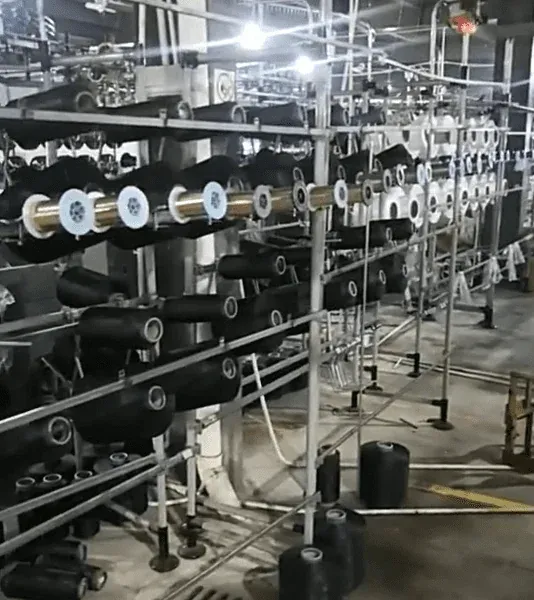
How well do factory lines adapt to each trim for mass assembly?
Bias trim may require specialized presser feet, folders, and slower sewing speeds to navigate curves and multilayer joins, potentially affecting takt time. Once the setup is standardized, repeatability improves, but style complexity still determines throughput.
Grosgrain ribbon integrates smoothly into high-speed lines through simple topstitching or edge-joining operations. Changeovers are fast (swapping rolls and threads), enabling flexible planning for multistyle lines and rapid replenishment cycles.
How adaptable are factory production lines to bias cord trim and grosgrain ribbon?
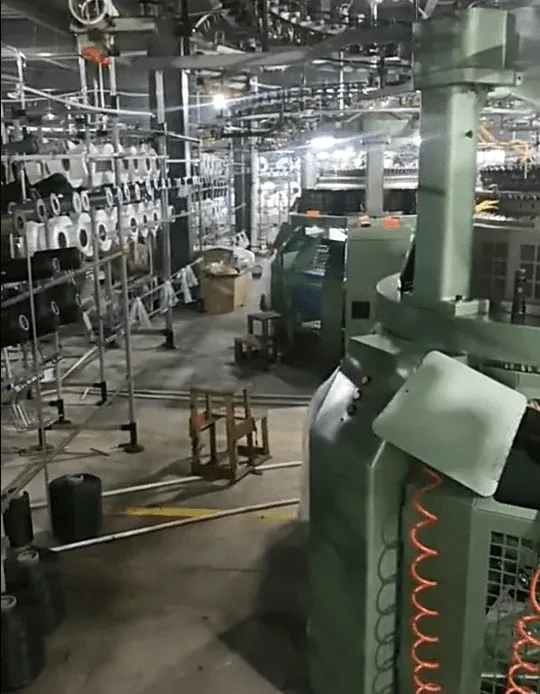
Factory production lines commonly integrate grosgrain ribbon through simple attachment operations suited to mass production. Bias cord trim requires control of cutting, cord insertion and stitching, especially on curves. Both can be processed by machine; speed and consistency depend on the design, guides and line settings.
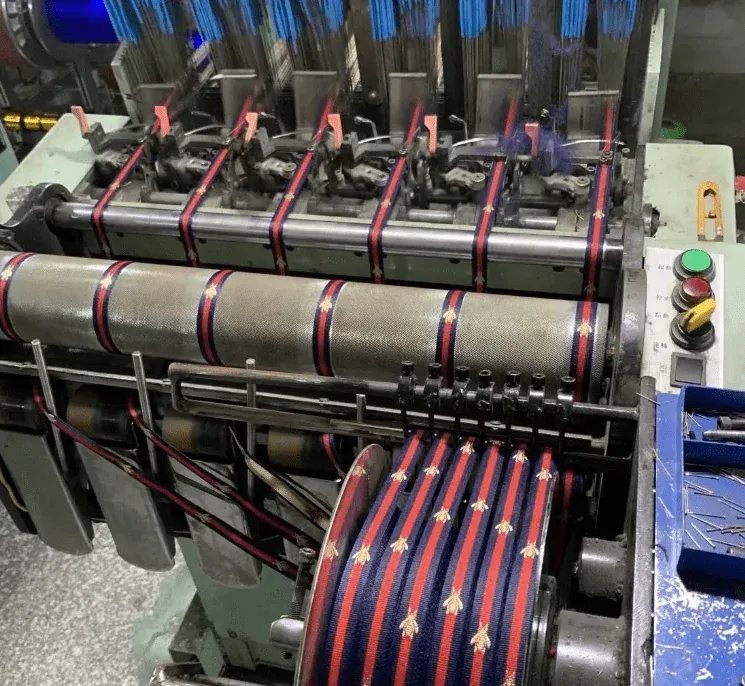
Application scenarios and B2B recommendations for OEM fashion solutions
Choose bias cord trim for contour accents on tailored garments, sports-luxe outerwear, childrenswear with curved yokes, and premium SKU where 3D edge definition increases perceived value. It is ideal when design differentiation and seam reinforcement are priorities.
Select grosgrain ribbon for cost-effective, repeatable programs: uniforms, athleisure tape, dresses with straight hems, accessories, and branding trims. It is the safest choice for large-scale OEM because of stable costs, simpler QC, and fast line integration.
In which applications are bias cord trim and grosgrain ribbon commonly used?
Bias cord trim is often used in high-end fashion and tailored garments where intricate details and flexibility are desired. Grosgrain ribbon suits ready-to-wear collections and accessories, offering durability and a classic look. For OEM fashion solutions, grosgrain ribbon is recommended for scalable production because of its cost-effectiveness and ease of manufacture.
Discuss a real requirement
Turn the reading into a practical next step.
Send a short note, product reference, photograph, swatch or tech pack. Technical feasibility, sampling, documentation and production terms are confirmed after review.