
Introduction
A useful supplier can turn a garment requirement into a sample you can examine, explain how it will be made and keep the agreed details through delivery. Start with the job the order must do. An exact refill calls for stock and identity checks; a new design calls for material selection and sampling. Compare quotations after the proposed product and work are clear.
Give candidates the same order requirement
Separate essential requirements from preferences. Composition, finished width, color, required documents and delivery timing can determine whether a proposal is usable. A fast reply or a wide catalog does not resolve a mismatch. If a requirement can change, identify who can authorize that change before considering the alternative.
For example, a blouse order needs ivory scalloped trim with a 40 mm finished-width target and a specified fiber composition. The buyer supplies the blouse fabric and a physical color reference, IV-01, then agrees the width acceptance range with the supplier. A reply that identifies the proposed material, trial sample and next action is more useful than “we can make the same as your photo.”
Understand what the sample represents
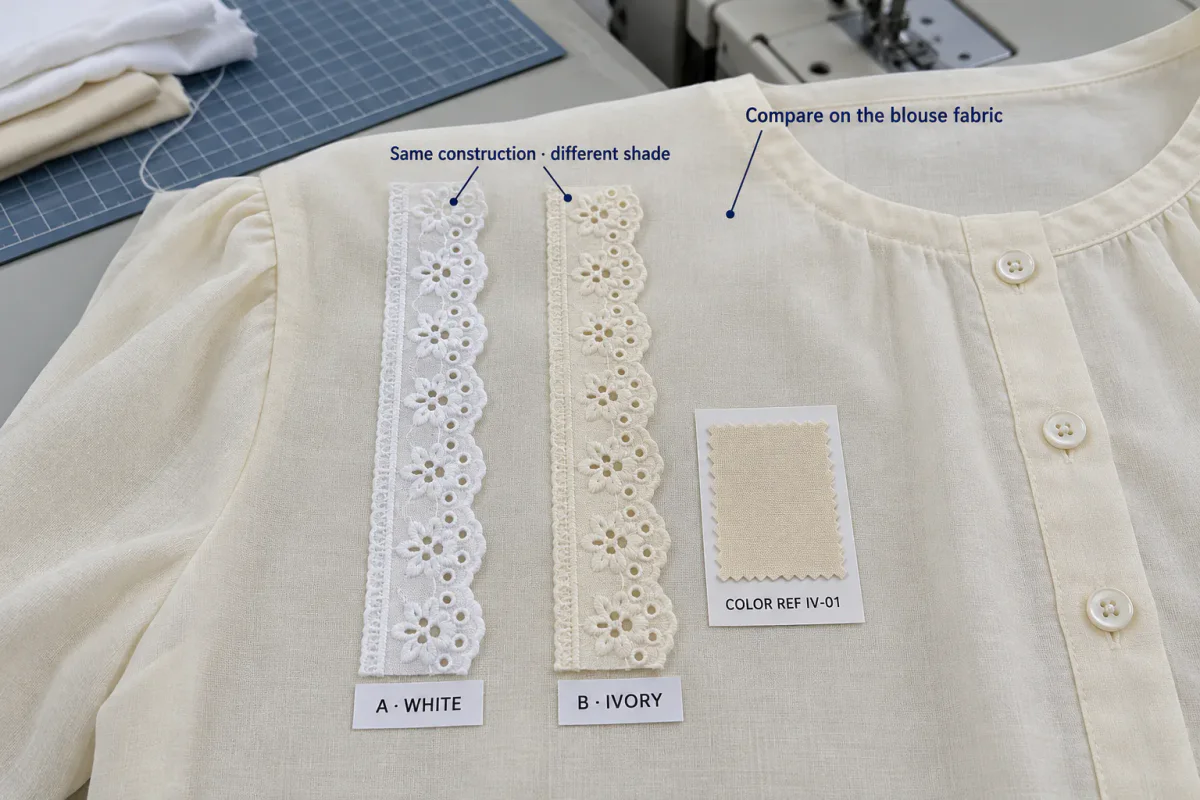
Compare A and B on the intended blouse fabric. They use the same straight attachment edge and floral eyelet construction, but A is white and B is ivory. A can help review the construction while B takes the color discussion closer to the order requirement. Keep their identities separate so acceptance of the white trial does not become acceptance of the delivery shade.
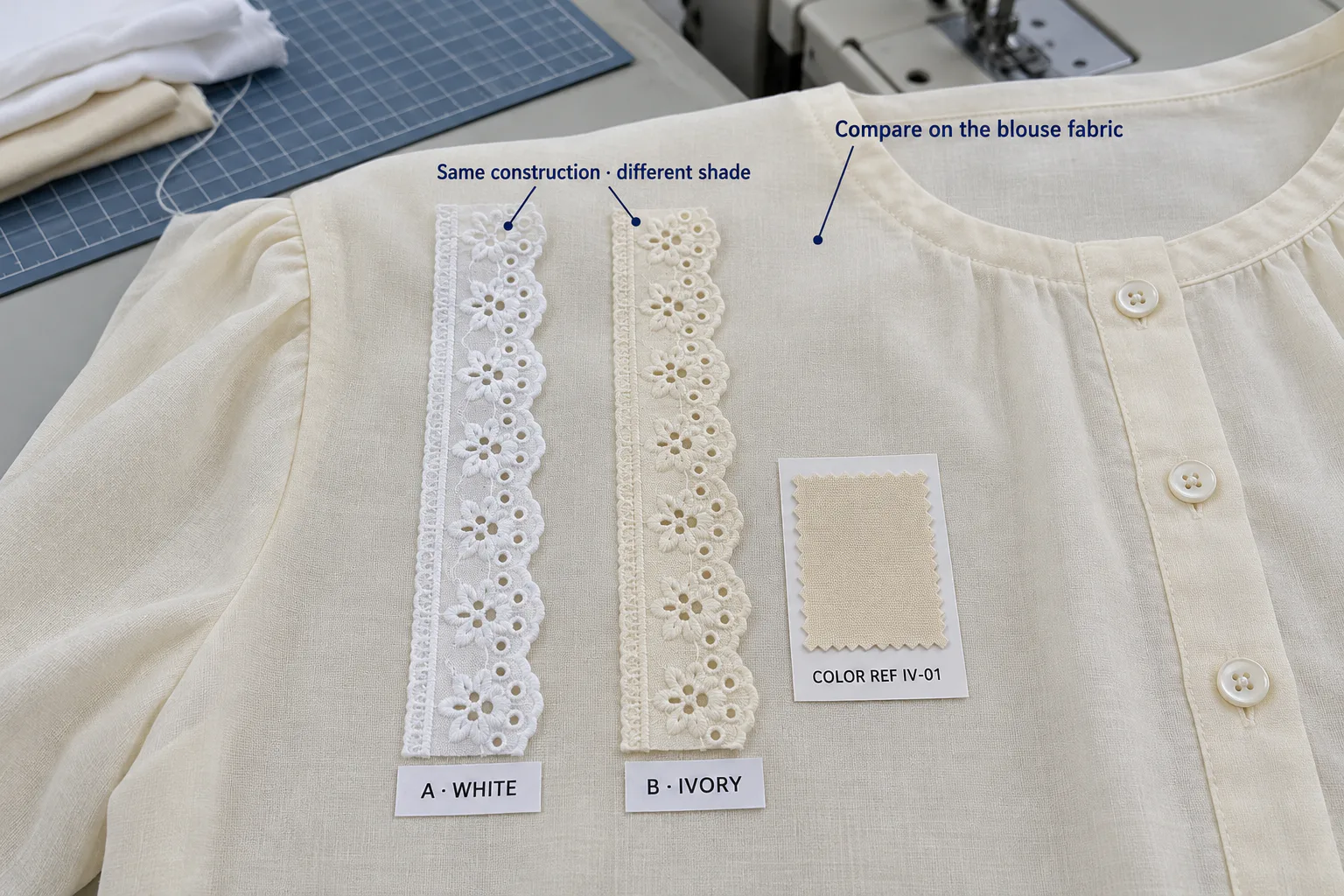
Sample arrangement: A looks cooler against the blouse fabric; B is nearer the ivory direction. IV-01 provides a separate physical color reference. Compare the visible lace and backing together under the agreed viewing conditions before choosing the shade.
Ask the supplier to provide the finished trim with its sample reference and the physical color standard. Keep the intended backing and direction consistent when comparing it. Confirm the fiber composition from the corresponding material information rather than the appearance of the lace. Store the accepted sample and specification together so production can distinguish that version from the earlier trial.
Next, make the width requirement readable. Lay the ivory trim flat without pulling it and measure perpendicular to its length, from the straight outer edge to an outer scallop tip. Define those two boundaries before comparing suppliers: measuring to a scallop valley or to the stitch line would give a different number.
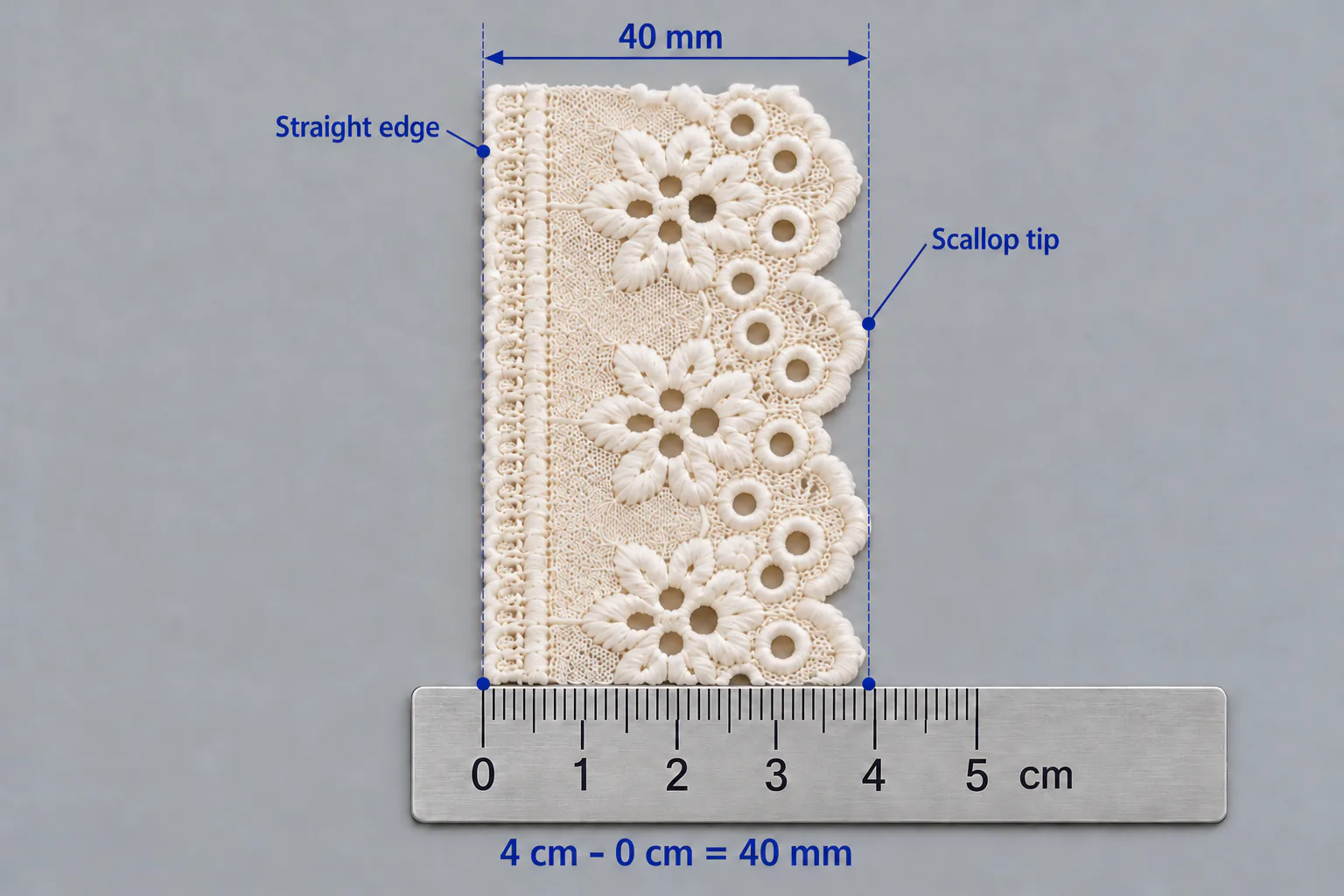
Width example: the straight edge is at 0 and the outer scallop tip at 4 cm. The difference is 4 cm, or 40 mm. The horizontal arrow measures across the trim; the vertical guides connect the two defined edges to the ruler.
For the actual sample, repeat the reading at the agreed positions, retain the individual results and compare them with the 40 mm target and accepted range. Keep the sample reference, measurement condition and edge definition with the record. Then attach the same trim to the intended blouse fabric and inspect the seam, visible repeat and how the edge lies. Record the attachment allowance and exposed width separately from the full trim width. Complete any separately required performance tests before using their results for approval.
Check who will carry the sample into production
Identify the business that will contract with you and who handles pattern development, lace production, dyeing or finishing, inspection and dispatch. Specialist partners may be involved. The supplier should explain how the approved reference passes between them and who is accountable if the proposed material or process changes.
Use one order contact to coordinate the work, with a named person and response date for the material description, finished sample and measurement record. Ask for the effect of any change on price and dispatch before accepting it. Mark superseded references clearly and make sure production and inspection receive the accepted version.
For required certification, check the relevant business, product and process scope, validity and order documents. If a supplier cannot share another customer’s confidential record, request a redacted example or a record from your own trial. YiTuo’s development process and quality information provide starting points for these discussions.
Choose on the work the supplier can complete
A limited construction trial may proceed while the final material, color and width are being established, provided its scope and cost are agreed. Bulk approval needs the required sample and records to be complete and acceptable. If the supplier cannot meet an essential requirement, evaluate another proposal or have the authorized buyer revise the requirement; an overall supplier score cannot make the shortfall disappear.
Send YiTuo the garment reference, required material and dimensions, quantity and unit, destination and delivery date. State whether the next step is stock confirmation, a technical review or a sample. The supplier’s response should identify what it proposes to supply, what it will do next and who will coordinate the work.
Discuss a real requirement
Turn the reading into a practical next step.
Send a short note, product reference, photograph, swatch or tech pack. Technical feasibility, sampling, documentation and production terms are confirmed after review.
Start an inquiry