
Introduction
Two rolls of ivory stretch lace arrive for the cuffs of a navy blouse. On the receiving bench R05 looks creamier than R04. The cutting room wants the trim this afternoon. Before a left cuff comes off one roll and a right cuff off the other, the buyer needs to know whether they will look alike on the dark sleeve.
Unroll a short length from each roll and place both beside the approved swatch in a single layer on the agreed backing. If R05 still looks warmer, keep its tag with the sample and set that roll aside. R04 can go to cutting only after the receiving record shows that it meets every requirement for this order and the person authorised to release it has signed. First check whether the order allows a roll to be released on its own.
Which swatch did the buyer sign off?
Take the order line and the physical swatch named on it to the receiving table. Check the supplier’s style and colour codes, specified width and approval date. If the buyer approved how the lace looks on a navy cuff, bring the sewn cuff as well. A loose cutting answers questions about the trim. The cuff shows how much flower the seam is meant to leave on view.
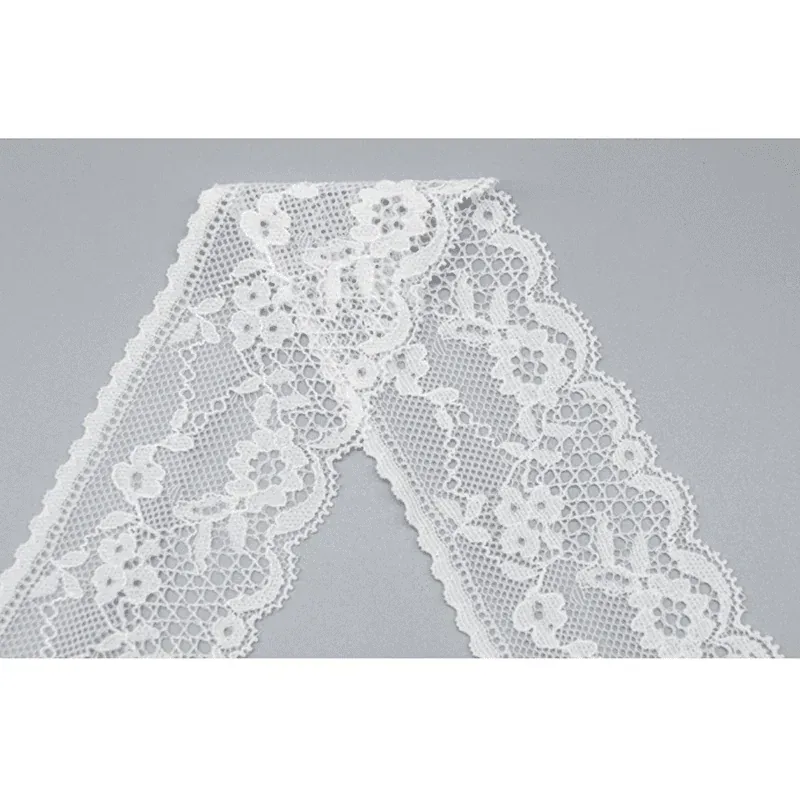
YiTuo catalogue photograph of YT-235T7. Follow one side around the fold and you can see which edge carries the deeper scallops.
For example, YiTuo lists YT-235T7 as a 5.5 cm white floral trim with a straight edge and a scalloped edge. Those details help receiving pick the right reference. The buyer’s signed sample and order specify which white, which width limits and which edge appearance this delivery must match. See the YT-235T7 product photographs.
Keep the roll number with the cutting
Before opening the rolls, photograph the labels and match each one to the packing list. A lot number may appear on several rolls. Give each roll its own identifier if the supplier has only marked the lot, and keep the link to the original label. Put the same identifier on the cutting as soon as it leaves the roll.
“R05, 12 m from the leading end, face up” lets someone find the spot again. “Ivory lace, Tuesday” does not. Mark the direction in which you unrolled the trim and note whether the metre reading was taken at the start or end of the section. If the roll has a splice, record its position before rewinding.
Does the shade difference survive a side-by-side check?
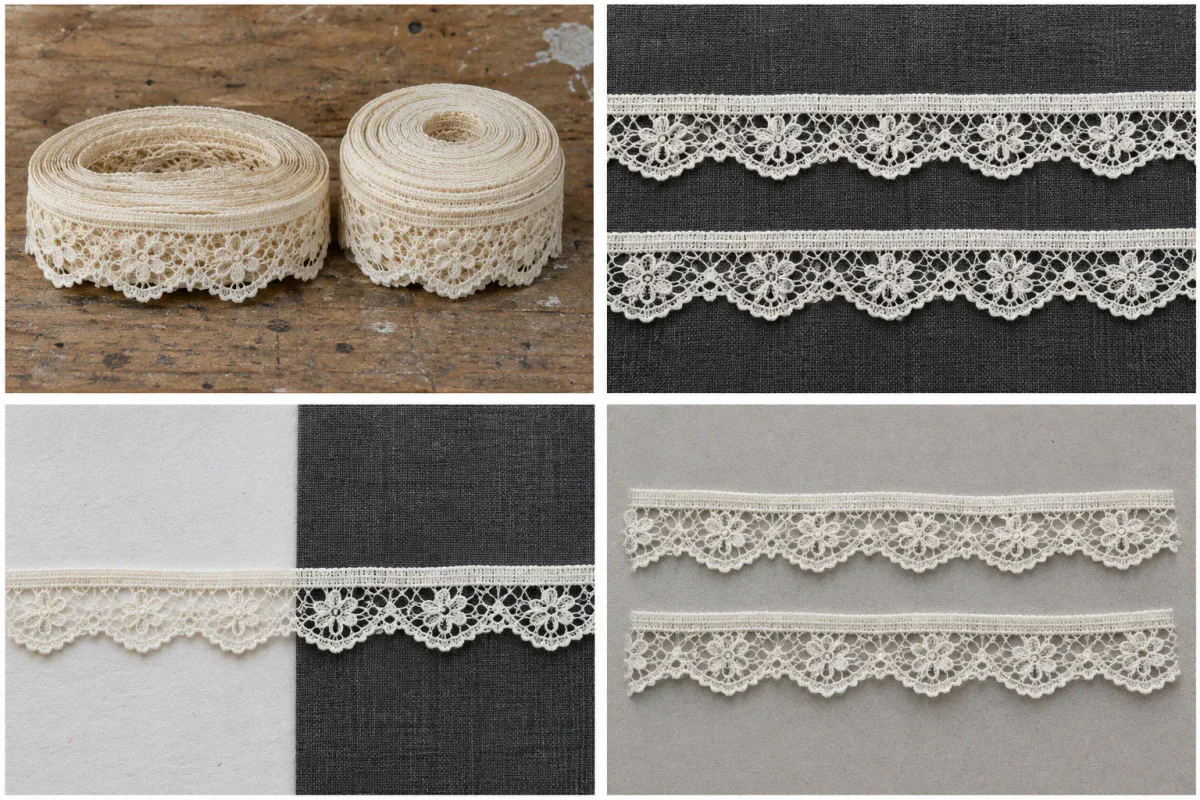
Several layers of open lace hide more of the surface beneath them than a single layer does. Lay the approved swatch, R04 and R05 face up in the same direction, with the same number of layers. Use the backing and lighting agreed for approval. Where the order calls for a sewn appearance check, compare the three again on the actual navy cloth and keep that observation separate.
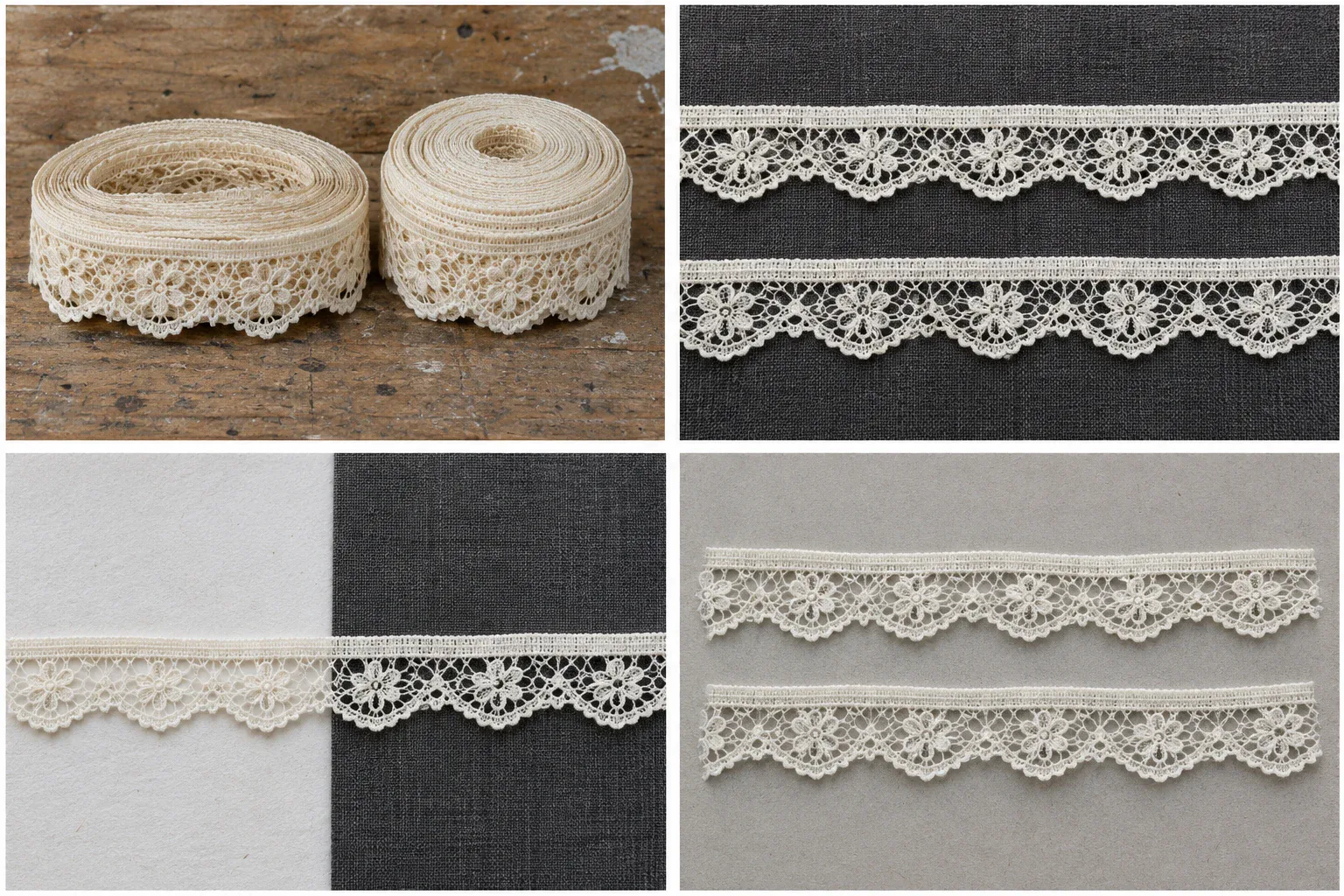
In the lower left, the same open lace crosses a change of background. For the shade decision, use the side-by-side arrangement on a single backing shown at lower right and add the approved swatch.
If the rolls now match the reference, record the conditions that cleared the shade question and finish the other checks. If R05 still looks warmer, photograph all three in one frame with their identifiers visible, and retain the physical pieces. A supplier comparing separate phone pictures may simply be seeing two different exposures.
Which edge did the ruler start from?
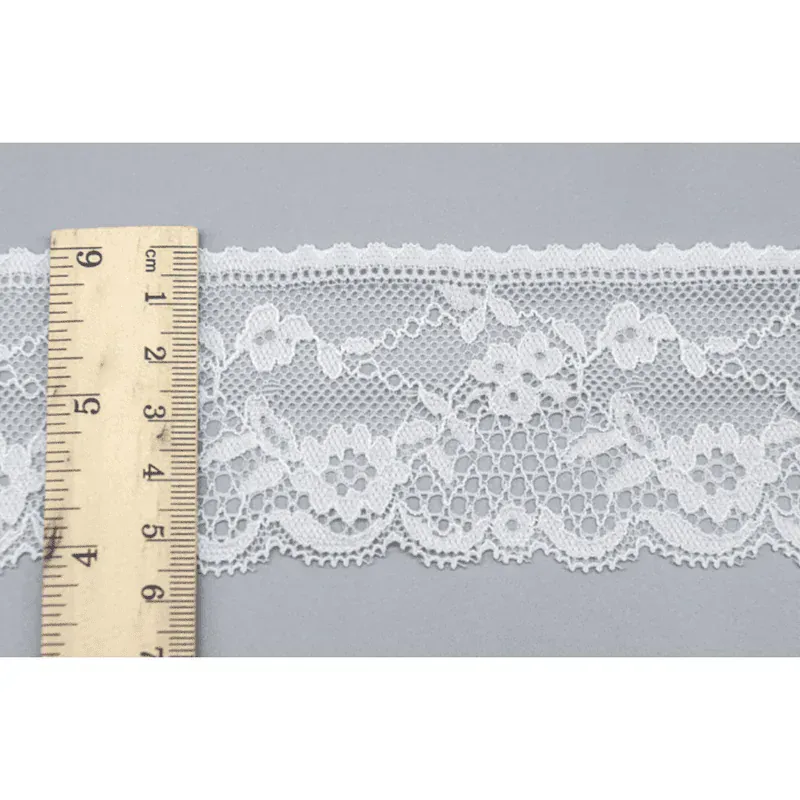
YiTuo catalogue detail. The lower edge has both tips and recesses. Measuring at one rather than the other changes the width you record.
Follow the measuring points on the approved drawing, with the trim relaxed as specified. For a straight-to-scalloped band, align the ruler with the straight-side reference and measure across to the specified point on the opposite edge. If the order also defines a usable sewing band or a finished visible width, record that separately. Mark the exact endpoints on a photo if the sheet just says “width”. Agree what to measure before calling a roll too narrow.
For a repeat check, align the centres of two matching flowers on the loose strips, then count along to the same flower several repeats farther on. Compare equal numbers of intervals. Five flower centres span four intervals. On paired cuffs this matters because the first flowers can line up while those near the closing seams drift apart.
If the loose trim passes but the sewn edge curls, make a short trial on the approved fabric, using the same seam position, thread and feeding instructions as the retained cuff. Lay the trial beside the finished reference. A separate stretch or recovery requirement belongs on its own worksheet with the agreed direction, load or extension and reading time.
Give the supplier a location they can find
A small loop of yarn sticks out of a scallop. Leave it in place until the supplier has seen it. A close view shows the loop. A second, wider view puts it on a particular edge and floral repeat. Add the lot, roll number and measured position to both. Keep the tag on the piece if it travels to the sample room.
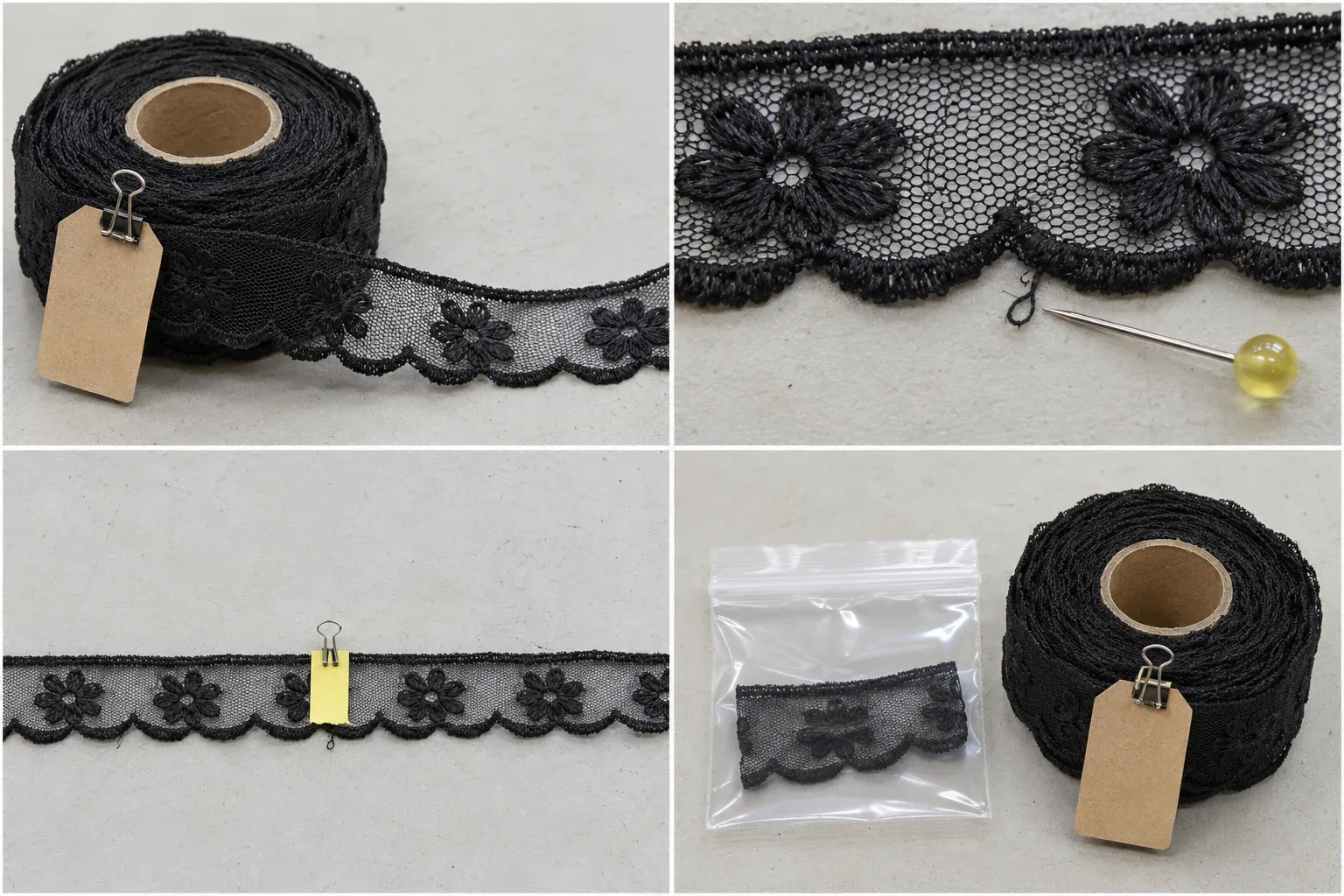
Look closely at the loose loop, then find the marked spot on the longer strip. Keep both views with the roll record so the supplier knows where to look when the roll is reopened.
Which lengths can go to cutting?
Keep the two observations on R05 separate. Mark the warmer shade on the comparison record. On a second line, note the loose loop about 12 m from the leading end and attach a close view and a wider view. Ask the supplier to check its retained sample against S3, then agree with the buyer how much of the roll to unwind and inspect. A usable section needs to pass both the shade check and the edge check, along with the other requirements for this order.
Suppose the buyer and supplier agree to release part of R05 after sorting. Record the start and end of each section that passed, measure its continuous usable length and have the authorised reviewer sign the release. Transfer those limits to the roll tag and stock record. A length that is good enough for a short cuff may still be too short for a long border.
Three rolls, three entries on the stock sheet
Here is how the receiving sheet could read for this order. S3 is the signed ivory swatch. R06 is an unopened roll from the same dye lot as R05. The clerk puts the roll number and status on both the stock sheet and the physical roll, then issues only the quantity cleared for this work order.
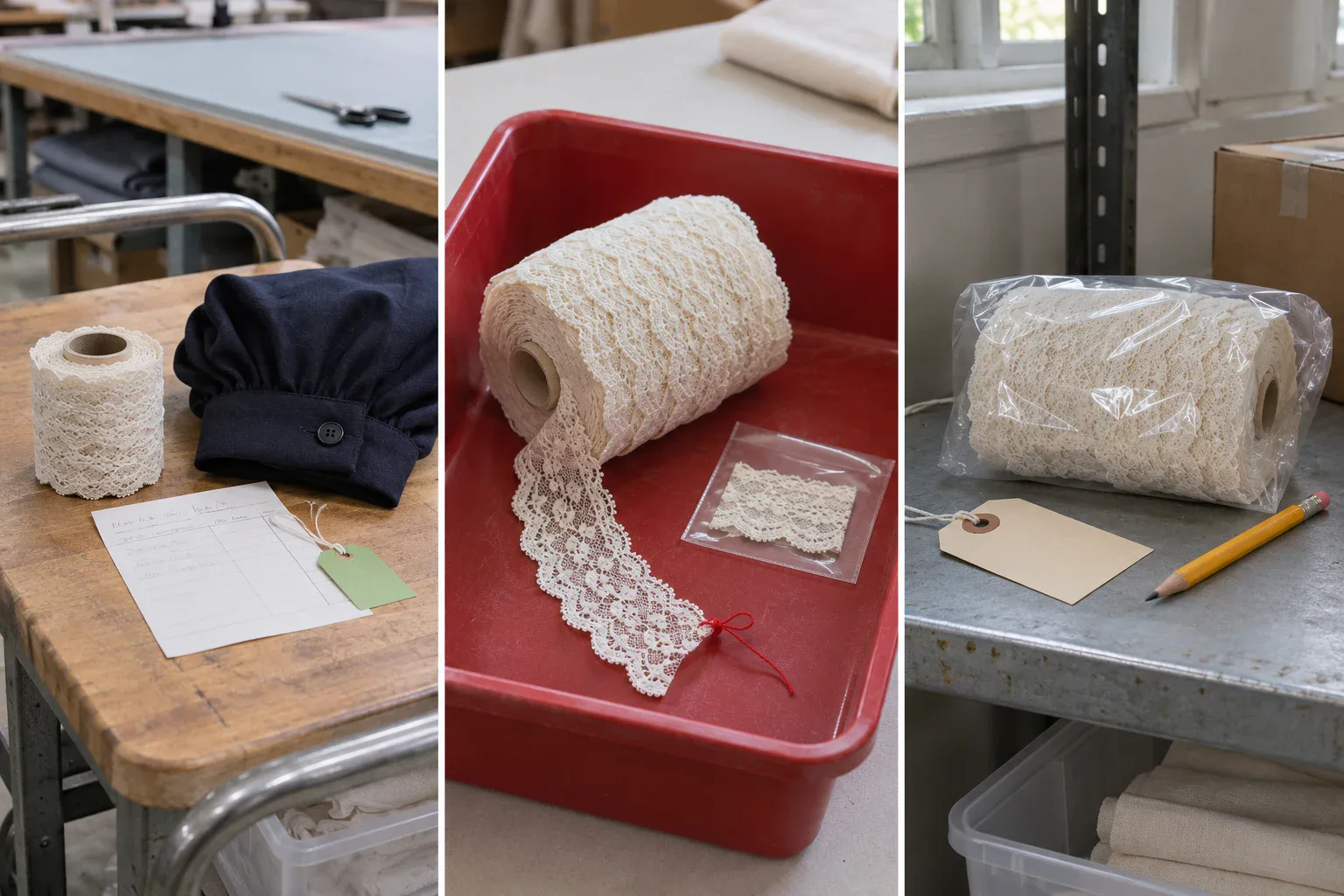
From left to right, a roll ready to issue, one set aside with its sample, and one still waiting to be opened. The stock record gives the roll number and who cleared it for cutting.
Roll and status | Evidence and handoff |
|---|---|
R04 · Release to cutting | The recorded shade matches S3. Width, edge, pattern repeat and all other applicable checks meet the order requirements. The plan permits a roll-level release and the authorised reviewer has signed for this roll and quantity. Issue the signed quantity to the named work order. |
R05 · Hold for review | Shade still looks warmer on the agreed backing. A separate entry records a loose edge loop at about 12 m. Keep the roll in the hold area with both records. Only a later signed decision can release all or part of it. |
R06 · Awaiting inspection | The roll is unopened. Keep it out of the pick list. Check whether the plan calls for a dye-lot hold or expanded sampling, then record the results before deciding its status. |
Discuss a real requirement
Turn the reading into a practical next step.
Send a short note, product reference, photograph, swatch or tech pack. Technical feasibility, sampling, documentation and production terms are confirmed after review.
Start an inquiry